

DAILY STRATEGY: We think the 10yr will trade in range between 4.8 and 5.2%, below the current level (5.26%). Most of the investors we spoke with over the past few days think yields are biased lower into year end. We understand that impulse and have sympathy for the arguments. Some Fed speakers are pushing back on current market pricing of expected Fed rate hikes (see NY Fed Williams comments yesterday, HERE) and oil prices appear to have downside risk*. In short, it won’t take much of a dovish surprise in the data to support a sharp, SHORT TERM, reversal lower in 10yr yields and higher in the oversold, small caps, retail and bank names. We would attempt to monetize dovish TRADES through options. Happy to send over some trade ideas from 22V Options Strategist Jeff Jacobson. We have a few and highlight one specific long bond trade below. Please reach out.
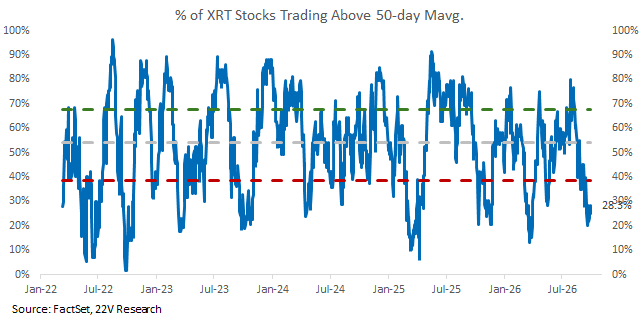
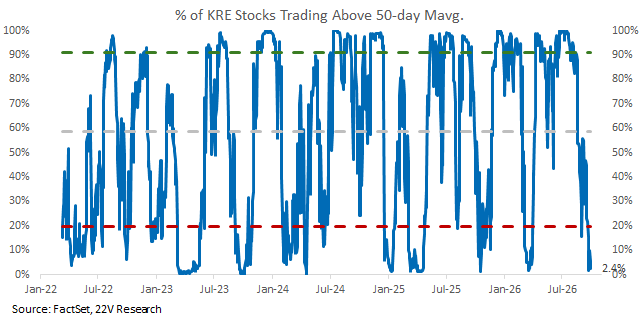
FYI – 27% of the names in the retail ETF (XRT) are trading above their 50-day moving average. Only 4% of stocks in the bank ETF (KRE) are trading above their 50-day moving average.
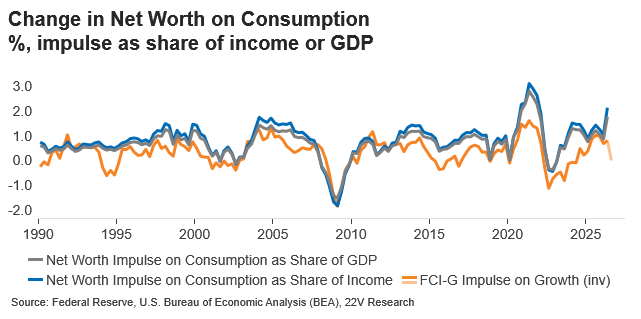
Longer term, we caution that demand indicators need to slow before Treasury yields move sustainably lower. The Fed’s financial conditions model indicates 40bps less impulse to GDP growth. False precision, but the implication is that yields should be sufficiently restrictive at these levels. Consumer durables spending, business fixed investment, and residential construction should react to higher rates.
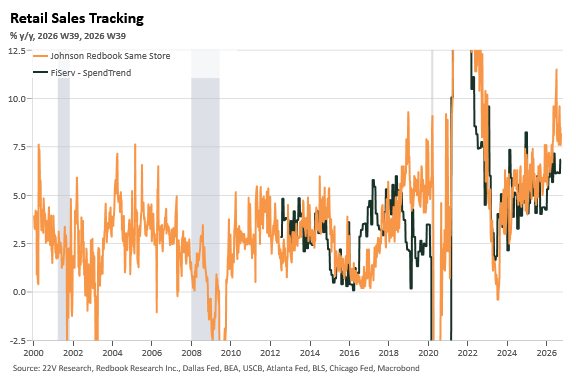
But high frequency demand indicators are still strengthening. The below chart shows two of the better indicators of consumer demand (Johson Redbook & Fiserv – SpendTred), both updated yesterday, continue to increase. The pain trade into year-end COULD be surprisingly resilient economic growth and UST yields moving HIGHER. Unusually strong Household net worth could lead to consumer being more resilient to higher rates or tightening in FCI. In short, we would like to see tighter financial conditions slowing consumer spending growth before making a more enduring short 10yr yield call.
Economic growth that remains well above the economic speed limit and higher yields are not the modal case, FROM HERE. However, the investor bias seems to be that growth will slow and yields will fall, so we wanted to run through some rough logic of how we could be wrong.
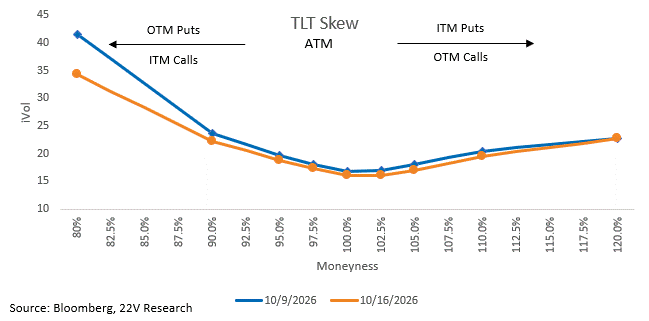
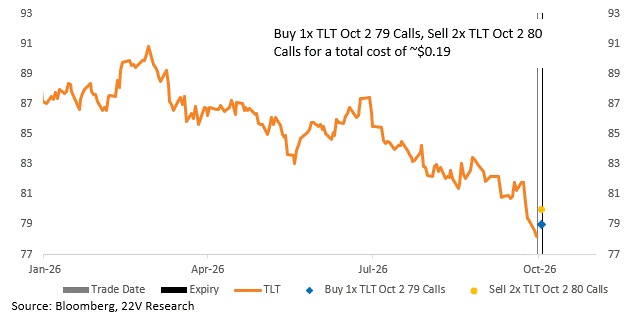
Trade Idea – the skew into labor data Friday is particularly interesting. The increase in yields has been justifiable given the data but extreme nonetheless (90th percentile MoM). Jeff Jacsobson, head of 22V Derivatives, noted the skew in TLT calls is favorable for cheap positions for lower yields. We don’t have a view on the data Friday, but the combo of aggressive moves into the data and hawkish skew make TLT calls attractive.
The trade: Oct 2nd 79/80 call spread for ~ .19 (TLT 78.35 ref)
From JJ… “Like taking an upside shot here on bonds (TLT) ahead of a few potentially positive catalysts:
> Getting a better than 4x to 1 potential payoff on the limited-risk upside trade
> Bonds extremely oversold on the RSI, could see a very sharp rebound on any of the upcoming data”
We would not be pressing short consumer and bank stocks here. Both are deeply oversold historically.
*As has been widely reported, Goldman Sachs estimates Gulf oil exports, including “dark exports” involving ships operating with their location transponders turned off, have recovered to 23.3 million barrels per day over the last week, in line with their 2025 average, as exports doubled in September. The reason cited for oil prices not dropping further is the potential for Iran to lash out with other countries oil revenues increasing as Iran’s exports are nothing. If investors believe Iran won’t or can’t lash out, oil prices would have sharp downside risk.

