

Last week was more of the same, with tech leading both the S&P and Nasdaq higher, while higher yields continued to put pressure on the more cyclical areas of the market (specifically the small caps and financials). Rising yields in the US have also given a bid to the US$, with the US$ index (DXY) trading just below its highest level in the past year. With the Fed having started a new hiking cycle, and with rates in the US continuing their rise, it wouldn’t surprise me to see the US$ continue to move higher against most other currencies. In addition, the impact of higher oil and gas prices is likely to weigh more heavily on Europe since they tend to import much more than the US (especially gas). This should not only continue to put pressure on the Euro vs the US$ but is also likely to become more amplified as we approach the colder winter months.
The US$ index (DXY) rallied almost 3% off the Sept lows (before the decline on Friday) and is now just below the 1-year highs
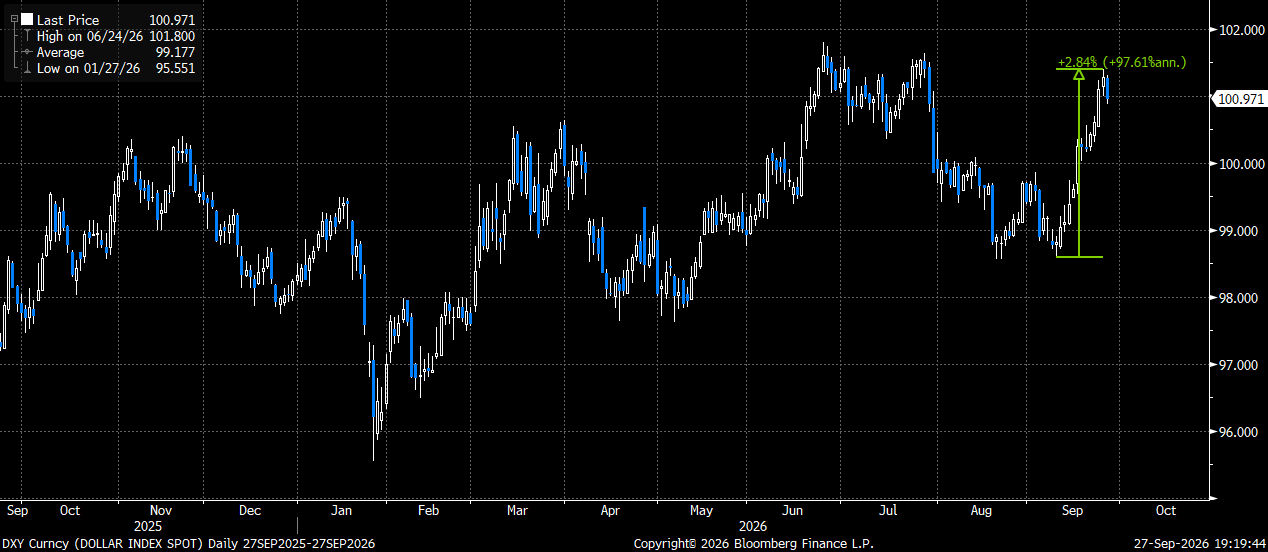
Should this trend continue of a higher US$, I believe specific hedges on sectors that are typically impacted negatively by a stronger US$ should be considered, even after the recent weakness we have already seen. Here are a few trades I favor that I expect would do well should we see the DXY breakout to new relative highs.
Trade #1 – GDX November puts
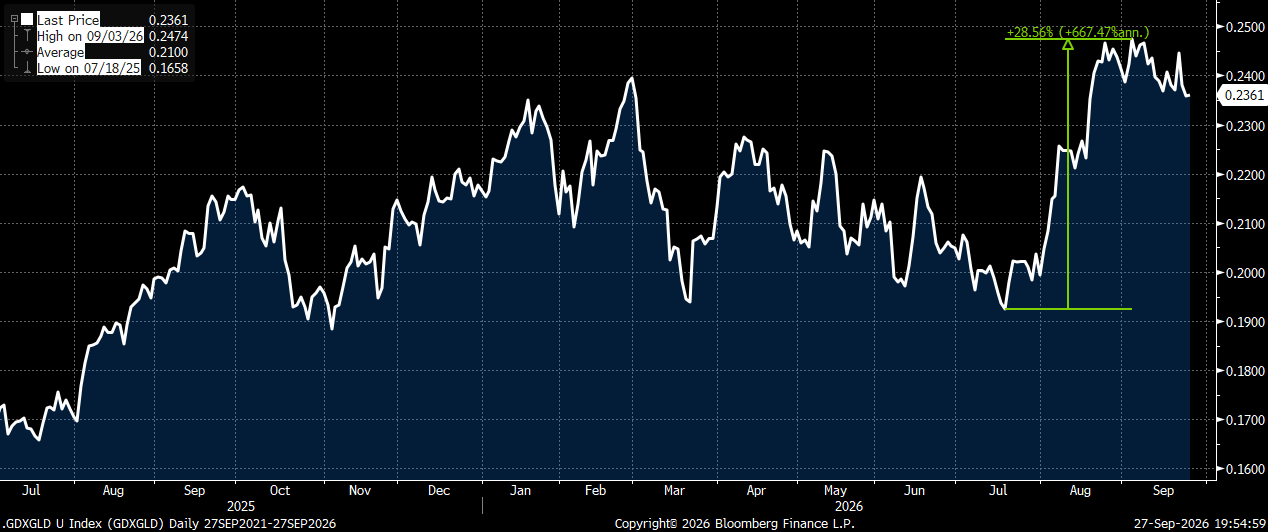
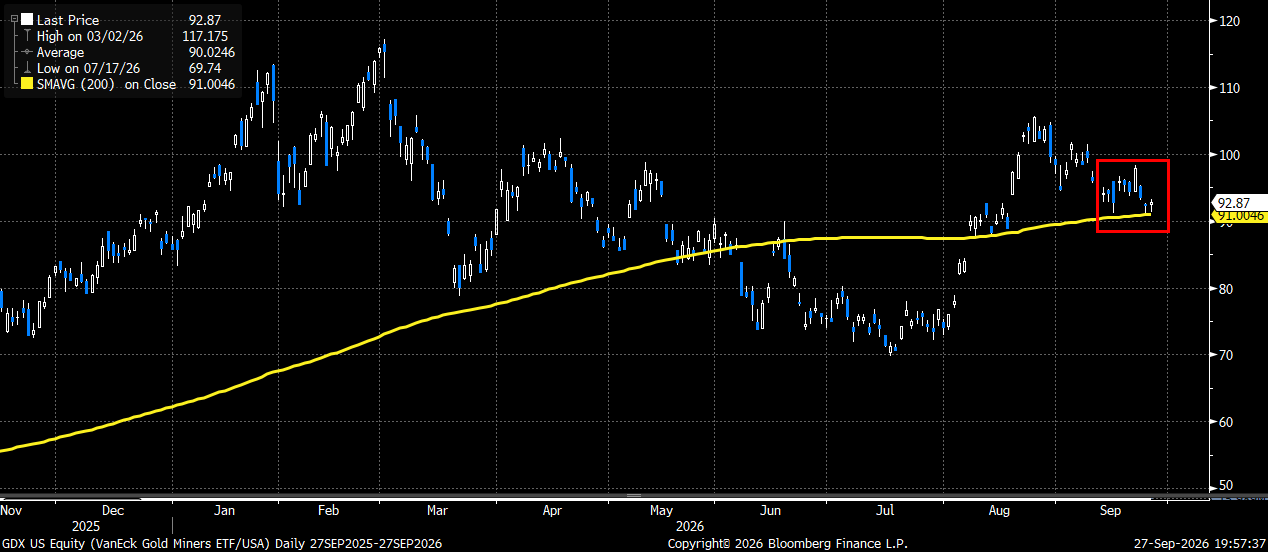
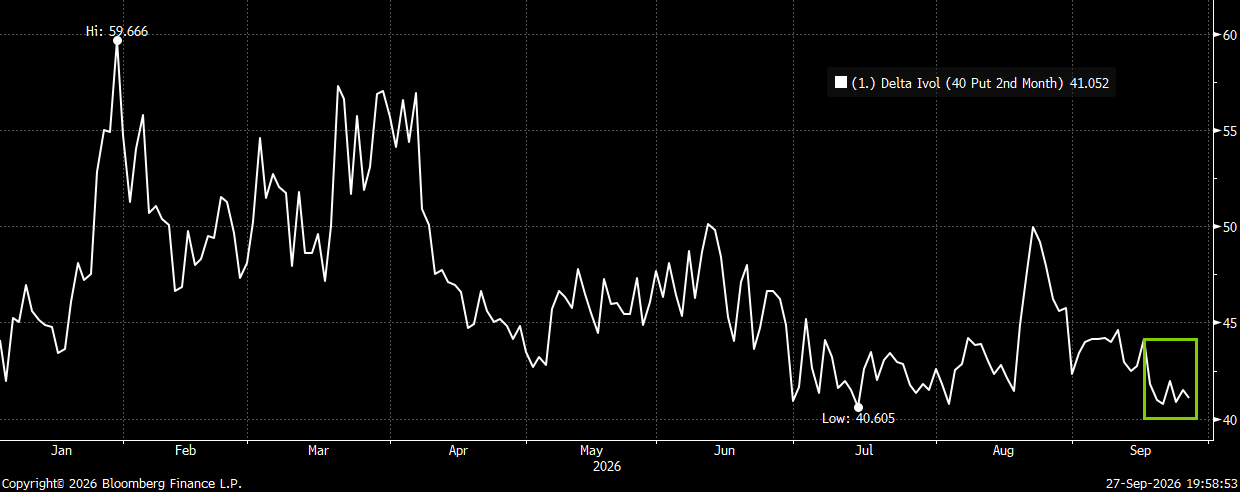
Gold typically fares poorly when we see a stronger US$. This has been the case of late, with gold down ~ 9% since late August when the DXY bottomed. What stands out to me, however, is that the main gold miner ETF (GDX) is “only” down ~ 12% from the same August highs. This move is unusual since GDX typically trades with a 2x beta to gold, and the miners had significantly outperformed the underlying commodity on the move higher in gold in July and August (as the US$ was weakening). In fact, the GDX/GLD relative spread gained nearly 30% over that time, and even with the recent weakness in gold it has only given back a very small amount. I think should we see the US$ continue to move higher from these levels, we could see more of a catch-up trade lower in this spread. What I also favor about owning hedges in GDX is that with costs going up across the board, perhaps we will hear some of that from the miners when they report earnings over the next month or so? Lastly, I also like the setup to own 2-month (November) puts in GDX as the 40-delta puts now trade at their lowest implied vols of the year.
GDX/GLD relative spread gained nearly 30% as gold rallied as the US$ declined in July and August. Could see a pullback from here
GDX declined ~ 12% from the recent highs. A technical break below the 200-day could lead to more selling
GDX 2-month (November) 40-delta put vol is back to the 2026 lows
Trade:
Buy GDX November 20th 90 puts for ~ $4.40 (GDX 92.87 Fri close ref)
Trade Details:
- Buying the November puts that start 3% below spot
- We saw the miners outperform the commodity when gold rallied sharply in July and August (should see some further pullback in the relative spread should gold weaken more)
- GDX 2-month 40-delta put vol at the 2026 lows (why I favor buying the puts outright)
- Most of the top-weighted names in GDX will report at the end of October/early November (why I favor the November puts)
- Puts can be bought to hedge a long gold position, or as an outright bearish bet given strengthening US$ as well as GDX/GLD spread back near the highs
- Please reach out to me or the 22V sales team for updated pricing and execution capabilities
Trade #2 – EFA November put spreads
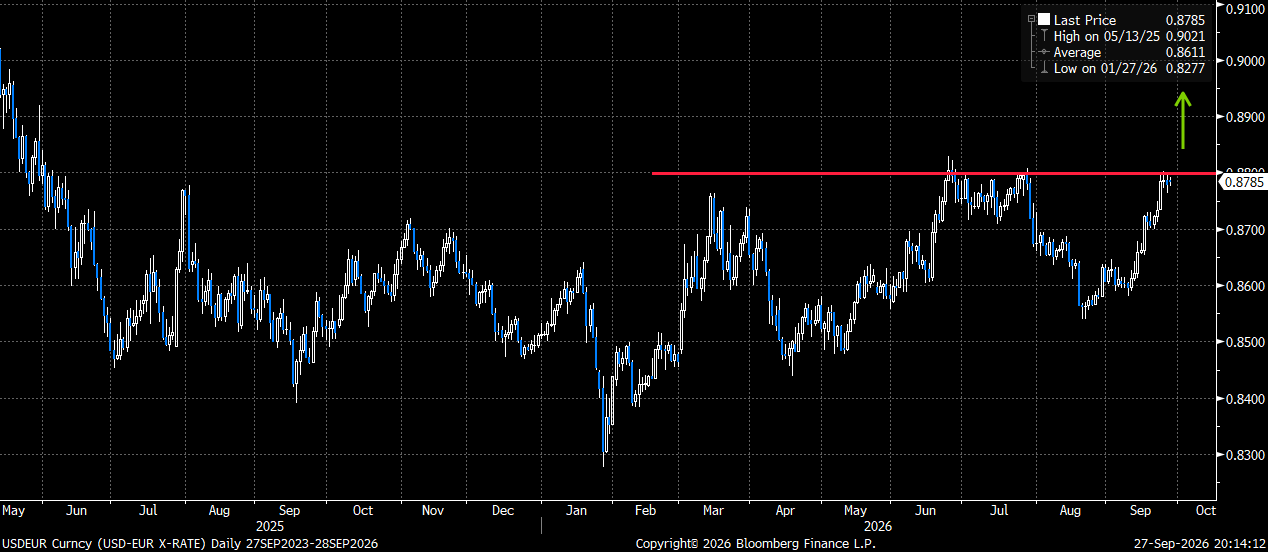
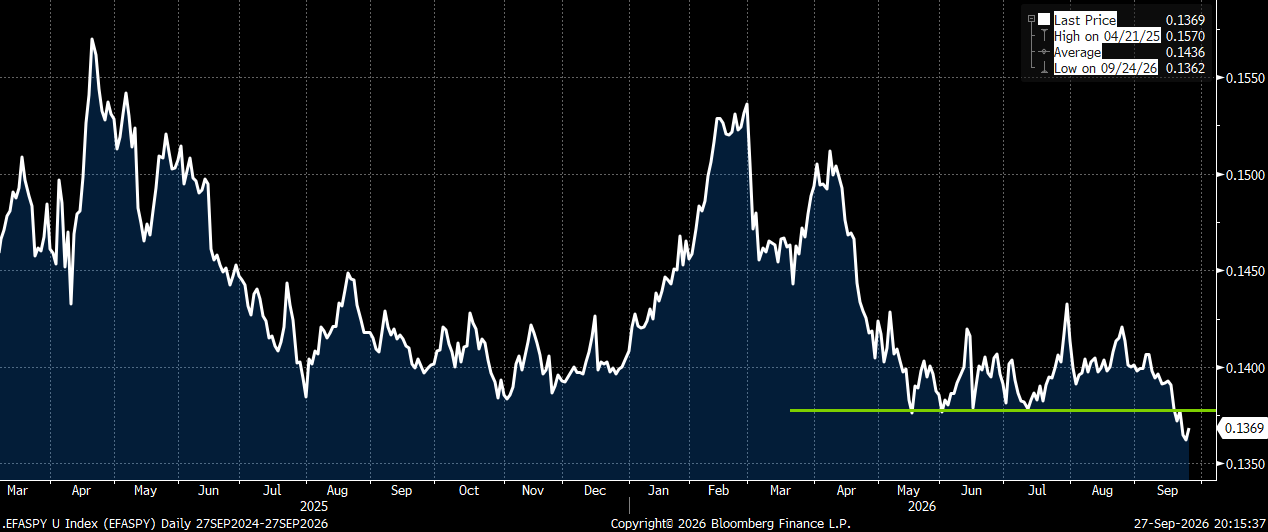
The $/Euro spread is now back to the June/July highs and appears to be on the brink of a more significant breakout. As I mentioned above, not only are we seeing a widening spread between rates in the US and Europe (as both are rising), but I do believe we could continue to see higher oil and gas prices impact Europe much more meaningfully than here in the US. Should that happen, then I believe European stocks (EFA) are likely to not only continue their sharp underperformance to stocks in the US, but we could see a significant absolute decline as well (we have only seen European stocks simply lag US stocks higher thus far).
US$/Euro spread looks poised to breakout above the June-July highs
EFA/SPY relative spread just broke below the recent support lows
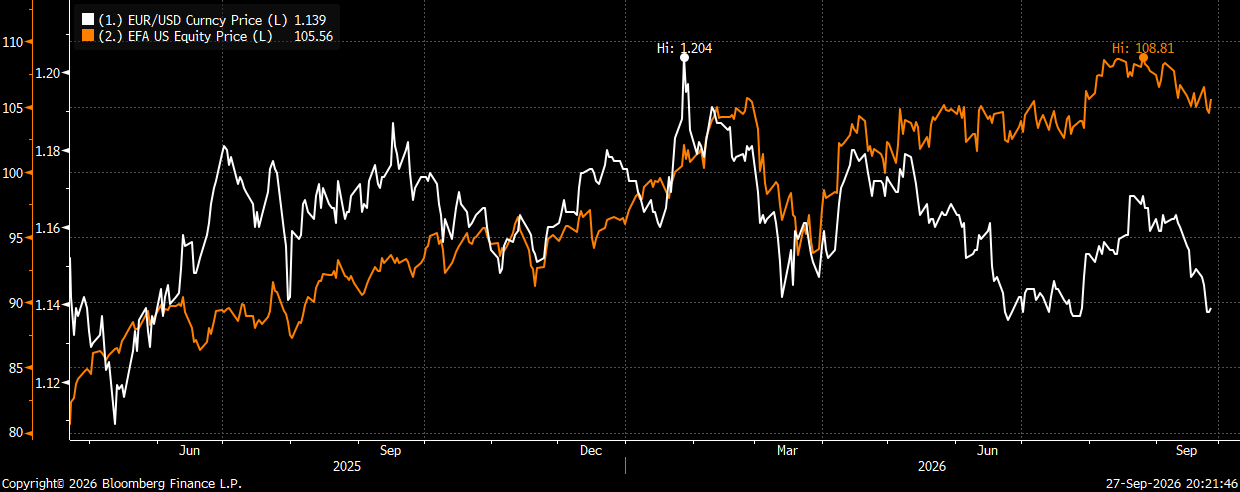
What stands out to me regarding EFA hedges here is that when we overlay the Euro/$ spread to where EFA is trading, we can see that EFA is trading at a very large premium to where it has typically traded when the Euro was trading at these levels to the US$. Perhaps we could see a decent catch-up trade lower in EFA to reflect this? In addition, even as concerns mount about a weakening Euro, EFA 2-month implied vol continues to trade near the lows (with put skew is also favorable).
EFA continues to trade at a large premium to where it has typically traded versus the Euro/US$ spread
Trade:
Buy EFA November 20th 104/97 put spread for ~ $1.20 (EFA 105.56 Fri closing ref)
Trade Details:
- Buying the 7-point wide November put spread that starts ~ 1.5% below spot
- We continue to see European stocks underperform their US counterparts, especially as the Euro weakens against the US$
- EFA/SPY relative spread made a new low, and EFA trades “rich” to where EUR/USD currently trades
- Put spread hedge offers a nearly 5x to 1 max payoff on the limited-risk hedge (bearish bet)
- Please reach out to me or the 22V sales team for updated pricing and execution capabilities

