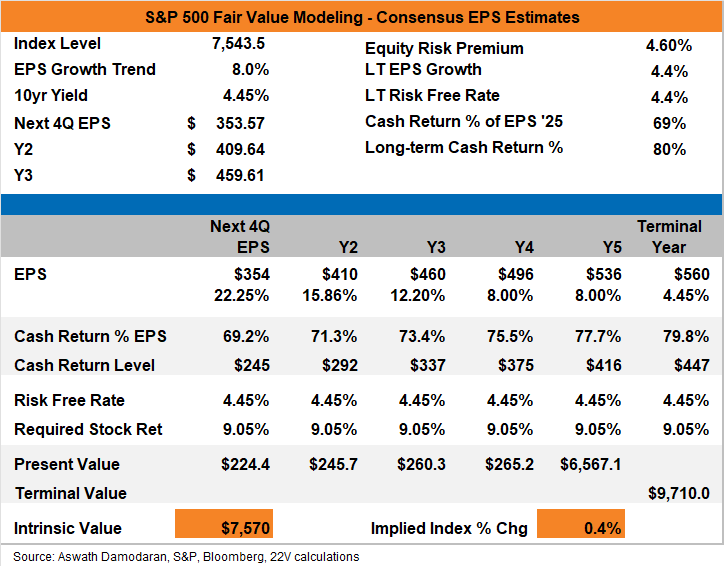
Now that 1Q earnings are wrapped up, we run through our monthly update of Fair Value to provide anchors to different scenarios, considering different scenarios for earnings, cash return, and valuation. This type of analysis has helped us discern interesting long market risk vs returns after drawdowns (COVID / Oct 2022).
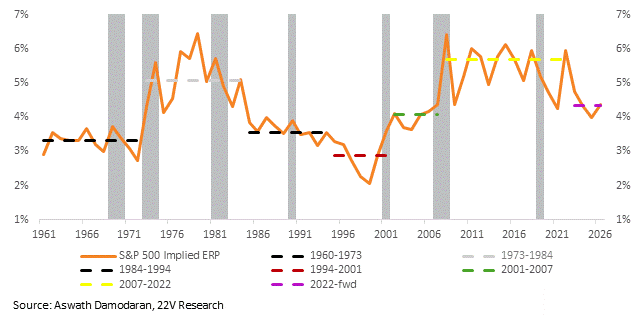
The divergence between the implied equity risk premium (implied ERP), our preferred cash return valuation metric based on the work of Aswath Damodaran (HERE), and the NTM Earnings Yield – 10yr (the naïve ERP) is something we have addressed before, but return to today. The cash-return ERP is not at an extreme level, unlike the naïve ERP, which has dropped back down to its all-time low (consistent with higher NTM PEs).
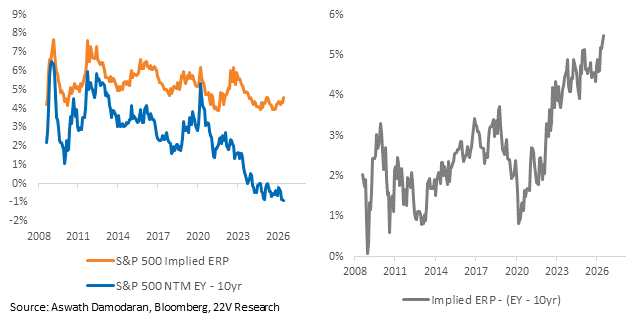
Broadly speaking, the cash-return-based methodology captures the effects of better margins and a higher ratio of earnings EXPECTED to be returned to investors. That is a critical part of the value proposition of holding the S&P 500 that the naïve equity risk premium misses over time. The naive equity risk premium just captures the current earnings yield and compares it to a 10yr duration asset (10yr Treasury). Logically that does not make sense (See Aswath Damodaran’s more detailed reasons why HERE).
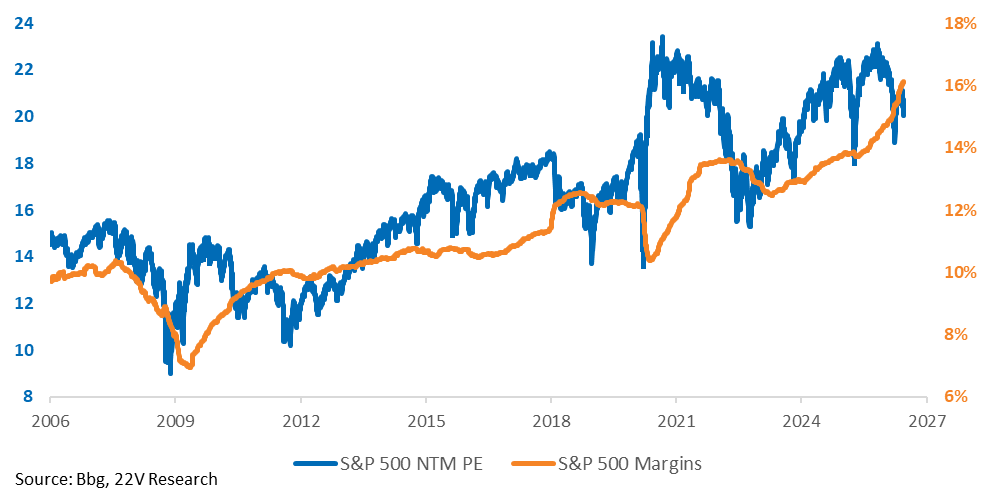
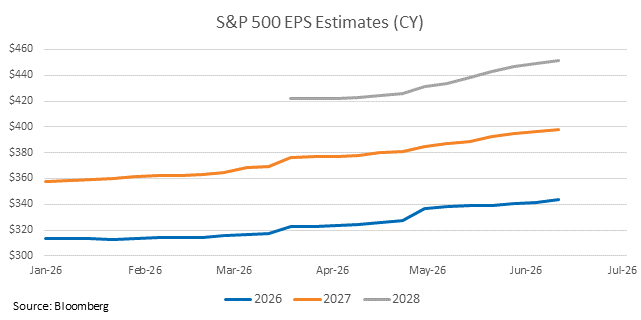
Specifically, this year, the implied ERP is diverging from the naïve ERP because of large positive revisions to earnings expectations beyond the next twelve months. That earnings increase coincides with a reduction in current cash returns. Investors are discounting that AI capex will have a positive ROI. Obviously, if that is not the case, the equity market is overvalued. That is the main question to ask and get right.
Details – The S&P 500 at an all-time high doesn’t screen as expensive when discounting cash return (dividends + buybacks / net income) beyond 1-year forward.
The implied ERP doesn’t make the risk-reward at an index level compelling here either. 1) Its level is near its long-term median. A mean reversion argument on valuation doesn’t make sense unless you think the economic regime will change dramatically. 2) There are elevated risks to the cash return profile now because of, guess what, AI ROI assumptions.
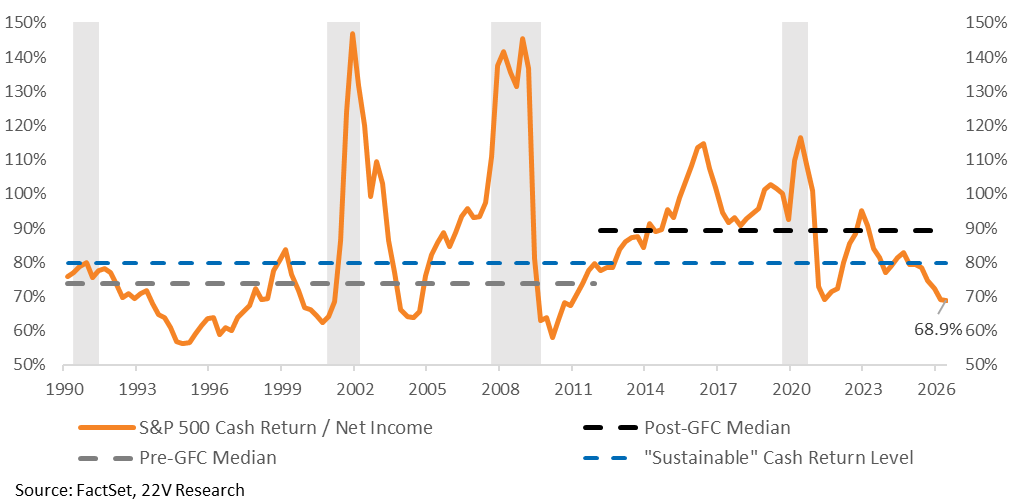
To be clear, we think AI will be effective as a margin-boosting and/or revenue-boosting tool. The early indications are positive (HERE). There is considerable upside to fair value estimates if/as companies utilize AI (that’d be the trigger for a different economic regime). The problem is that AI disrupts the CERTAINTY of cash returns for incumbent tech and introduces forward volatility in earnings. That is not just a theory; cash return is currently impaired. In 1Q, the cash return ratio of the S&P 500 declined to its lowest level since the post-GFC and post-COVID recoveries as incumbent tech pivoted towards Capex and R&D.
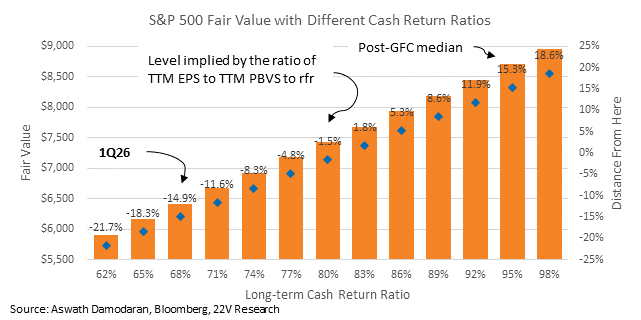
Investors are concerned that incumbent tech will end up in a protracted spending battle over AI and cash return will remain impaired. Or maybe AI just doesn’t create as much value as assumed. That is possible. Bottom line, if cash return was to hold at its level in 1Q, for 5+ years, S&P 500 fair value would be -15% lower. Investors are discounting higher earnings growth that translates, eventually, into higher cash returns. The question is more about WHO dominates the cash returns. A few winners (if switching costs are high) or all companies (if AI switching costs are low).
FYI, in our base case, we use the level of cash return implied by ROE – the index retains the earnings it needs to grow eps at the risk-free rate, returning the rest as cash. A bar chart of S&P 500 fair value with different cash return ratios is below.
Going forward, it’ll be important to track the cash return contribution of the AI buildout beneficiaries. For example, NVDA announced an $80B buyback and raised its dividend from $0.01 to $0.25. There may be upside relative to investor concerns if the buildout companies begin to return cash. Fair value estimates are sensitive to cash return, so how much of the buildout money that ultimately flows to investors will be important. That is not something that can be assessed now though.
We walk through the regular updates that feed into our model below…
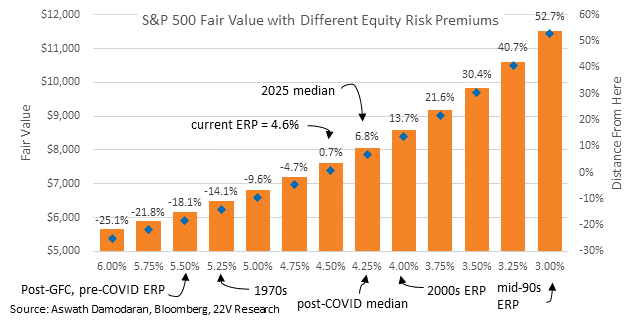
VALUATIONS: The implied equity risk premium (ERP), our preferred cash return valuation metric based on the work of Aswath Damodaran (HERE), has moved up from ~4.35% at the beginning of the year to ~4.6%. FYI, the ERP at its high (PEs at their low) this year was consistent with the 1970s stagflation and the post-GFC lack of demand/liquidity trap. Macro data, in aggregate, kept indicating an ongoing NORMAL economic expansion (HERE). Not a liquidity trap or 70’s style stagflation. It has now fallen back to closer in-line to its long-term median.
First charts are the longer term chart of the implied ERP and Fair Value under different ERPs below. If the ERP goes back to its 2025 median (and we hold 10yr, EPS expectations etc., all equal), fair value is +7% higher. The risk reward is interesting, but not super compelling.
EARNINGS: Earnings estimates have increased, significantly, this year, helped by an extremely strong 1Q (HERE). Realizing the cash return in 1Q and rolling forward one quarter adds +140 points to fair value.
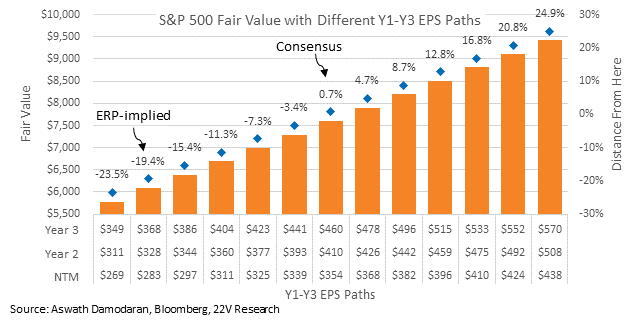
The table demonstrates our fair value calculation below. Our methodology is based on the work of Aswath Damodaran, a valuation guru at NYU. Great resource HERE. We are also happy to send the model.