

Bottom Line: Upcoming Inflation Data
Upcoming CPI and PPI data will shape expectations for Core PCE inflation. Current Core PCE is at a level that increases the odds of a transition from a normal expansion toward a more volatile economic and market regime — historically associated with a VIX above 20, tighter financial conditions, and headwinds for risk-on factors that have performed well year-to-date. Federal Reserve speakers have shifted dramatically toward viewing inflation as their principal concern, with monetary policy sentiment turning relatively hawkish.
Relevant News: Strait of Hormuz
The key wildcard is the Strait of Hormuz supply shock, which appears to be the primary driver of inflation sentiment and 10-year yields — if it is resolved, 10yr yields should decline and the risk of moving into a more volatile economic and market regime would be reduced. In short, it is very difficult to have strong economic and labor market growth + a supply shock and not have significant upside inflation risk. That is the bad news. The good news, the main driver of inflation risk is the supply shock, which can go away over time. If that happens, riskier factors will benefit.
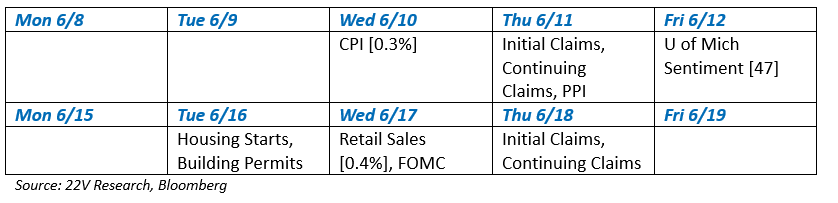
Things to Watch [Consensus, Results]:
Strategy:
Upcoming CPI/PPI Data Will Shape Core PCE Expectations and Odds that the Economic Expansion Falters – (HERE)
Across all 14 economic categories, Fed speakers now treat inflation as their principal concern. At the onset of the Iran War (2/28), Inflation sentiment was mildly negative; today it is the most negative category, marking a dramatic deterioration since the start of the war. Alongside this drawdown, Monetary Policy sentiment has flipped from firmly positive to one of the most negative categories. As a reminder, we define positive Monetary Policy sentiment as dovish and negative as hawkish, so this shift signals a decidedly more hawkish stance. 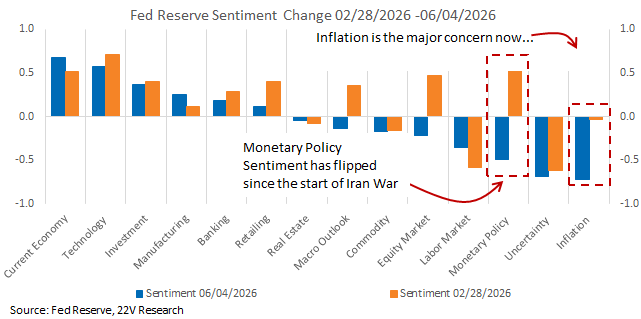
China
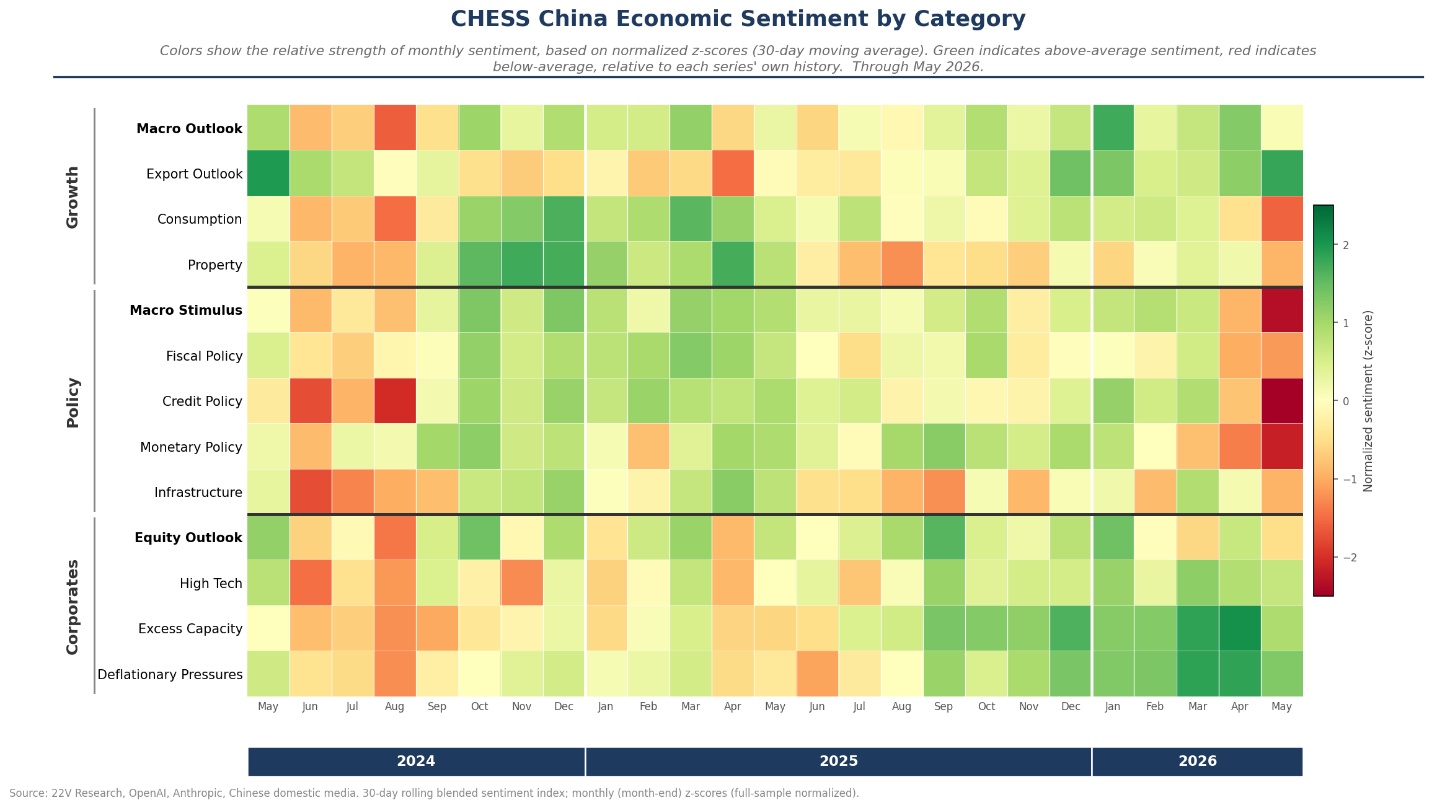
Weak Stimulus Sentiment Points to Summer Growth Doldrums Ahead – (HERE)
Analysts’ near-term expectations for stimulus have dropped sharply; we expect fiscal spending to normalize after an abrupt slowdown in the last few months, but not enough to be meaningfully stimulative. The macro outlook relies on the relatively narrow base of exports and high-tech industries; consumption and property sentiment are weak, and analysts have lately lost some of their optimism towards the excess capacity campaign. The soft macro backdrop means that equity market gains are likely to remain concentrated in AI-related companies; this is a balancing act for the authorities, who are keen to fund high-tech but must be wary of speculative risks.
Washington:
Summary of latest 2026 midterms webinar with Jacob Rubashkin– (HERE)
Jacob argued that redistricting is unlikely to offset the historical headwinds facing Republicans in 2026, noting Speaker Johnson’s three-seat House majority versus the average 28-seat midterm loss for a president’s party since WWII. He sees Senate Democrats as unlikely to regain control given the need for a net four-seat pickup. On data centers, bipartisan support remains strong, with Maryland’s 6th District serving as a potential test case for anti-data-center sentiment. Meanwhile, Trump’s roughly 20-point net disapproval rating is driven primarily by Iran and cost-of-living concerns, though Jacob cautioned that the impact on competitive general election races remains difficult to predict.

