Following the weaker jobs data on Friday, as well as the market’s mixed reaction to the latest FOMC meeting (and Powell presser), I think small cap (IWM) macro portfolio hedges are back in play. For the better part of the last few months, I had been suggesting VIX calls over index/etf hedges as the “better” hedge since vol had apparently hit a floor, yet markets continued to move higher. I believe the sharp selloff on Friday, as well as the continued underperformance by small caps to large caps (SPY), now means investors should start to consider playing for further downside in the main small cap etf as an overall portfolio hedge.
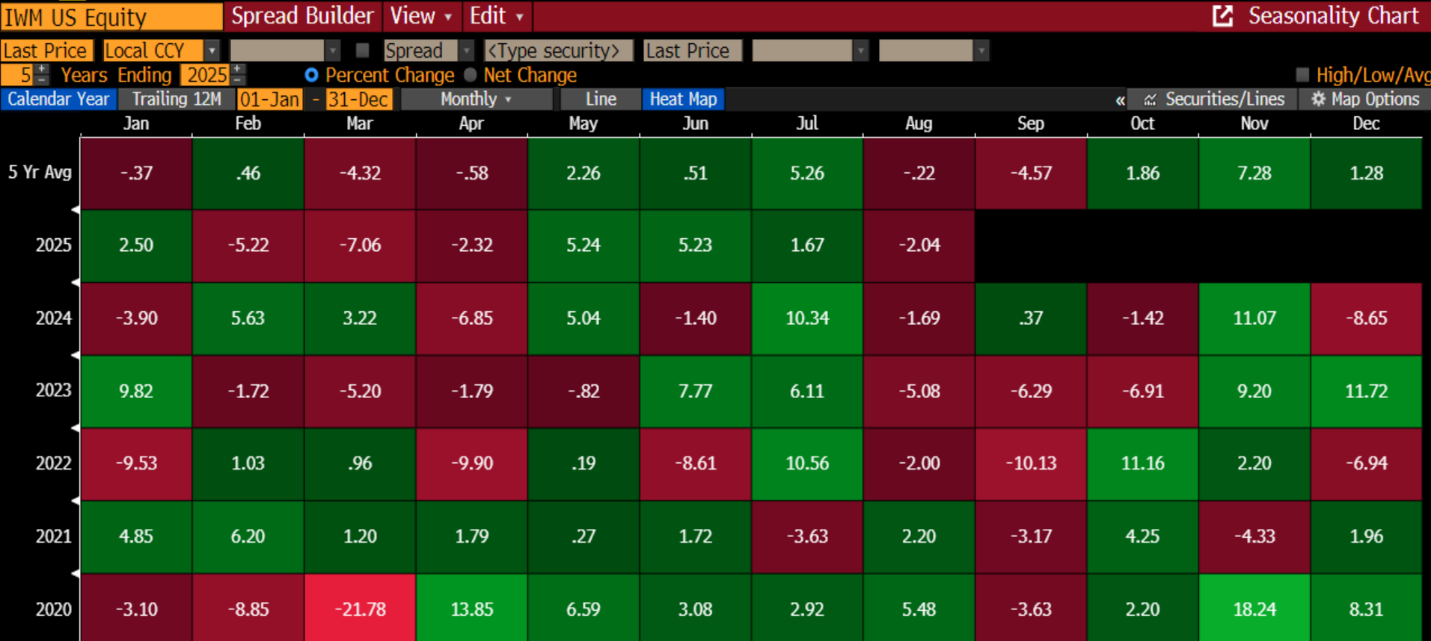
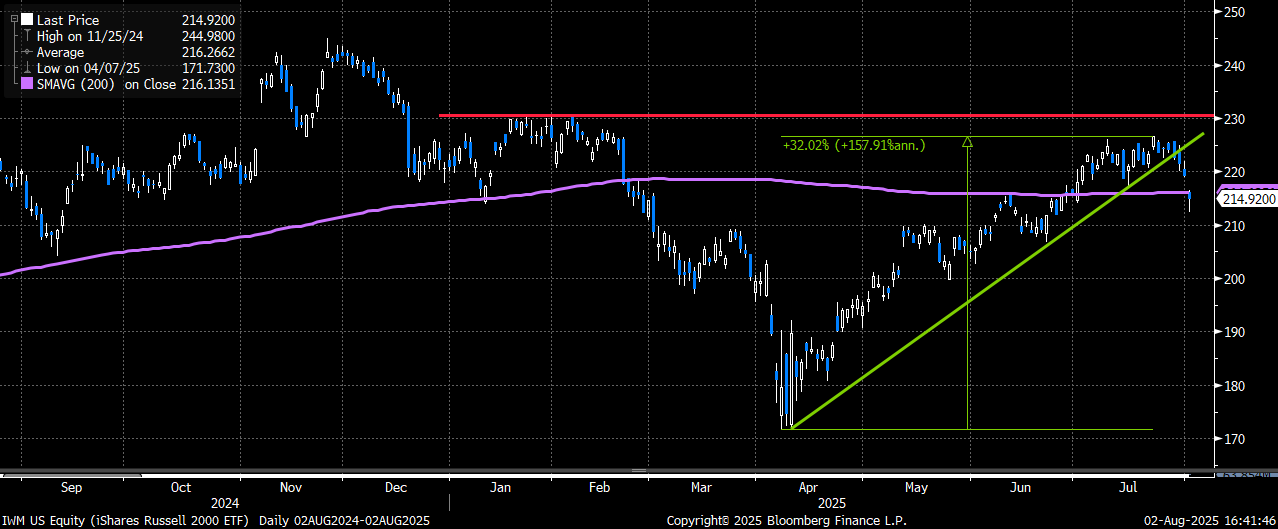
This focus back on using small caps as a macro portfolio hedge also fits the 22V view where we moved to the sidelines on riskier assets (like small caps) a few weeks ago (here). For the past few weeks small caps were still able to trade sideways (even as both SPY and QQQ made new highs), but they finally “broke” on Friday’s payroll report. Of concern now for the small caps are a few things. First, even as we saw a massive risk-on trade in the equity markets off the April lows, IWM was unable to gain back most (any) of the relative underperformance it had from the Dec highs to the April lows, where it lagged SPY by nearly 15%. The best is was able to do was outperform by ~ 4% at the early July highs, and now the relative spread is already back at the April lows. Second, while small caps did manage to stage an impressive 32% rally off their April lows, they still were unable to eclipse their Jan-Feb highs (and fell far short of re-testing their Nov all-time highs) even as both SPY and QQQ continued to make new highs on what seemed to be an everyday basis. Lastly, we now have what can only be described as a very poor technical setup in IWM. After a 32% rally to just below the former highs, it now not only broke below the April uptrend support but also gapped below the 200-day moving average as well. Given the now “cloudy” backdrop of slowing job growth, potentially higher inflation related to the tariffs and a seasonally weak period for stocks (September has been the worst month for small caps over the past five years) I believe they are at clear risk of further downside.
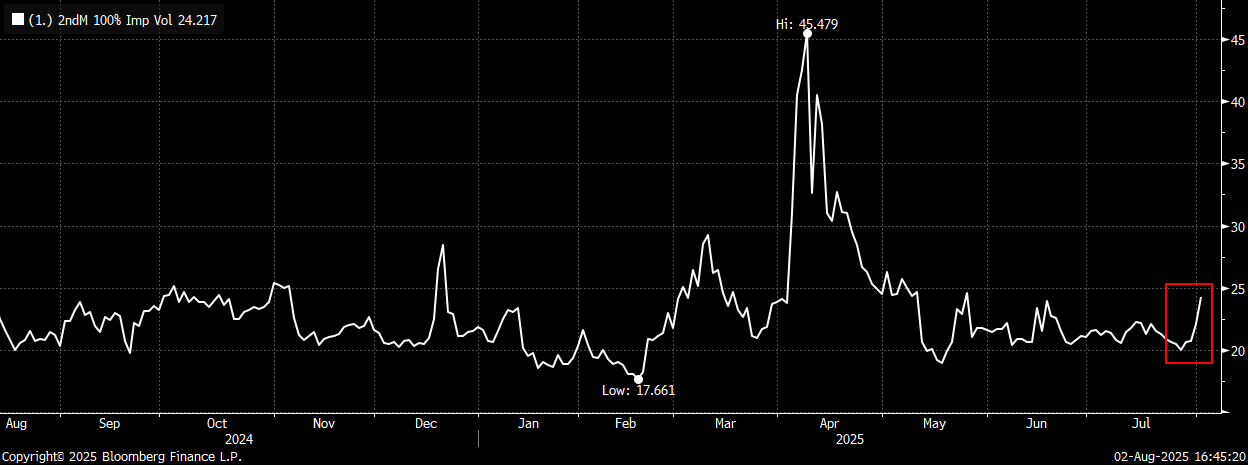
When looking at IWM vol out to Sept, we see it has moved up more than 4 points off the lows, and if we take out the April (tariff) spike, it now trades towards the upper-end of the “normal” one-year range. I believe that given the inability by small caps to make new highs while the risk-on trade was working, it seems far less likely we see a new high over the next month or two (especially given new concerns on growth, inflation and a bevy of other concerns). Therefore, I think September put spread collars look very compelling if looking to hedge overall market exposure over the next few months.
Trade:
Sell IWM Sept 228 calls
Buy IWM Sept 210/190 put spread
Costs ~ $1.20 (IWM 214.92 Fri close ref)
Trade Details:
- Selling the 6% upside calls (at a strike ABOVE the July highs and just below the 230 Jan-Feb resistance) to buy the 20-point wide protective put spread that starts about 2% below current levels (IWM was down 2% just on Friday)
- Small caps continue to lag the large caps (whether market rallies or declines) and IWM/SPY relative spread already back to the April lows and looks poised to make fresh new lows
- IWM with a technical break below both the April uptrend as well as 200-day moving average
- The August-September seasonal period has been bad for IWM (esp September), which is another reason I favor establishing the low-cost protective put spread collar here
- Can continue to hedge large cap (tech) stocks with IWM options as they have lagged for what seems like an eternity and don’t have the large-cap tech/AI exposure that SPY/QQQ do
- Please contact me or the 22V sales team for updated pricing and execution capabilities
IWM with a clear break below the April uptrend support as well as the 200-day following 32% rally off the April lows to just below the Jan-Feb highs
The IWM/SPY relative spread was only able to muster a 4% rally after collapsing by 15% into the April tariff lows. Now it is at clear risk of new lows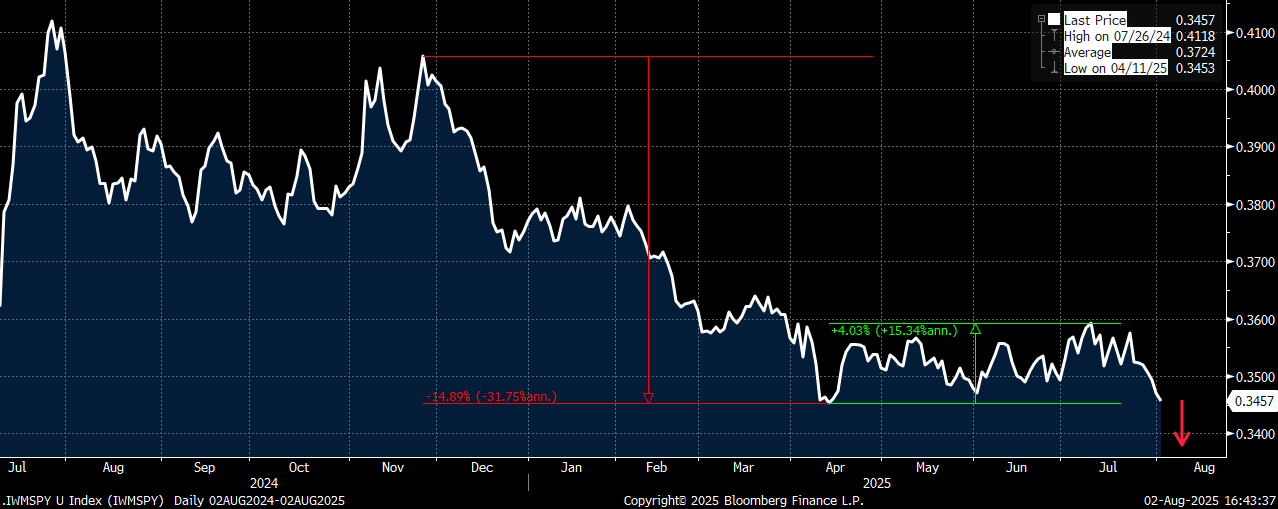
IWM 2-month (Sept) implied vol moved up ~ 4 points last week and is now back towards the high-end of the 1-year range (ex-April tariff move)
We are entering a seasonally weak period for small caps, with September being the worst month over the past five years