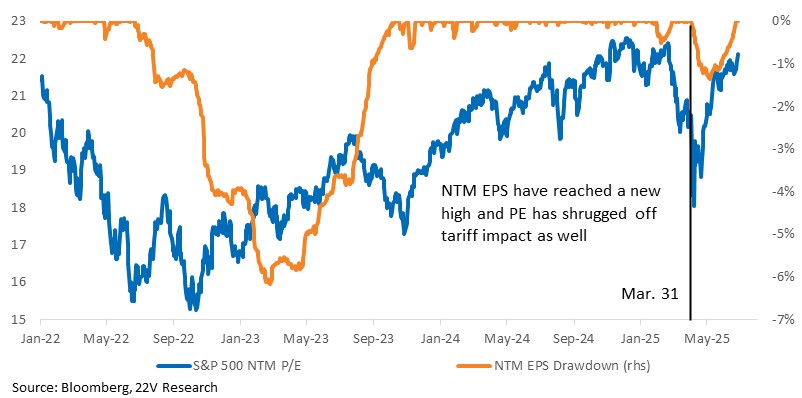
The 1Q earnings season was better than expected, and NTM earnings expectations have rebounded to a new post-tariff high. PEs have also recovered, suggesting less concern about the level and volatility of E. Macro risk stabilizing and economic growth better than expected (and much better than feared) puts 2Q reporting in a strong starting position.
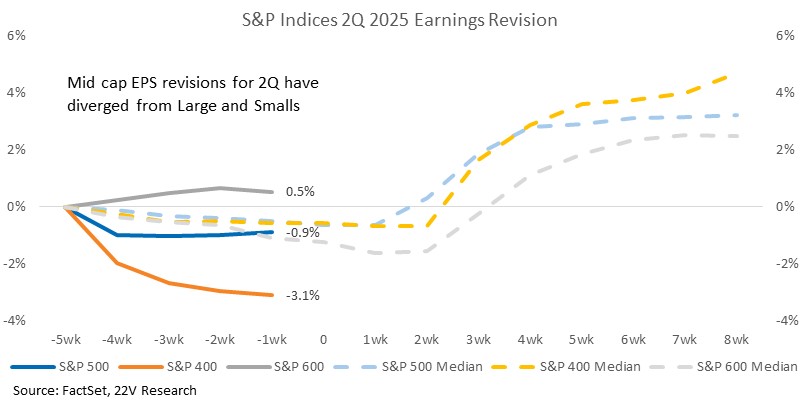
About two weeks out from the unofficial start of reporting, 2Q revisions for the S&P 500 are in line with normal trends (modestly negative). Small-cap revisions have been strong. The only source of weakness is in midcaps. SMID cap revision trends tend to be more volatile than large caps, so we would not read much into either of those trends.

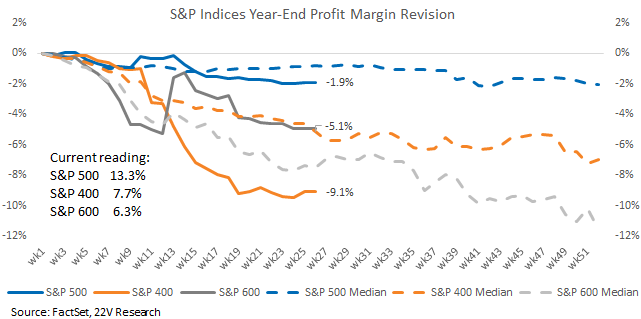
Higher tariffs and slowing growth are expected to put downward pressure on margins, so negative revisions to profitability estimates were expected. Lower but not collapsing margins effectively set a lower bar for companies to beat estimates this quarter. Given the trend of overall economic growth, we see little reason to expect margins to surprise to the downside.
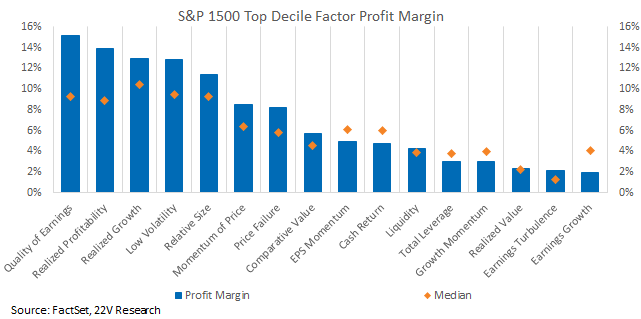
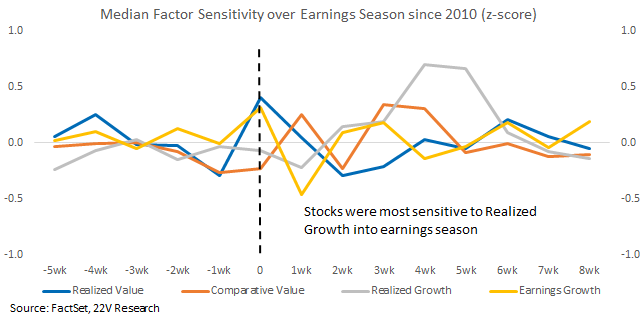
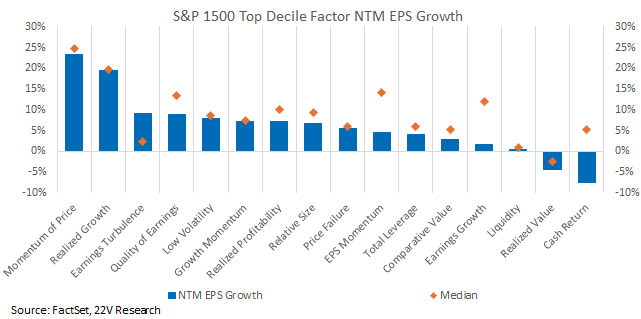
The setup for reporting favors Growth names. Fundamental factor sensitivity tends to increase at the start of the earnings season, especially for Realized Growth. Growth and Momentum have higher NTM EPS growth estimates than all other factors. High Earnings Growth names also have lower margin than other factors.
Value also has low margin expectations, which could provide the factor with a tailwind if profitability proves better than expected. But Value is also one of only two factors with negative EPS growth estimates. Given the still high level of economic uncertainty and the general slowing of economic activity, we prefer Growth names heading into the reporting season.
Expected Improving Earnings Outlook for 2Q Earnings Season: 1Q earnings season was better than expected, but provided investors with little clarity about the impact of the trade war. Heading into 2Q reporting, tariff risks are lower, and NTM EPS estimates have erased their post-Liberation Day decline. PEs have also recovered, suggesting less concern about the level and volatility of E. Macro risk stabilizing and economic growth better than expected (and much better than feared) puts 2Q reporting in a strong starting position.
About two weeks out from the unofficial start of reporting, 2Q revisions for the S&P 500 are in line with normal trends (modestly negative). Small-cap revisions have been strong. The only source of weakness is in midcaps. SMID cap revision trends tend to be more volatile than large caps, so we would not read much into either of those trends.
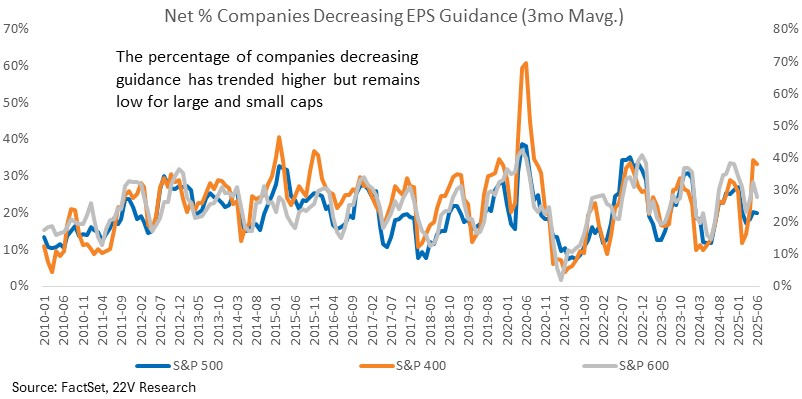
Guidance is a source of modest concern. The percentage of companies decreasing EPS and sales guidance has ticked higher. Keep in mind that the level of net negative guidance remains right around median levels for large and small-cap names. The only outlier is mid-caps. What managers of mid-caps say about the impact/expectations around tariffs will be important this reporting season.
Mid-caps have also seen the largest negative revisions to full-year margin estimates. Higher tariffs and slowing growth should put some downward pressure on margins, so negative revisions to estimates were expected. Lower but not collapsing margins effectively set a lower bar for companies to beat estimates this quarter. Given the trend of overall economic growth, we see little reason to expect margins to surprise to the downside.
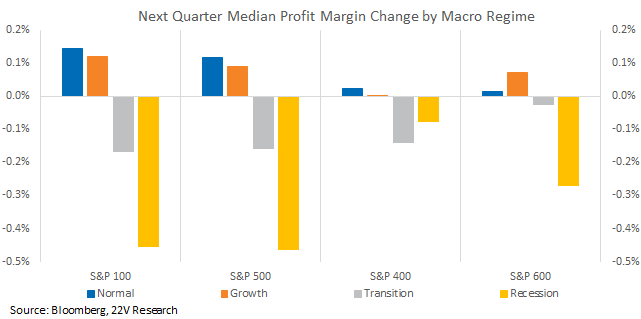
Historically, margin expectations trend higher during periods of normal economic expansion. Large forward margin contractions are more common in Transition and Recession regimes, which are increasingly unlikely.
Where to Focus During 2Q Reporting: Fundamental factor sensitivity tends to increase into the start of the earnings season, especially for Realized Growth. Increasing sensitivity suggests the market is driven more by fundamentals during earnings season. This reporting season, we favor Growth factors given lingering concerns around the U.S. slowdown.
In addition, Growth and Momentum have higher NTM EPS growth estimates than all other factors. Cash Return and Realized Value are the only two factors with negative earnings growth expectations. The strong growth explains why we favor more on Momentum, Growth, and Quality names in the long term.
Profit margin estimates for high Quality and Profitability names are highest today. High Earnings Growth names have lower margin than other factors. Value also has low margin expectations, which could provide the factor with a tailwind if profitability proves better than expected. Given the still high level of economic uncertainty and the general slowing of economic activity, we prefer to Growth names heading into reporting season.