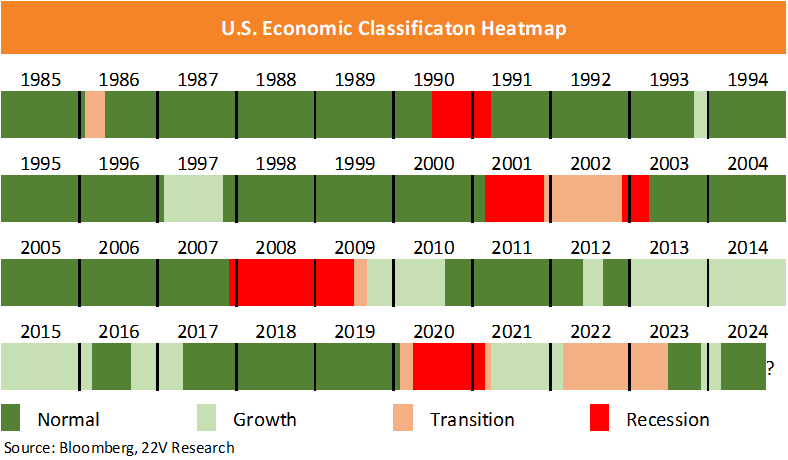
Throughout 2024, the macro backdrop remained consistently one of a normal economic expansion. Growth was firm, financial conditions supportive, equity and currency vol were low, inflation was drifting lower, etc. Despite those trends, uncertainty about the macro trajectory heavily influenced market sentiment. Even as a soft landing became the base case for most investors, lingering reinflation worries weighed on markets.
Macro uncertainty meant that 2024 market internals diverged widely from the typical patterns associated with normal macro regimes. Defensive periods were MUCH more frequent than usual Only recently has growing confidence and the easing of election-related uncertainties, have internals started to converge to the distribution usually seen in economic expansions.
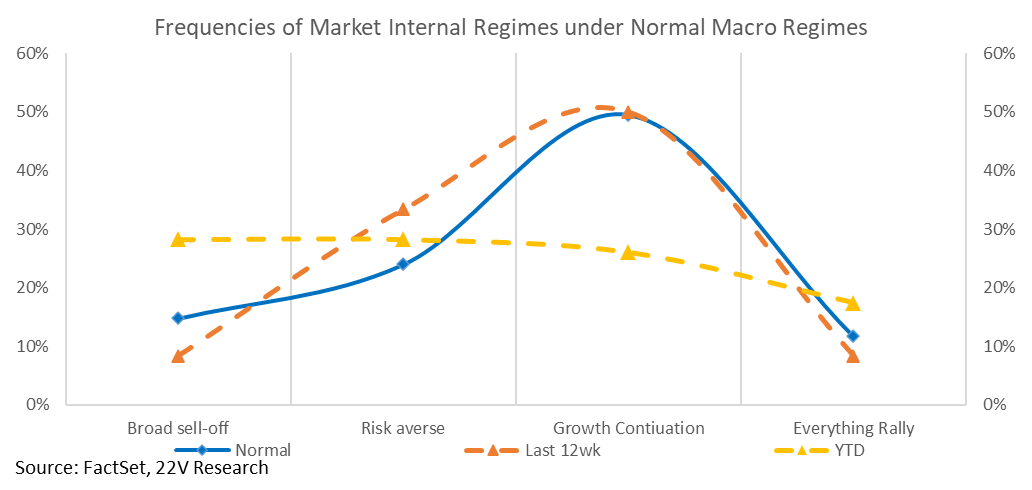
As we move into 2025, we expect the macro environment to normalize further, sustaining a stable expansionary trajectory. The influence of pure risk-on/risk-off risk trading should continue to fade in favor of a more consistently fundamental factor-based leadership. Risk factors will continue to be a source of volatility, but the frequency of risk-dominant weeks should be much lower.
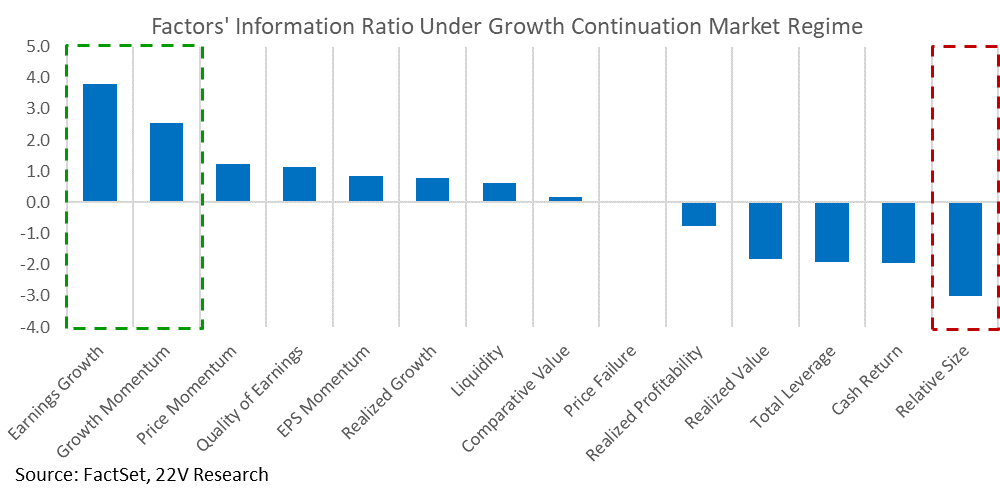
To identify the factors more likely to benefit from normalizing market internals in 2025, we examined historical risk-adjusted active returns, aka Information Ratios, within the Growth Continuation regimes – the most prevalent market regime during a stable economic backdrop. The results highlight that fundamental/style factors such as Growth Momentum (long-term realized growth trends), Earnings Growth (short-term growth outlook), and Small Size are well-positioned to outperform in 2025.
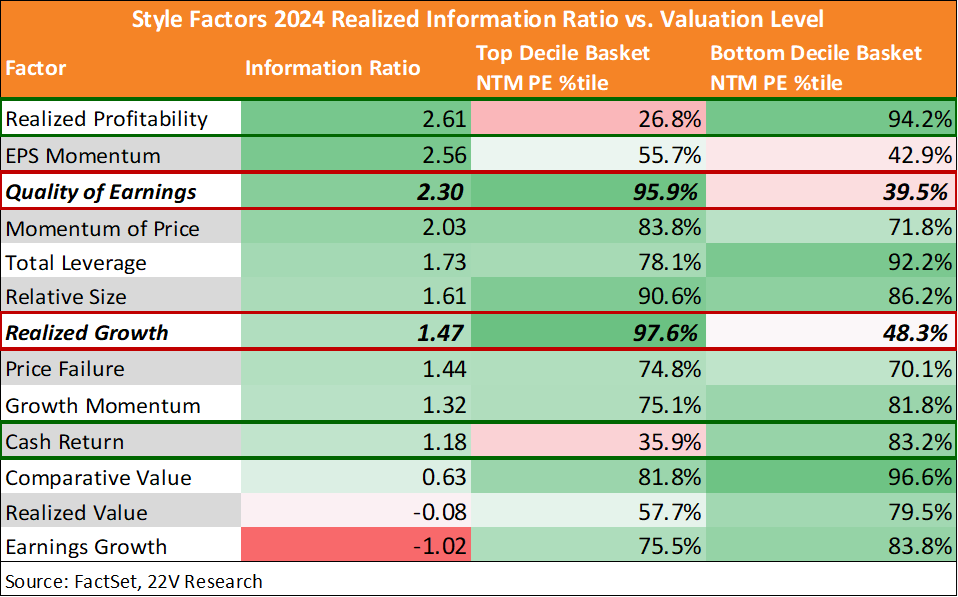
To make sure that our call to long Earnings Growth and Growth Momentum and short Size are not overly correlated with recent crowded trades, we analyzed their YTD realized Information Ratios alongside their valuation levels. The results indicate the valuation spreads of these factors are neither excessively high nor too low, suggesting that the tail risks—whether from sharp reversals (unwinds of crowded trades) or quick breakouts (extremes becoming more extreme)—are relatively contained. Some other factors that look compelling today are Cash Return and Realized Profitability (longs) and Quality and Realized Growth (shorts).
Positioning for Normalizing Market Internals in 2025: Throughout 2024, the macro backdrop remained consistently one of a normal expansion. Growth was firm, financial conditions supportive, equity and currency vol were low, inflation was drifting lower, etc. Despite those trends, uncertainty about the macro trajectory heavily influenced market sentiment. Concerns over reinflation risks in Q1, driven by hotter-than-expected CPI readings, later transitioned to fears of a sharp labor market deterioration in Q3, then election-induced vol. Even as a soft landing became the base case for most investors, lingering reinflation worries weighed on markets.
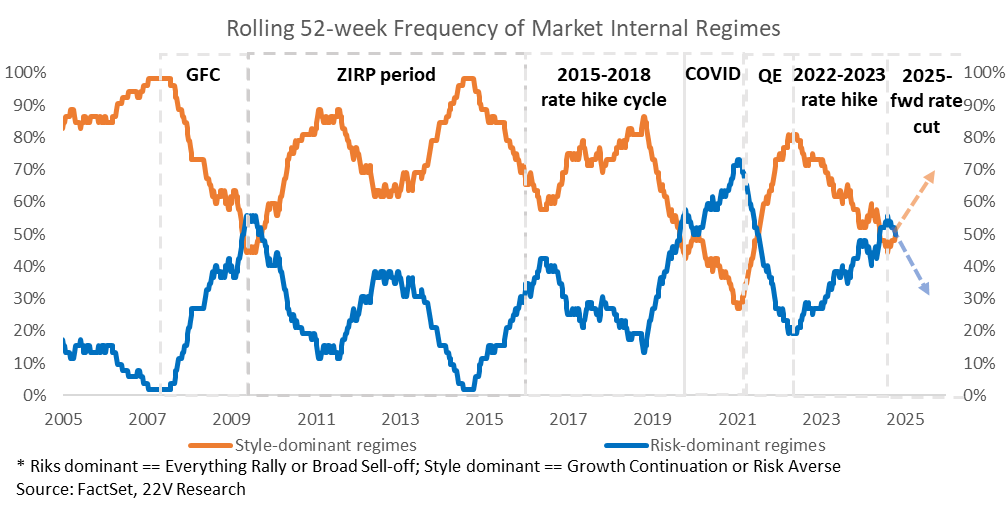
Macro uncertainty meant that 2024 market internals diverged widely from the typical patterns associated with normal macro regimes. Defensive periods were MUCH more frequent than usual In our parlance, Broad Selloffs and Risk Averse regimes happened more. Only recently has growing confidence in a stable macro path and the easing of election-related uncertainties, have internals started to converge to the distribution usually seen in economic expansions.

As we move into 2025, we expect the macro environment to normalize further, sustaining a stable expansionary trajectory. Market attention is likely to meaningfully shift away from headline-driven volatility to a more balanced focus on fundamental and style factors. As a result, the influence of pure risk-on/risk-off risk trading should continue to fade, and a favorable environment for fundamental factor-based investing can take hold. Risk factors will continue to be a source of volatility, but the frequency of risk-dominant weeks should be much lower.
To identify the factors more likely to benefit from normalizing market internals in 2025, we examined historical risk-adjusted active returns, aka Information Ratios, within the Growth Continuation regimes – the most prevalent market regime during a stable economic backdrop. The results highlight that fundamental/style factors such as Growth Momentum (long-term realized growth trends), Earnings Growth (short-term growth outlook), and Small Size are well-positioned to outperform in 2025.
To make sure that our call to long Earnings Growth and Growth Momentum and short Size are not overly correlated with recent crowded trades, we analyzed their YTD realized Information Ratios alongside their valuation levels. The results indicate the valuation spreads of these factors are neither excessively high nor too low, suggesting that the tail risks—whether from sharp reversals (unwinds of crowded trades) or quick breakouts (extremes becoming more extreme)—are relatively contained. Some other factors that look compelling today are Cash Return and Realized Profitability (longs) and Quality and Realized Growth (shorts).