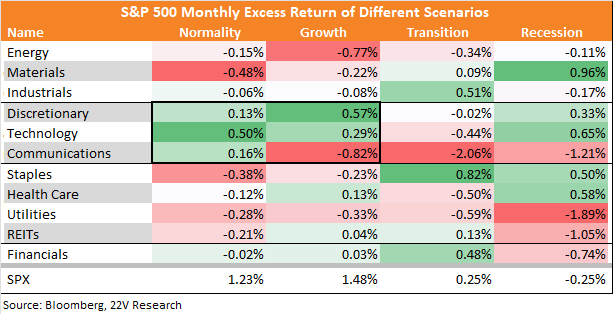
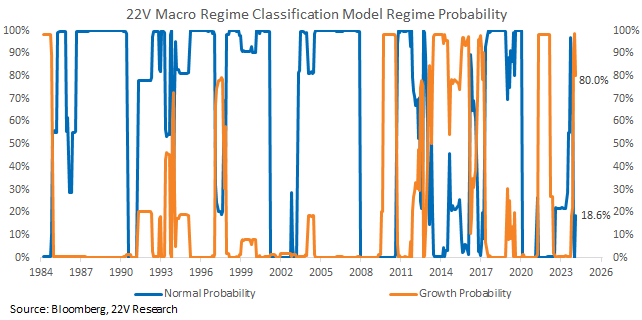
With most of January’s data released, the U.S. Growth backdrop remains firmly in place. This is the third consecutive month where macro/marker data indicate a strong economic backdrop. Our regime model is probabilistic and the odds of being in a Growth backdrop have declined from nearly 100% to ~80% today. That decline reflects the reflects the increase, at the margin, of macro volatility.
Regime classification remains highly sensitive to yields (HERE) and so recent yield vol is weighing on the growth backdrop. Since the start of this year, short rate expectations have backed up while long term yields have climbed sharply. Most investors we survey (HERE) expect 10yr yields to keep moving higher near term, which is a headwind for the macro regime. The offsetting force is broad financial conditions, which have remained steady, helped lower by further compression of credit spreads. The bottom line is higher yields are a headwind, but unless financial conditions tightened from here, risk-on, Cyclical, GARP, leadership remains our base case.

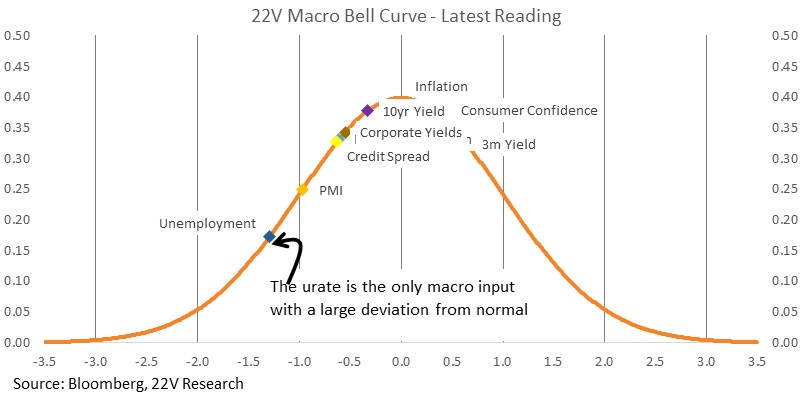
Most macro indicators have moved back into their normal ranges relative to history (within 1std), including inflation when measured by core PCE (the Fed’s focus). PCE released yesterday was in-line with expectations helping ease concerns about a rebound/surge in inflation. Unemployment remains VERY low relative to history. That is not a problem UNLESS we start seeing increased AHE, inflation.
In aggregate macro readings suggest the recent backup in yields is more a reflection of a stronger growth outlook than a higher inflation/tighter financial conditions backdrop. That leaves us favoring fundamental factors, market laggards, and Early Cyclicals. Some catch up from Value, which has lagged since the start of the year, is increasingly likely given its unusual divergence with macro trends (HERE).
Macro Internals Supports the Ongoing Risk Rotation: With most of February’s data releases in, the U.S. Growth backdrop remains firmly in place. This is the third consecutive month where macro/marker data indicate a strong economic backdrop. Our regime model is probabilistic and the odds of being in a Growth backdrop have declined from nearly 100% to ~80% today. That decline reflects the reflects the increase, at the margin, of macro volatility. As we mentioned (HERE), some volatility of the Growth vs. Normal regime odds were likely given the outsized influence of yields on the macro backdrop.
Yield volatility has dropped from the start of rate hiking cycle, but remains elevated. Long yields has rebound since the start of this year on strong economic growth as the Fed pushed back against aggressive rate cut expectations. Most investors we surveyed (HERE) expect higher 10yr yields near term, which should further steepen the yield curve. Importantly, that backup in yields is NOT coming alongside a tightening of financial conditions.
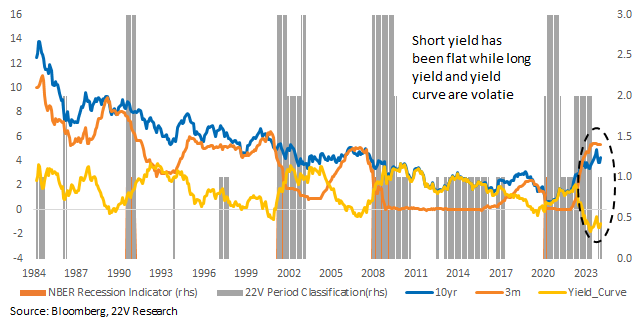
Historically, rising yields during periods of stable/easier financial conditions are normal for economic expansions. Stable credit spreads, and PMIs are helping offset the headwind from higher yields.
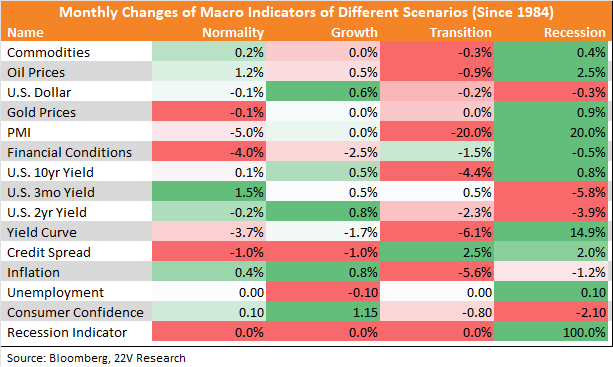
Today, most macro indicators have moved back into their normal ranges. That includes inflation when measured using core PCE, which the Fed focuses on. In line PCE readings yesterday helped alleviate some concerns about strong January inflation, contributing to the ongoing risk rotation. Currently, the only unusual macro deviation is the low unemployment rate. A low urate is not a problem as long as wage growth/inflation remains in check.
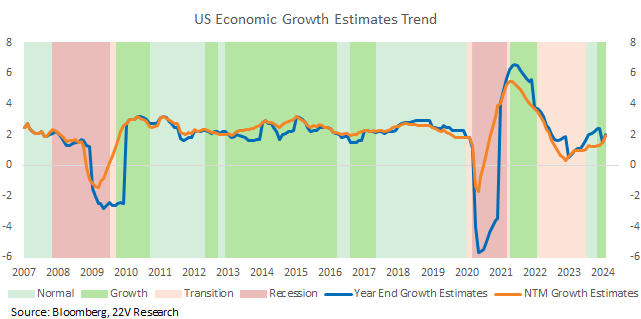
The combination of higher yields and stable financial conditions suggest firming growth prospects, not fears of higher inflation, are driving yields. Both the Atlanta Fed GDPNow and consensus NTM GDP growth expectations have moved higher recently. That is consistent with historical Growth regimes and is a tailwind for risk assets and risk-on factors.
Fundamental factors tend to perform best during Normal and Growth regimes. Momentum and Growth factor have both outperformed in February and this year. Value lagged though and some catch up is increasingly likely given the factor’s divergence with macro trends (HERE). For sectors, Early Cyclical sectors gained the most in the current regimes, especially for Technology and Discretionary, and we continue to like the group.