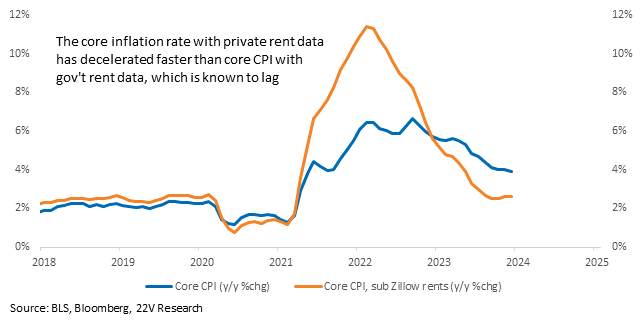
SUMMARY: Powell reinforced his emphasis on the 12mo rate of core inflation in his 60 Minutes interview. The 6-month annualized rate, which Fed officials had previously focused on, looks to be dismissed. Powell basically said the same thing last Thursday. As Gerard noted then, the 12-month rate of core inflation is fated to decline. From Gerard “Simply swapping out the lagging government measure of average rents and swapping in marginal rents reduces the 12-month rate to 2.4%.” We are in the same spot with Powell: hawkish near term (March was dismissed again), but the medium-term forecast tilts dovish (or justifies cuts) as the 12-month rate of inflation is highly likely to fall.
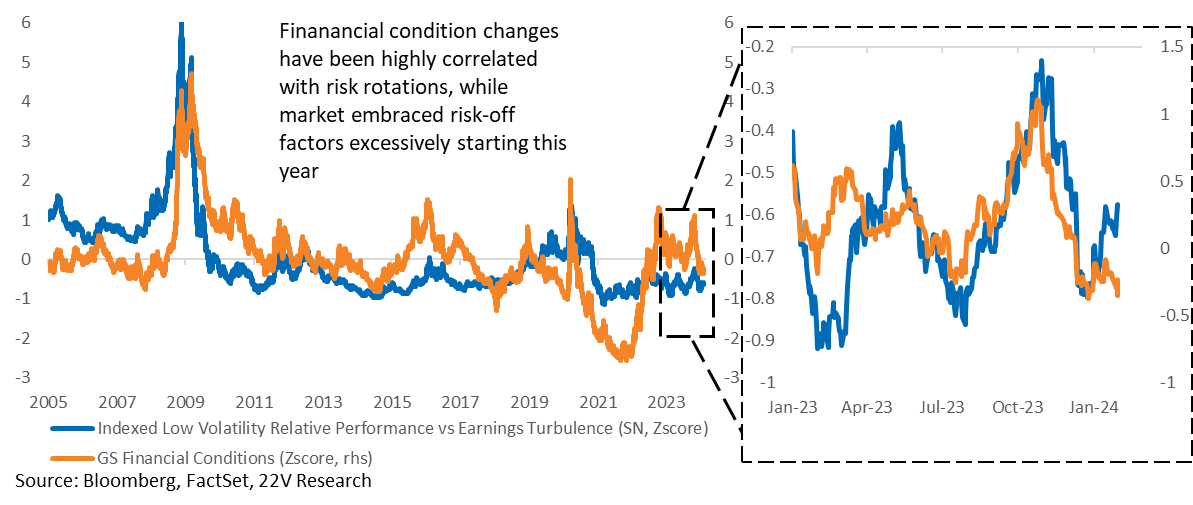
With the 12mo rate of core inflation expected to fall, don’t expect financial conditions to tighten much, which should be a headwind for the Low Vol factor. Low Vol has done much better than one would expect given the current level of financial conditions.

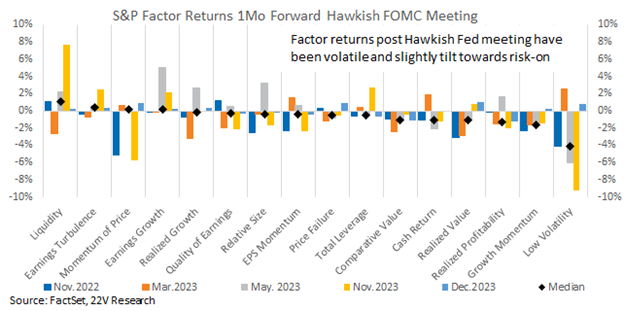
Historically, on FOMC surprise days, Low Vol tends to perform best, but the longer-term factor impact is more mixed. Typically, risk-on factors rebound following FOMC surprises. Filtering FOMC decision days for surprises (when financial conditions on decision day deviate from their pre-meeting trend) shows median S&P factor returns 1 month AFTER hawkish surprises have been led by Liquidity and Earnings Turbulence. Low Volatility was the worst performer. FOMC surprises have less impact on more fundamental factors.
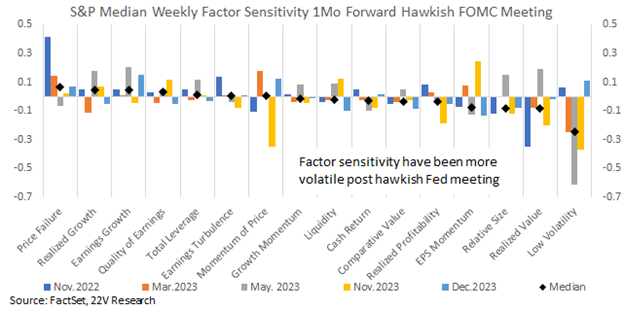
S&P factor sensitivity 1 month after hawkish Fed shocks also suggests Low Volatility will struggle going forward. While Price Failure and Growth factors have the greatest sensitivity in that period. In other words, stock prices are more likely to reverse after FOMC surprises and Growth characteristics had a greater influence on returns.
Investors’ uncertainty around the Fed’s reaction function will continue to influence factor internals, but there are some important persistent trends. Stronger economic/earnings growth means 1) low correlations, 2) lower than normal vol, 3) an upward bias to fundamental factors, and 4) an ongoing catchup trade in market laggards.
More details are in the full report below…
MARKET VIEWS: Powell basically said the same thing last night that he said last Thursday. With the continued focus on the 12mo annualized pace of core inflation. As Gerard noted at the time the 12-month rate of core inflation is fated to decline, which is why Powell’s focus on that rate is more dovish than hawkish. From Gerard “Simply swapping out the lagging government measure of average rents and swapping in marginal rents reduces the 12-month rate to 2.4%.”. We are in the same spot with Powell: hawkish near term (March was dismissed again), but the medium-term forecast tilts dovish (or justifies cuts) as the 12mo rate of inflation is about to fall.
We don’t expect financial conditions to tighten much, which should be a headwind for the Low Vol factor. Low Vol has done much better than one would expect given the current level of financial conditions.
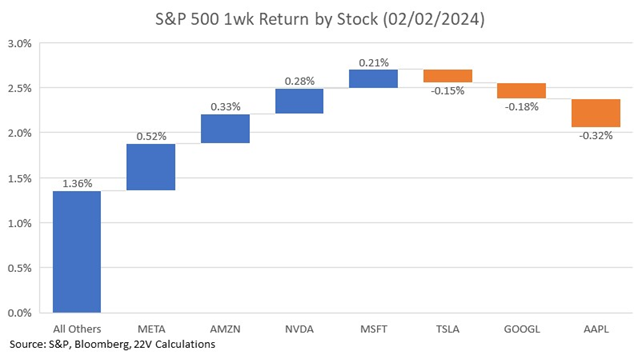
Weaker growth due to labor market slowing or resurgent inflation took a hit last week. Too strong growth is becoming the clearer risk. That helps explain why the average stock was higher last week (equally-weighted, the S&P was up 40bps last week), despite a surge in mega cap names, and why credit spreads ended the week flat and extremely tight, even after some disappointing Bank earnings and worries about commercial real estate. The Mag 7 added to returns last week, but most of the cap weighted index gains were because of OTHER names.
The Growth factor worked well, particularly outside of the OEX, and ALL earnings-related factors have generated >0 active returns (Earnings Quality, Earnings Growth, Earnings Momentum, Realized Profitability, and short Earnings Turbulence). Revenue, margins, and earnings are again surprising to the upside, and macro concerns that lowered management sentiment coming out of 3Q reporting have faded.
Longer-term factor impacts from hawkish FOMC meetings have been mixed, but tilt more toward risk-on factors, a reversal from decision day rotations into Low Vol. We filtered FOMC decisions during the current rate hike cycle for days that saw a tightening of financial conditions. Median S&P factor returns 1mo AFTER such those hawkish surprises (n=12) have been most positive for Liquidity and Earnings Turbulence. Low Vol has the worst performance. For most factors, forward returns were more volatile.
The S&P factor sensitivity 1 following hawkish Fed surprises also suggests Low Volatility will struggle. The S&P is most sensitive to Price Failure and Growth factors after such surprises. In other words, stock prices are more likely to reverse their 1day FOMC moves over the subsequent month and names with strong Growth characteristics tend to perform best.
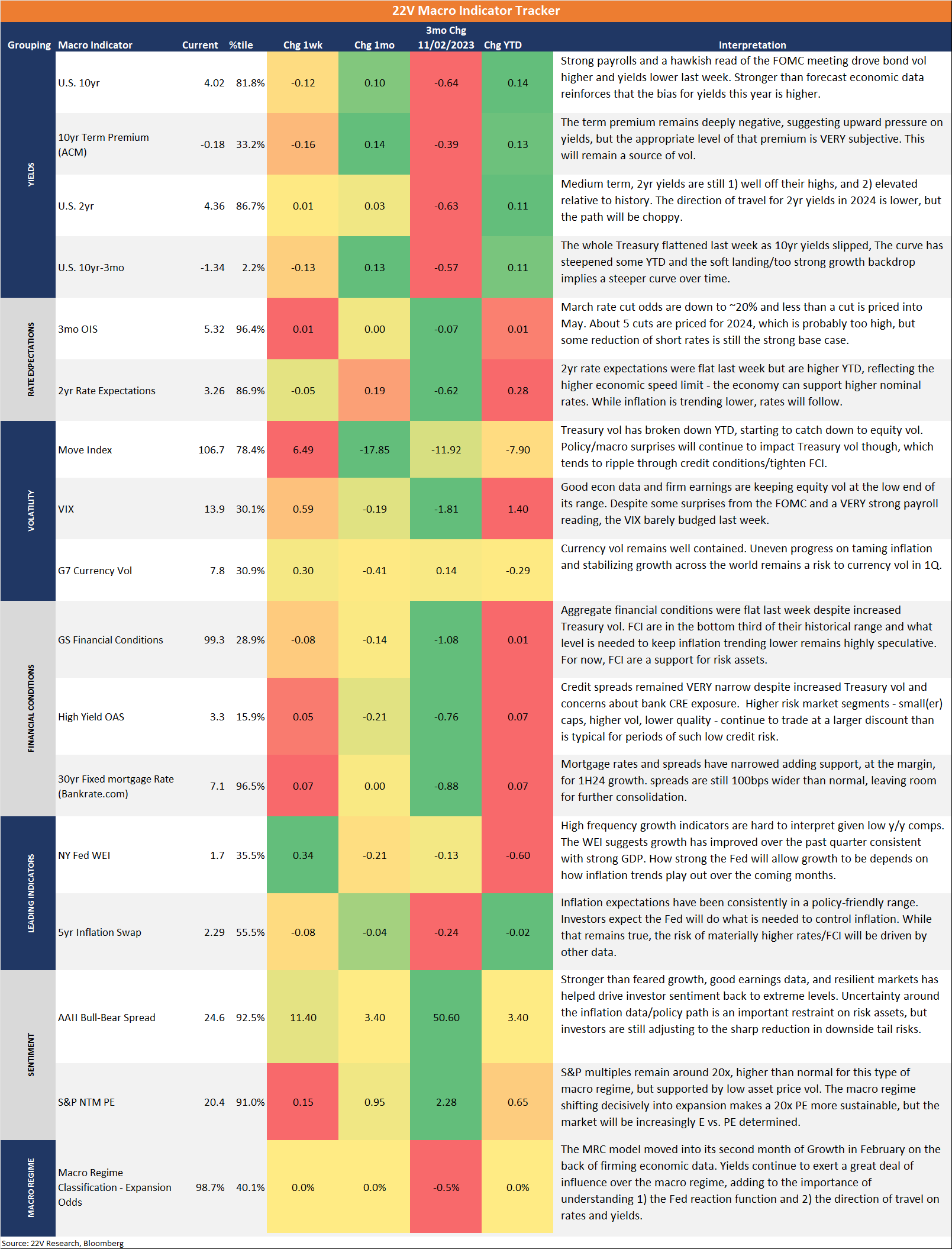
Macro Tracker: Strong macro data was the overarching story of last week. Payrolls grew MUCH faster than expected, wage growth also expanded more, and PMIs rebounded. So, stronger growth? Check. At the same time, the ECI, the Fed’s preferred wage measures, was lower than expected, and productivity data was stronger than forecast, so unit labor costs were lower. Is inflation still contained? Check. The bottom line of the above is that narratives about weaker growth due to labor market slowing or resurgent inflation took a hit last week. Too strong growth is becoming the clearer risk. That helps explain why the average stock was higher last week (eq S&P was up 40bps), and why credit spreads ended the week flat and extremely tight, even after some disappointing Bank earnings and worries about commercial real estate. Stronger growth and no signs of credit risk also help explain why despite the hawkish read of the Fed and Powell saying he doesn’t expect data to justify a cut at the March meeting, financial conditions were stable last week. Internals told a similar story. Low Vol DID gain again last week, indicating some preference for risk-off factors. At the same time though, Growth worked well, particularly outside of the OEX, and ALL earnings-related factors have generated >0 active returns (Earnings Quality, Earnings Growth, Earnings Momentum, Realized Profitability, and short Earnings Turbulence). Revenue, margins, and earnings are again surprising to the upside, and macro concerns that lowered management sentiment coming out of 3Q reporting have faded. Volatility around the Fed’s reaction function will continue to influence risk factor internals, but stronger economic/earnings growth means 1) low correlations, 2) lower than normal vol, 3) an upward bias to fundamental factors, 4) an ongoing catchup trade in market laggards.