

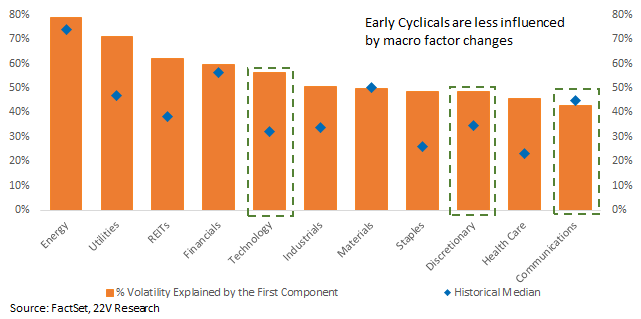
Last Friday, we looked into the increasing macro risks to Deep Cyclicals as growth continues to slow (HERE). Today, we focus on Early Cyclicals, which have a more attractive profile. Unlike Deep Cyclicals, which are highly correlated with macro changes, less of the volatility of Early Cyclicals (Technology, Discretionary, and Communications) can be explained by macro influences. Idiosyncratic influences play a larger role in the returns of Early Cyclicals, and the relatively strong fundamentals of those groups leave them more attractive as we head into 2023.
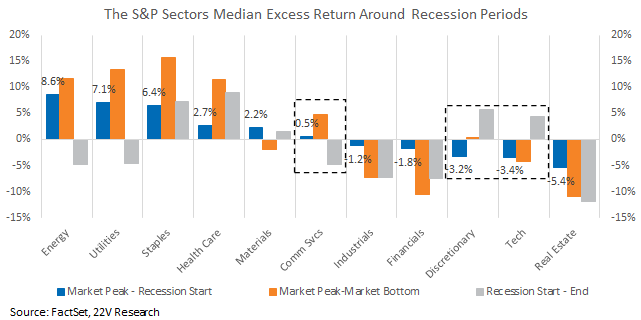
Historically, Early Cyclicals tend to underperform sharply in the early phases of a bear market but rebound as the market bottoms/a recession begins. That trend is particularly pronounced for Communications and Discretionary names. The underperformance of Early Cyclicals earlier this year has been roughly in line with that trend, leaving room for gains as macro uncertainty and the exceptionally high level of stock/factor correlations ease.
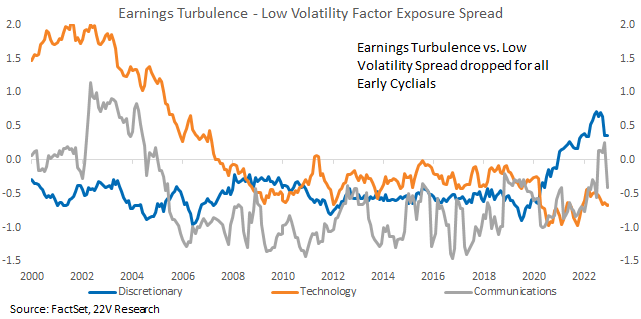
Increasing sector exposure to Earnings Turbulence vs. Low Volatility is usually a sign of increasing risk. Discretionary Turbulence-Low Vol exposure spread reached a multi-decade high in June. The Earnings Turbulence to Low Volatility spread within Technology and Communications also dropped recently. Earnings Turbulence, a fundamental measure, narrowing relative to a price-based measure (Low Vol) suggests an improving risk/reward backdrop for these groups.
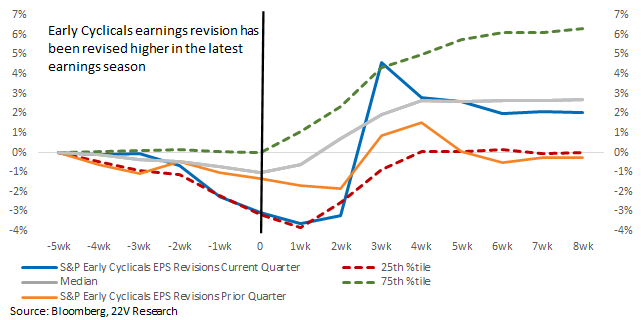
In the latest earnings season, Early Cyclicals EPS were revised higher during even as earnings are revised lower for both Deep Cyclicals and Defensives. Deep Cyclicals saw earnings revision deteriorate sharply in 3Q relative to 2Q (HERE), but Early Cyclicals earnings revision improved in 3Q, especially after the start of the reporting season.
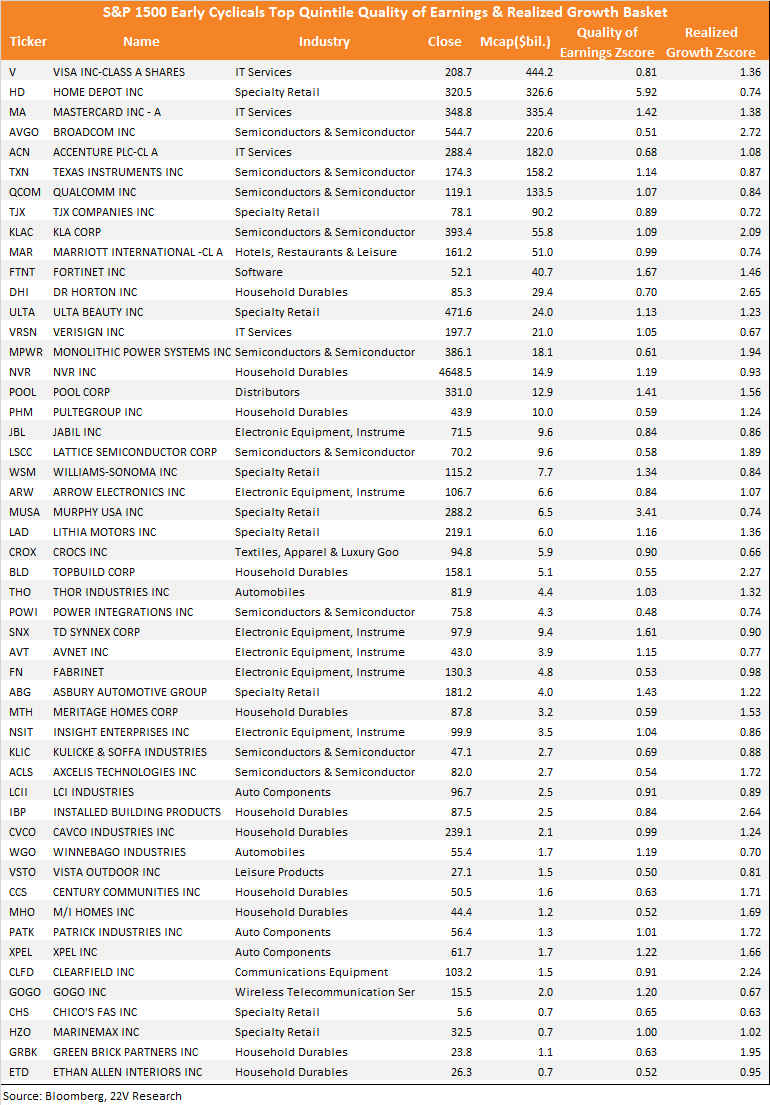
Less macro influence, relatively strong fundamentals, and lower risk factor exposures are suggests further Early Cyclical gains ahead. At the end of this report, we list the Early Cyclical names falling in top Quintile Quality of Earnings and Realized Growth basket. Those are factors we favor heading into the slower growth, lower correlation backdrop of 2023.
Improving Macro and Fundamental Backdrop for Early Cyclicals: Last Friday, we looked into the increasing macro risks to Deep Cyclicals as growth continues to slow (HERE). Today, we focus on Early Cyclicals, which have a more attractive profile. Unlike Deep Cyclicals, which are highly correlated with macro changes, less of the volatility of Early Cyclicals (Technology, Discretionary, and Communications) can be explained by macro influences. Idiosyncratic influences play a larger role in the returns of Early Cyclicals, and the relatively strong fundamentals of those groups leave them more attractive as we head into 2023.
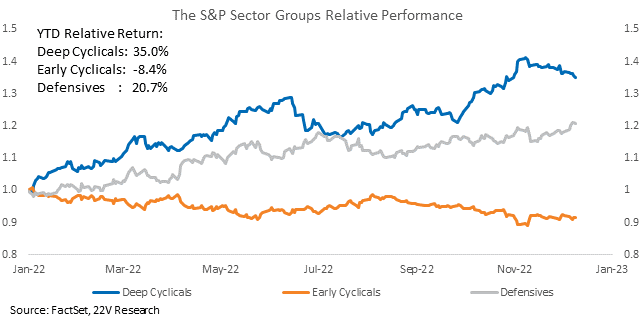
Early Cyclicals, including Technology, Discretionary and Communications, have been the WORST performing sectors in 2022, posting a relative decline of -8%. That trend has reversed since mid-November with Early Cyclicals gaining 2.8% while Defensives have been flat and Deep Cyclicals are down -4%.
Historically, Early Cyclicals tend to underperform sharply in the early phases of a bear market but rebound as the market bottoms/a recession begins. That trend is particularly pronounced for Communications and Discretionary names. The underperformance of Early Cyclicals earlier this year has been roughly in line with that trend, leaving room for gains as macro uncertainty and the exceptionally high level of stock/factor correlations ease.

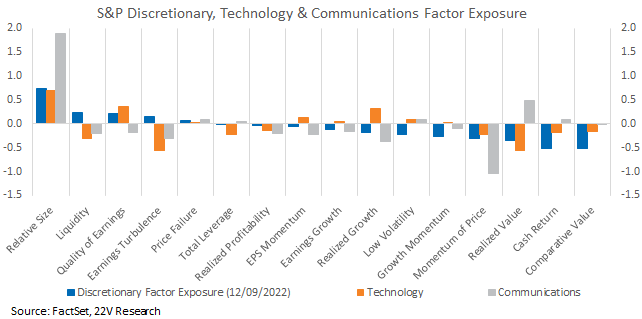
At the factor level, Discretionary and Technology are also highly exposed to Size and Quality. Size has been a drag this year as mega-cap names have weakened, but that headwind is fading. Quality should improve over the coming quarters as economic activity continues to slow. Early Cyclicals are also negatively exposed to Momentum, which will be a benefit as macro influence over equities fades and fundamentals become increasingly important.
Increasing sector exposure to Earnings Turbulence vs. Low Volatility is usually a sign of increasing risk. Discretionary Turbulence-Low Vol exposure spread reached a multi-decade high in June. The Earnings Turbulence to Low Volatility spread within Technology and Communications also dropped recently. Earnings Turbulence, a fundamental measure, narrowing relative to a price-based measure (Low Vol) suggests an improving risk/reward backdrop for these groups.
Fundamental Supports: In the latest earnings season, Early Cyclicals EPS were revised higher during even as earnings are revised lower for both Deep Cyclicals and Defensives. Deep Cyclicals saw earnings revision deteriorate sharply in 3Q relative to 2Q (HERE), but Early Cyclicals earnings revision improved in 3Q, especially after the start of the reporting season.
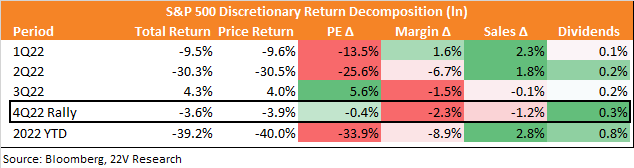
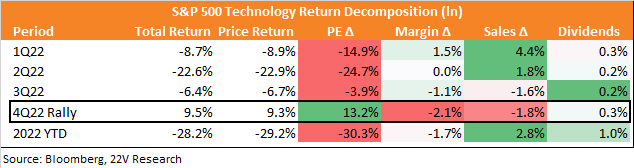
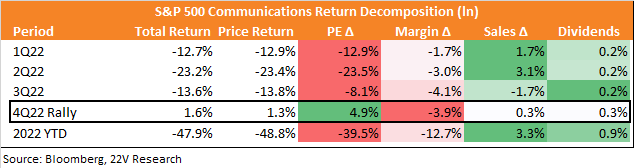
In the first half of the year, Early Cyclicals sunk on PE contraction. Investors were correctly discounting a deterioration in fundamentals that come about in the back half of the year. Looking ahead, PEs have started to expand. That is true for ALL stocks, but in the case of Early Cyclicals, assuming a deep recession can be avoided, today’s higher PEs are discounting expectations of relatively firm earnings growth ahead.
Below, we list the S&P 1500 Early Cyclical names falling in top Quintile Quality of Earnings and Realized Growth basket. Both factors have rebound and gained since November. We expect them to continue that trend near term, and Early Cyclicals with the highest Quality and Growth scores should benefit most.
\\192.168.128.87\Model\Factor\Factor_Charts\Baskets\SP1500\SP1500_Score_Baskets.xlsx

