SUMMARY: Powell stressed, again, that 1) inflation is too high, 2) labor markets are too tight, and 3) the Fed will tighten/maintain tight financial conditions until inflation is lower. All that means labor markets need to loosen. In a sense, that changes nothing, but it does squash hopes of a “pivot” or suggestions of more two-sided policy. They really don’t want a recession, but they want lower inflation more. That reinforced the risk-off, Defensive positioning investors already favor (HERE), both of which rallied yesterday.
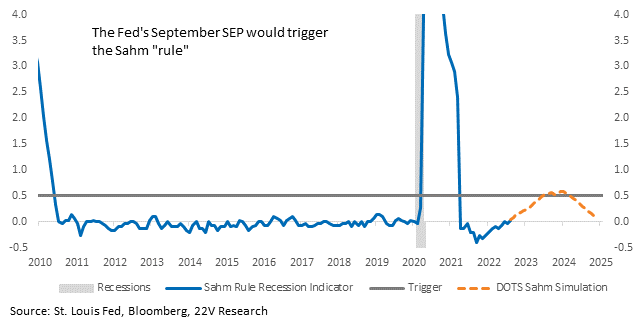
There’s some buzz about the dot plot coming in higher than expected, but the Fed will deliver tightening as needed, not as guided. The dots shouldn’t be a focus. The relevant risk is the Fed accepting the recession risk associated with delivering below-trend growth. The Fed’s own urate guesses would trigger the Sahm ‘rule’ (and most other employment-based recession indicators). If the urate increases nice and smoothly (which is NOT how it usually moves) to the Fed’s 2023 guess of 4.4%, the Sahm indicator would be triggered in July of 2023. The Fed has a dual mandate and will discuss employment as losses occur, but recession risk is present, even if not immediate.

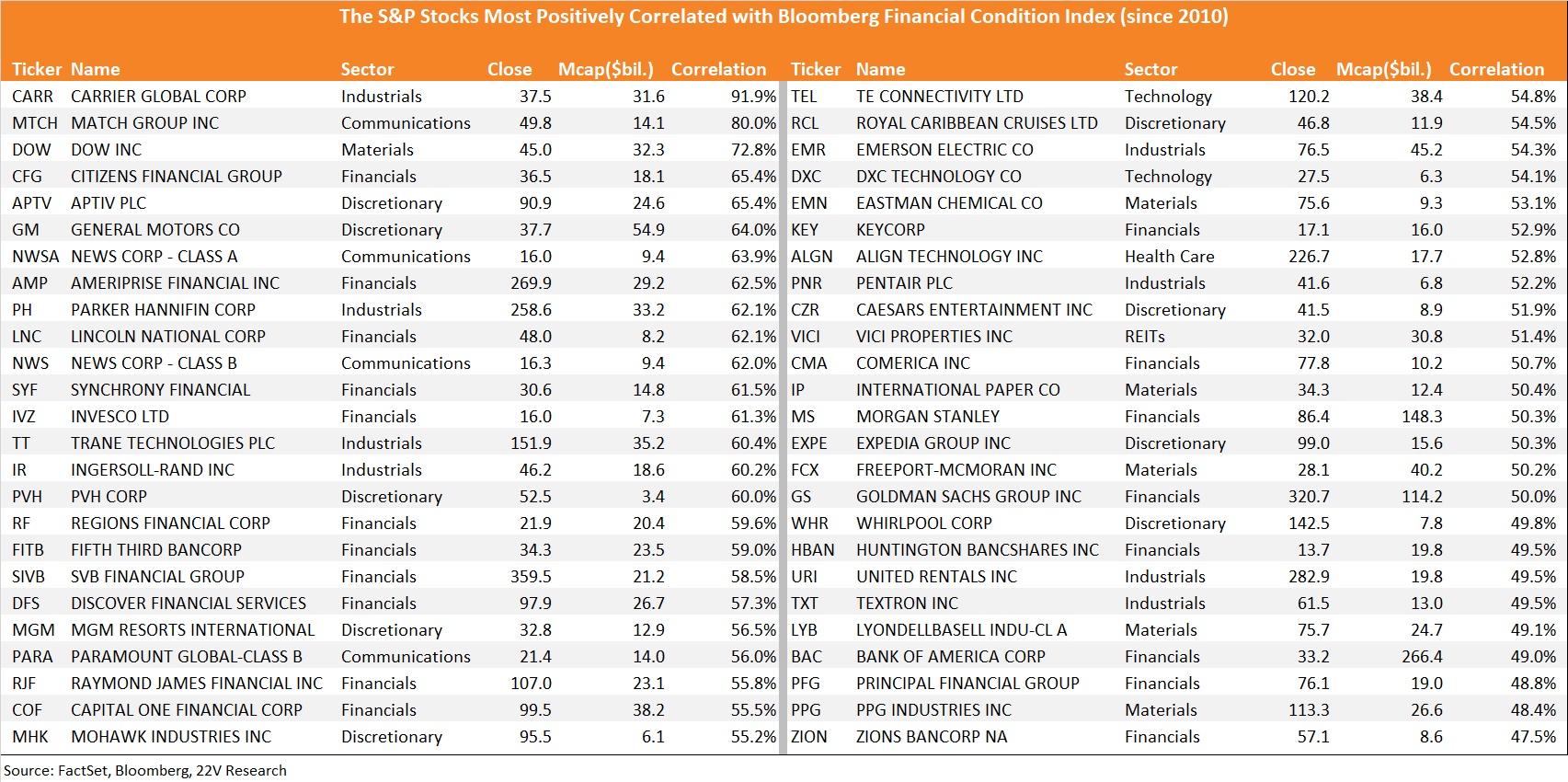
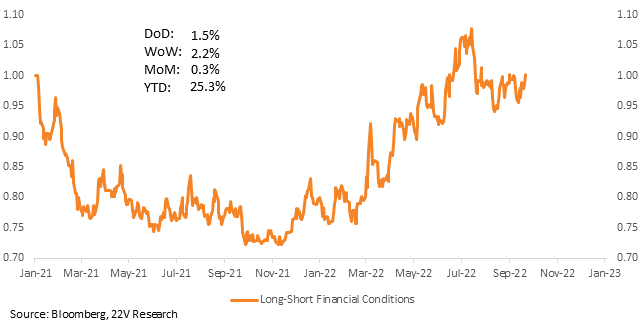
Gerard has a summary of Powell’s press conference (HERE) and he notes Powell mentioned financial conditions tightening further and suggested the tightening is not yet discounted. That’s an equity headwind; PEs compress when financial conditions tighten. Our long-short financial conditions portfolio outperformed by +1.5% yesterday. The portfolio is designed as a place to hide during another round of tightening. Constituents at the end of the report. Low Vol names in general stand to benefit from tighter conditions as well.
The S&P closed at 3790, the bottom of our fair value estimates. A fair bit of hawkishness and recession risk is already priced into multiples, which reduces downside risk. It’s tough to get long until we get signs of slower underlying demand growth, but tail risk is limited by already tighter financial conditions, lower PEs, and higher implied vol. Housing data is deteriorating, which helps, but inflation internals and high frequency demand indicators are too hot. So, the markets stay volatile, and we maintain our neutral, range bound stance. The skew is better at 3800 than 4200.
MARKET VIEWS: Markets are processing a slew of central bank decisions. Most are hawkish, save the BOJ, which promised not to raise rates for years. Japan intervened in the yen for the first time in 25 years to halt its subsequent weakening. Yesterday Powell stressed, again, that 1) inflation is too high, 2) labor markets are too tight, and 3) the Fed will tighten/maintain tight financial conditions until inflation is lower, which means labor markets need to loosen. In a sense, that changes nothing, but it does squash hopes of a “pivot” or suggest more two-sided policy. There’s some buzz about the dot plot coming in higher than expected, but the Fed has been clear about its data dependency. The Fed is not interested in guidance because guidance is not a helpful tool right now. The Fed will deliver tightening as needed, not as guided. Don’t focus on the dots.
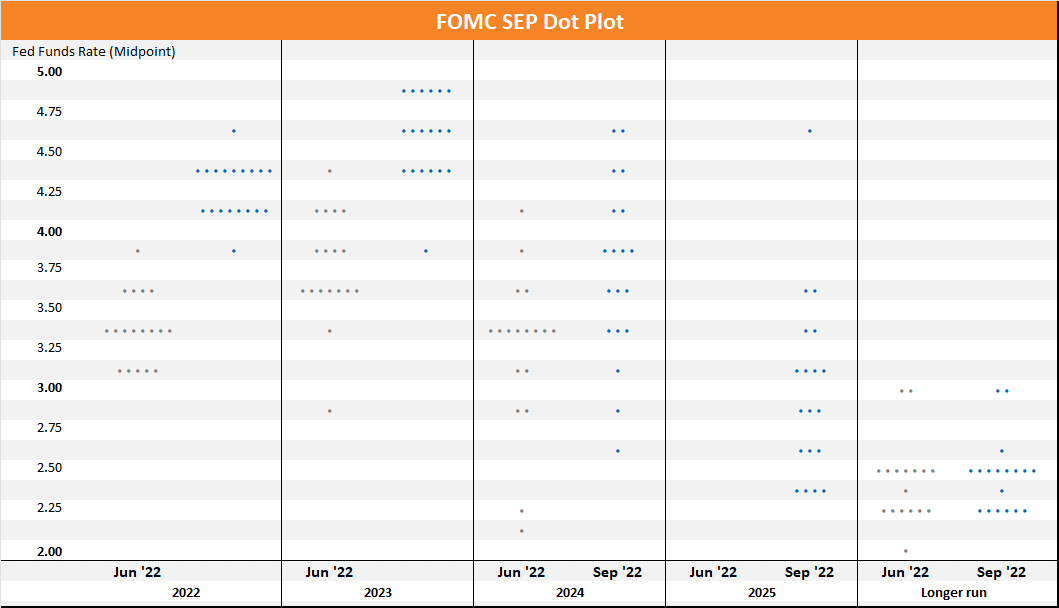
The Fed is going to deliver below-trend growth to tame inflation and will accept the recession risk associated with that, and that’s the relevant risk. The Fed’s own urate guesses would trigger the Sahm ‘rule’ (and most other employment-based recession indicators). If the urate increases nice and smoothly to the Fed’s 2023 guess of 4.4%, then the Sahm recession indicator would be hit in July of 2023. A sequential increase is possible but not likely. Urate changes tend to be accelerating curves rather than straight lines. The Fed has a dual mandate and will discuss employment losses as they occur, but recession risk is present, even if not immediate.
Gerard has a summary of Powell’s press conference (HERE) and he notes Powell mentioned financial conditions tightening further and suggested the tightening is not yet discounted. That’s an equity headwind; PEs compress when financial conditions tighten. Our long-short financial conditions portfolio outperformed by +1.5% yesterday. The portfolio is designed to be a place to hide in another round of tightening. Constituents at the end of the report. Low Vol would also benefit.
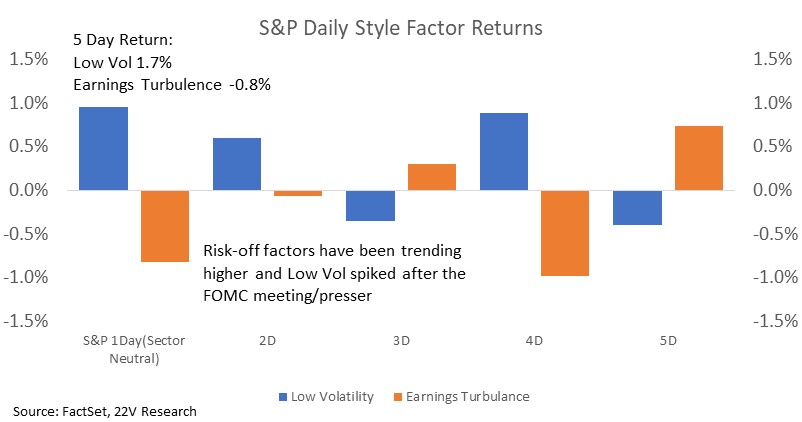
The S&P closed at 3790, the bottom of our fair value estimates. A fair bit of hawkishness and recession risk is priced in. Risk-off factors have been trending higher and Low Vol spikes after the FOMC meeting and presser. It’s tough to get long until we get signs of slower underlying demand growth, but tail risk is limited by already tighter financial conditions, lower PEs, and higher implied vol.
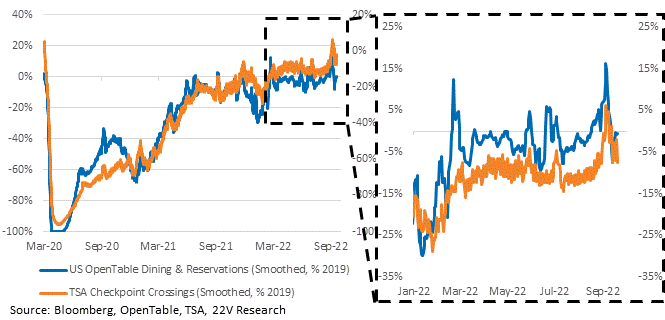
Housing data is deteriorating, which helps, but inflation internals and demand growth are too hot. Rent is still a problem and core services inflation ex-rents are not behaving well. In the prior CPI reading, the apparent deceleration in core service inflation was almost entirely due to financial services prices, which are not well measured and heavily influenced by financial market developments. And high-frequency service data is simply too strong. Fyi, we get an update of the NY Fed’s WEI later today (11:30am). It has fallen to 2.6% but remains too high. So, the markets stay volatile, and we maintain our neutral, range-bound stance. The skew is better at 3800 than 4200. A meaningfully lower level on the market requires a slowdown greater than a mild recession.
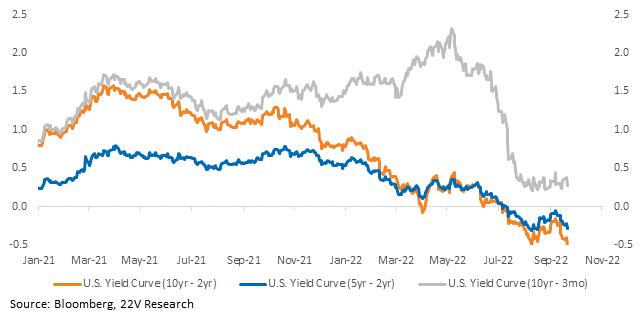
Short yield curves remain inverted and deepened yesterday. The more accurate recession indicator is the 10yr-3mo, which has been surprisingly flat despite vol. Long-term real growth expectations are stable despite increasing short rates.
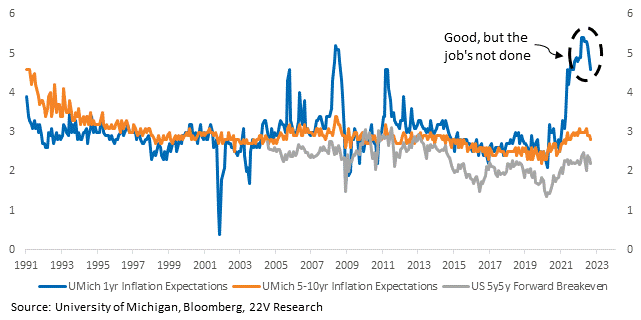
Investors have frequently reasoned the Fed can back away from the current rate hike path because longer-term inflation expectations remain anchored. But yesterday, Powell reasoned the Fed cannot back off lest longer-term inflation expectations increase. Larry Summers told us to expect as much in a webinar we hosted with him in July. Inflation expectations are anchored because of the Fed’s insistence on getting to 2%. If the Fed backs off, inflation expectations will not stay anchored. So, the Fed cannot back off because inflation expectations are anchored.
Go long this basket for tighter financial conditions…
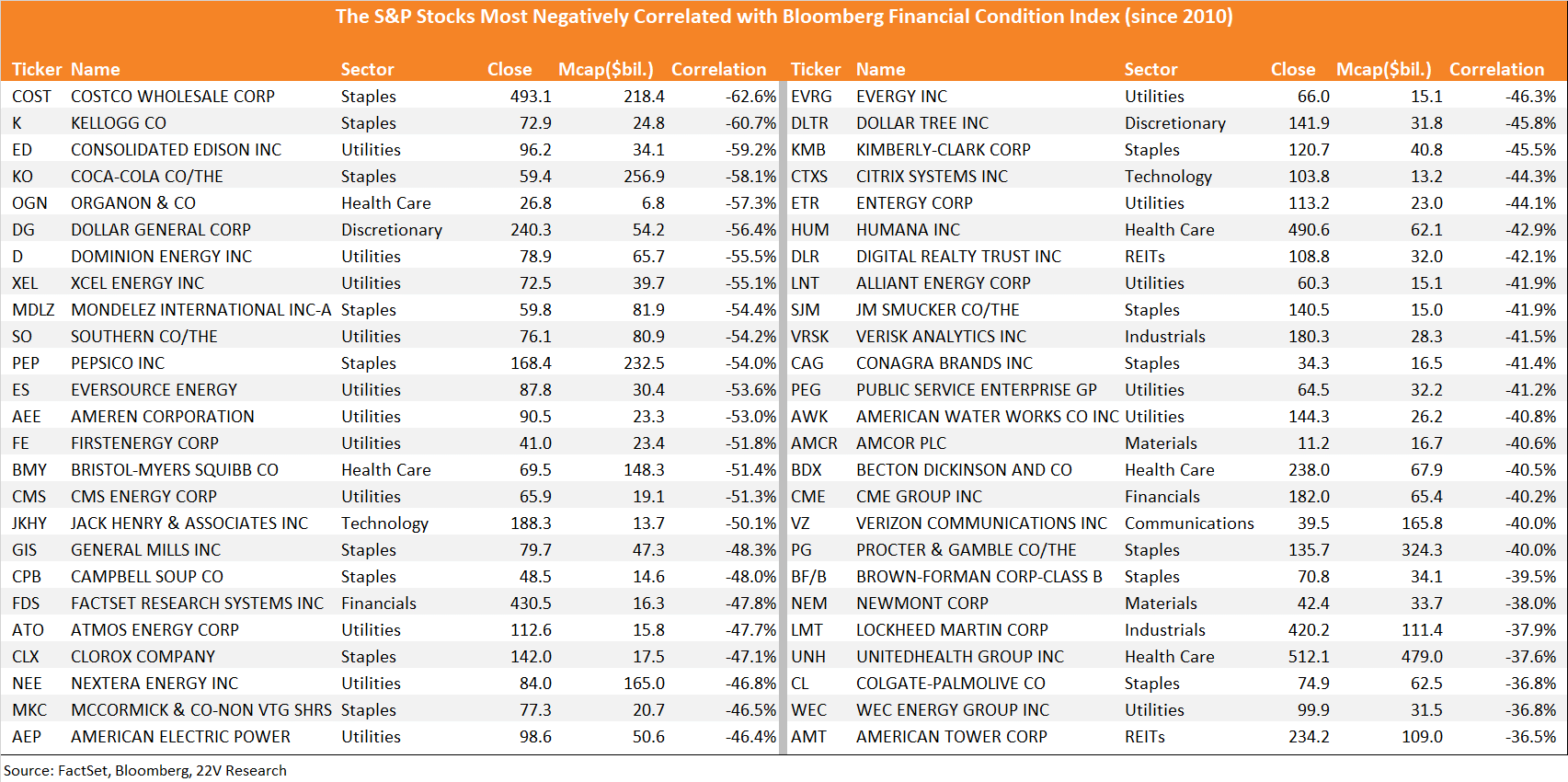
And short this basket…