SUMMARY: Correlations are exceptionally high, valuation spreads (between cyclicals/defensives, low vol and high turbulence) are at extremes, market exposure is depressed, and volatility elevated. With that backdrop, a more positive market narrative is enough to drive a rally. Even when we know the Fed is determined to slow growth and inflation. The big unknown is how much economic growth needs to slow to reduce inflation toward the Fed’s target. As Gerard highlighted last week (HERE), the wage outlook remains unusually strong and given still above trend demand, indicates financial conditions should remain tighter for longer. That is the direction of travel and should keep the market range bound.
The problem is the unusual number of shocks hitting the economy, which makes forecasting with conviction REALLY HARD. That is why macro uncertainty and correlations remain high. While macro uncertainty is high, investors will be more reluctant to focus on the longer-term headwinds. With that in mind, it is possible the current level of financial conditions is sufficient to reduce price levels without more pushback from the Fed. At least over the next few months. As supply side shocks unwind, there will be an “easy” disinflation over the next 6ish months. The longer-term problem is that the easy disinflation will leave inflation at a level far too high for the Fed’s taste, and risks triggering a rise in inflation expectations. If the Fed/investors focus more on near-term disinflation and worry less about core inflation being too high NEXT YEAR, PEs can expand again. Especially if growth remains above trend (it is now, see the NY Fed WEI), helping hold up earnings (earnings are slowing, but will not do so as quickly as many assume with econ growth still above trend) and given negative sentiment.
Long Tech Through End of September (post CPI): During the June market rally, Tech and Discretionary were the main market drivers, responsible for 34.5% and 21% of the rally, respectively. Tech was also the largest drag on returns during the August decline. A narrative that could help Tech in particular and the market in general is an improved Europe outlook, still firm US growth, and an improving inflation outlook. That would lead to an increase in the Euro and help high foreign sales names. Tech has the highest foreign sales exposure. Tech is an interesting long now for a trade. Through the next few weeks.
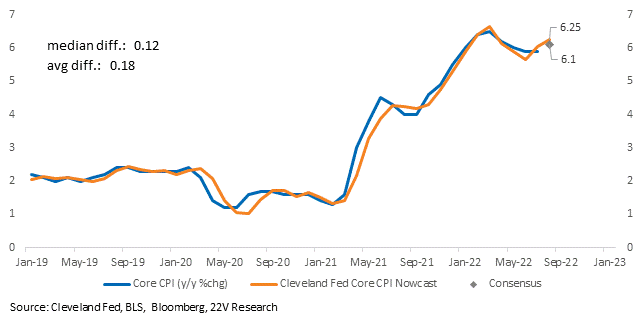
CPI needs to come in lower than expected or inline for Tech to work though. The Cleveland Fed’s inflation Nowcast has August CPI coming in a touch higher than expected on Core (details below). The Nowcast has done a better job than consensus estimates, which is why we wanted to pass that along.
Full report below…
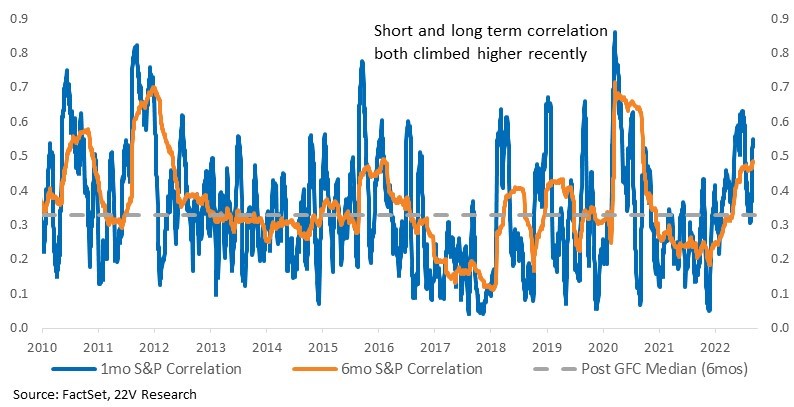
MARKET VIEWS: Correlations are exceptionally high (1mo and 6mo S&P IPC are in their 93rd %tiles), valuation spreads (between cyclicals/defensives, low vol and high turbulence) are at extremes, market exposure is depressed, and volatility elevated. With that backdrop, a more positive market narrative is enough to drive a rally. Risk-on/off factor rotations, and Cyclical/Defensive sector rotations have provided cleaner ways than stock picking to play risk-on on risk-off backdrops.
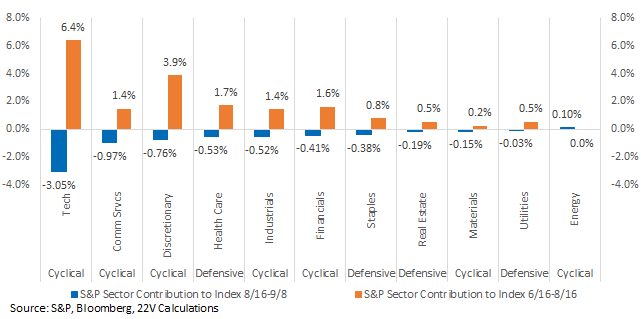
During the June market rally, Tech and Discretionary were the main market drivers, responsible for 34.5% and 21% of the rally, respectively. Tech was also the largest drag on returns during the August decline. A narrative that could help Tech in particular and the market in general is an improved Europe outlook, still firm US growth and an inflation outlook that starts to improve. That would lead to an increase in the Euro and help the high foreign sales names. Tech has the highest exposure to the high foreign sales basket. Tech is an interesting long now for a trade. Through the next few weeks.
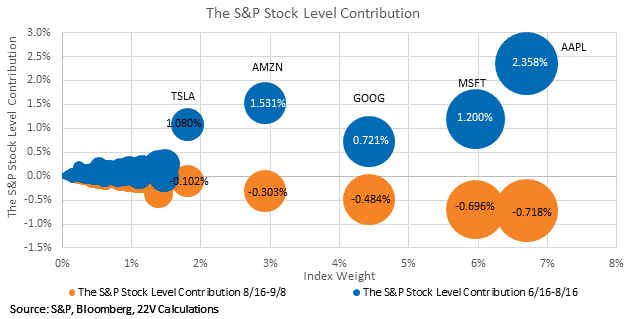
The 5 largest S&P names (AAPL, MSFT, GOOG, AMZN, and TSLA) contributed 37.3% of the S&P rally from June to August. They were also the largest drags on the market while the market declined.
It is possible that the current level of financial conditions is sufficient to reduce price levels without more pushback from the Fed. At least over the next few months. Longer term, core inflation is likely to remain too high for the Fed. As the supply side shocks unwind, there will be an “easy” disinflation. The problem is that the easy disinflation will be to a pace that is still far too high for the Fed’s taste, and risks triggering a rise of inflation expectations. That being said, if the Fed/investors don’t worry about core inflation being still too high NEXT YEAR and `focus on the easy part of disinflation this year, PE can expand again. Especially if growth remains above trend, helping hold up earnings.
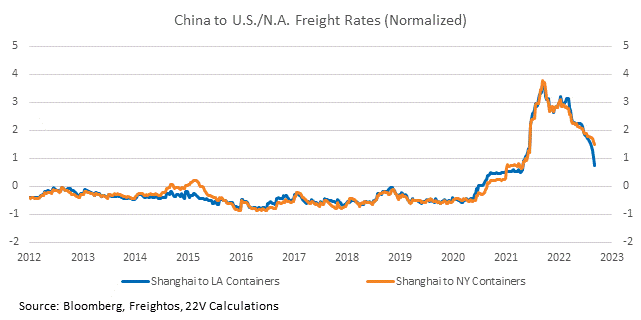
Odds & Ends: Helping support the “easy” disinflation narrative near term. Shanghai to LA freight rates have collapsed.
Below is some potentially bad news for people that think lower inflation this week will help the markets rally near term. The Cleveland Fed’s inflation Nowcast has August CPI coming in a touch higher than expected. The Nowcast has done a better job than consensus estimates, which is why we wanted to pass this along.
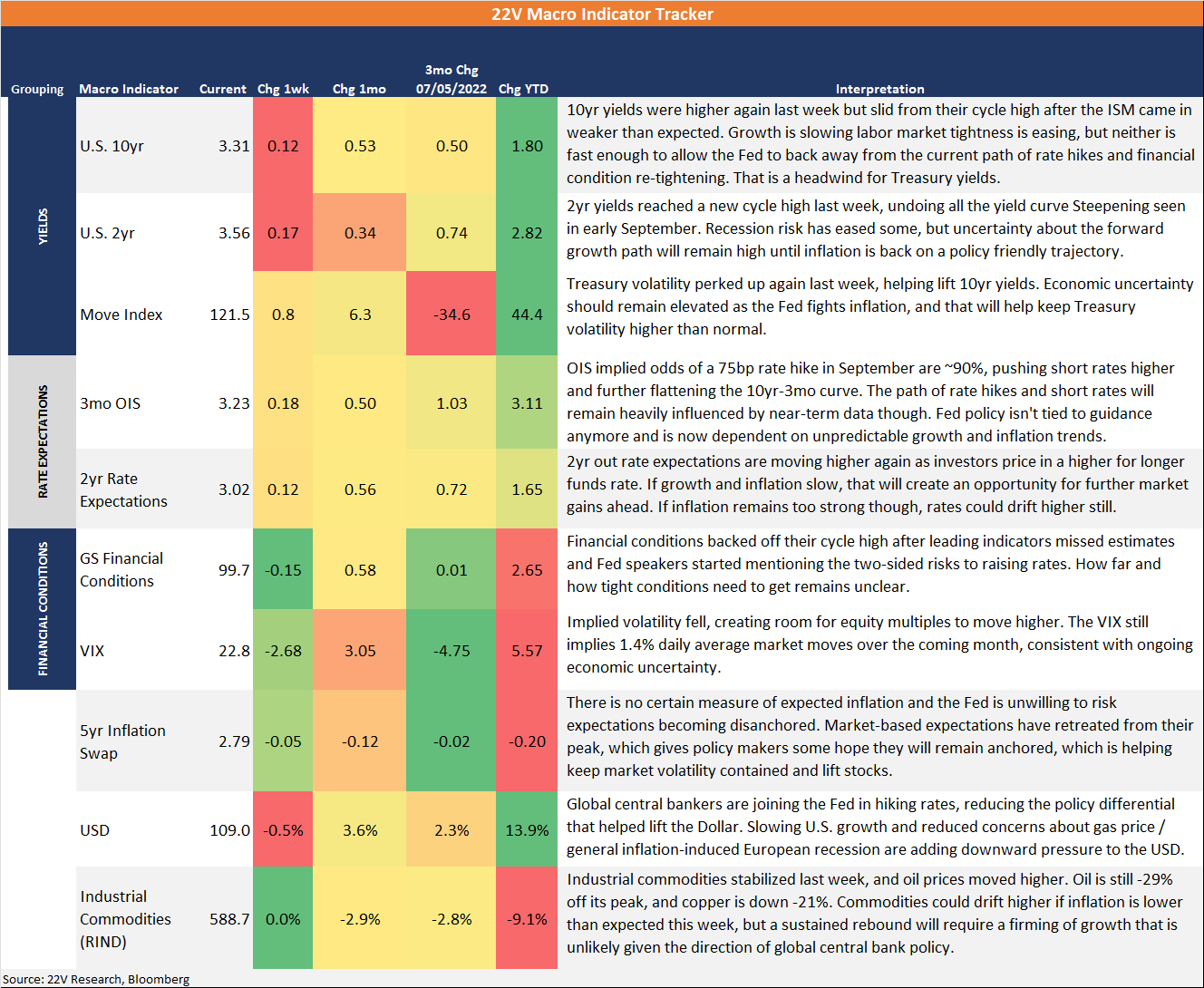
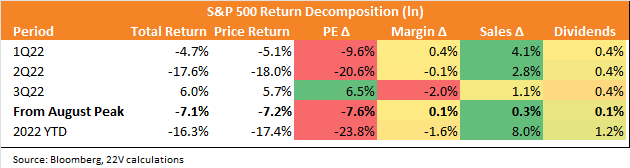
Macro Tracker: Stocks have rebounded over the past few days as investors discount the possibility that growth slows, inflation falls, and a recession can be avoided. FOMC members have made it clear they want to avoid a recession, but reducing inflation remains the larger concern. Investors are hyper-focused on inflation, so a weaker than forecast CPI print would add to the current risk-on rotation. U.S. economic activity is slowing, and it is possible that the current level of financial conditions is sufficient to reduce price levels without more pushback from the Fed. Additionally, sentiment has been the driver of returns this year as earnings growth expectations have remained steady and margins, though lower, are still firm. Correlations are also exceptionally high today, valuation spreads (between cyclicals/defensives, low vol and high turbulence) are at extremes, market exposure is depressed, and volatility elevated. With that backdrop, a more positive market narrative is enough to drive a rally. Growth is still slowing though, earnings are on track to be revised lower in late ’22 and into 2023, and economic uncertainty remains high. Until there is more clarity on the economic outlook, volatility is biased to remain higher than normal, financial conditions tighter, and market valuations constrained.