Thanks to everyone who responded to our survey. Please hit us back with feedback or questions you’d like to see asked – our goal is to help, after all.
Quick summary, respondents:
- Expect Payrolls to be stronger-than-consensus (consensus +300k).
- Think the market will be risk-off if Payrolls are high and risk-on if Payrolls are low.
- Don’t think Payrolls are the most important macro indicator (inflation).
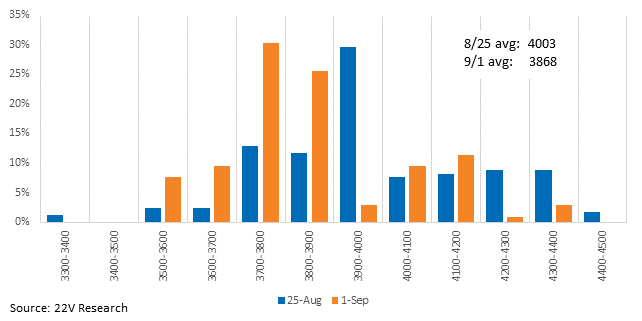
- Expectations for September returns have deteriorated.
Payrolls: More of our respondents expect Payrolls to be stronger than consensus (consensus +300k) than weaker or in-line. A strong reading would be consistent with the St. Louis Fed’s model, which called for +585k. Blowout Payrolls would solidify 75bps in September – markets are currently pricing in ~70% odds of 75bps – and terminal rate expectations would increase. 10yr rates would gap higher on a strong report but, as we discussed this morning (HERE), we would be long 10yr (short yields) after a mechanical increase in yields because the Fed would have to take on more recession risk to combat an economy still over full employment.
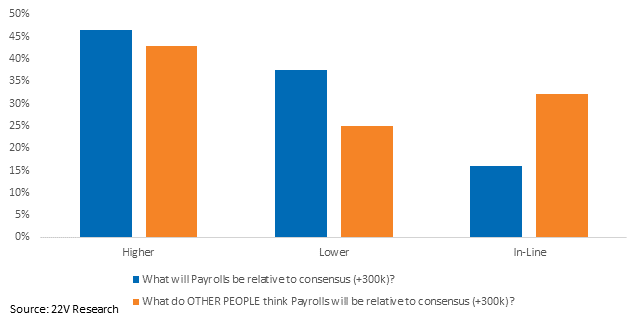
Market expectations are clear; our respondents think a higher-than-consensus reading will be risk-off, lower-than-consensus risk on or negligible, and in-line negligible/mixed. We typically ask what investors think other people expect. In this case, investors’ own expectations were consistent with how their peers responded. Everyone is in agreement.

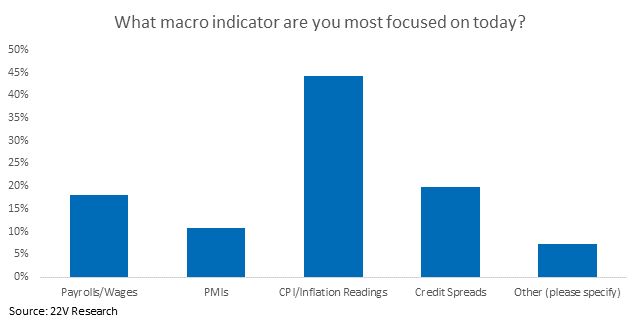
Macro Focus: Investors do not consider payrolls and wages the most important macro indicator. Our respondents are keyed in on CPI and other inflation readings. We’re watching employment data because employment is currently consistent with too-hot demand, which the Fed is taking on to bring inflation back towards their target. Employment is too strong to bring inflation down quickly enough.
September Returns: Last week, we asked for month-end estimates for the S&P. The average response was around 4,000. This week, that number has dropped to ~3,870. The majority of responses in both weeks were within 3700-4000, slightly worse than our estimate of fair value (3800-4200).