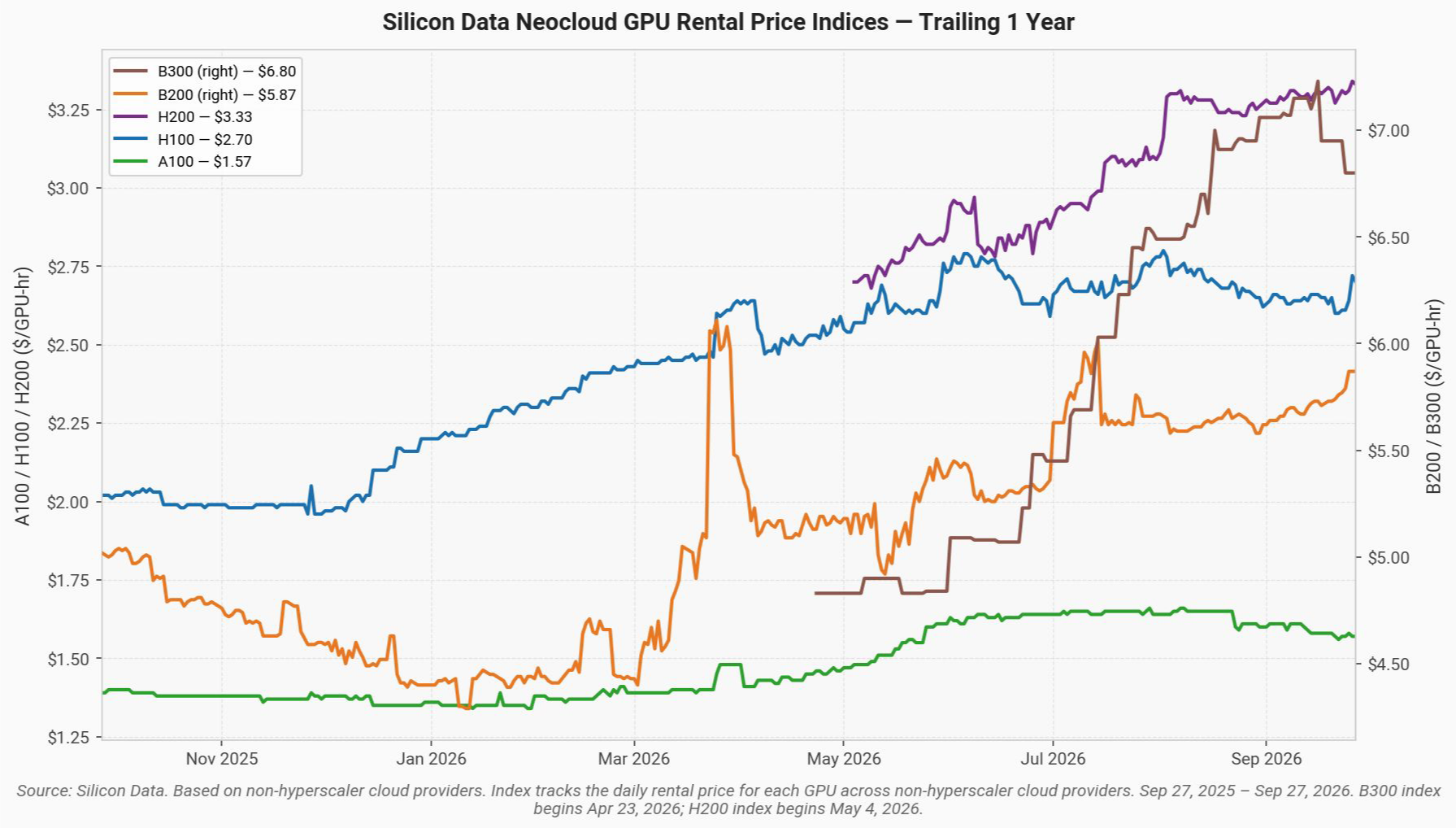
WEEKLY AI Update: A new set of useful AI tools implies even stronger demand AND shorter compute. As Dauvin Peterson, head of 22V Data Infrastructure/Commodities Research, has been noting, the market is already short compute. The rental prices for chips continues to increase, even for A100s, the oldest chips (HERE, chart below). As Dauvin put it rather well, he has “Increased conviction that compute prices will remain tight, if not move higher, supporting scalers with capacity and line of sight on approved projects. SPCX and CRWV are beneficiaries; SPCX has the added benefit of ODCs entering the discussion more actively.”
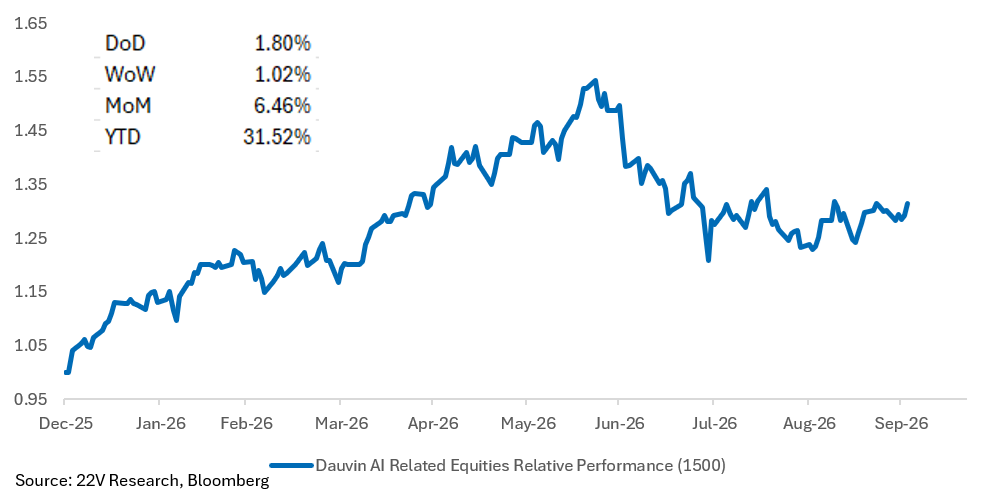
Dauvin has curated list of 91 companies with significant exposure to AI capex (the breadth of these companies benefit from strong AI demand), grouped into 12 segments (HERE). These are names that have seen significant multiple compression since mid-year and in many cases rising earnings estimates. The Strategy team would be long this basket now and think the names will outperform relative through 3Q26 EPS season.
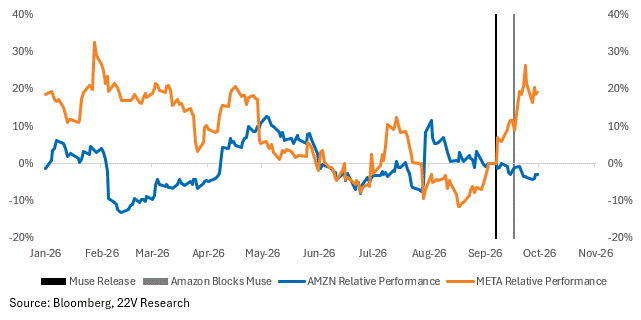
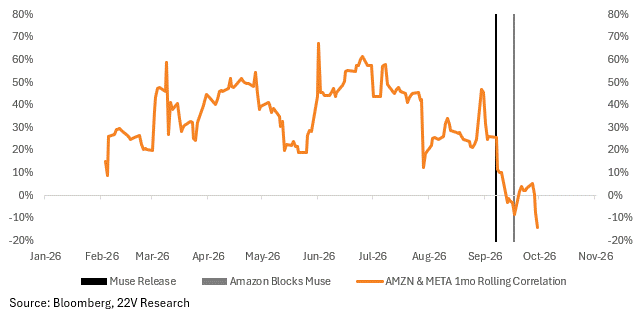
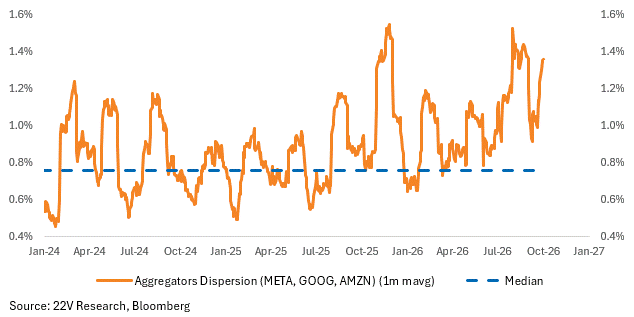
We are not the experts on who wins the personal AI agent competition within the aggregators, but will focus on some obvious initial implications. 1) There is more dispersion within mega caps, but 2) so far it is NOT zero-sum to the index. The correlation between Meta and Amazon has turned negative since the release of Muse (9/8) and since Amazon banned it (9/20), but Meta has contributed +40bps to the S&P 500, and Amazon has contributed -11bps. There is obviously a problem at an index level if a mega cap is displaced and goes to zero. Our point is that zero-sum is not the (very early) market direction.
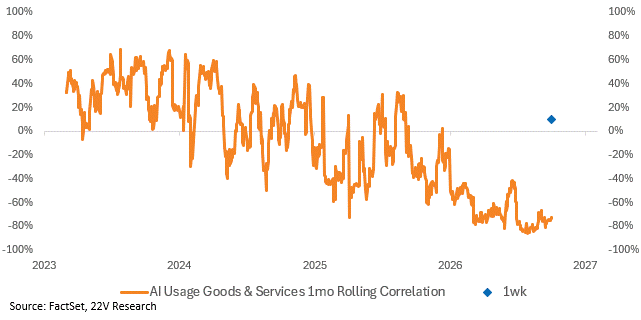
We have argued that the macro backdrop of growth slowing in non-AI areas of the economy support both Service companies that implement AI and AI Buildout names relative to non-AI Cyclicals. The baskets had been trading zero sum, and the implication is the negative correlation fades over time. This week, like last week, the short-term rolling correlation was positive.
As growth slows, 1) investors will reward strong eps growth and cash return, which is a tailwind for AI Services that have implemented AI, and 2) activity and investment in the AI buildout will continue to outpace non-AI cyclicals. FYI – A new Brookings paper argues that the AI Buildout will cost $10.3 Trillion over the next 8 years. To get a 10% return on that investment, those investments will need to annual revenues of $3.7 Trillion by ~2032. Roughly 9% of GDP.
Not making a claim on the above numbers being hit…just noting that building out and using of AI go hand and hand.