

Executive Summary
The midterm elections are November 3rd, right in the heart of an earnings season that peaks in early November and Anthropic’s expected record-breaking IPO. AI data centers have become a central issue in the midterm elections, and recent concerns over AI safety have only enhanced that narrative and discourse on the campaign trail. Investors are asking what happens to data center construction after the midterms; the following is a data-driven analysis and scenario review to guide that question.
The analysis of both state and local actions in recent months leads to the conclusion that AI data center pushback is significant enough that the number of states supportive of AI data centers will be reduced from 27 to ~15 post-midterms, due to a combination of moratorium/pause actions and altered processes that create increased friction and costs.
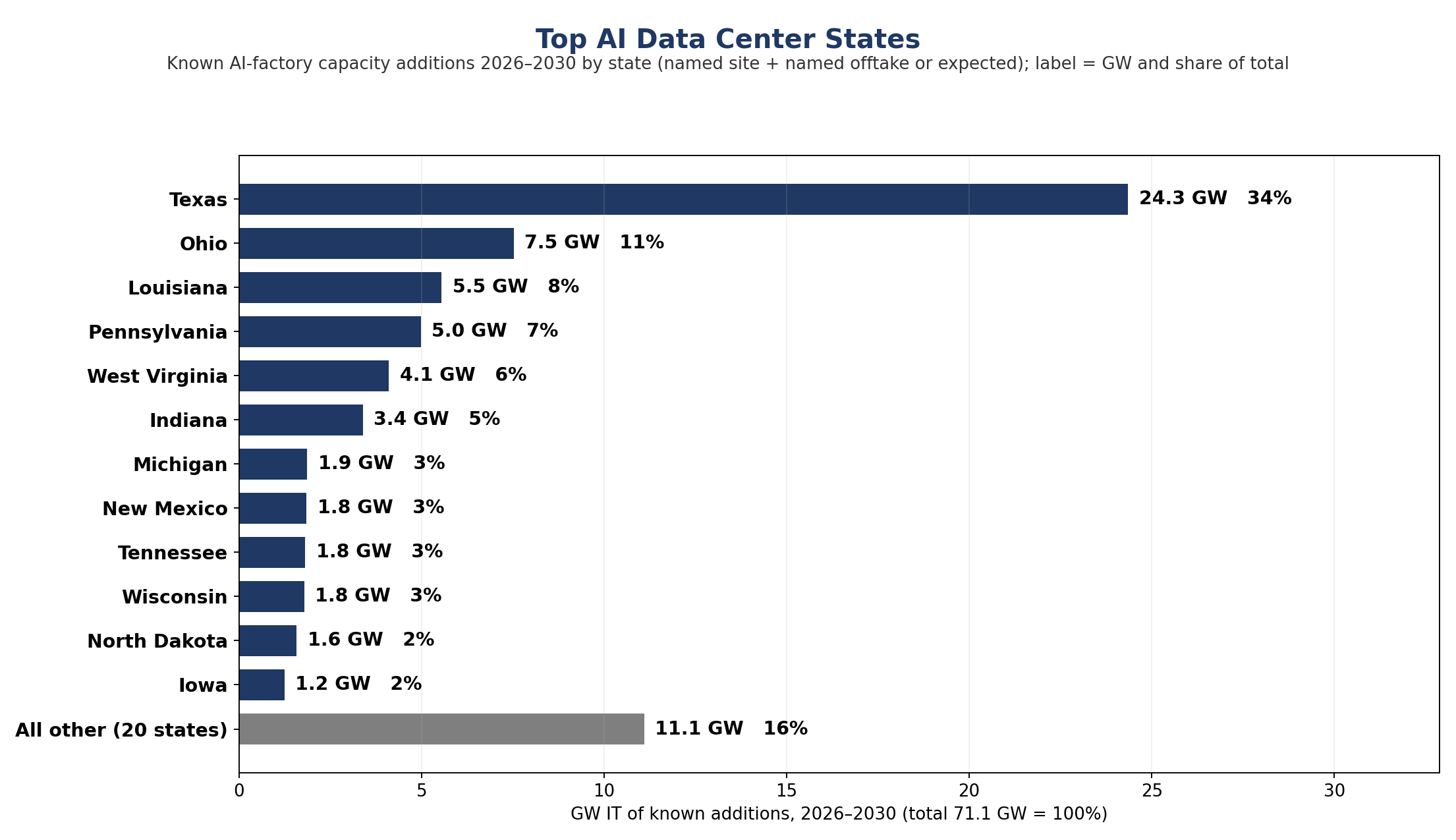
Texas is the linchpin of the AI build-out, with a 35% share of announced IT capacity projects through 2030. The base case is that Abbott wins; however, the regulatory review and air permit delays are capable of slowing projects in 2027 and 2028.
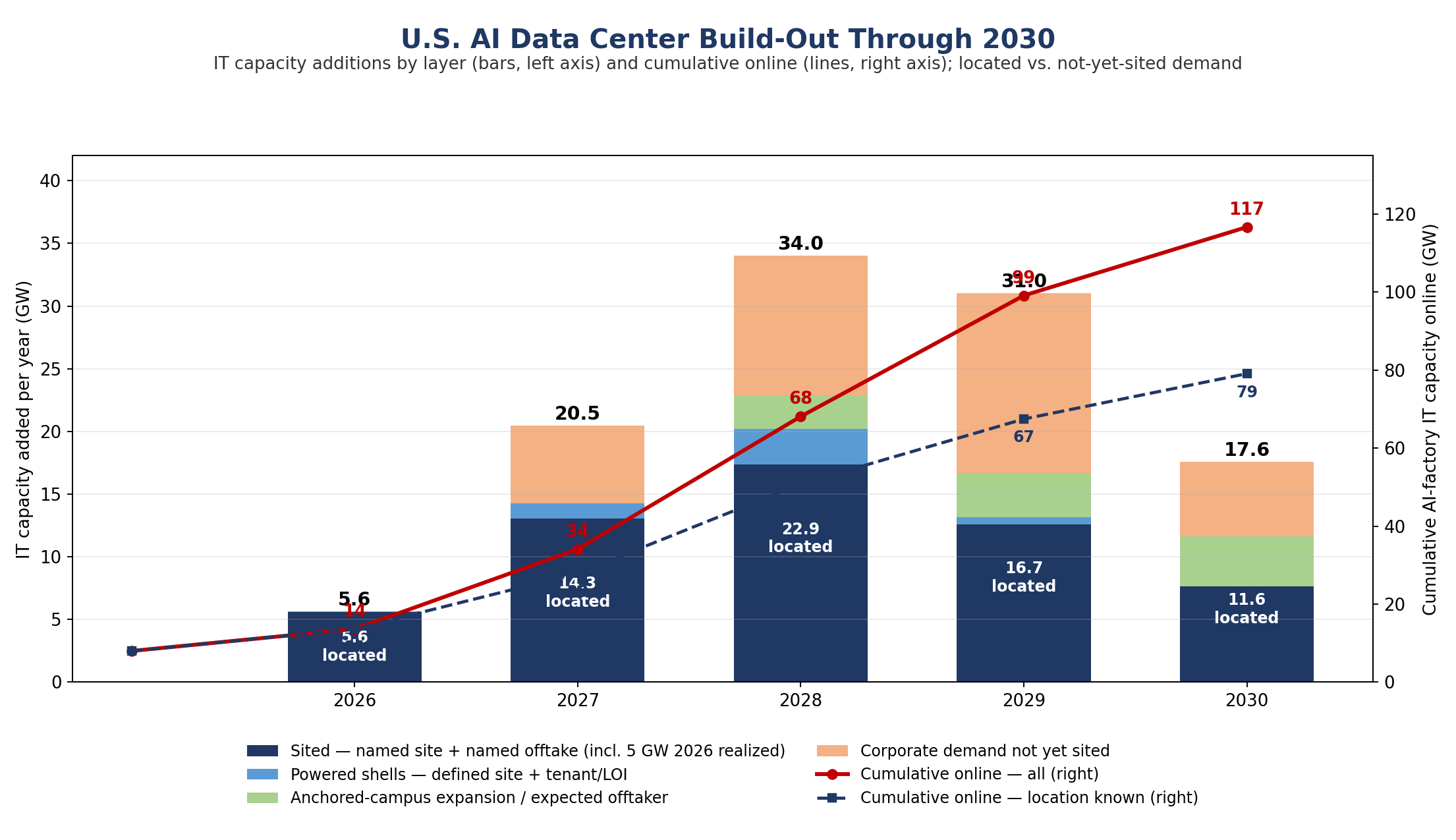
In our analysis, the incremental demand for compute IT capacity in the U.S. is over 107 GW through the end of the decade, and there are only ~70 GW of cumulative announced large-scale projects where there is real demand from Anthropic, OpenAI, xAI, MSFT and CRWV and NBIS to be finalized. While this gap may overstate some unannounced projects and approved sites, the reality is that any delays to existing projects in the context of a strong AI demand environment will only exacerbate how short the market is for compute; thus validating concerns expressed by Broadcom and Nvidia on recent calls about getting chips online.
Recommendation:
Caution around a “back to business” view post-midterms. There are far too many examples of discrete projects running into challenges, opposition and delays, as well as states with regulatory policy changes on the horizon, to feel comfortable. While a compiled risk by county or state (ex Texas) yields ~5-8% “risk” it does not tell the full story as we are seeing challenges across multiple projects like the Stargate New Mexico site, projects in Minnesota and Georgia and those are not in moratorium locations at this point. The reality is that risk to delay is higher and fewer GW will be added than expected in 2027 and possibly 2028.
Increased conviction that compute prices will remain tight, if not move higher, supporting scalers with capacity and line of sight on approved projects. SPCX and CRWV are beneficiaries; SPCX has the added benefit of ODCs entering the discussion more actively.
Companies with approved/permitted power sites and availability (powered shells) in specific states have a higher probability of power pipelines converting to tenants. FRMI, RIOT, CIFR and other select names possess this optionality.
Utilities and power generation companies in the emerging corridor of friendly data center states could be net beneficiaries of incremental demand. IPPs and PJM-based names are likely to remain challenged given how that region is evolving for AI data center regulation.
The analysis below walks through a macro backdrop of the AI build-out in the U.S., utilizing project-level analysis to highlight potential outcomes and direction changes for the build-out after the midterms.
Macro update for AI data centers: In our analysis of the U.S. AI data center build-out, we see ~107 GW of IT capacity for AI being built out between 2026 and 2030, with ~70 GW of this capacity having defined locations and offtake agreements. This is a build-up of known large-scale projects, predominantly above 50 MW in size, and makes assumptions around the timing for bringing those campuses online based on publicly available data and reporting. It should be noted that this is a starting point and that the midterms and regulatory changes are putting timelines at risk, thus moving capacity additions to the right relative to this chart.
Source: 22V Research
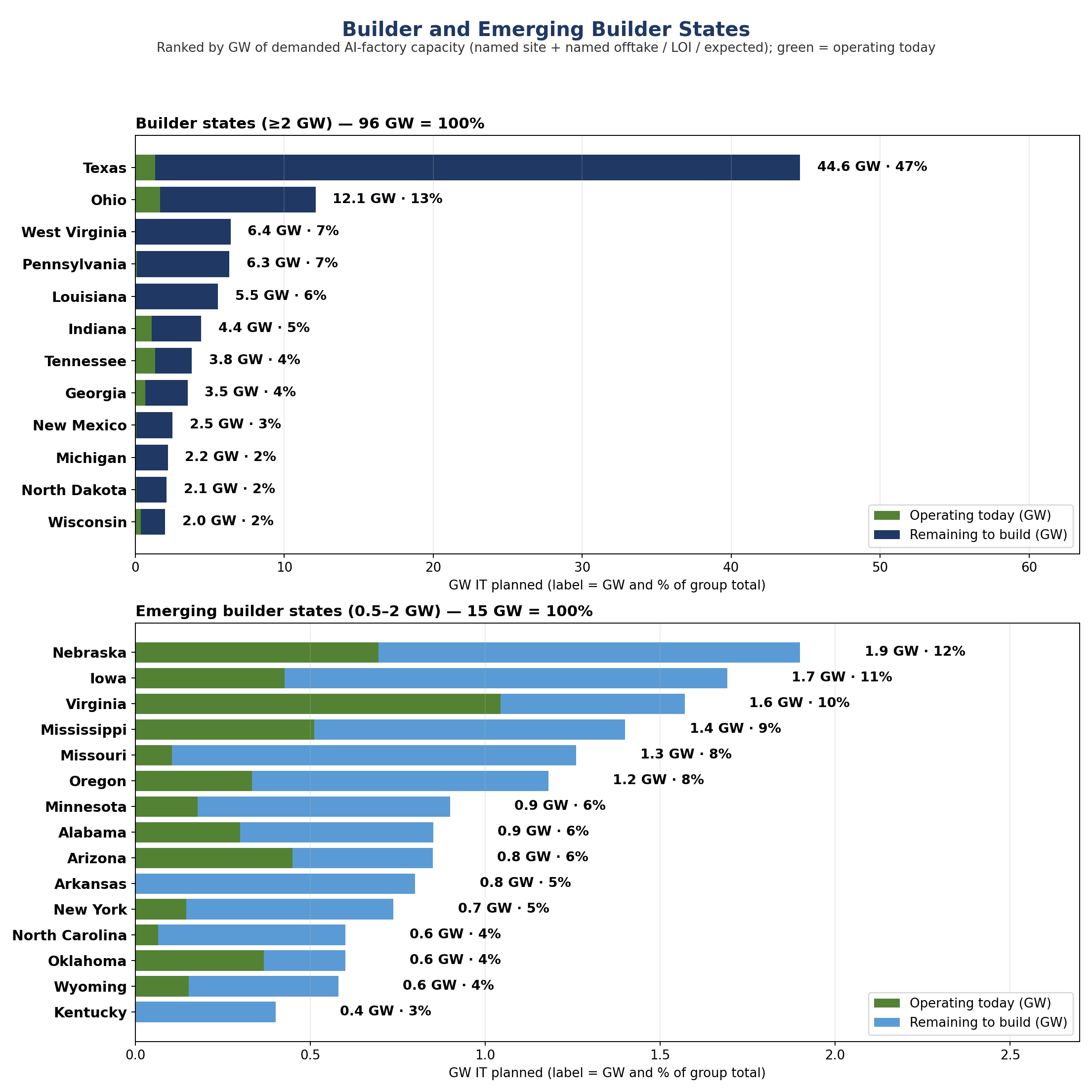
Framing the Midterm Risks: Defining AI data center Builder, Emerging Builder and Non-Builder states: In our analysis, we define builder states as those with more than 2 GW of announced large-scale AI data center projects that have clear offtake or LOI agreements. Emerging states are those with 0.5–2 GW of announced projects. We exclude states with limited or no large-scale AI data center projects.
Source: 22V Research
The chart below indicates builder and emerging builder states ranked by projected AI data center build-out demand through 2030. A few key facts: Builder states comprise 86% of the total growth, with TX over 47% of the total.
Source: 22V Research
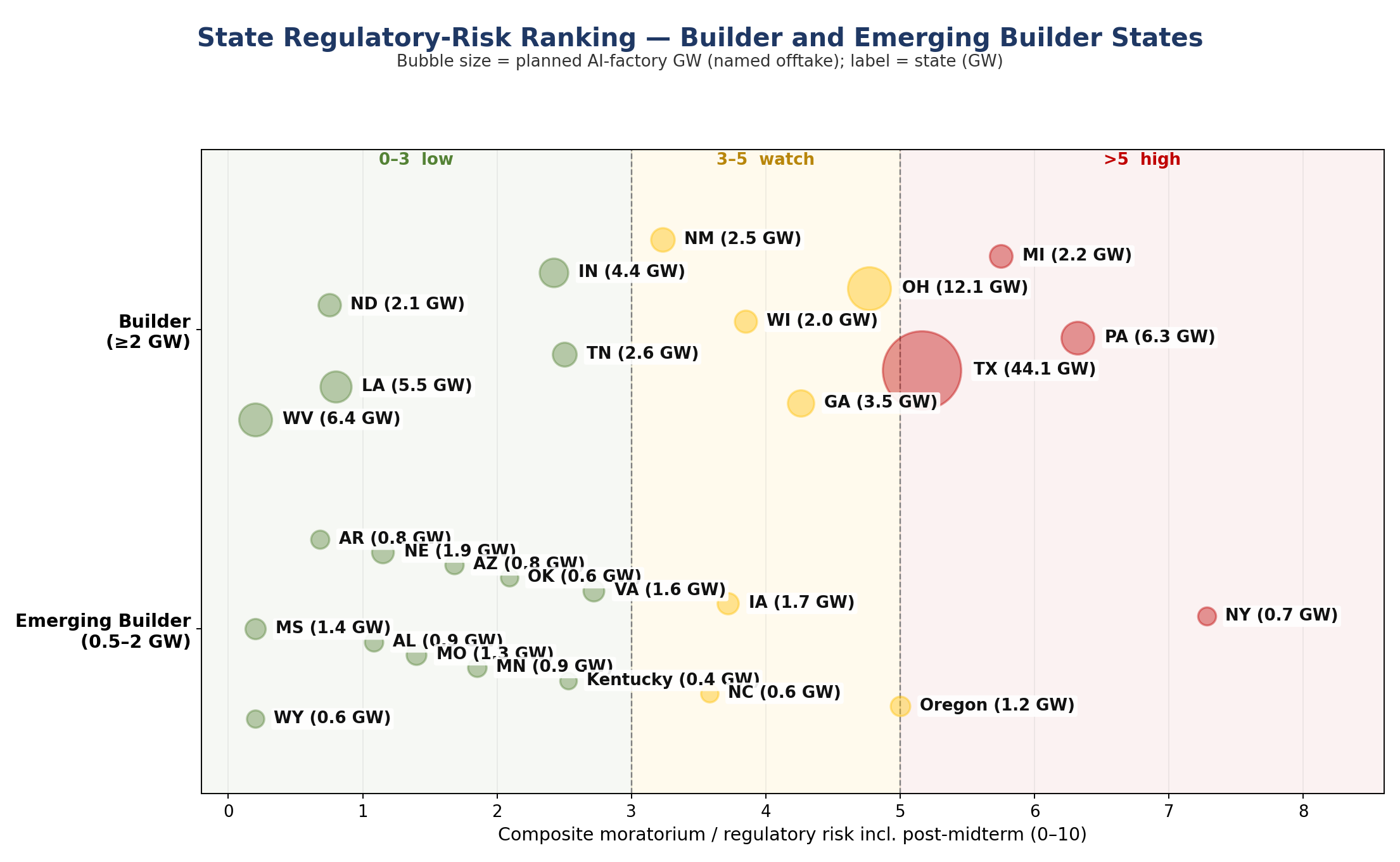
State-level risk analysis: In evaluating the risk to AI data center projects in a particular state, we utilized a composite score that weighs state government and regulatory actions, local actions, and a balance of midterm election risk based on candidate positions and current market odds. Examples of state-level actions that are negative for risk would be TX, PA and NY’s executive orders and regulatory actions that slow or pause data center or air permit approvals. In terms of future elections, NM, OH and GA rank high as negative-risk states.
The following chart indicates our ranking of risk based on these factors and provides a framework for where states seem most “favorable” for AI data centers.
Source: 22V Research
As with anything, the devil is in the details. In the case where a state like OH ends up moving toward a statewide moratorium post-midterm, the DOE-sited SB Energy project tied to OpenAI may not be at risk given the DOE relationship; however, future Ohio projects may not move forward. Similarly, in GA, while the future governor may put forward a pause on future AI data centers, the recent contract between OpenAI and Georgia Power is not likely to be at risk; however, there appear to be some significant local challenges ongoing related to how the deal was concluded without open public hearings (link). Notably, this project is slated to come online starting in 2028, so there remains significant time to overcome challenges, but it does show “future” data center timing and actual development risk building.
State-level signal – Midterms: The most impactful changes to data center policy will come at the state level, which makes the gubernatorial elections critical.
The base case is that we exit the midterms where the key builder state, TX, remains supportive of AI data centers; however, future developments in OH, PA, MI, GA, NM, OR and NY appear to be at risk on a number of fronts. The chart below indicates our initial view that 27 AI data center builder states are reduces to ~15 green or AI data center friendly states post-midterms.
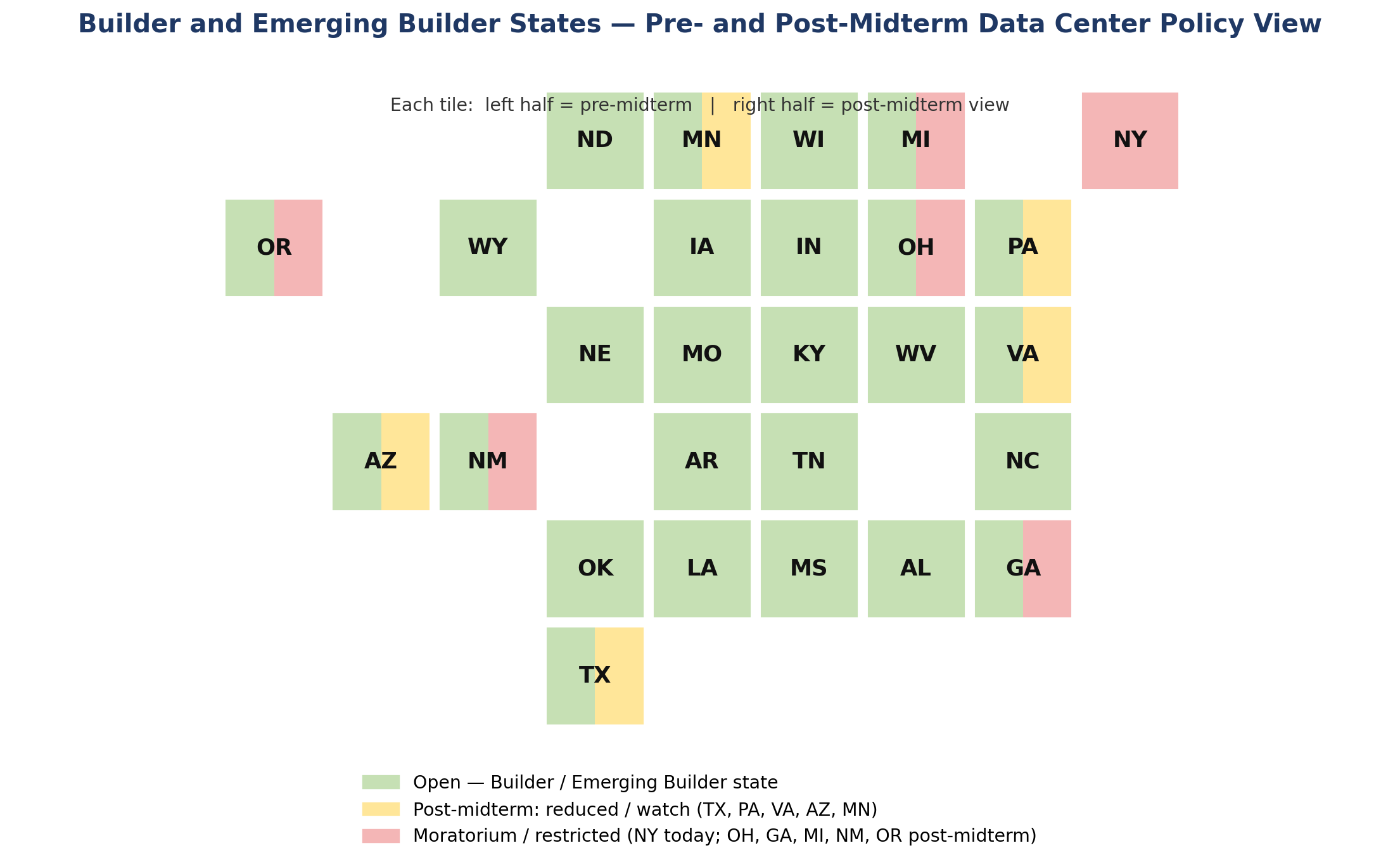
Source: 22V Research
A wild card / black swan event would be Abbott losing the TX race and the state swinging further away from data centers – while this is not currently predicted, Abbott’s recent moves to pause data center permits and processes are a clear signal of the rising tide against data centers and political reactions that can lead to delays.
Key states to Monitor:
- Texas: Governor Abbott’s TCEQ air permit halt, combined with the ERCOT interconnection queue review due in early December, has effectively halted data center related approvals in the state. The outcome of the election currently favors Abbott, but at an ever-decreasing margin. With BTM projects making up 69% of the development pipeline, the air permitting halt needs to be lifted to prevent delays to 70–80% of tracked AI data center projects TX in 2027 and 2028. Grid interconnection is likely being pushed back due to the halt; however, the review of the queue likely favors prioritization of the projects on our list, which are larger in scale.
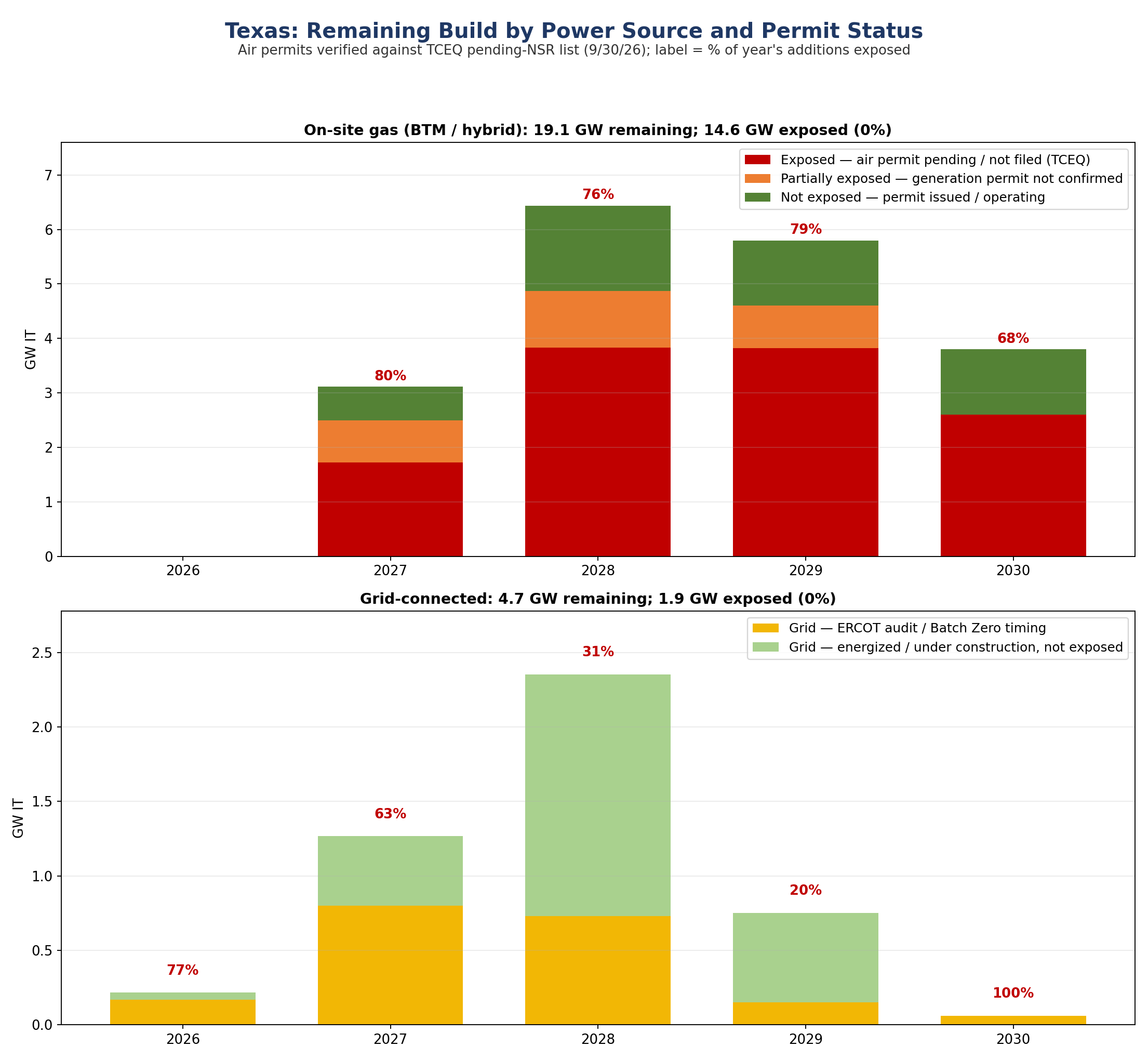
Source: 22V Research
- Pennsylvania: PA is under EO 2026-05 with no defined end date, and it gates DEP permits on local approval plus a GRID generation commitment. PA is setting the standard for community-first approvals before state environmental approvals, and in view of grassroots local opposition, this will make it a much more difficult state in which to move projects ahead and get final state premitting.
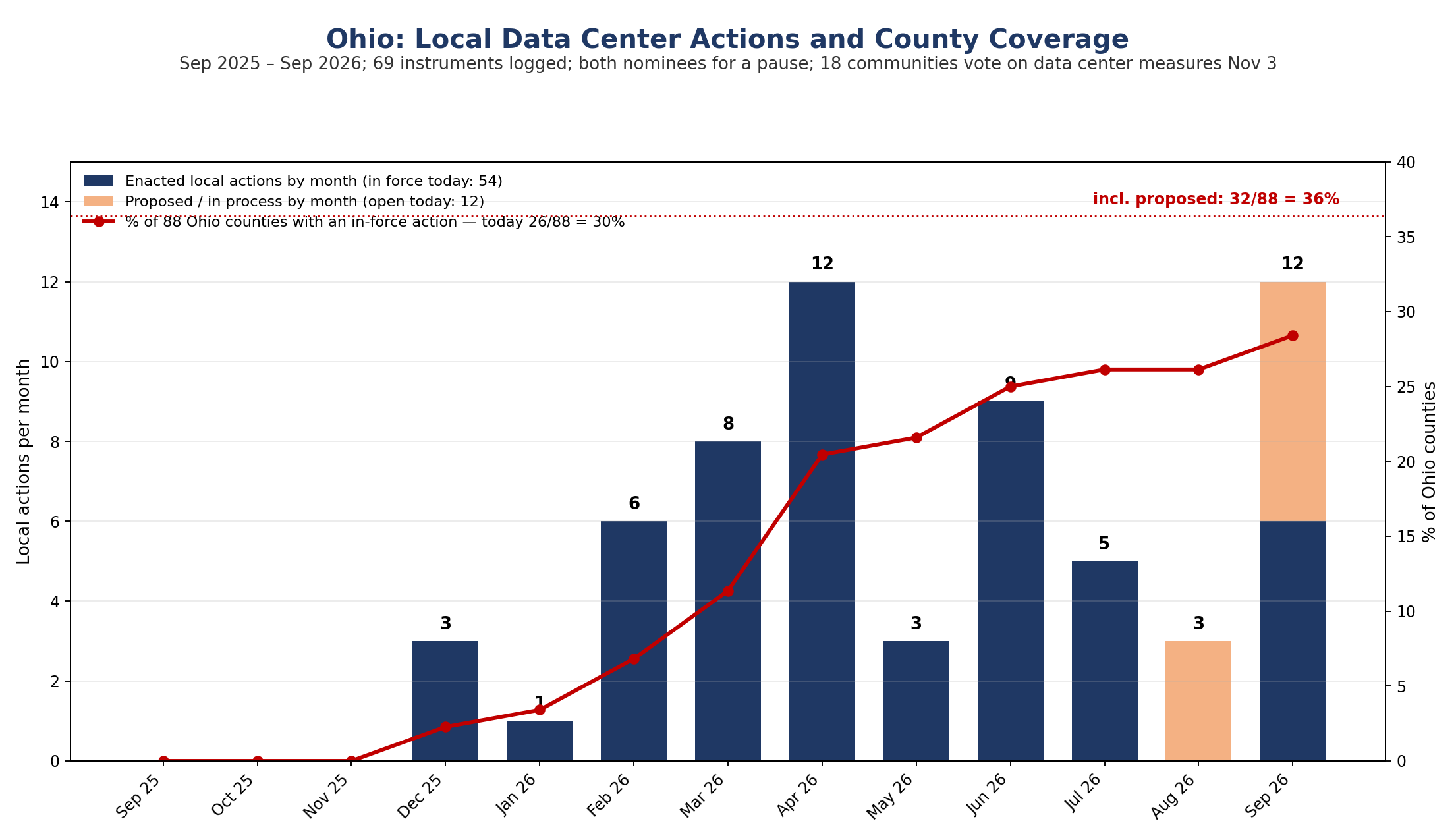
Source: 22V Research
- Michigan: This state has the most local moratoria of any state, with 50+ in the data, and both candidates for governor are calling for a statewide pause on AI data centers.
- Georgia: The governor’s race currently favors the candidate, Bottoms, who is calling for a data center pause. Additionally, significant local pushback has emerged at recent projects such as OpenAI’s project with Georgia Power.
- Oregon and Virginia: Two of the historically large data center states are seeing significant local opposition to new data centers and increased guidelines on what is required for data centers to be built in the future. Oregon has created a data center advisory committee, and the governor has supported local moratoria and halted any state land use for data centers. While a large state, the scale of its existing data centers is creating significant pushback to future development.
- New York: New York has a de facto moratorium on data centers. The path forward is unclear, but it will depend on the election, which appears to continue to favor the incumbent governor. Governor Hochul does not appear likely to withdraw this order; rather, a potential modification or process change could come in 2027. It remains a small state, but WULF has projects that could benefit from a change in stance.
Local action is having an impact and will slow future data center projects:
Local-level action to prevent data centers and update regulation is an indication of how difficult approvals are and will become at the local level, which will also move the pieces around as to where data centers are built.
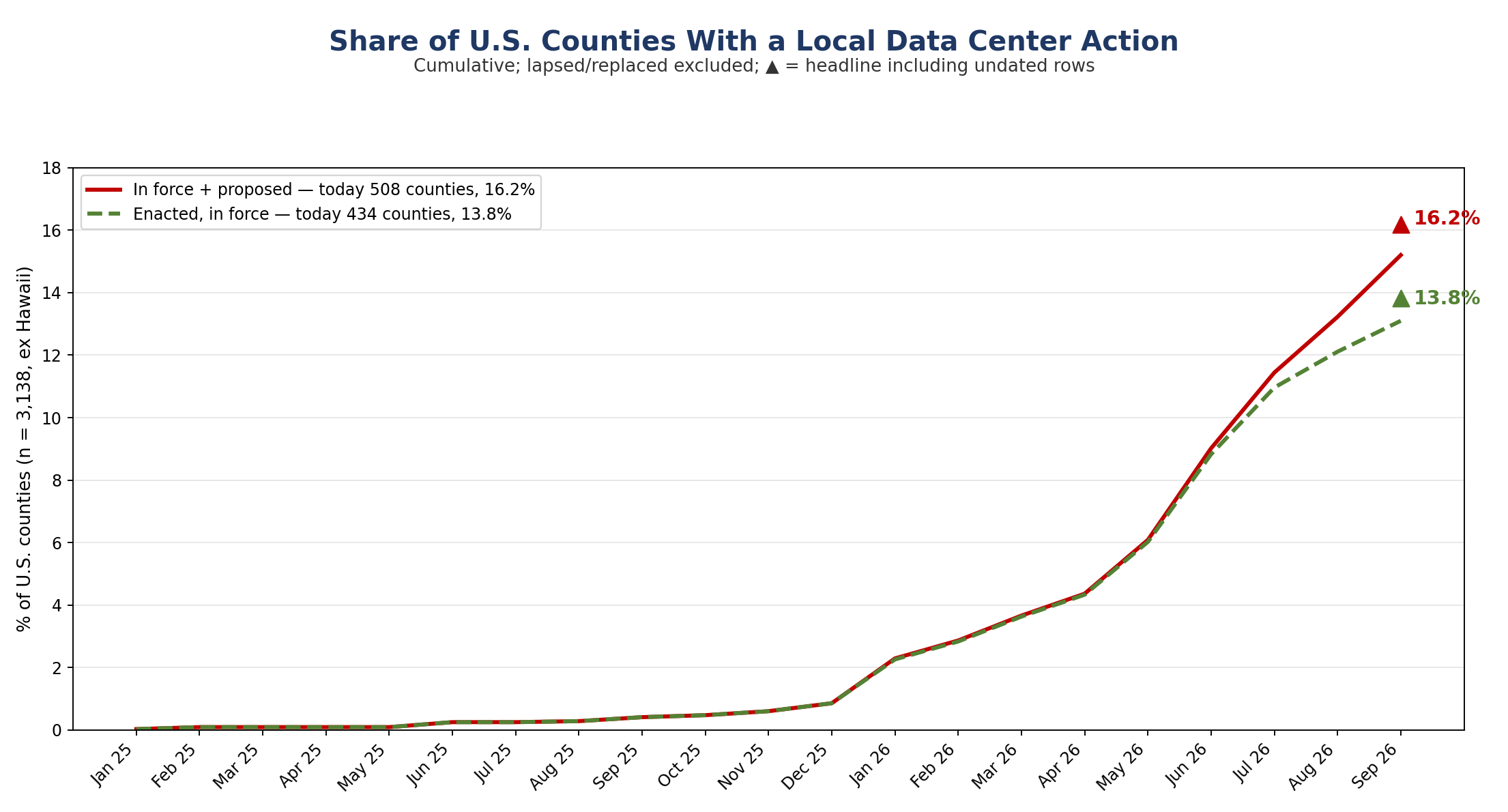
Local towns and counties are the source of grassroots pushback on AI data centers, and our analysis of the data indicates that over 16% of counties within the U.S. now have a regulatory pause, moratorium or similar action imposed within that county. There have been over 800 local actions since June 2025, with a peak in activity over the last few months; more recently we see an increase in proposed vs. approved actions, which would make sense as we capture recently floated initiatives. 89% of these actions are moratoria, application freezes or outright bans. The remaining 11% are zoning or permitting-process ordinances: industrial-only districts, special-use permits, setbacks, noise caps and size thresholds.
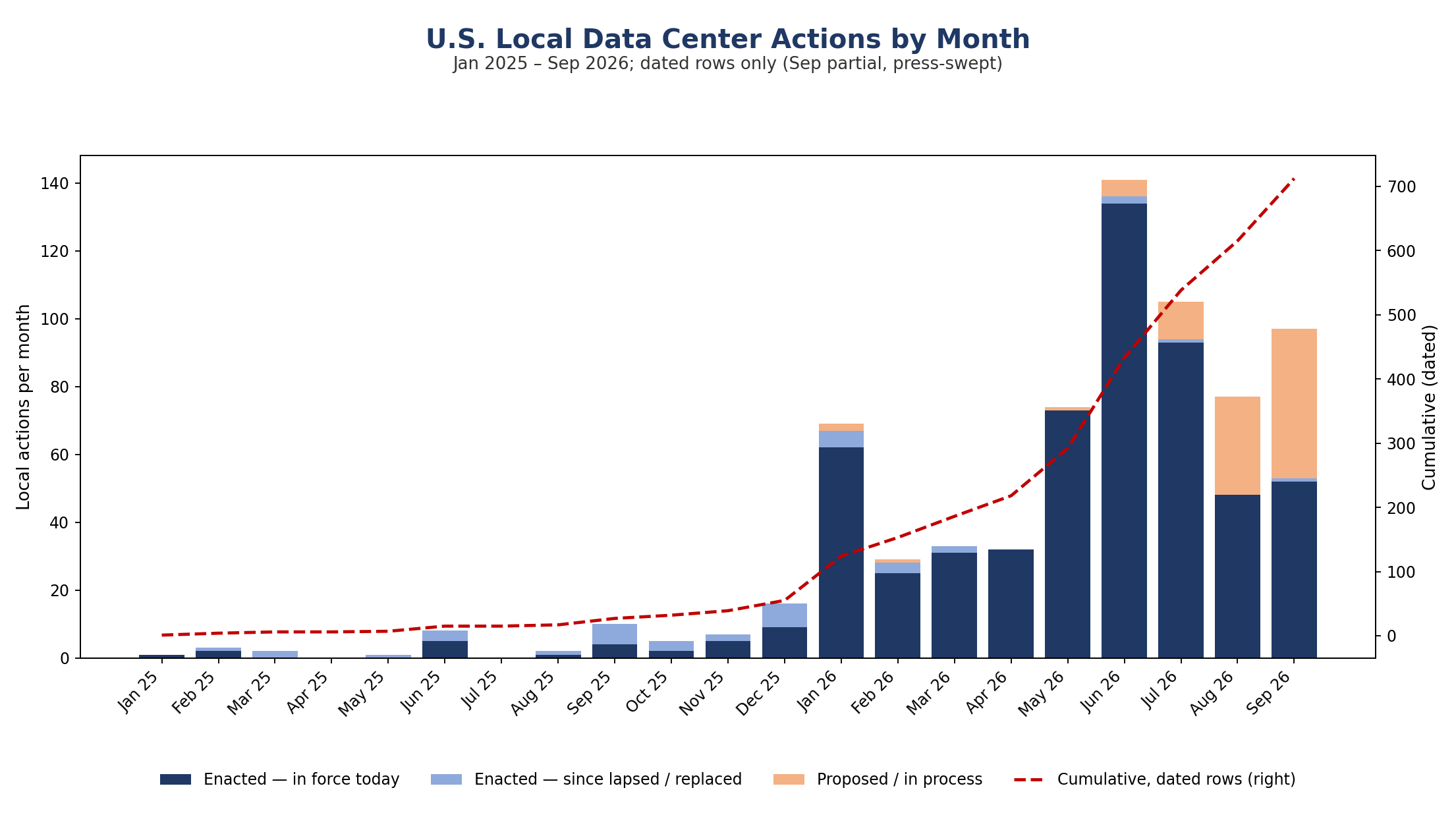
Source: 22V Research
Putting this in context: these actions have been a “response” mechanism by local governing bodies to add the legal documentation and zoning that will allow a process to protect communities from future data center proposals. In many cases, they have been enacted following the approval or build-out of a data center in a nearby county. Second, the most impactful regulatory decisions around ratepayer protection, bring-your-own power, tax incentives and environmental permit approvals will take place at the state level.
An emerging trend (PA in particular) will be requiring future data center projects to be approved at the local level in a public fashion (not secret NDAs), which will give significant local power over future projects and likely lead to more delays and costs. As project approvals fall through or become challenged, developers then consider other nearby sites within regions where data centers are being built. In MN, Geronimo Power planned to build a data park in Nobles County, MN; however, after being rejected by the county, it will need to consider other nearby sites if it continues (link). In another example of how local process can slow development, Cloverleaf Infrastructure (in which Nvidia recently invested) has been working to get approvals for Project Bluestem near Kansas City, KS. Local governments imposed temporary moratoriums to learn more, and hearings continue. It’s unclear what the outcome could be, but it does show what happens when approvals need to start at the local level to move a project forward (link).
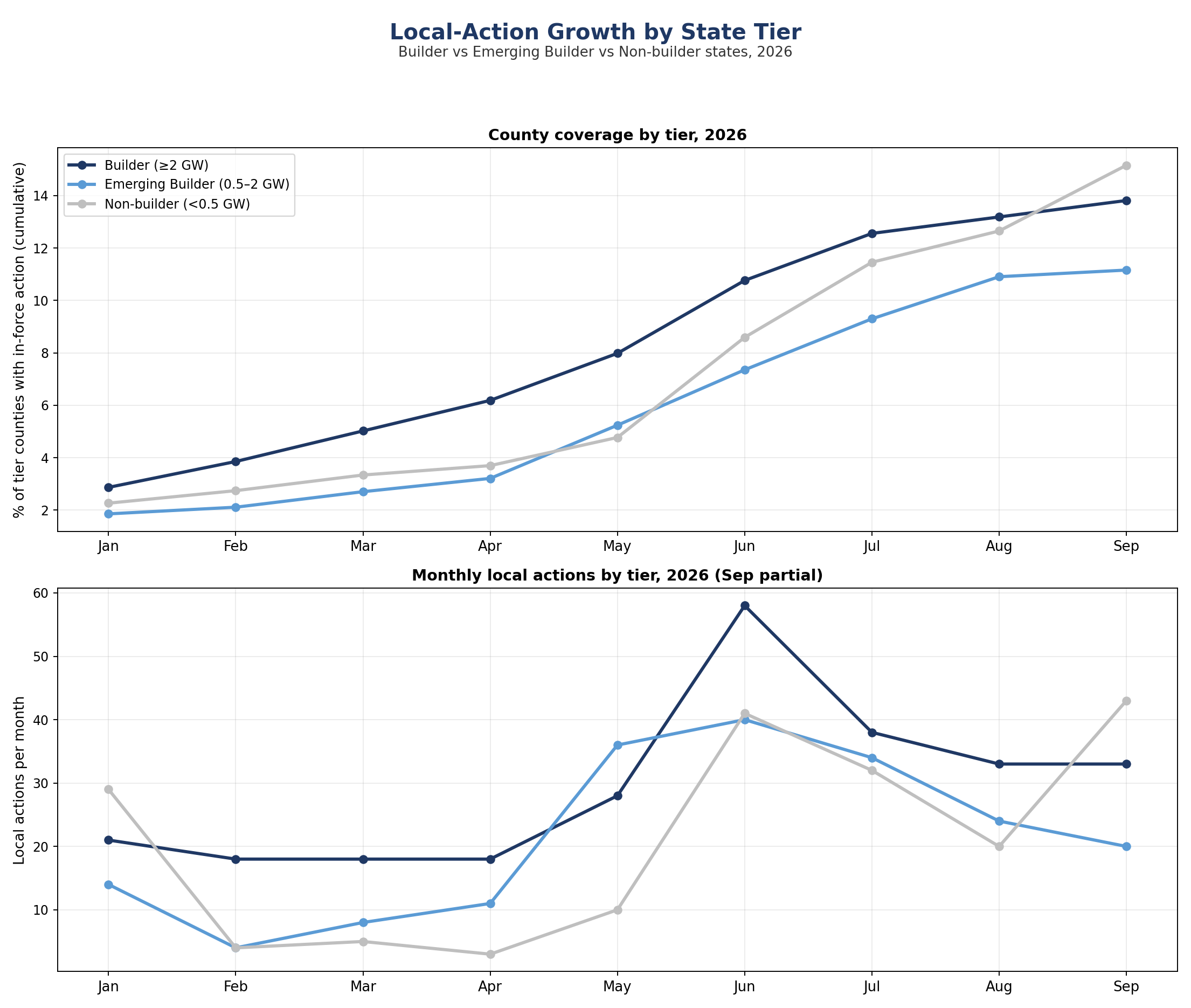
In terms of the volume of local actions, monthly actions started to level off and decline in builder and emerging builder states. The acceleration in non-builder states is less concerning and again speaks to the reaction mechanism embedded in states that were already, in many cases, growing more anti-data center.
Source: 22V Research
Source: 22V Research
What is going to change — how we are looking at the post-midterm build-out environment
- AI builder states will evolve. While TX will remain a large player, other states (mostly in the South, such as LA) will earn a larger share of new AI data center projects.
- Ratepayer protection, benefit, or bring-your-own power. This will evolve and vary by state and situation, but the end goal is for data centers to be a net benefit to communities or states in the form of lower electricity prices.
- Tax incentives will be eliminated. Multiple states, including TX, are addressing this, as are D.C.-led bills around tax breaks for AI companies.
- Local approvals before state review and no more “behind closed doors” NDA deals to approve data centers or change local zoning regulation without public comment.
- In certain states, location-specific siting: industrial-only zoning, special-use permits, setbacks and size thresholds. This is mostly handled within local regulatory updates and changes.
- Limitations on air permits for on-site generation — where local and state intersect: the TCEQ halt, DEC’s EO 62 hold, SELC’s appeal of Colossus turbine permits, Ohio EPA timing on PORTS. As the build goes behind the meter (94% of non-grid capacity is gas), the contested permit becomes the air permit, and public pushback often hinges on emissions. New Mexico faces a critical air-permit decision for Stargate at the end of November, which now looks in question given the potential governor-elect’s call for a moratorium.
- Closed water loop and lower environmental resource impact. This was already a trend at the data center level, largely due to liquid cooling; however, it will be a requirement going forward.
Select Investment Themes and Ideas
Behind the Meter is a solution that eliminates delay in powering chips while also satisfying an increasing push toward bring-your-own power for data centers. We would view onsite power providers like LBRT, SEI, WMBT, and capital equipment names like FTAI and possibly BE as beneficiaries. On the other side, due to potential shifting priorities and timelines for bringing power online, grid based turbines may not see the same backlog trajectory within the U.S. in the near term, impacting GEV and Siemens Energy at some level.
Liquid Cooling: A clear call to action from all regulatory and public pushback has been toward lower water usage at data centers and increased power efficiency. Liquid cooling is a secular trend for managing AI compute and fits this narrative. ECL, JCI and ETN all fit the list of top beneficiaries for single-phase and integrated liquid cooling exposure.
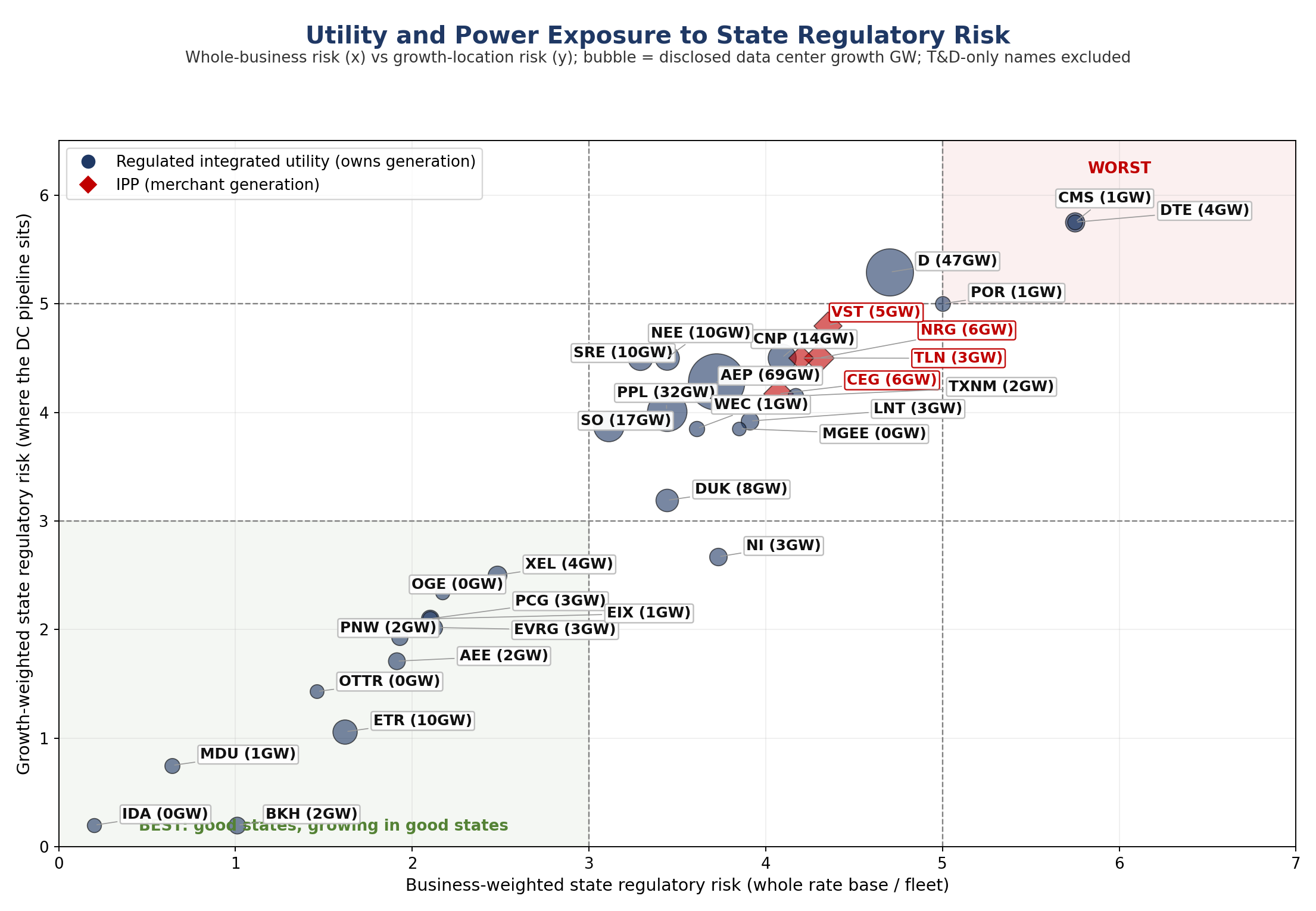
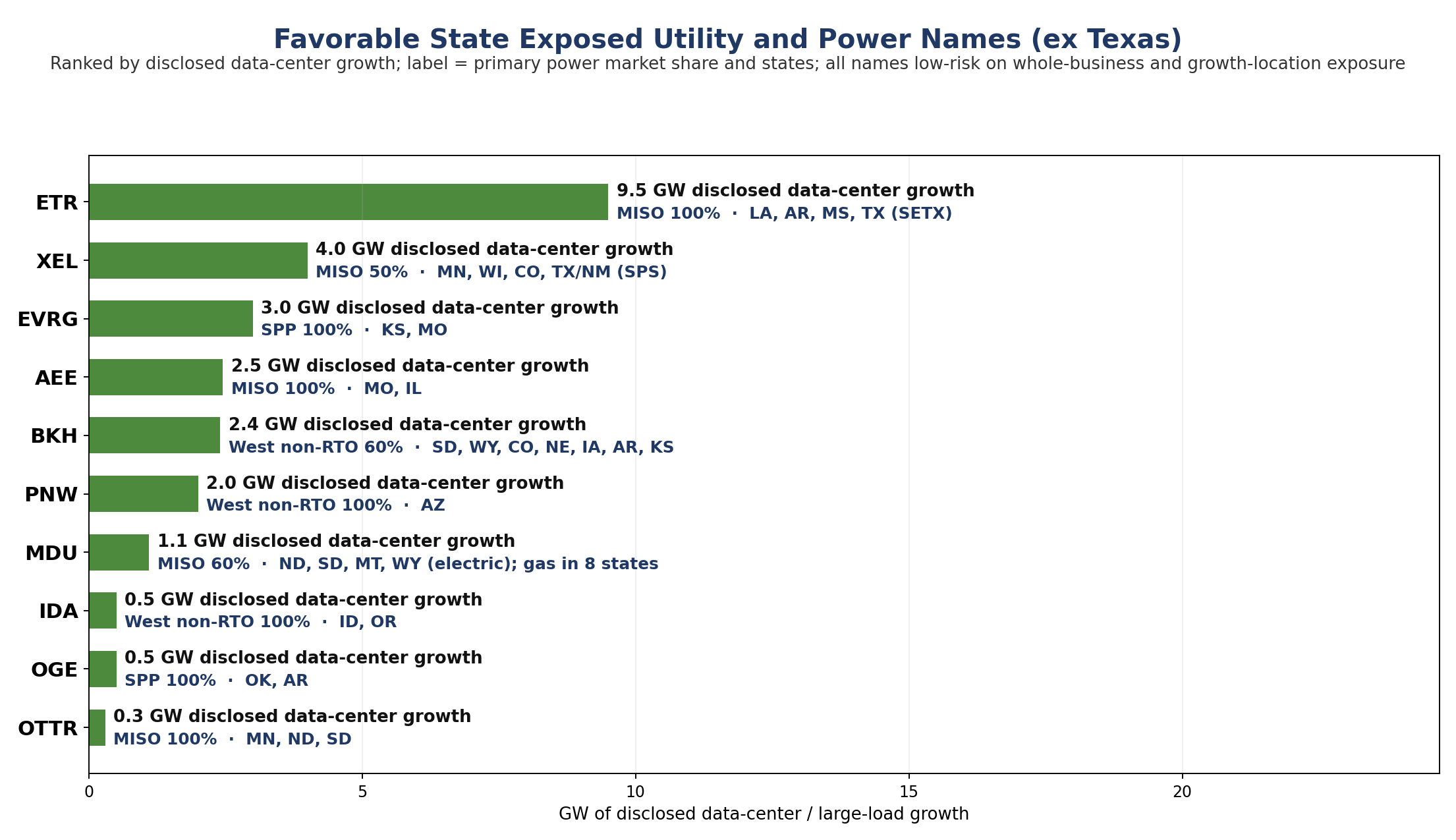
Emerging corridors and related utilities: MISO (+) vs PJM (-). While TX (as a base case) is likely to remain friendly to data centers, future projects may shift toward states that emerge as pro-data center with limited public opposition. The IPPs and utilities exposed to these states are in the chart below and could be net beneficiaries. We would note that Louisiana has emerged as incredibly pro-data center, and ETR is a large player in that state. We are not making a call on any one name; however, this does give a view as to the post-midterm power corridor that is most favorable.
IPPs have been viewed as beneficiaries of the AI build-out and demand, particularly in the PJM region; however, the challenges in this power region, for both data center regulation and general PJM market regulation, put these names in a more challenged position.
Source: 22V Research
Source: 22V Research
Developing a clear thesis of how to trade the midterms is a herculean challenge but an “all clear” signal does not seem to be emerging as a broad strokes clearing event. The backdrop for AI is positive but the beneficiaries and stock selection process for the U.S. build out is evolving.
Please let us know if you’d like to discuss further.

