DAILY STRATEGY: Chicago Fed President Goolsbee noted in a speech this morning “that to restore price stability, the central bank may need to raise rates and narrow the gap between supply and demand, which could lead to drops in employment, wages and growth.” As we have noted a few times, and we realize it’s counterintuitive, but a NON-RECESSIONARY increase in the unemployment rate would be CONSTRUCTIVE for equities longer term. If the unemployment rate were to increase, the speed limit for economic growth, which is the main constraint today, would increase. Gerard and I cover this more in a video HERE.
FYI – The unemployment rate increased in 2025 and S&P 500 multiples expanded. The unemployment rate is moving lower in 2026 and PEs are contracting. The reason, when the economy is at full employment and inflation is above the Fed’s target, economic and labor market strength show up through a more restrictive Fed path OR higher 10year yields. Not higher equity prices. The correlation between bond yields and stocks is deeply negative as a result.
We are not calling for lower equity prices as credit spreads are tight and inflation expectations have started to move lower. Consumer spending moving from the blistering ~3% plus pace to ~2% or below (which is our call) as 10yr yields remain around current levels should alleviate some of the speed limit constraint. Inflation is not so far away from target that the Fed needs to lift the unemployment rate meaningfully.
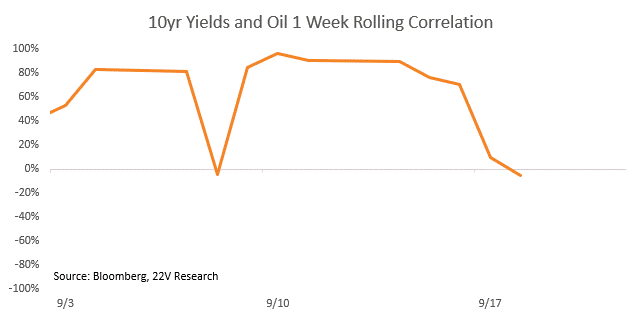
Interesting chart. To us at least. The 1 week rolling correlation between oil prices and 10yr yields is close to zero now. It had been unusually high. It’s not JUST oil prices moving 10yr yields.
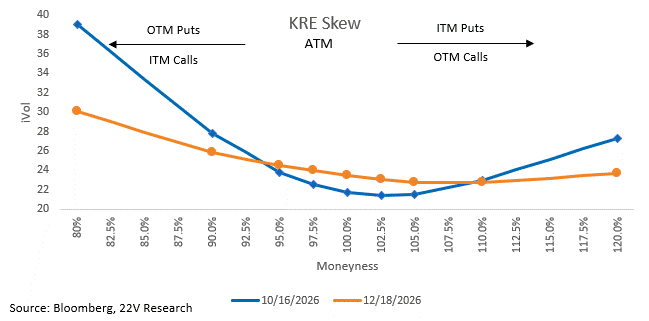
BANKS – STAY ON THE SIDELINES: The options skew is not favorable enough for long tactical trades in Banks yet (neat chart below). This is the important point we wanted to get across today as we have gotten question on being TACTICALLY long some of the areas of the market that have gotten hit. We Like banks longer term and will look to add to Banks tactically, but we will need a more favorable macro backdrop (skew to cuts vs hikes) or more attractive risk reward before making that call.
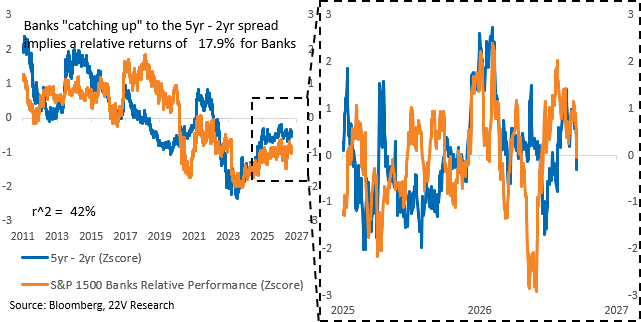
For background, as Bill Hebel, 22V Banks analyst recapped HERE, the net net of conferences last week was that Banks remain in strong fundamental positions with high cash returns heading into the rate hike cycle. Rate hikes put obvious pressure on Banks, but recent negative relative performance has outpaced the flattening of the belly of the yield curve (3mos through 5yr is the yield curve that matters most for banks), and our call is for a benign economic slowdown.
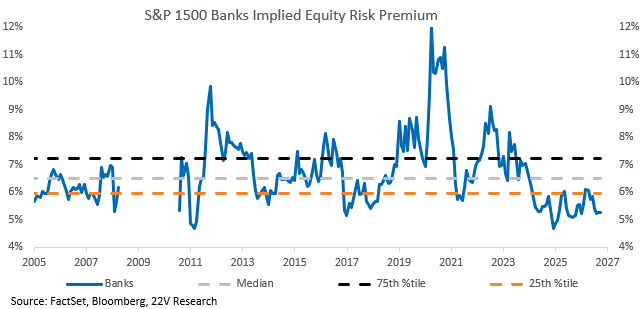
Despite regional banks strong cash return, discounting those future expected cash returns using our preferred valuation model show that Banks are not especially cheap relative to their own history. They are cheaper than the S&P 500, but given the rate hike backdrop, we are inclined to wait for a more attractive valuation setup before taking a long position. Or the upside options becoming cheap enough to justify a long position.
Charts…
Options skew is such that upside Banks strategies aren’t “cheap” either. The setup of Bank performance vs the economic backdrop is more conducive to options plays when the pricing is right. That is not right now. Thank you to Jeff Jacobson, head of 22V Derivatives Strategy, for help judging this.
Banks have underperformed by more than what the belly of the yield curve would imply.
The market is now pricing in a median of 3 rate hikes by the end of 2027, with a skew to more hikes.
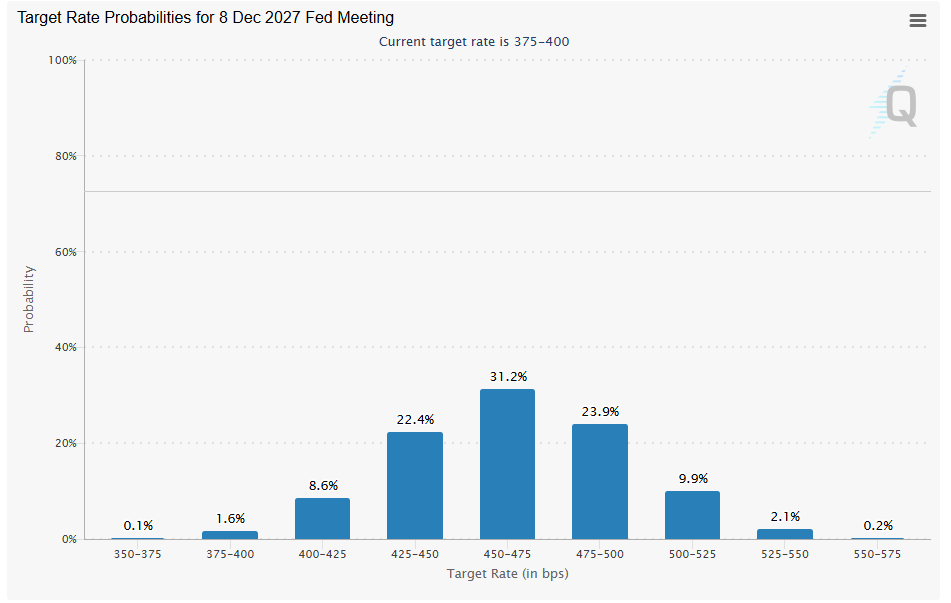
Source: CME Fedwatch Tool
Our preferred valuation methodology, based on the work of Aswath Damodaran, valuation guru at NYU, discounts futured cash returns (dividends + buybacks). It’s akin to valuing an index using a DCF for a single stock (good resource HERE). With that valuation methodology, Banks are still trading rich relative to their own history, but cheaper than the below 5% ERP for the index.
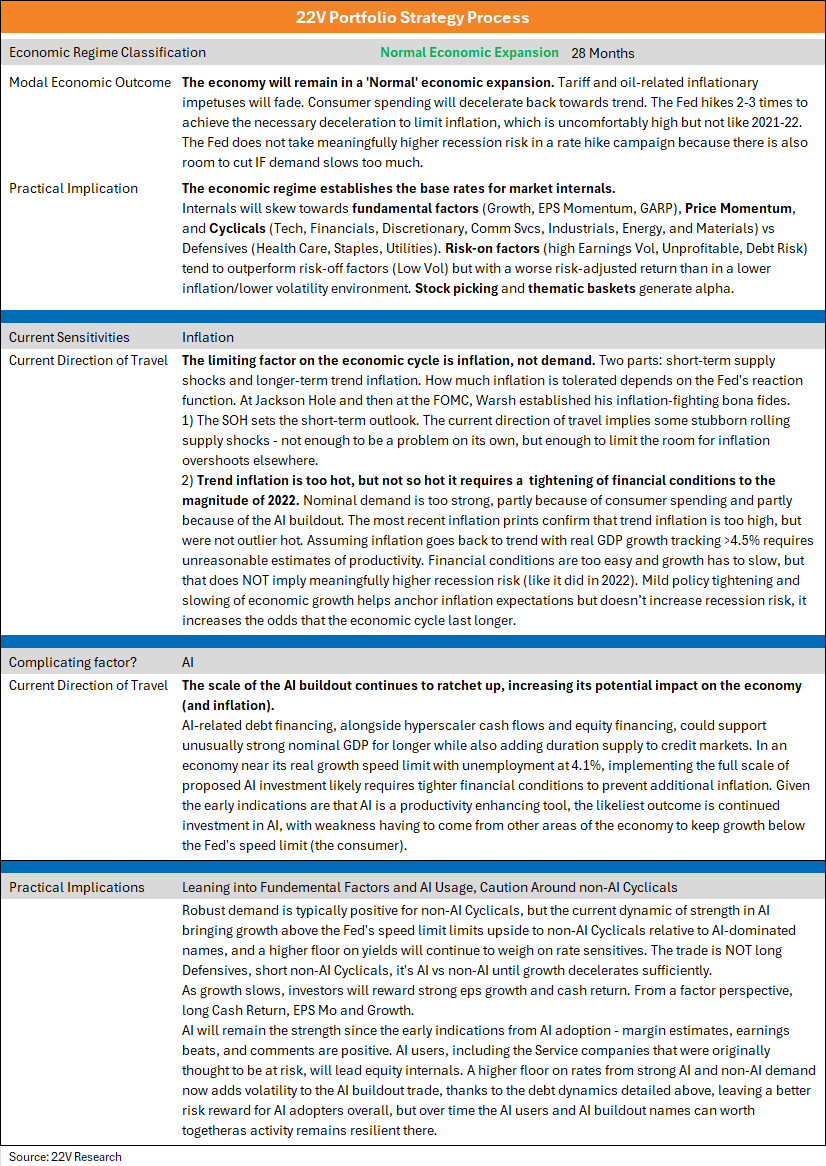
OUR PROCESS: The first note of the week focuses on our overall process. The below graphic details the medium to longer-term views (6+ months) for equity internals based on the current economic backdrop, the modal outcome for that backdrop, and the sensitivities of the backdrop. When we mark to market our views based on new market and macro data, and talk about short-term risk management, it is always relative to what our background process implies.