DAILY STRATEGY: Investors responding to our latest surveys (HERE) think financial conditions need to tighten to get inflation on a Fed-friendly glide path and expect the market reaction to today’s FOMC (94% odds of a rate hike) to be risk-on. The market has shown a preference for at least a bit of counter-cyclical, cyclically extending policy. Equity market internals and rates show far more overheating and potential restrictiveness concern than left tail worries.
As the Quant team noted HERE, fundamentals factors led equity internals in analogous rate hiking campaigns. That is the modal market path now, in an economic backdrop of ~3 rate hikes curtailing inflation risk. Growth still needs to slow, so it is hard to chase risk-on factors (high earnings vol, debt risk) and non-AI Cyclicals as growth slows, even if there’s a relief rally on the day as investors expect. We prefer longs in AI users, which have some of the best fundamentals and are returning cash to investors now (see HERE). Stock list HERE.
Even though growth will slow, risk-off leading market internals for an extended period of time (> 1 week) requires MUCH tighter financial conditions (> 4 hikes priced in) and correspondingly higher recession risk, most likely through the economy/inflation proving to be TOO resilient. That is not the modal economic outcome – inflation is not that far from target. Core service inflation is only running ~80bps too high. Wage growth suggests inflation is not originating from the labor market, which would require a more painful tradeoff between labor and inflation. Goods price shocks should fade, though the pattern of rolling shocks has been problematic. Net net, this is not like 2022. At the minimum, many more rate hikes being priced in requires multiple more months of stubbornly hot data.
LONG DOMESTIC BRAZIL: While we wait for the Fed today, here’s a position to consider that doesn’t rely on the Fed.
We were lucky enough to host a webinar earlier this year with João Landau, Founding Partner & CIO of Vista Capital, one of Brazil’s leading hedge funds. Replay link HERE. João thinks there is asymmetric upside in domestic-facing Brazil equities, with the presidential election in October as a catalyst.
The background supports are: 1) real interest rates have stabilized, 2) the unemployment rate has reached historic lows (~5%), 3) inflation has exceeded forecasts but remains relatively contained given the urate (this has been a major surprise), and 4) Brazil’s equity market valuation had reached decade lows, with IVBX P/E ratios around 12x.
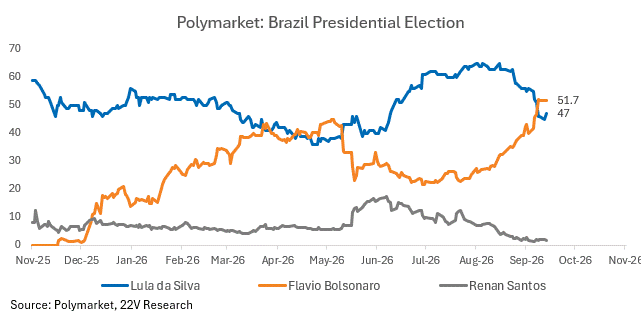
The upcoming election had been an overhang on the index. In short, investors REALLY dislike President Lula, but Lula’s odds of winning have recently decreased, and domestic Brazil stocks are now outperforming. President Lula faces hurdles in re-election amid low approval ratings, especially among evangelicals and youth. If Lula loses, there is asymmetric upside in Brazil equities that are more domestic facing. Joao made the case that local investors with money are likely to reallocate a significant amount of capital back to local Brazil if Flavio Bolsonaro wins. With Lula’s odds still at ~47%, upside in Brazilian equities based on a Lula loss remains.
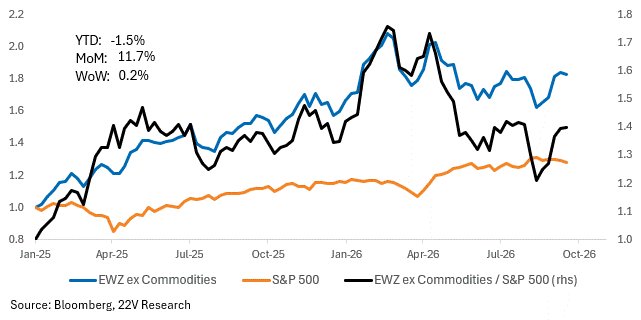
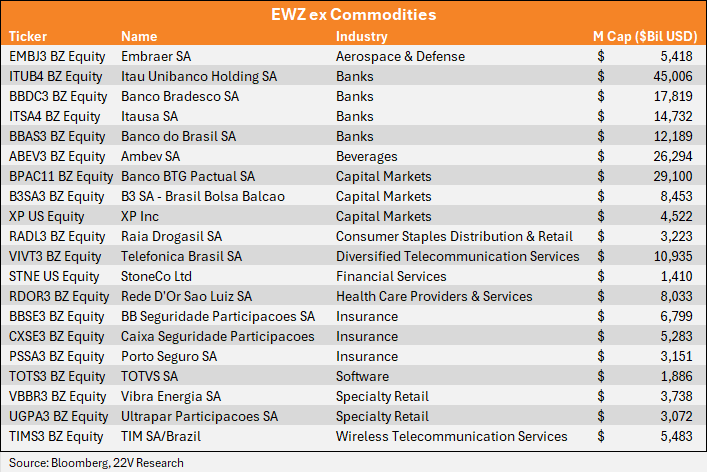
Joao notes it is underappreciated that fiscal adjustments, which are needed in some form, do not have to come with large hits to growth and significantly higher recession odds, particularly because the economy is starting from a point of strength. Own the EWZ ETF ex commodities. Commodities are largely driven by factors outside of Brazil but have large representations in indices. PBR (Petroleo Brasileiro) is an oil company with a 14.5% weight in the EWZ ETF. EWZ ex commodities, charted below, have rallied as Lulu’s odds of winning the election have declined.
Charts below…
Other charts…
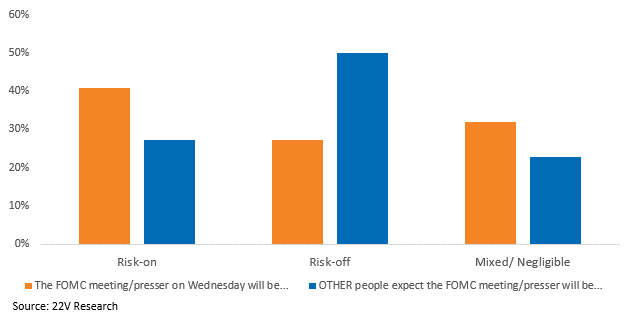
A plurality (41%) of the investors we surveyed think tomorrow’s FOMC meeting, for which markets are assigning 94% odds of a hike, will be risk-on. 32% think the market reaction will be mixed/negligible, and 27% expect risk-off.
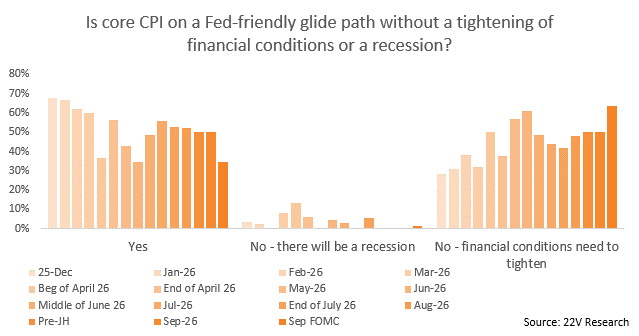
63% of investors think financial conditions need to tighten. This has significantly increased from the beginning of the year (+33pp) and now sits at a high water mark in the history of our survey (November 2023-fwd). 35% think core inflation is on a Fed-friendly glide path.
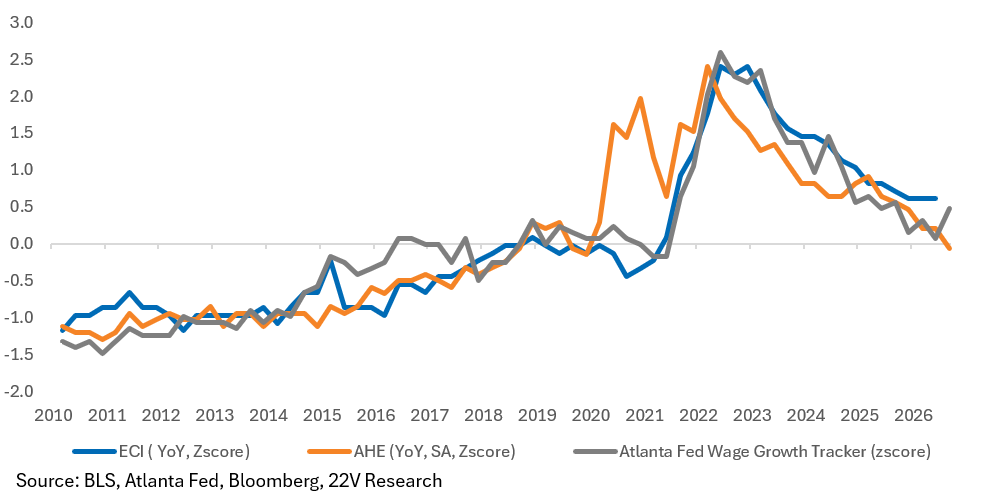
Relatively tame wage growth metrics suggest the labor market isn’t the source of inflation right now. That does not mean we can ignore inflation, but it does imply the Fed doesn’t necessarily have to take on lots of labor market easing to get inflation back to target.
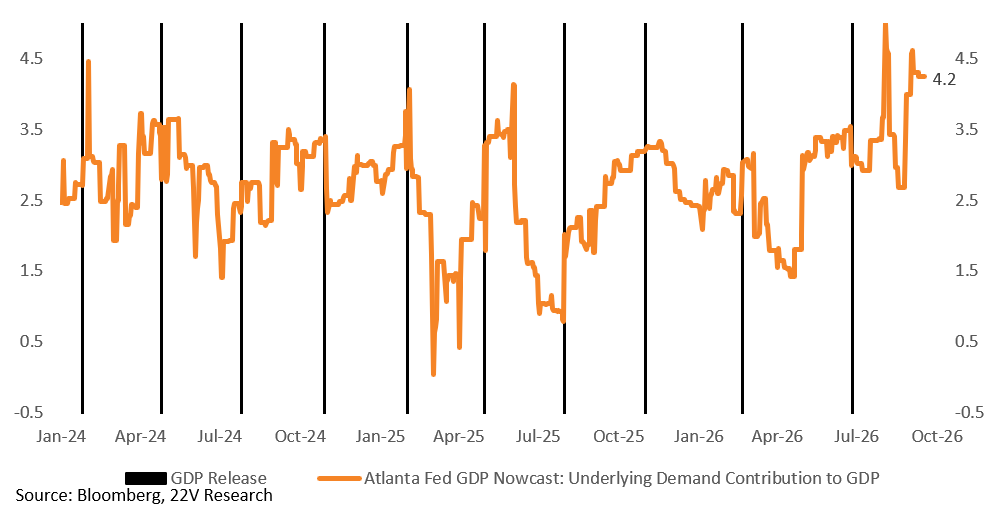
Economic growth needs to slow. Real demand is tracking ~4.2%. The risk to equity markets is if achieving that does end up requiring significantly tighter financial conditions/more rate hikes (>4). That is possible, but not the modal path right now.