DAILY STRATEGY: Main Point – We don’t expect much of an increase in 10yr yields or the expected fed funds rate FROM HERE. Even if today’s CPI data is hawkish. A ~5% 10yr yields is the level where investors believe demand destruction sets in according to our surveys and the Fed is unlikely to signal a well above 4.5% fed funds rate (current expectations). Investors assume some slowing given the current 10yr level. As that slowdown happens, WHICH IS NECCESARY, Price Momentum, AI buildout names, EPS Momentum and the Cash Return factor will continue to outperform. Non-AI related Cyclicals (consumer, housing, transports) will suffer relative.
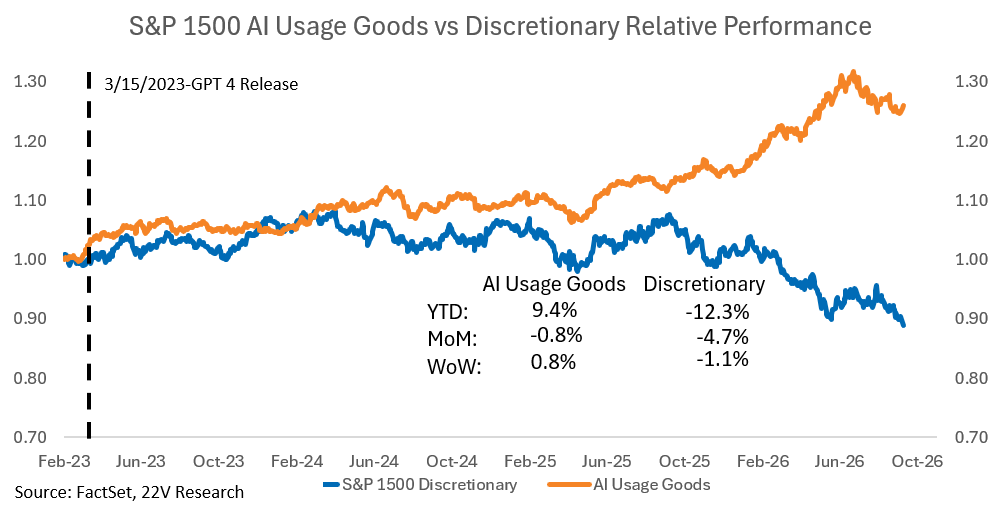
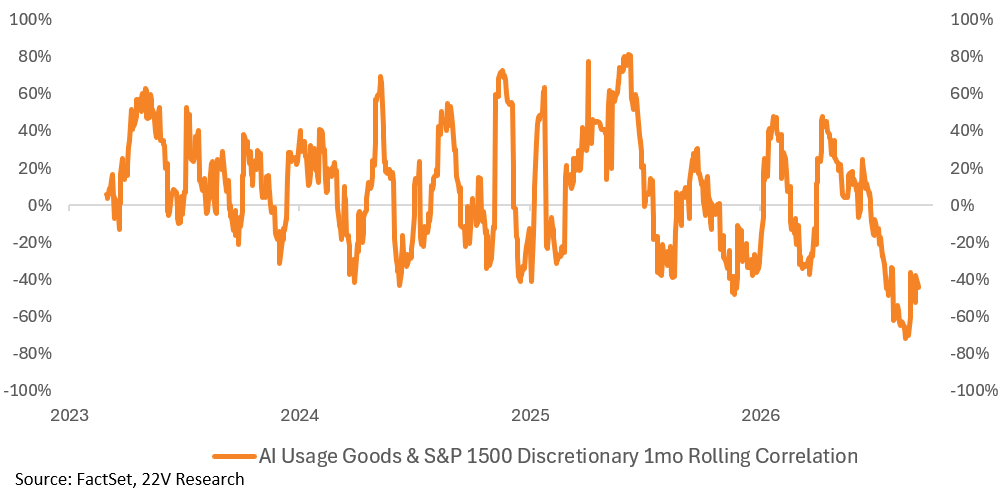
Below is the High AI Usage Goods Basket vs S&P Discretionary. The rolling correlation between AI Buildout names (proxied here with our AI Goods basket) and Discretionary has turned negative. That fits with our view that economic growth is too strong and the consumer, not AI capex, is likely to be the source of a slowdown.
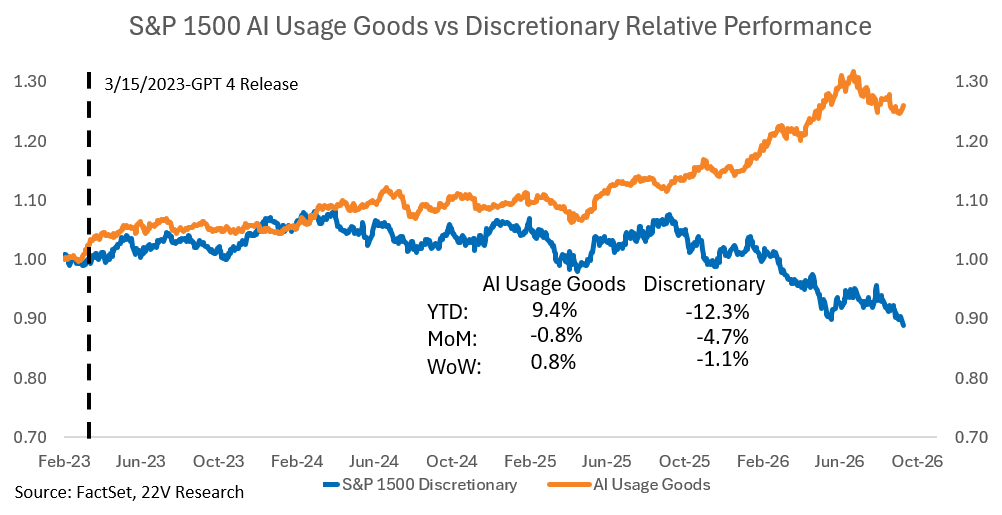
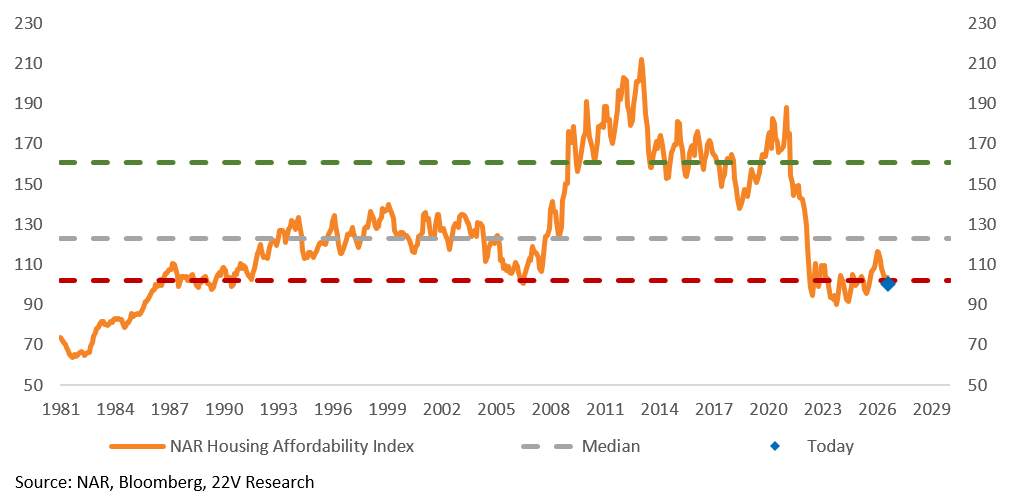
About 3 or 4 25bp hikes are priced between now and October 2027. Even if the CPI data today are hawkish, we would not expect a meaningful move higher in UST yields from here. Reasonable hawkish outcomes are priced. If UST yields remain around the current range (4.8%-5%), that will likely apply some restraint to economic growth over time. Or to put it differently, the market pricing in higher than 4.5% Fed funds rate doesn’t seem necessary to slow economic growth and inflation. 30yr Mortgage rates close to 7% and housing affordability at the 15th%tile historically should put further downward pressure on housing demand. Housing is already very weak though, which is why consumer spending needs to slow to lower inflation risk. Economic slowing is unlikely to come from the AI capex side.
AI capex holding up as the rest of the economy slows some favors the AI buildout names on a relative basis. Or companies that are less cyclical and using AI to increase margins/profits (software).
The points we make above are in the context of an economic speed limit that needs to be respected. The economic speed limit appears to be in the ~2% range. With the economy near full employment and inflation still above target, economic and labor market strength (growth is well above 2% now) show up through a more restrictive Fed path OR higher 10year yields. It does not show up in higher equity prices. The correlation between bond yields and stocks is deeply negative as a result. It’s counterintuitive, but a NON-RECESSIONARY increase in the unemployment rate would be CONSTRUCTIVE for equities. The unemployment rate increased in 2025 and S&P 500 multiples expanded. The unemployment rate is moving lower in 2026 and PEs contracting. FYI, if the unemployment rate were to increase, the speed limit for economic growth would increase. Gerard and I cover this more in a video HERE.
DAILY STRATEGY: Headline PPI was inline with expectations, but slightly on the hawkish side given the revision higher to the previous month. Headline PPI can be misleading though. What matters are the specific categories that translate into Core PCE, and most forecasters added about 4–5 bps to their Core PCE estimates after today’s report. Morgan Stanley now has August Core PCE at 0.24% m/m versus 0.20% previously, even after incorporating the expected methodology changes.
Airfares were higher than expected, which is important. One reason September was a coin flip, while 2027 rate hike expectations have been moving higher, was the expectation that higher diesel prices would eventually increase airfares. So even if we got a reprieve this month, the concern was that airfare inflation would increase over the coming months. But we didn’t even get the reprieve.
The 10yr is also sending a pretty clear message. The market does not want more dovishness, more fiscal, or higher oil prices. It wants inflation to start realizing closer to target in a durable and sustainable way. Hawkish Fed policy can help anchor long rates somewhat, but despite more hawkish comments and some decline in term premium, long rates have moved higher.
The difference between now and early August is that AI capex expectations kept accelerating, consumer spending reaccelerated, and oil prices increased. In short, that means higher nominal GDP for longer against a still-tight labor market backdrop, with the unemployment rate at 4.1%. Earnings remain really strong, which is the good news. But the economy needs to slow, and until that happens, financial conditions are biased to tighten, making it tough to be long risk assets.
Charts…
There are now 3.5 hikes priced in from now until end of 2027.
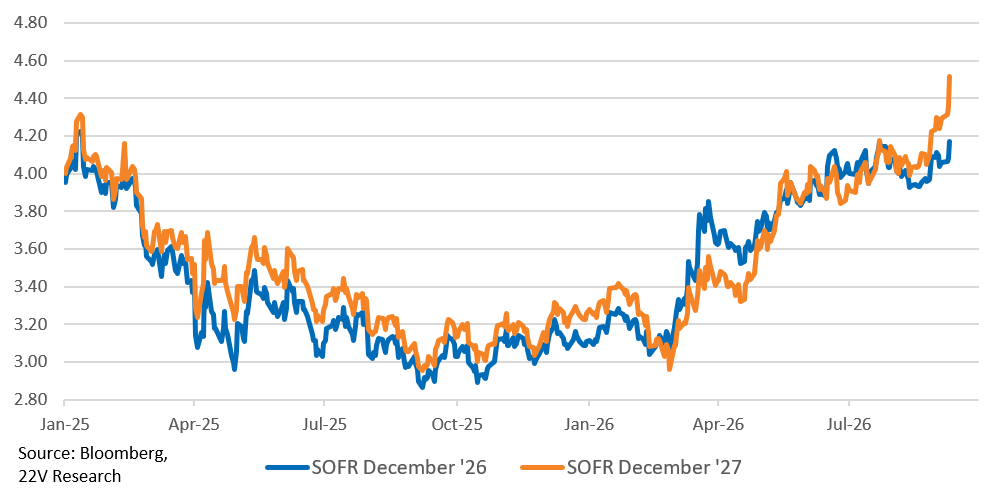
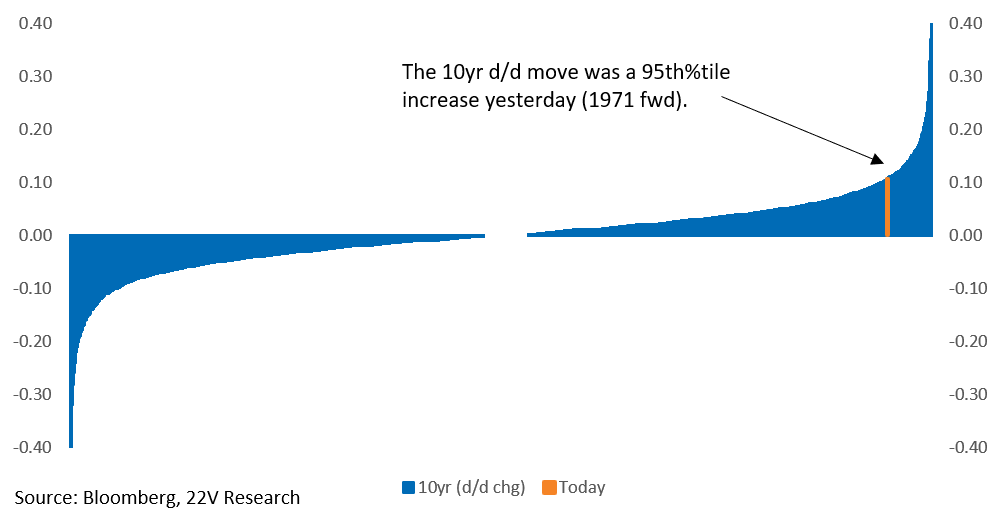
The 10yr had a 95th%tile increase yesterday since 1971.
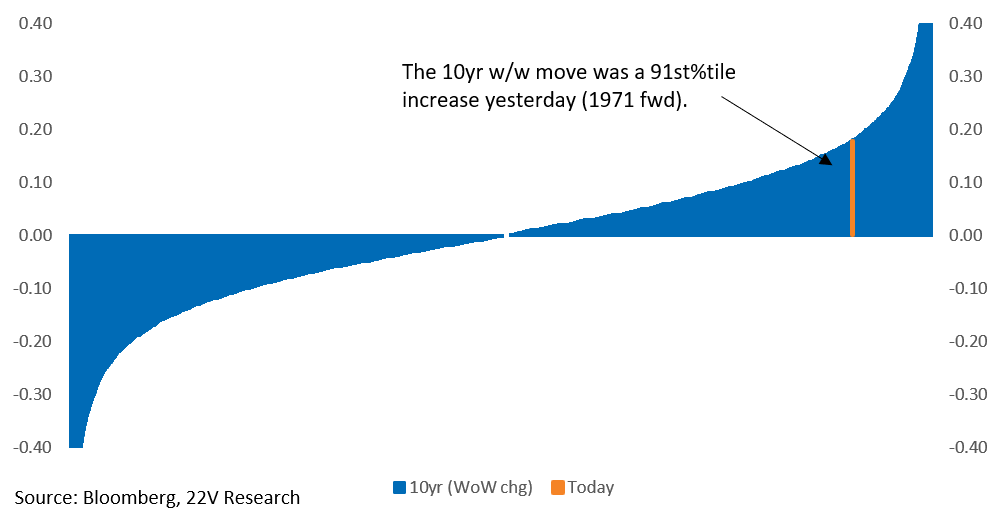
And a 91st%tile move w/w.
Housing affordability has fallen to its 15th%tile since 1981 using yesterday’s 10yr.
WEEKLY AI Update: Real GDP growth remains well above the economy’s roughly 2% speed limit, supported by both consumer spending and rapidly increasing AI-related investment. With AI investment unlikely to be a source of slowing over the next two years*, more of the adjustment will likely need to come from consumer expenditures. We estimate consumer spending growth may need to slow from 2.5%+ currently toward 1%-1.5% to bring overall growth back toward a pace consistent with target inflation.
The diverging forward outlooks are impacting equity internals. Buildout baskets are showing tentative signs of rebounding, while Discretionary continues to come under pressure. The rolling correlation between AI Buildout names (proxied here with our AI Goods basket) and Discretionary has flipped to negative.
*Dauvin Peterson, head of 22V Data and Infrastructure, continues to see strong fundamentals for compute and database. As he notes HERE, the earnings results and commentary from SNOW, PLTR, and DELL indicated an “incredibly positive” demand trend. Estimates for cumulative AI IT and Datacenter Capex are continuously increasing; Semi Analysis now estimates $11.1 trillion by 2030. If there is a capex cliff, it is unlikely there will be evidence of it soon. It is more likely that consumer spending growth needs to decline.
FYI, our AI Goods basket is available to trade via Morgan Stanley – ticker MS22AIGD Index on Bloomberg.