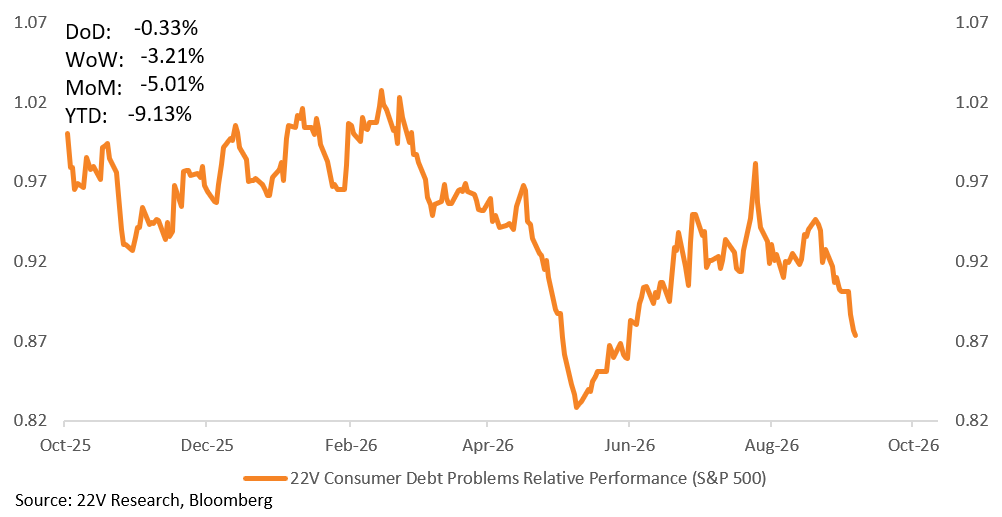
The consumer has remained stronger for longer than we expected, but that strength is increasingly part of problematic. Real GDP growth remains well above the economy’s roughly 2% speed limit, supported by both consumer spending and rapidly increasing AI-related investment. With AI investment unlikely to be a source of slowing over the next two years, more of the adjustment will likely need to come from the consumer. We estimate consumer spending growth may need to slow from 2.5%+ currently toward 1%-1.5% to bring overall growth back toward a pace consistent with lower inflation. Markets appear to be recognizing this: consumer stocks with lower interest coverage, higher near-term debt burdens and greater cash flow volatility have underperformed sharply since late July as investors increasingly price the need for tighter financial conditions.
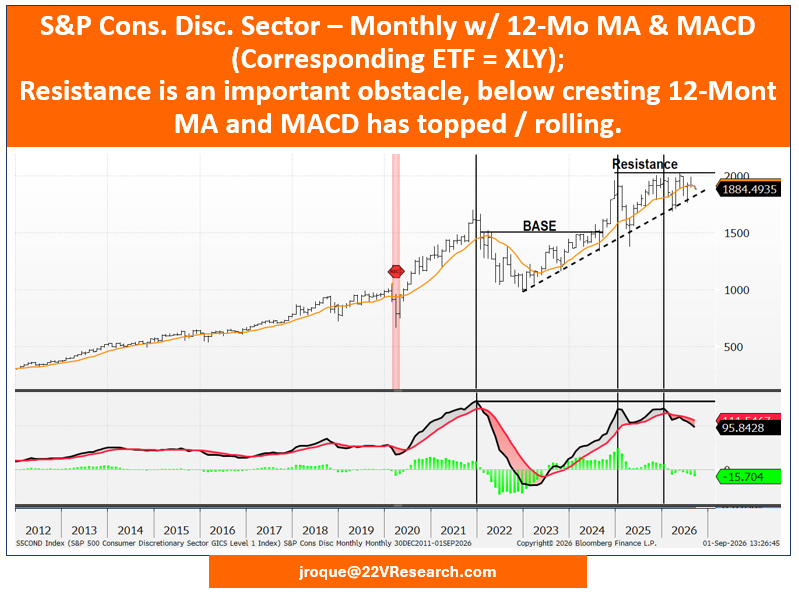
The technical backdrop reinforces that view. John Roque, 22V Technical Analyst, thinks Consumer Discretionary (XLY) has further downside, with the ETF below both its 50- and 200-day moving averages and momentum weakening across daily, weekly and monthly timeframes. Breadth is also poor: 59% of stocks in the sector have Weak/Poor Technical Scores, while just 36% are above their 50-day moving averages and 40% are above their 200-day moving averages. With XLY around 114.71, Roque sees downside risk toward 105 and identifies weakness across a broad group of consumer names, suggesting the pressure extends well beyond a handful of stocks.
Jeff Jacobson, 22V Derivatives Strategist, thinks the best way to express this view is through XLY put spreads extending through the end of October. XLY is already roughly 6% below its August highs, but its 17.7% weight in Tesla has helped mask some of the underlying consumer weakness as TSLA rallied roughly 24% from its July lows. With Tesla now back near the level from which it sold off following its July earnings report, renewed TSLA weakness could add another leg lower to XLY, particularly if higher oil prices and rates continue to pressure the broader consumer complex. Tesla is expected to report earnings on October 22, making late-October XLY put spreads particularly attractive: XLY fell 4.6% on the day of Tesla’s last earnings report, and at a minimum, Jacobson expects XLY volatility to remain well bid into the event.
Here is a XLY hedge trade Jeff suggests at this time:
Buy XLY Oct 23rd 110/100 put spread for ~ $1.90 (XLY 111.85 ref)
Trade Details:
- Buying the 10-point wide put spread that starts a bit more than 2% lower and has more than six weeks of duration
- TSLA is the 2nd largest weighting at nearly 18%, and is expected to report earnings on 10/22 (the day before expiration)
- We saw XLY decline by 4.6% in July when TSLA last reported earnings
- Trade has a nearly 5x to 1 max payoff on the limited-risk hedge/bearish bet
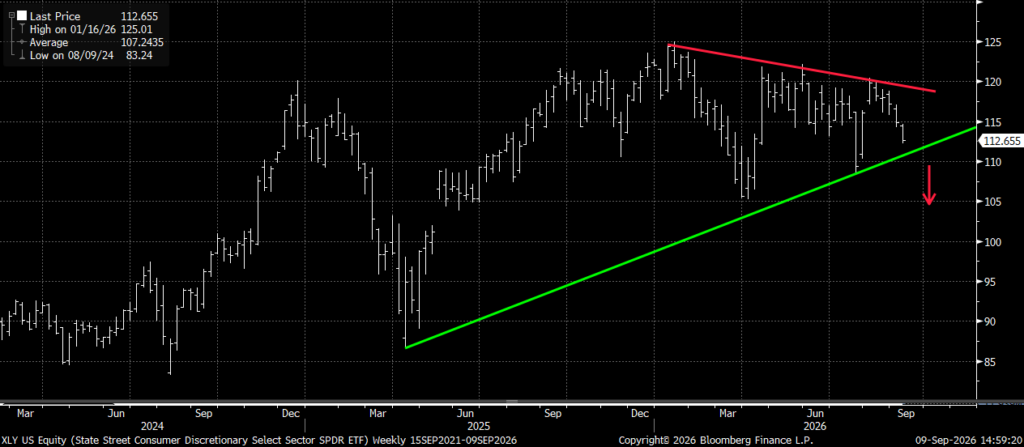
XLY – targeting a potential break below the longer-term support after multiple failed attempts of a breakout