July PMIs Make Clear the Cyclical Recovery
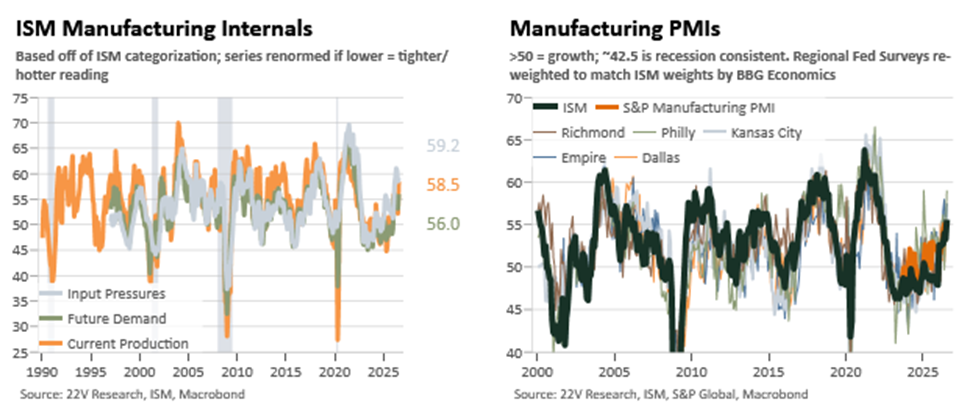
- The July PMIs point to an increasingly strong demand backdrop and broadening out the recovery which, in fits and starts, started roughly 18 months ago.
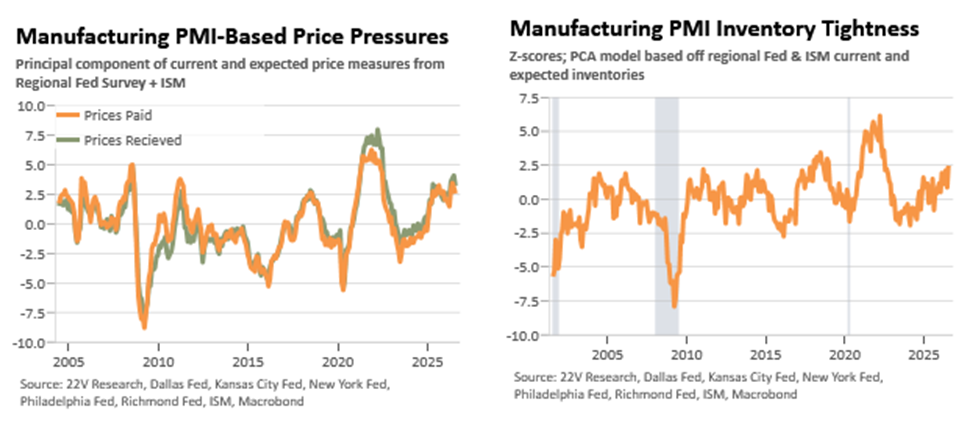
- Supply shocks, competitive pricing dynamics, and generally robust demand have been consistent themes across the PMIs.
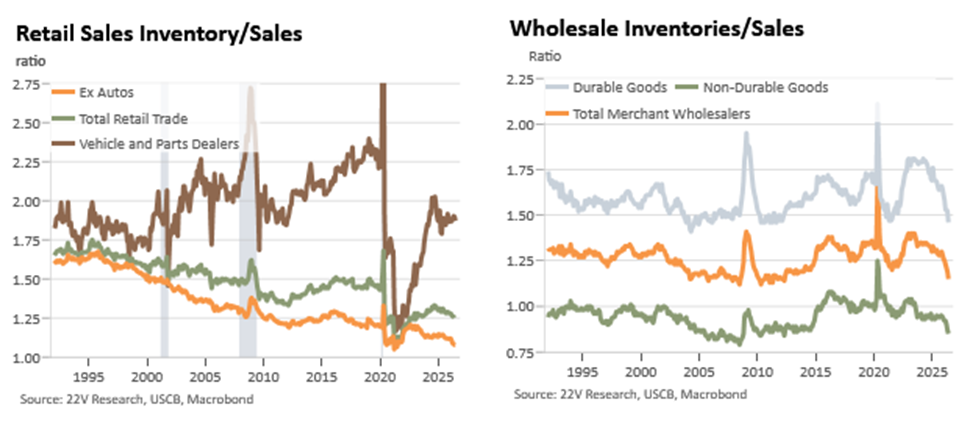
- There had been concerns that the nascent recovery this spring, after tariffs damped the rebound last year, was largely driven by inventory restocking following the tariff-related whipsaws of 2025. The evidence increasingly says that is not the case.
- The comments attached to the ISM report paint a picture of firms which are largely playing catch up to upside surprises in demand and reacting to chaotic supply chains.
In late 2024 there were budding signs that the then 2+ year period of doldrums for much of the cyclical economy was starting to slowly rebound. The combination of hoped for policy shifts (corporate tax cuts and deregulation) layered on top of a gradual exit of the post-reopening doldrums to boost sentiment. Tariffs ultimately dragged that down for a time, but the underlying economic momentum has been consistently building since then. The AI boom has been humming along and its impacts are growing clearer in the domestic activity data but growth is not all that. We can see this most easily in the steady uptick in measures of nominal activity since their troughs roughly 18 months ago but it is now increasingly apparent in the PMIs, durable and capital goods orders, lending standards, and the strength of consumer services spending.
In 2026, there have been worries that the rebound in many sentiment-led cyclical measures largely reflected an inventory restocking cycle after tariff-related whipsaws. While inventories are low, they continue to decline relative to sales across wholesale and retail. Firms seem unable to catch up with accelerating demand, accentuated by the supply chains snarls brought on by the war and tariffs.
Cyclical durability, the AI boom, and continued supply chain impacts are all acting to push up (short run) assessments of appropriate interest rates. Housing and consumer durables may continue to lag the cycle given interest rate dynamics, but the overall growth is strong and rates, whether led by the Fed at the front-end or the market at the long-end, are reflecting a strong nominal and improving real economic backdrop.
Quotes below from ISM survey respondents highlight the strong of demand amid a very strange supply-side and policy backdrop; these broadly line up with what we have taken aware from earnings season so far.
- “We are seeing a very opportunistic and reactive marketplace.”
- “Now that it seems the buildout of AI infrastructure globally is nearing real activation, products going into data centers are at full procurement and manufacturing ramp-up.”
- “No normalcy in sight in the world of metals. It makes me yearn for the coronavirus pandemic chaos, which was more manageable than whatever this is that we are in.”
- “The pricing volatility and lead-time extensions in this market are arguably worse than the pandemic era. During COVID-19, we saw a surge of price hikes and inventory buy-ups, which caused constraints that eventually leveled out. We are seeing nothing but consistent upward trends for both pricing and lead times that show no signs of slowing down.”