May CPI: a Soft Topline a Bit of a Head Fake
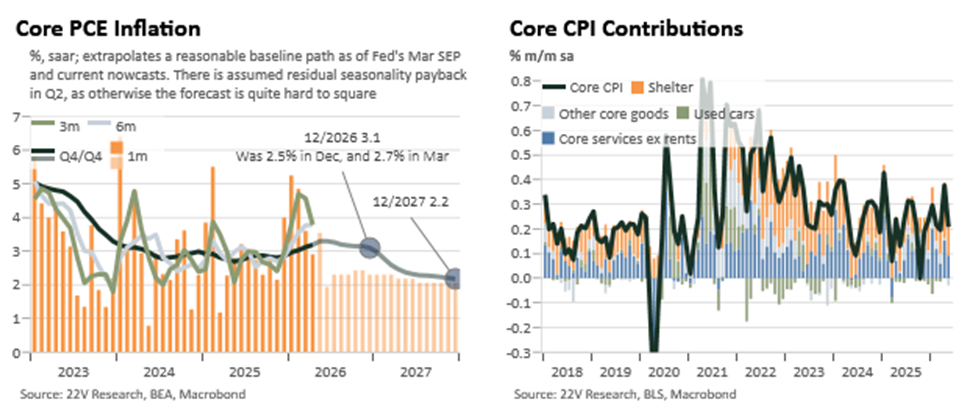
- May core CPI at 0.21% came it a little below our read of the informed consensus. This was driven by the softest core goods print in years, but shelter and core services ex housing inflation both remain fairly firm.
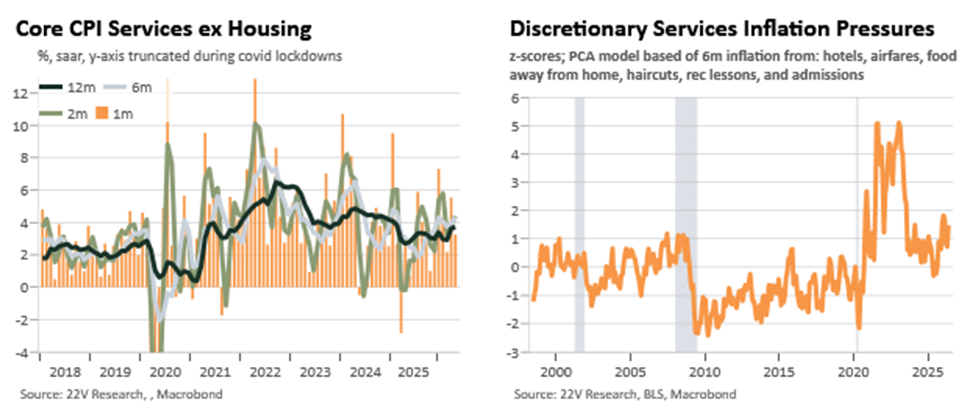
- The acceleration in inflation is not just about tariffs or oil prices, as core services ex housing have accelerated to 3.7% in CPI and ~3.5% or a bit above in PCE.
- Core PCE tracking estimates generally shifted a bit higher after the release, once again reminding that the weight and input differences between the two indices can be consequential. The Fed’s core PCE forecast for 2026 is likely to move from 2.5% in Dec and 2.7% in March to 3.1% in June, perhaps higher.
- For most at the Fed, this release is unlikely to do too much to shift their policy views on the margin. The doves will point to some plausible sign of deceleration in core goods and its attendant upward pressures elsewhere, while the hawks will see a one-off bit of relief as the median and stickier parts of inflation remain too hot.
Core CPI came in just a bit below our read of the informed consensus at 0.21% in May. The composition of the report and the readthrough to core PCE were both a bit less optimistic than the initial takeaway suggested though.
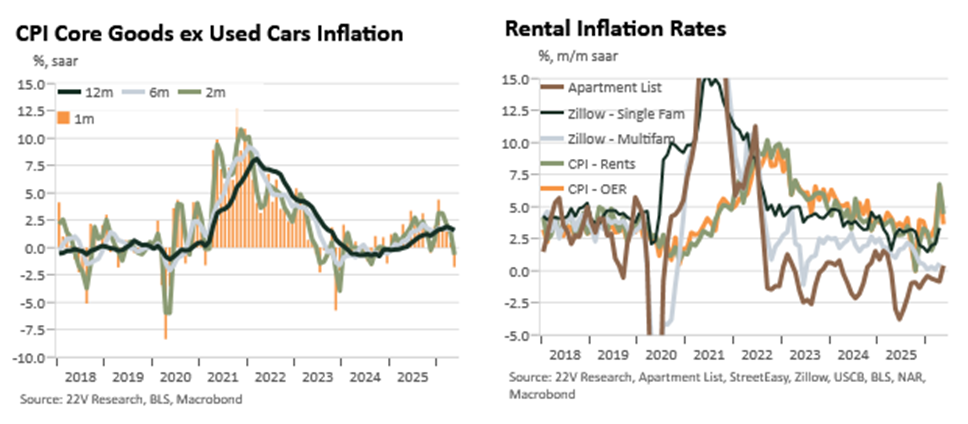
The mild beat was driven by the softest print in core goods ex used autos since mid-2024. The was led by surprising softness in new autos as well as broad-based very mildly negative prints across the sector. There may be some drag in core goods as tariff related pressures, at least for now, finish being passed through to consumers. It could also be that the inflationary pressures from oil prices most immediately lead to substitution effects away from other lower cost core goods items, rather than lower purchase frequency services. The AI booms impacts on consumer core goods pricing will likely start being felt in the coming months.
Housing inflation seems to be troughing, although the noise related to the BLS’ imputations around the government shutdown makes a strong conclusion difficult to draw on the subject yet. Private sector measures tell a mixed story but recent accelerations in large coastal markets (NYC and SF standout), along with still fairly fast single family rental price gains as potentially setting a floor in the BLS measures going forward.
Core services ex housing decelerated a bit m/m but the trends there remain unpleasant. The soft floor in the data seems to be appreciably hotter than a target-consistent pace and the skew remains to the upside. Discretionary services inflation seems to be sticking higher as well, with rental car inflation showing the most downside, perhaps as a result of reduced driving, but not overall travel, demand following the gas price surge.
Despite the softer topline, there was little underlying comfort for the Fed in this release. The tariff impulse may be fading but the core impacts of the war and AI boom are likely to keep gradually building. On top of that, while this year has not shown obvious signs of residual seasonality it may still be present in some of the data, an uncomfortable thought for H2 if true.