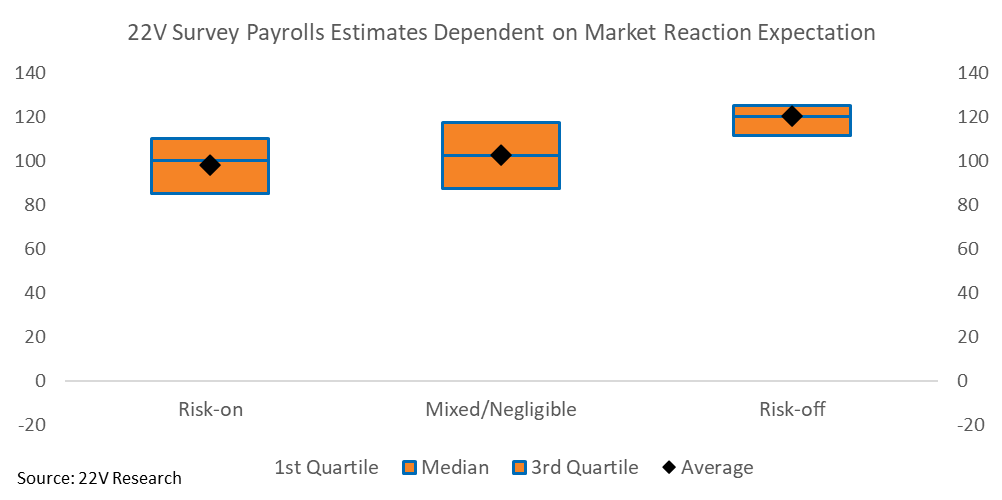
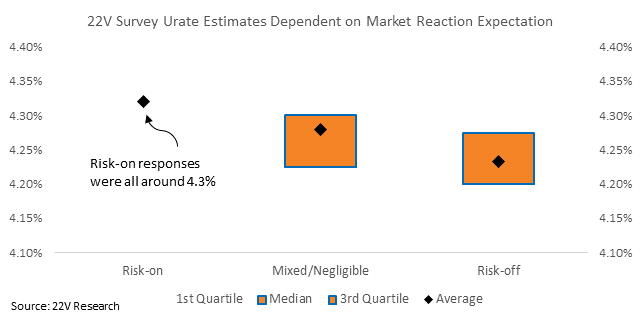
DAILY STRATEGY: Main Point – Investors view strong payroll data as risk-off. This has evolved from strong data being risk-on at the beginning of the year, to mixed last month, and now risk-off (full survey HERE). And much of the note today was inspired by a “perception gap” conversation we had with long time client/friend yesterday.
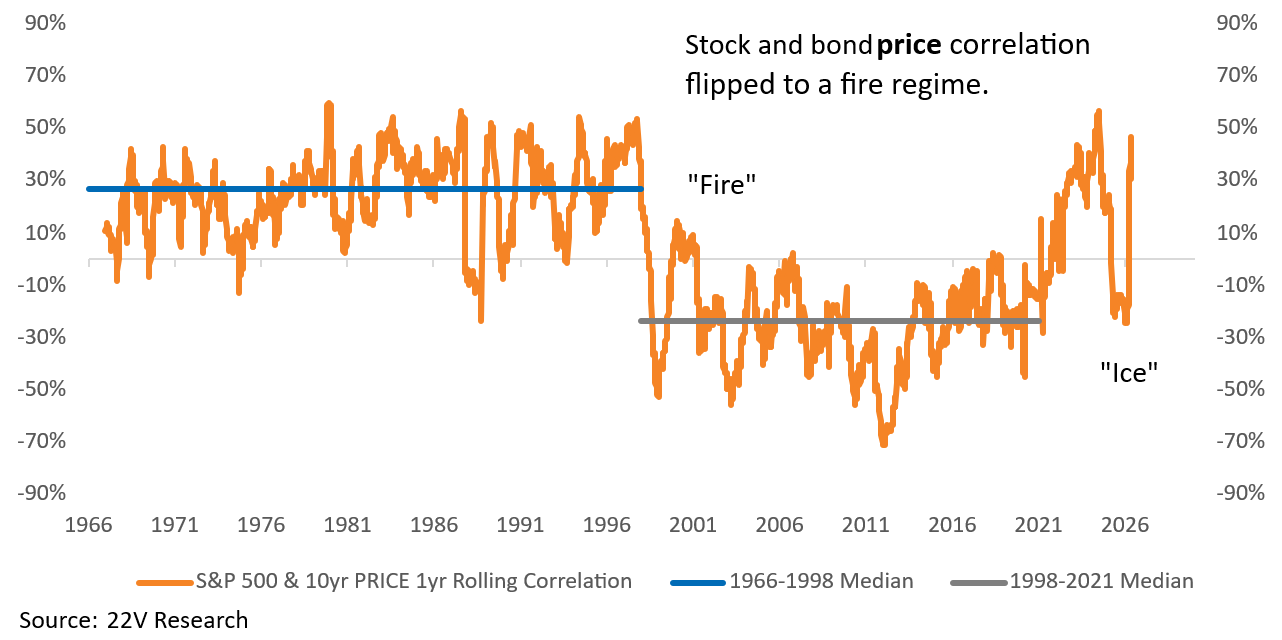
The 22V view has been roughly the same for the last ~4 years. That inflation, not weak economic demand, is the constraint to the economic cycle, overall markets, Cyclical sectors, and fundamental factors (Earnings Momentum, Growth Momentum, Value, GARP). That is how the market has traded. Higher 10yr yields, especially when yields move above 4.5%, have been a headwind for stocks, Cyclical sectors and fundamental factors. And vice versa. This is the opposite of how markets traded in the post GFC period up.
In the post GFC period, lack of economic demand (private sector deleveraging cycle), very little inflation (which introduces significant downside risk to EPS) and the Fed Funds rate being stuck at the zero lower bound was the backdrop. Higher 10yr yields were associated with higher stock prices.
Pointing out that the current economic regime is different (lack of demand/inflation are not a problem now) and that higher inflation is the constraint on the economic cycle has served us well. Many investors we talk to still anchor to the post GFC regime. That creates buying opportunities if risk assets sell off on weak data and inflation expectations decline.
To think about this differentially or to use a thought experiment, if the unemployment rate moved up to 4.6-4.7% range, economic growth slows to below 2%, Core inflation declines and fed cuts are priced again. We would be bullish, LONGER TERM (markets probably sell off first). There are limits to how much the urate can move up. Eventually bad news would become bad news. That would likely be closer to 5% on the urate.
And we are not bearish now (not particularly bullish on overall markets either. Focused on internals and idio) because financial conditions are easy and the bar for fed tightening is still high. Tighter labor markets would increase the odds of fed tightening and tighter FCI. That would be concerning for risk assets IF it happened.
Back To The Here And Now: Our investor survey consensus estimates for today’s data are Payrolls +110k (vs +85k sell-side consensus), AHE 0.3% (in-line with sell-side consensus), and urate 4.3% (in-line). This month, the threshold for a risk-off reaction is payrolls above 120k, while payrolls below 100k would be risk-on. For the unemployment rate, a reading below 4.23% (unrounded) would be risk-off, while a reading above 4.3% would be risk-on.
Based on the survey results, if the payroll data came in at the Bloomberg consensus estimates (never happens, but it’s a decent place to start when thinking about market reactions), the market reaction would be risk-on. An inline reding would not materially increase concerns about inflation or Fed tightening.
Investors would likely view inflation as a much bigger problem and UST yields would increase across the board, if the urate declined below 4.2% and wage growth came in above .3% MoM.
Charts…
Investors view strong data as risk-off.
Higher yields has been negative for stocks and vice versa in the post COVID regime.
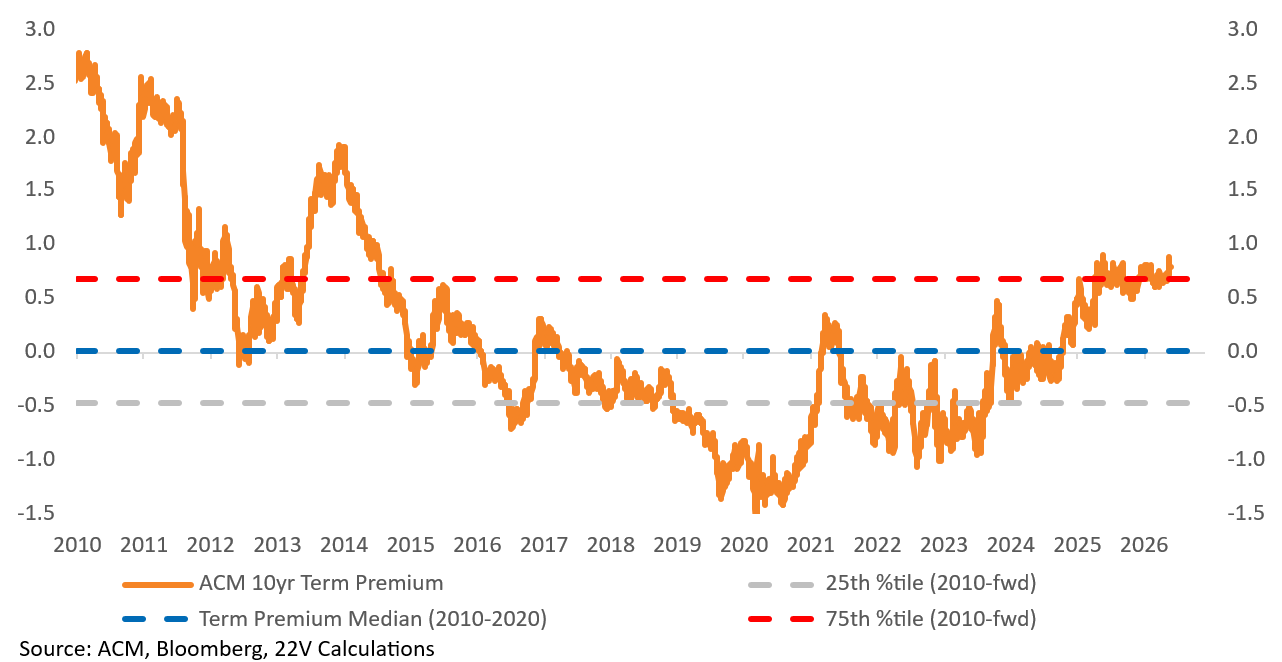
10yr term premium (the “risk” imbedded in 10yr yields. Most associate that risk with inflation) is well above levels that existed in the post GFC period. That is consistent with inflation being more of a risk now to markets.
The closer the unemployment rate is to NAIRU, the worse for risk assets. Investors’ thresholds align with the Fed’s NAIRU estimate.
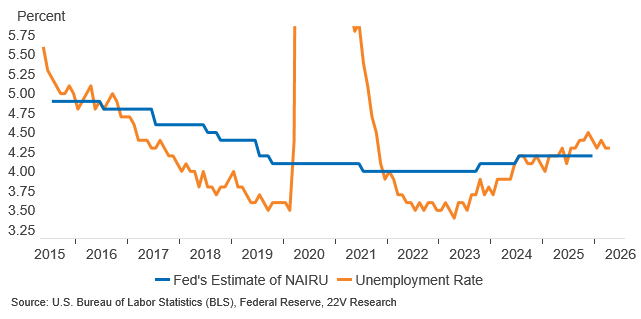
Labor weakness is not the concern.