DAILY STRATEGY: Main Point – Inflation is the main constraint on the economic cycle. That is why some slowing in consumer spending growth in the back half of 2026 (which is our call) is not negative for retail stocks and other non-AI related Cyclicals. 10yr yields and inflation expectations will likely move lower IF the consumer slows some. Some decline in inflation expectations would LOWER the risks to the economic cycle and support Non-AI related Cyclicals.
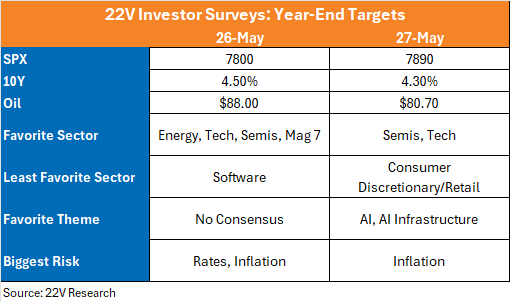
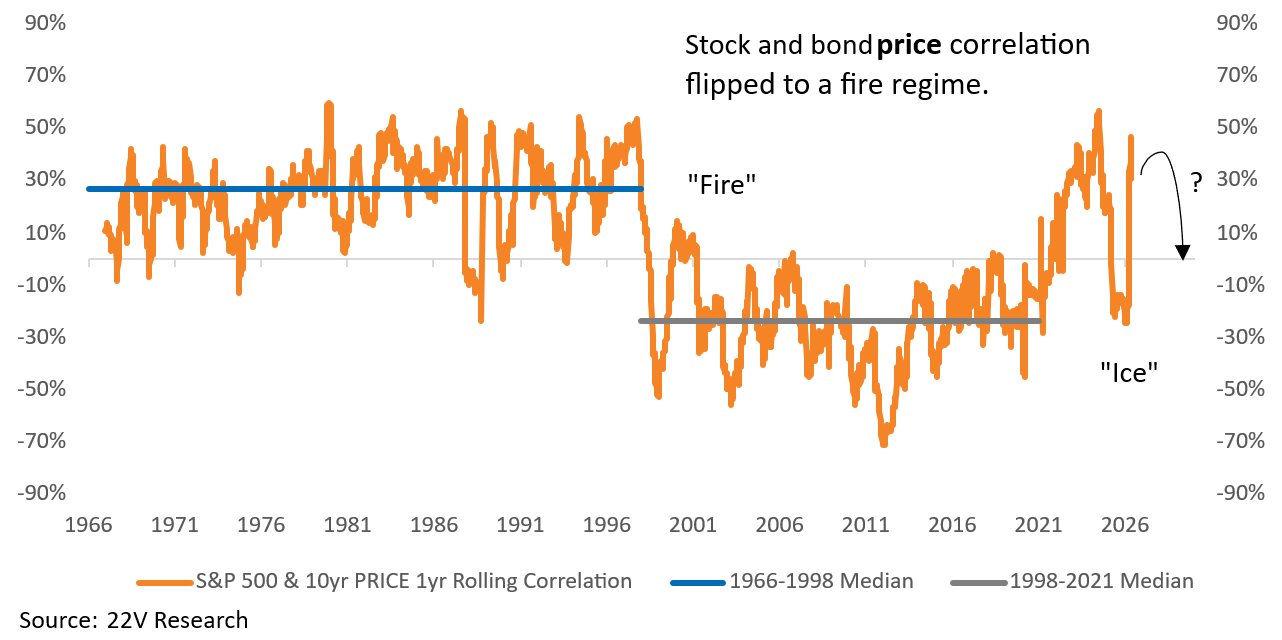
We hosted group events over the last few days. A brief summary of the survey results are below. Commodities and Tech (Semis/Hardware) are consensus longs and investors remain bullish with a 7800 year-end price target for the S&P 500. Investors seem to agree with our view that inflation, not weak demand growth, is the constraining factor on the economic cycle. If inflation is the constraint on the current economic cycle (HERE), the more inflation moves above the Fed’s target, the tighter financial conditions need to be. That explains the negative correlation between bond yields and stocks.
In the current cycle, Consumer Discretionary stocks perform poorly as 10yr yields increase. The theory being AI capex plans are set and unlikely to change much. If 10yr yields are moving higher to slow economic growth and contain inflation, the consumer (~70% of the economy) would likely be the driver of weaker economic growth. FYI – Downside inflation surprises would be a significant positive for risk assets and non-AI related Cyclicals (HERE).
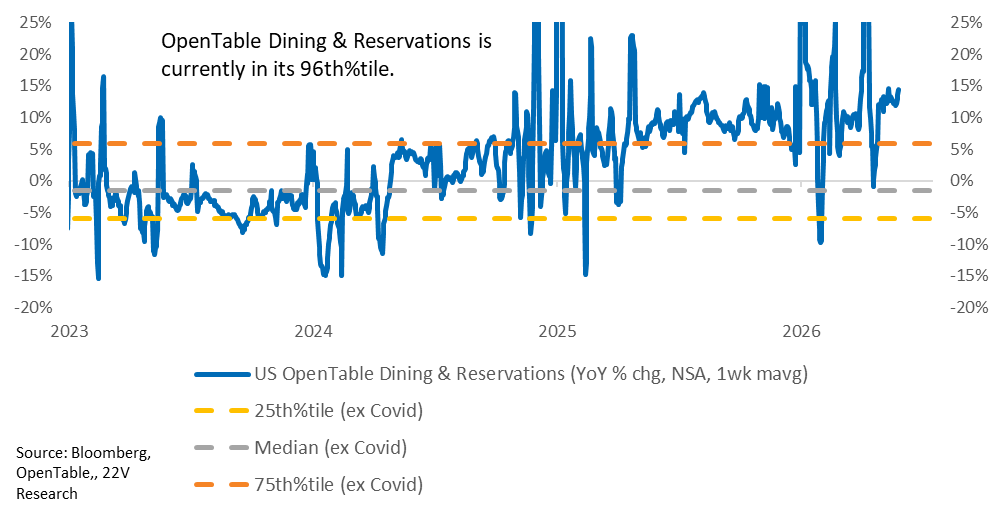
Consumer Spending Remains Strong – From the Bernstein Strategic Decisions Conference, 22V’s Bank Analyst, Bill Hebel, notes that both JPM and BAC see the consumer as still healthy, with JPM emphasizing high volumes and low credit losses. BAC’s data show clients consistently moving roughly $4.5–5 trillion per year out of checking into the broader economy, with MTD spending up about 5% (including higher airline, gas, and restaurant spend). Day‑to‑day activity has not yet been hurt despite affordability concerns, with BAC stressing employment as the key driver and the wealth effect helping too (around 50% LTVs in its home loan business). Loan growth is mixed by product, and near‑term delinquencies remain in good and even improving shape. According to BAC, Employment key – yes, airline spend is up (more tickets bought + higher prices), gas spending higher, restaurant spend higher, but employment is the key.
Current data trends continue to reinforce our high conviction call that the low end consumer does not determine the business cycle. The higher end consumer does. As BAC pointed out yesterday (highlighted above), wealth effects are helping consumers now.
Charts…
The negative correlation between stocks and bond yields reinforces our view that inflation is the constraining factor on the Cycle.
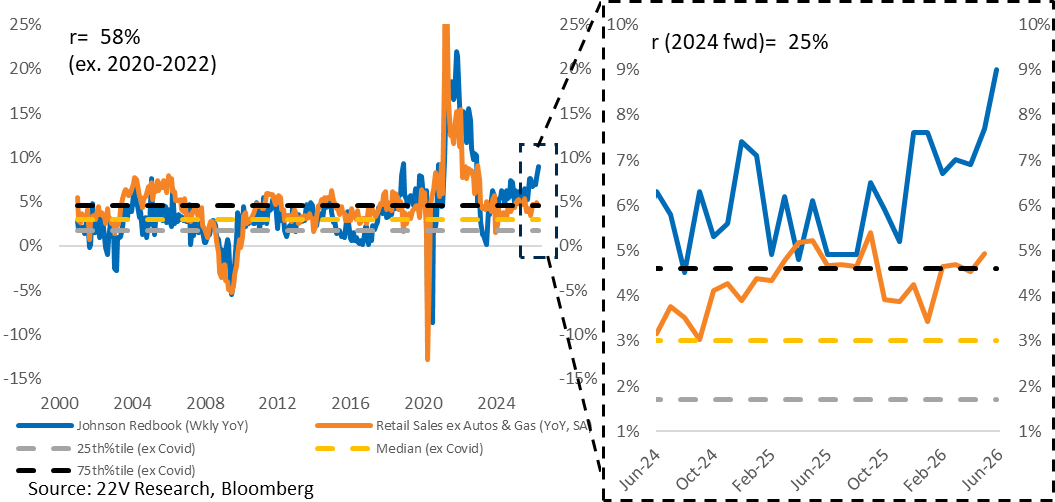
Consumer Spending Remains Strong – Johnson Redbook and Open Table data remain unusually firm.
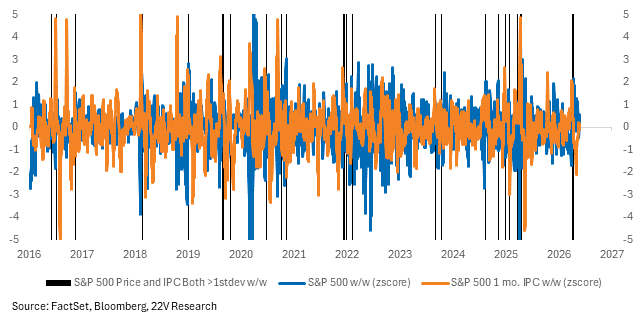
FYI – There was talk about a pain trade higher with higher correlations at both group events. We looked at this historically. There have been 22 instances since 2016 in which the S&P 500 w/w AND the S&P 1mo IPC both increased > 1 sigma (2.3% and +0.07, respectively). The most recent occurrence was after the market bottomed at the end of March this year.