

It is not news, as the report was out a few days ago. But for the first time in a while, the Cotality Single Family Rent Index (SFRI) shows an uptick in its 12-month inflation rate.* The rate of inflation is still very low, just 1.3%. And this is 1.9 percentage points below the 12-month inflation rate in the PCE Housing Price index, which enters the core with a weight of 17 ½%.
The single best measure of marginal rent inflation, which very predictably leads average rent inflation as measured in the government statistics, is the BLS’s “experimental” New Tenant Rent Index (NTRI). But an issue with the NTRI is that it is noisily estimated in real time. Only “seasoned” vintages of it are reliable, for reasons I have discussed in earlier notes. And according to the BLS’s own research, the contemporaneous rate of inflation in the SFRI is a better measure of what seasoned vintages of the NTRI will eventually show than are contemporaneous measures of the NTRI itself. So, I pay close attention to the SFRI, even though there is room for slippage in all these metrics. Slippage of say, up to 100 bps, is a reasonable price to pay when the gap between the marginal and average is very wide, although that used to a somewhat larger issue than is now the case.
Very tentative evidence
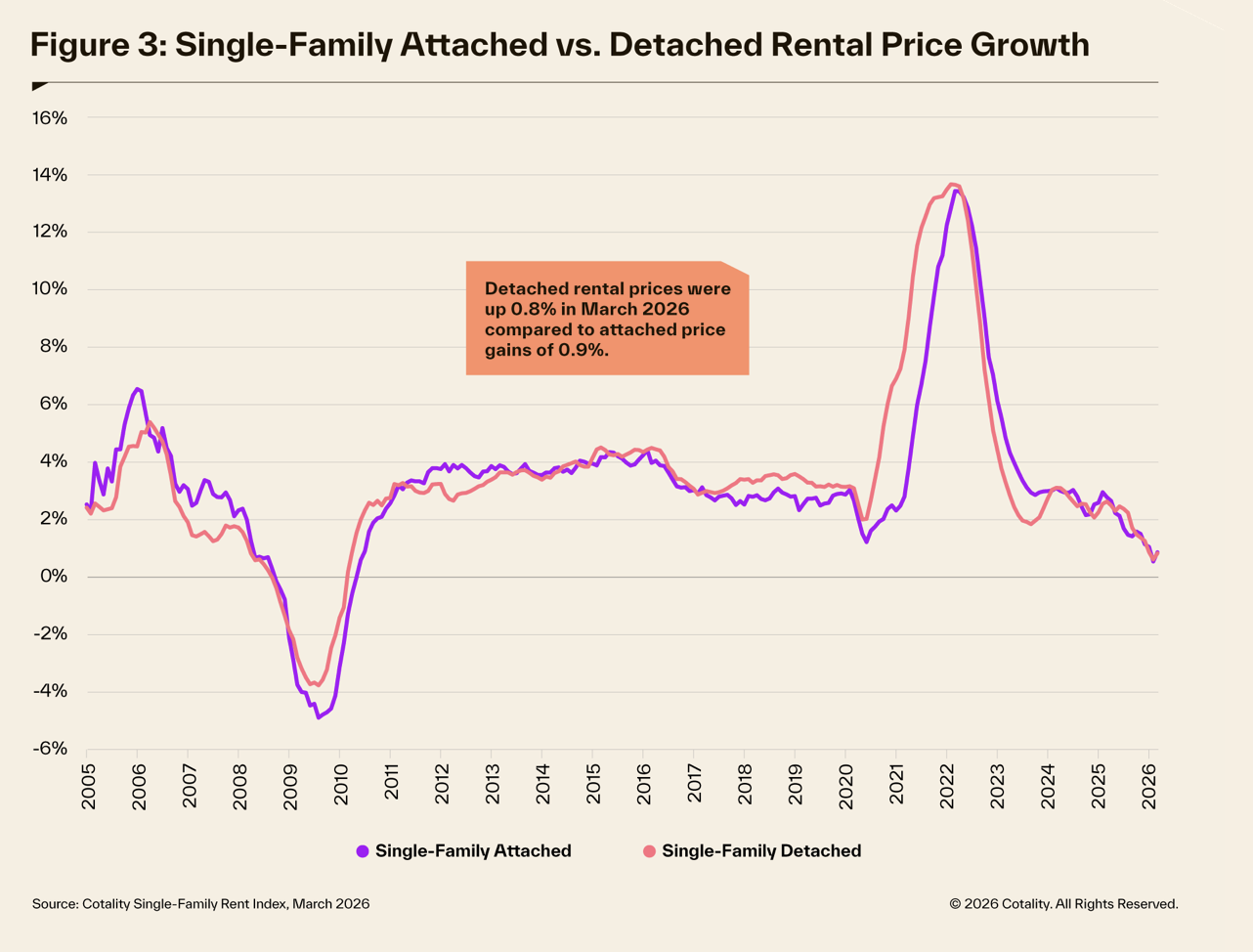
This is the third chart in their standard presentation. I show it simply because it has few lines and is less noisy. But you can go to the linked report if you want to squint at the aggregate series.
The practical implication of the tentative evidence of stabilization in the NTRI inflation rate is to leave me comfortable with my current estimate that marginal rent inflation is running at 1 ½%. Given the inflation pressures elsewhere, this depressed reading in marginal rent inflation is a meaningful mercy. It is just that I am not currently under pressure to upsize the scale of this blessing.
And to put it in context, the current rate of supercore services inflation is running 60 basis points too high to be consistent with the Fed’s presumed 2% inflation target, even if we factor in that goods price inflation will retreat to zero (although not below) and that housing inflation is “really” running at 1.5%, i.e., in line with my estimate of the marginal rate.
Supercore 12-month is 60 bps too high, even with some friendly assumptions about the rest
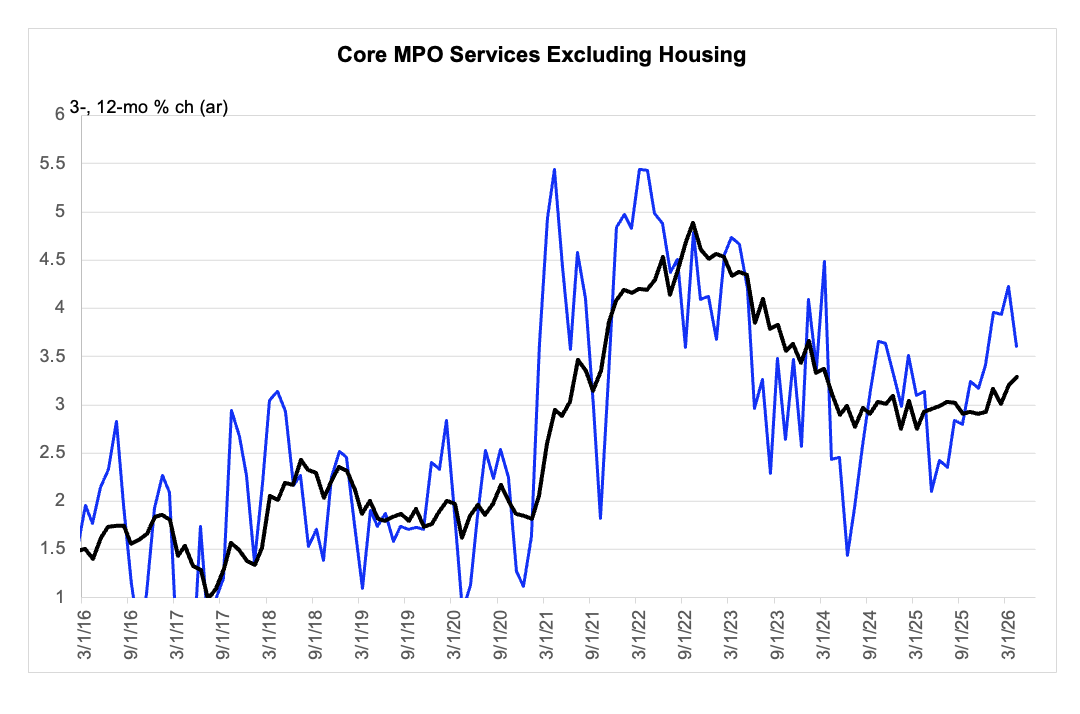
Data are actual to March and estimate for April.
MPO stands for market-price only, which excludes noise from financial services in particular. Controlling for that noise generates a hopefully stable downward bias of about 30 bps. So this series is consistent with 12-month supercore services inflation running at 3.6%, about 60 bps too high.
* I refer here not to the current time series. I am referring to what is shown in the monthly reports, the data behind which are subject to modest revision. This is the first time the lates tick has been up, in a while.

