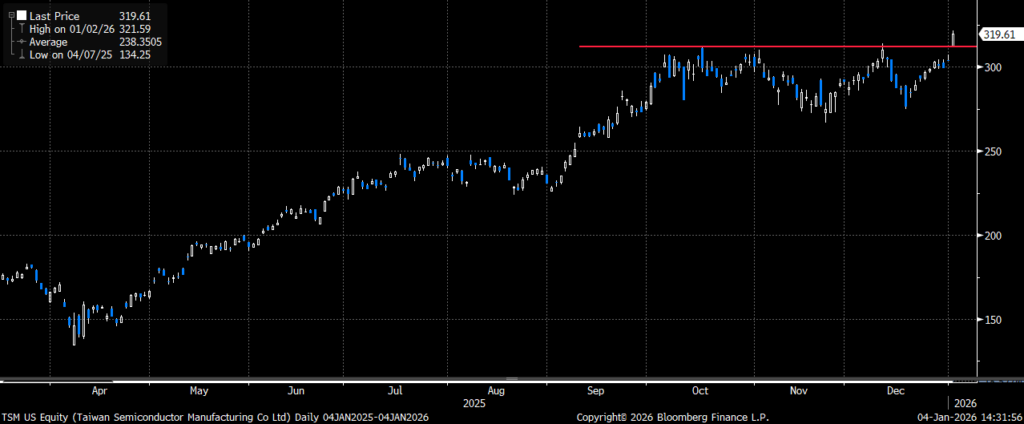
As we start the new year, volatility (VIX) continues to hover just above the one-year lows. When volatility is this cheap it remains an asset class you want to own to express viewpoints, whether as a cheap hedge, or as a limited-risk bullish bet. The news over the weekend on Venezuela should be a reminder that the unexpected can and will continue to happen, and why owning “cheap” vol continues to make sense. With that being said, the S&P (SPY) has effectively traded in a rather narrow range between 650 and 690 for the better part of four months. Therefore, I prefer to own vol in other areas of the equity market that have also seen their implied vols move lower as VIX has dropped that have had more realized volatility.
VIX continues to trade just above the one-year lows
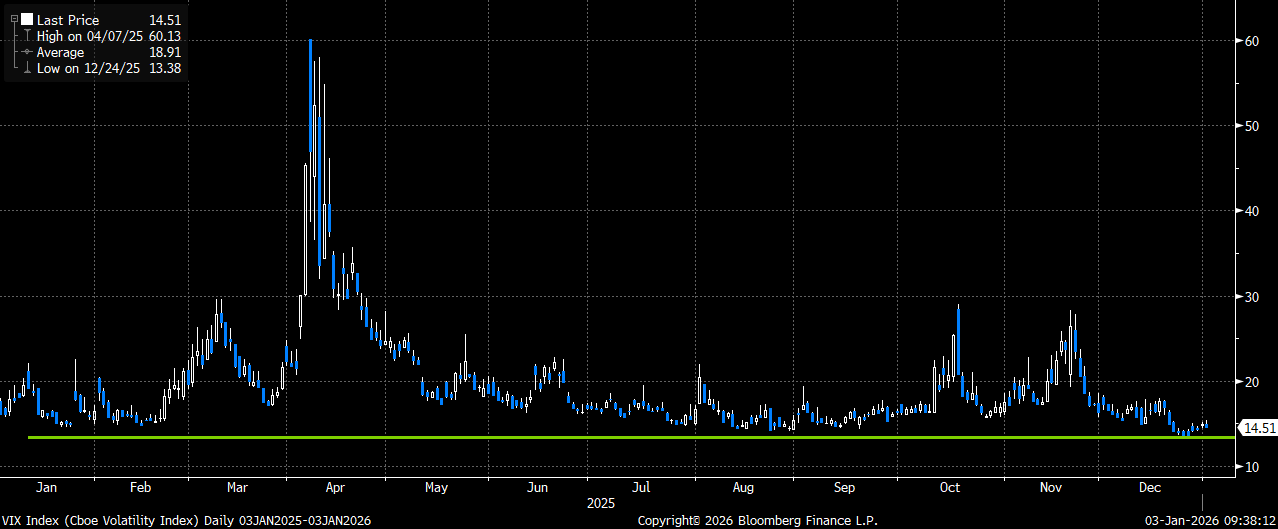
S&P (SPY) has traded in a tight range between 650 and 690 since September
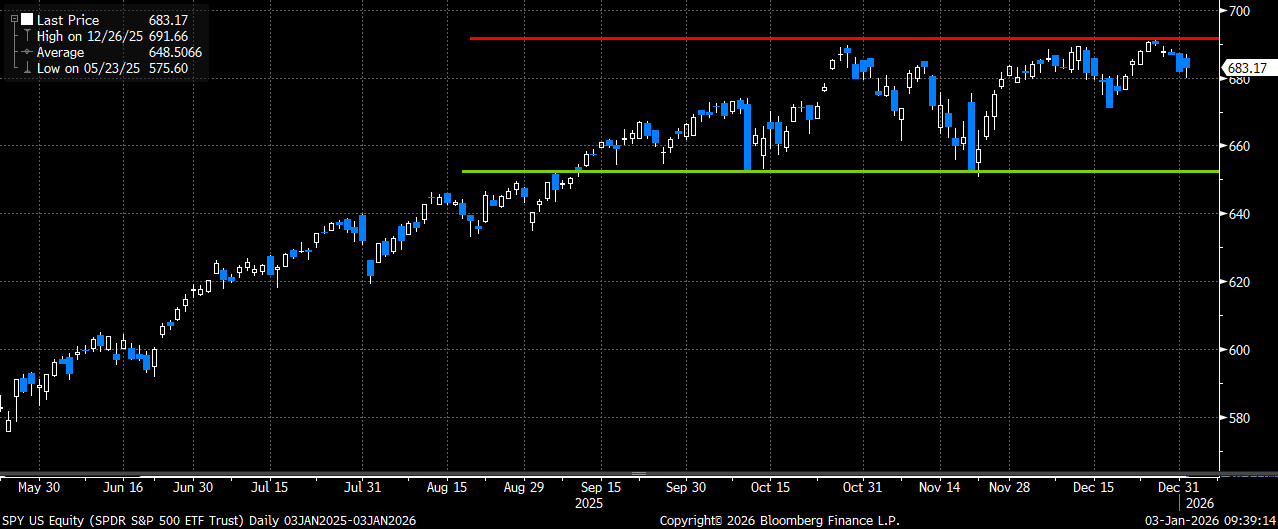
We have been talking about the equity market broadening out trade at 22V for a few months now, and I thought the action on Friday (first day of the trading year) typified this. While the tech-heavy Nasdaq (QQQ) was down 19bps, we saw nice gains in small-caps (+106 bps), energy (+2% in XLE and XOP) and regional banks (+ 66 bps). In fact, I don’t think I can ever recall a day where the semis (SMH) gained nearly FOUR percent AND the Nasdaq was down on the day. This clearly speaks to money continuing to rotate out of most of the Mag7 names, yet being re-deployed to other areas of the market. Should this rotation continue, you want to own cheap calls in areas of the market that should benefit from both a strengthening economy as well as money being allocated away from this “crowded” mega-cap names into new sectors.
Massive divergence between SMH and QQQ speaks to the relative weakness in the Mag7 names
With that setup, here are a few upside trades I like to play the broadening out theme further as we start 2026 using cheap upside calls.
Trade #1 – Feb KRE upside calls
Buy KRE Feb 20th 67 calls for ~ $1.60 (KRE 65.24 Fri close ref)
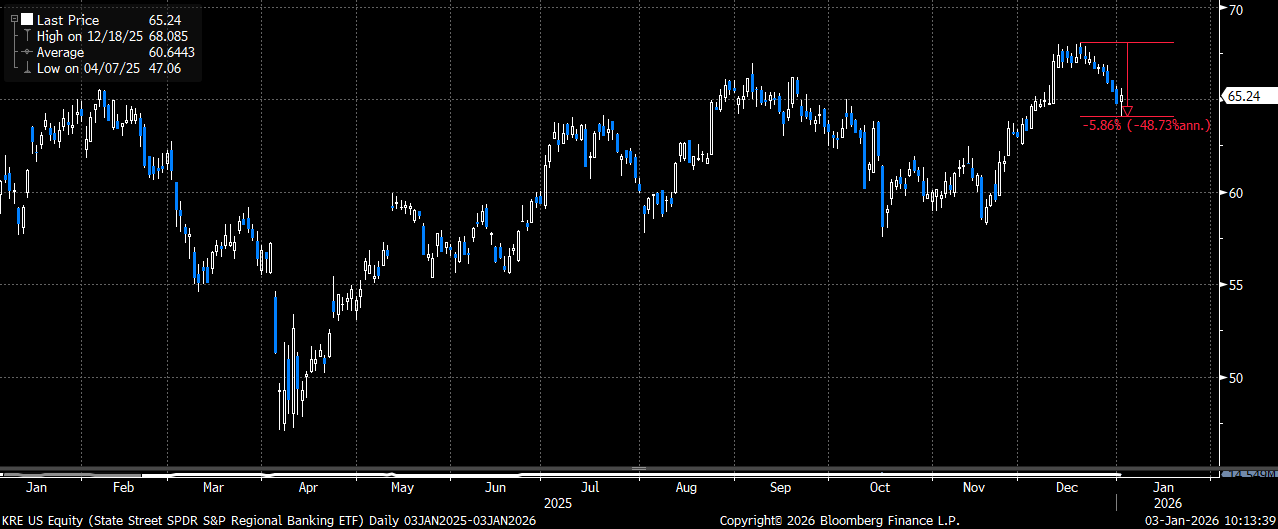
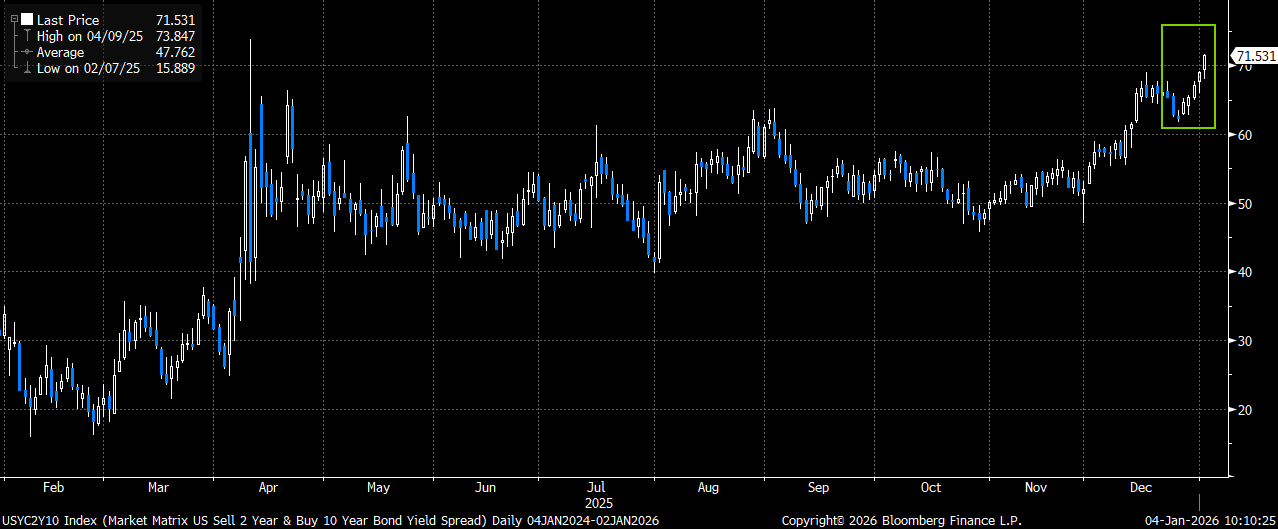
After breaking out to new highs in early December, we saw a bit of a pullback in the main regional bank etf (KRE). I believe this 5%+ pullback has created an attractive entry-point to add the upside Feb calls. In addition, with the Fed cutting short-term rates AND yields on the longer-end continuing to move higher, the 2/10 spread just hit a new relative high. This dynamic should help drive NIM for the group which should continue to give a bid to the sector. What I like about owning Feb calls too is not only does that allow time for trade to work (seven weeks until the calls expire), but that will also capture earnings season for both the regionals as well as the larger money center names. Should we hear positive news on the net interest margin front, as well as on a “strong” consumer, I believe the regionals should continue to perform well and are likely to eclipse the highs from December.
KRE had a nearly 6% pullback after hitting fresh highs in early December. This looks like an attractive entry-point to play for new highs thru earnings season.
The 2-year/10-year spread continues to make new relative highs as the curve steepens. This should help sentiment/margins for the regionals
Trade #2 – Emerging Markets (EEM) Feb upside calls
Buy EEM Feb 20th 57 calls for $1.00
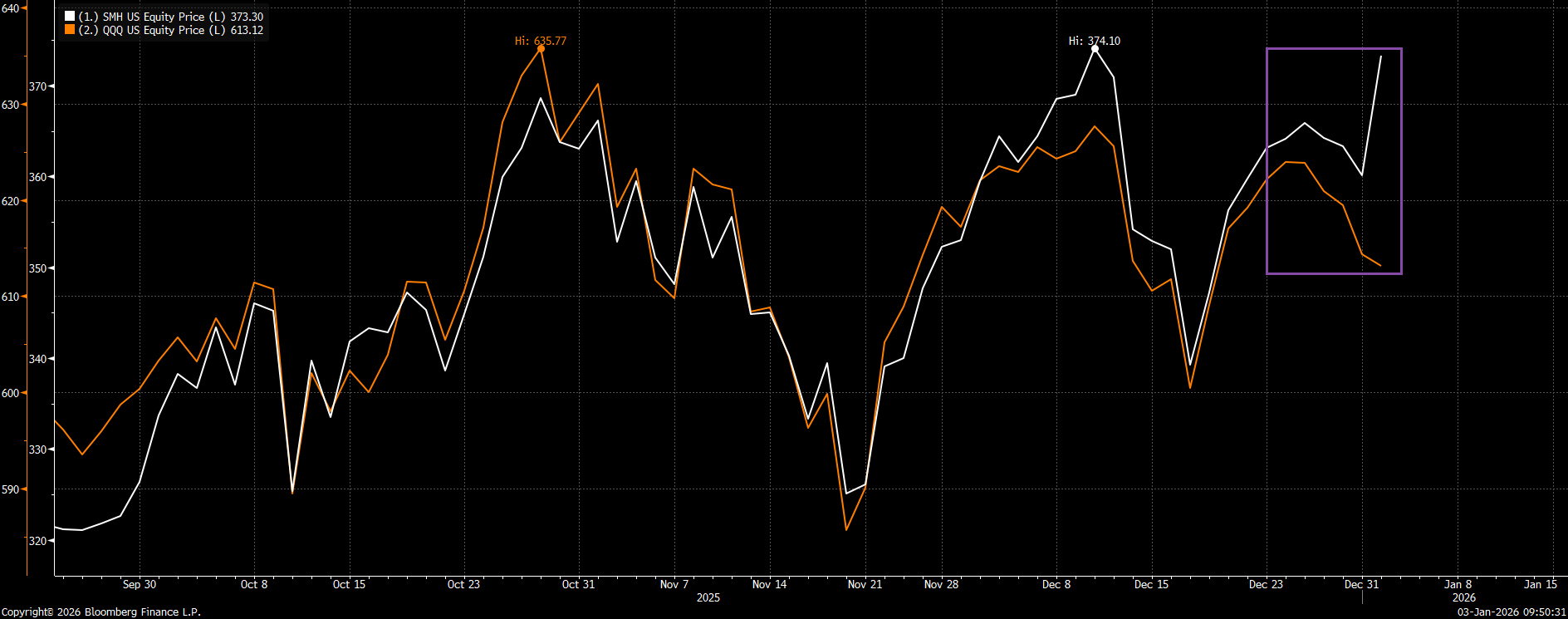
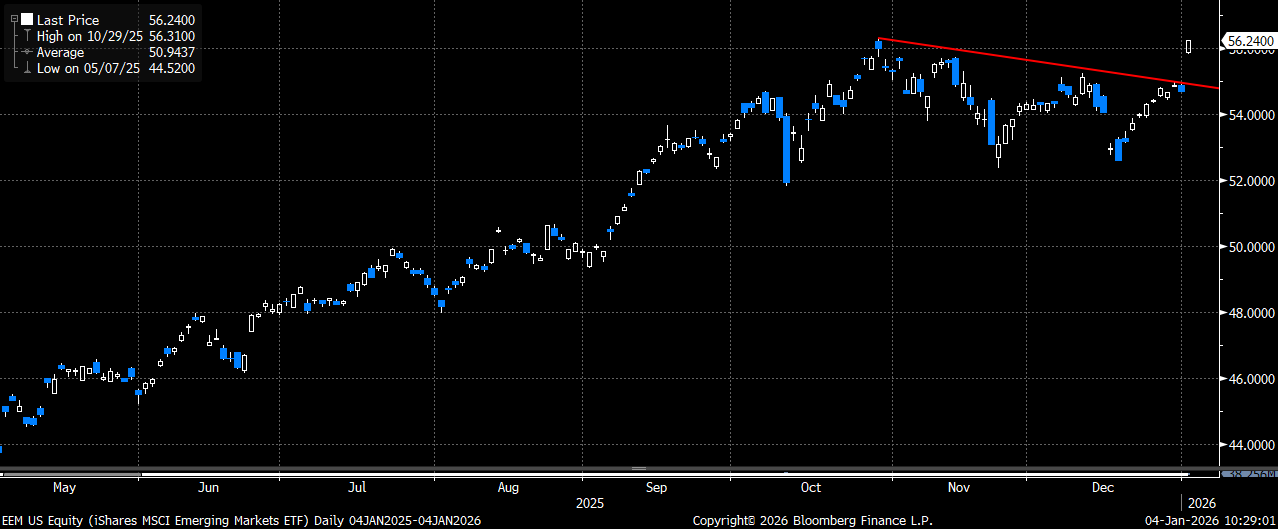
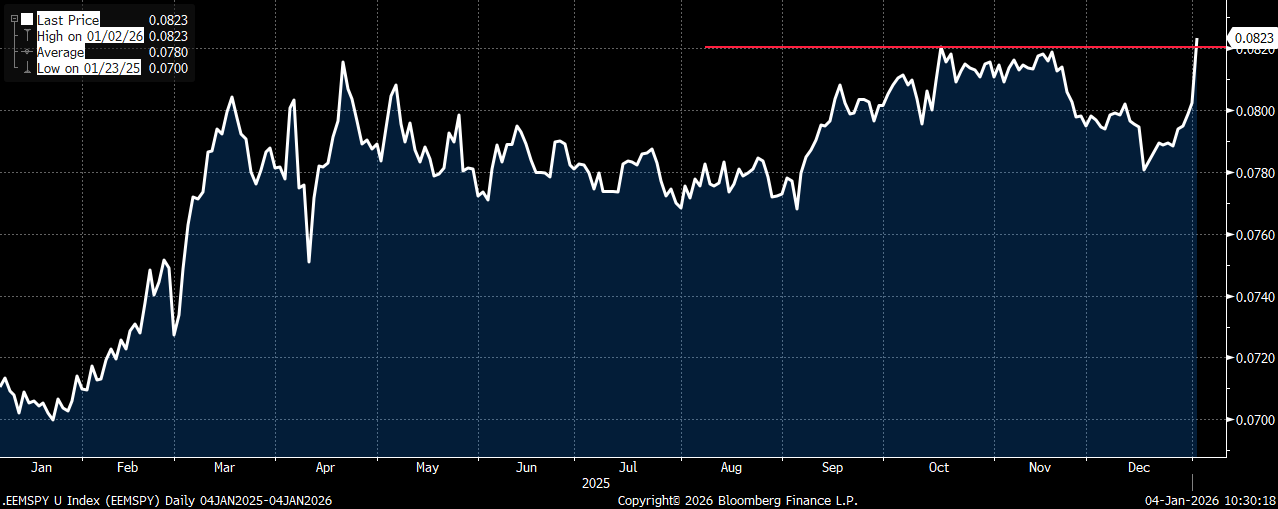
The weaker US$ continues to support owning other (cheaper) markets. In fact, as the US$ index (DXY) declined from ~ 108 to 98 last year, we saw EEM nearly DOUBLE the performance of the S&P (+34% to +17.7%). I continue to expect the US$ to remain under pressure, and the emerging markets to continue to outperform. EEM started the year with a bang (up nearly 3% on Friday), and in doing so it not only broke above the October downtrend resistance, but the EEM/SPY relative spread just made a fresh high (after months of consolidating). Finally, the largest weighting in EEM is Taiwan Semi (TSM) at over 12% and that too broke out to a new all-time high on Friday as the AI semi trade continues to gain momentum.
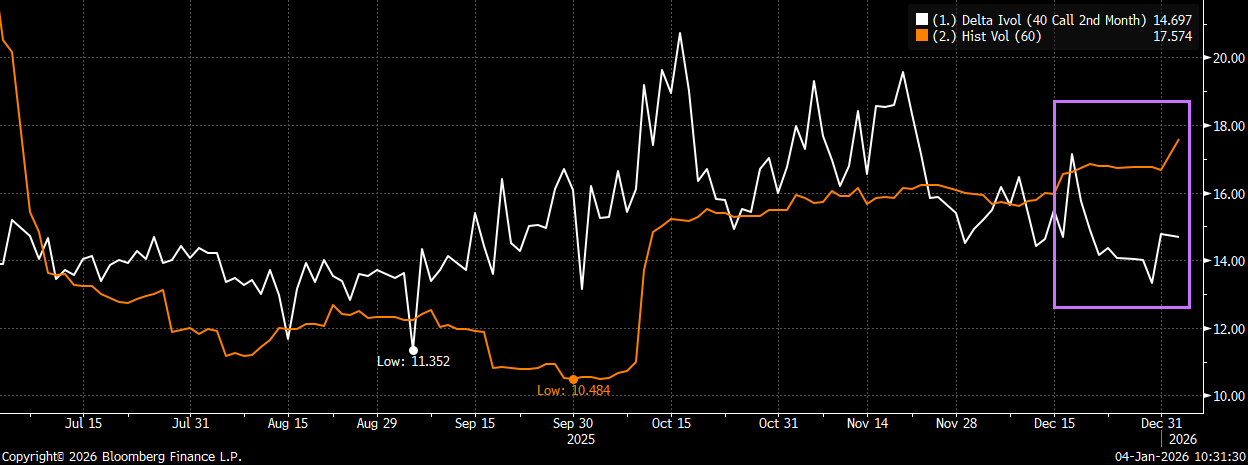
What I also like about owning EEM calls is that 2-month (Feb) implied vol on the 40-delta calls is down sharply from the October highs and now trades at a decent discount to 60-day realized vol. The calls start just over 1% above current levels and have nearly 7 full weeks until expiration.
Please contact me or the 22V sales team for updated pricing and execution capabilities for either idea.
EEM was up 34% in 2025 vs a 17.7% gain for the S&P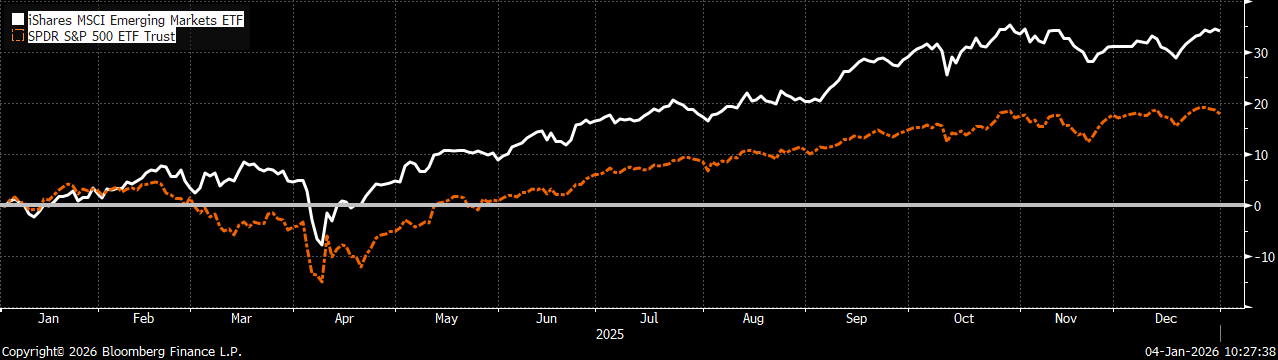
EEM with a breakout above the October downtrend
EEM/SPY relative spread with a breakout to new highs after months of consolidation
EEM 2-month (Feb) 40-delta call implied vol is not only down sharply from the Oct highs, but also trades at a steep discount to 60-day realized vol
TSM broke out to new all-time highs on Friday