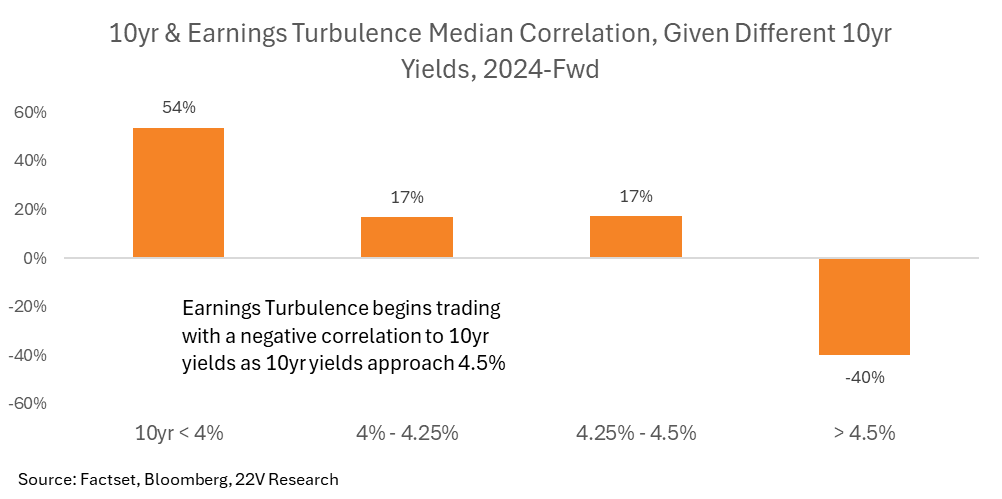
DAILY STRATEGY: With 10yr yields back to ~4% and high frequency data looking solid, being short 10yr bonds (long yields) is interesting now. A move higher in 10yr yields would be a headwind for high dividend paying stocks and the Low Vol factor in general.
The 10yr has had a tough time moving meaningfully below 4% even when concerns around the labor market were more intense. That is a result of nominal GDP growth consistently tracked 4.5%. Hard data or corporate commentary (banks, travel cos, and retailers this earnings season) and the recent stabilization of the labor market continues to support personal consumption. All else equal, 10yr yields have an upward bias. Especially if the Fed is easing lowers 2yr yields.
Banks should benefit from a steeper 10s-2s curve from here. All things equal, the riskiest factors (unprofitable small, debt risk, Retail investor favorites) should EVENTUALLY face headwinds as 10yr yields move higher. At first, stronger growth driving 10yr yields higher is not an issue when starting at 4%. Historically, it has not paid to fade risky factors until 10yr yields move toward 4.5% (HERE).
FYI – Yesterday, Michelle Meyer, the Chief economist of Mastercard’s Economic Institute said consumer spending had ACCELERATED into the first half of November vs October. Spending is tracking +3.6%, in line with Mastercard’s holiday spending forecast. Economic growth is firm, and the Fed is accommodative.
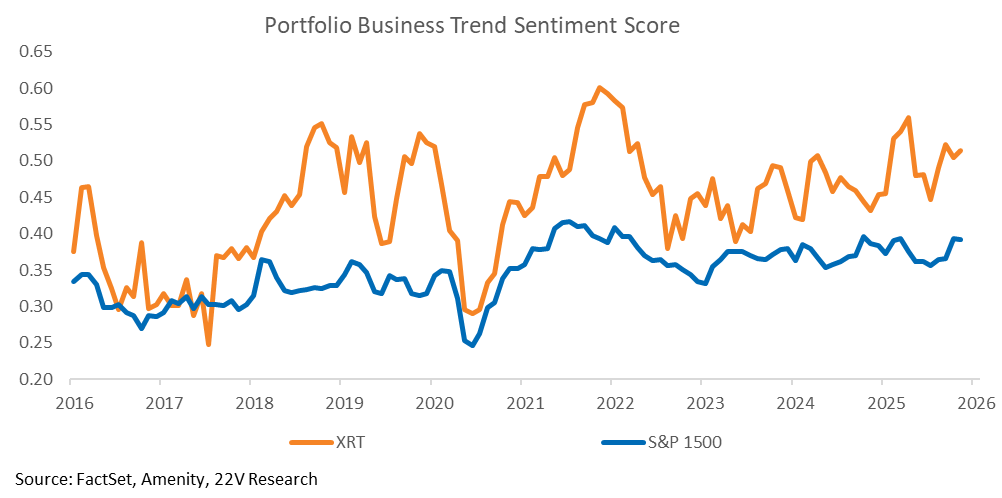
We Like Being Long Discretionary Now – 3Q Retailers earnings have been better than expected and the macro backdrop is supportive. Taken in aggregate, XRT company managers had an 81st percentile business trend sentiment score in 3Q. Labor market tail risks have been a significant overhang on the group along with tariffs. Both those headwinds seem to be fading. The lower end has struggled, but they should see short term relief from the OBBB in 1H26.
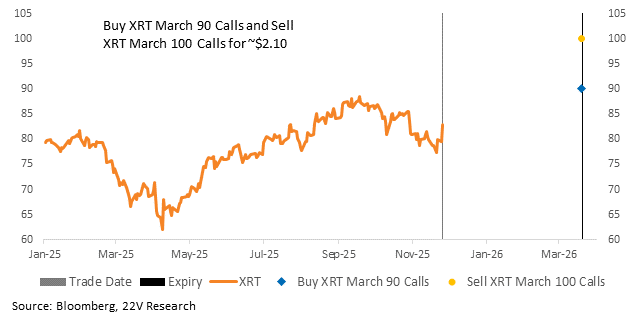
Jeff Jacobson, 22V Derivatives specialist, structured two trades to take advantage of a continued 1mo bounce or sustained rally in XRT. 1) Buy XRT Dec 26th 86 calls for ~ $1.60 (XRT 83.55 ref) 2) Buy XRT March 90/100 call spread for ~ $2.10 (XRT 83.55 ref). More in the charts section below.
Charts…
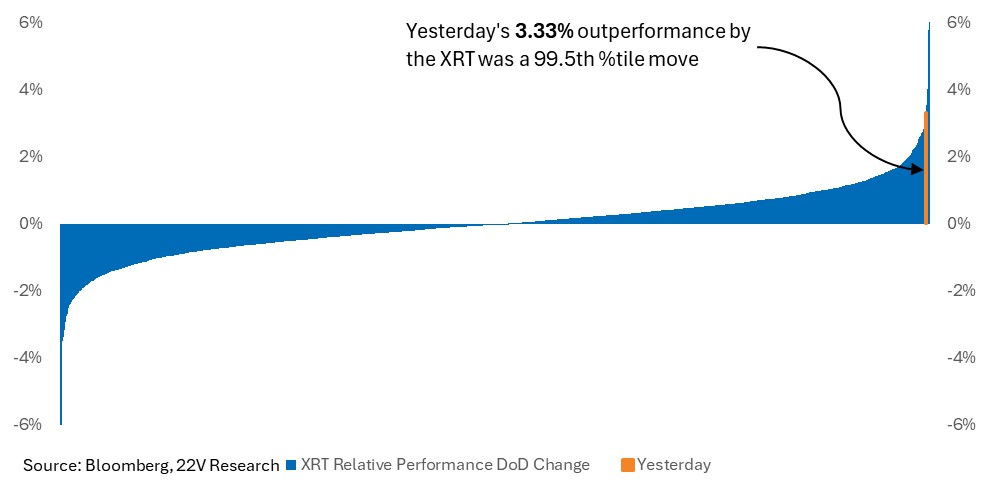
XRT outperformed by +3.33%, a 99.5th %tile relative move, yesterday. Retail is both consumer-sensitive and sensitive to rate expectations, so this kind of surge typically reflects shifting macro assumptions around household strength.
XRT management teams are expressing lots of optimism about their business trends. Sentiment, measured using the Amenity natural language processing tool and objectively scoring each earnings transcript, is at its 81st percentile.
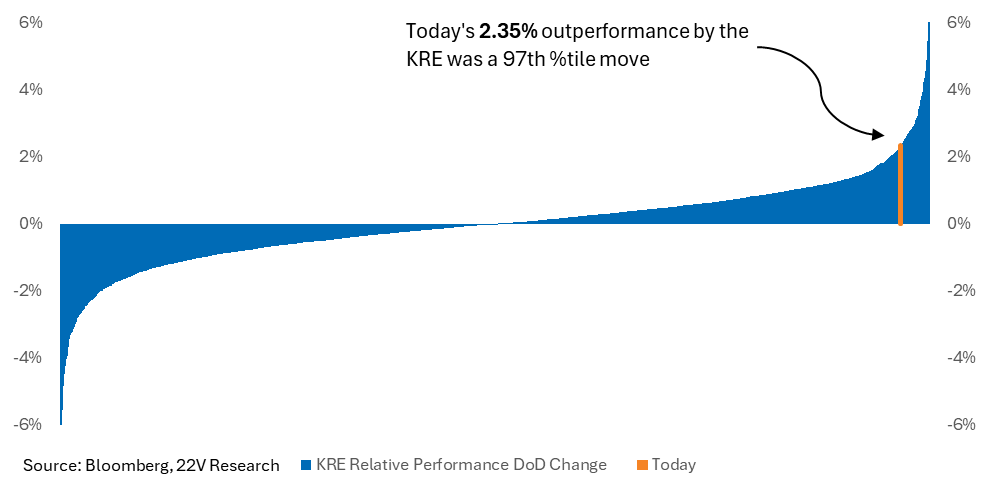
The KRE outperformed by 2.35%, marking a 97th%tile relative move.
Here are 2 trades Jeff likes in XRT to play for further upside even after the large rally yesterday.
1) Buy XRT Dec 26th 86 calls for ~ $1.60 (XRT 83.55 ref)
- Shorter term trade to play for a breakout above the recent downtrend resistance and perhaps for a move back to the highs
- Even with the large, realized moves, vol remains “fair” to cheap (XRT is up $4 just today)
- Dec 26th expiry will capture more earnings from the sector, the black Friday updates, as well as a slew of economic data
2) Buy XRT March 90/100 call spread for ~ $2.10 (XRT 83.55 ref)
- Buying the longer-dated upside call spread that starts just above the former highs
- March expiry allows time for bullish thesis to play out and will capture next earnings period for the group
- Call spread has a nearly 4x to 1 max payout on the limited-risk upside bullish bet
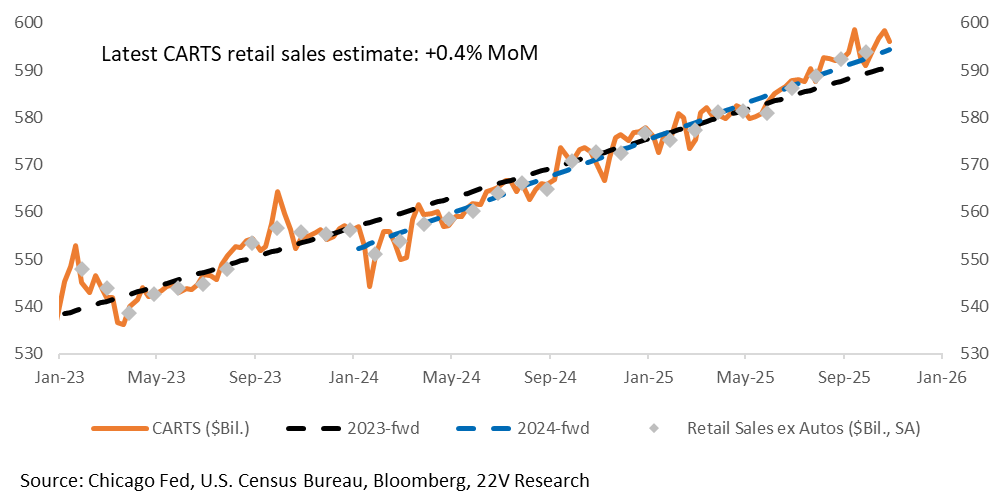
Retail sales data and the Chicago Fed’s aggregation of high frequency data, which is more current, indicate consumer spending continues at a strong pace.
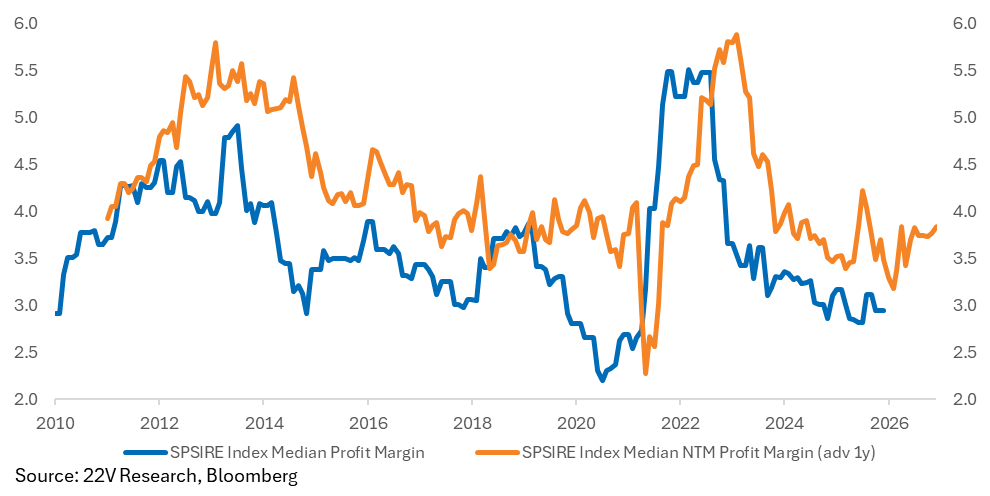
Discretionary has some work to do on margins…
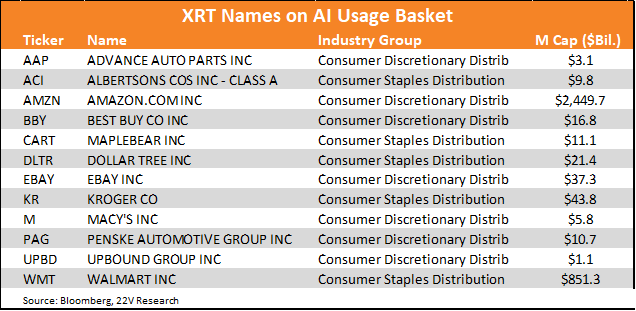
AI usage may be a good place to start looking for names that can improve margins. The Discretionary companies who have referenced specific use cases for AI are here…
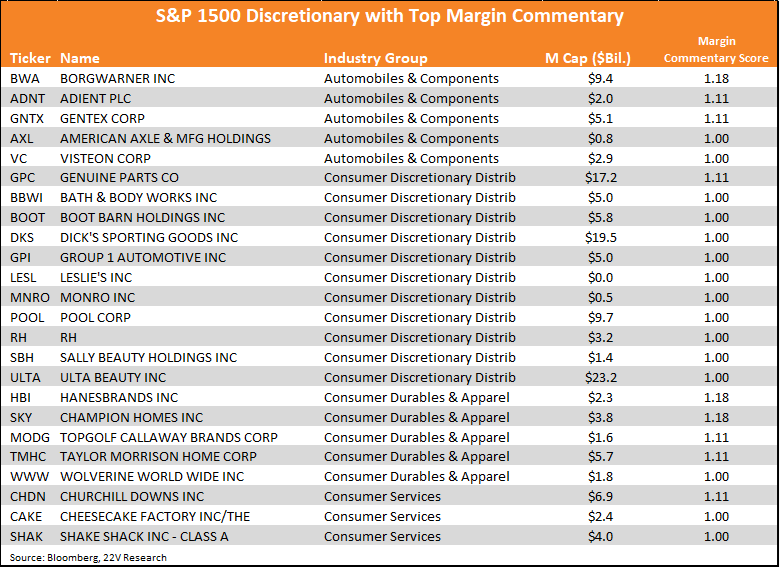
We can also source the Discretionary companies with the best margin sentiment. That list of stocks is here.
Risk factor betas to yields falls as yields approach 4.5%. At 4%, the correlation is positive.