

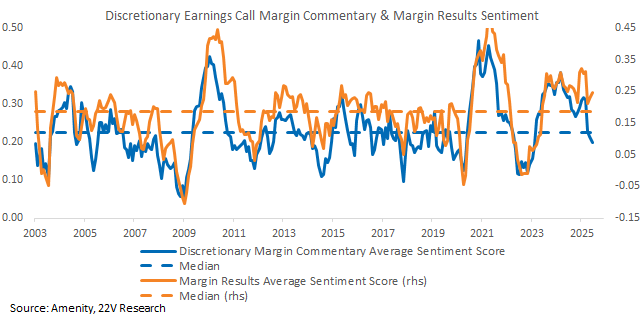
SUMMARY: – Addressing Client Questions or Comments – Several Clients have pointed to positive comments from Retailers on the ability to pass on tariffs and upside risk for the retail group. To check that we looked at S&P 1500 Discretionary commentary about current margins. We use an NLP tool to track what ALL companies are saying about margins. Margin sentiment has improved and remains at a high level. That suggests companies ARE passing on tariff costs, as some investors have pointed out.
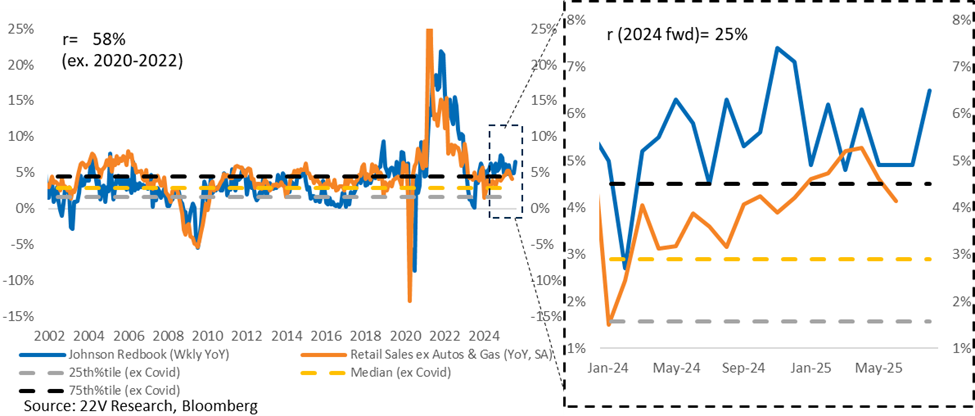
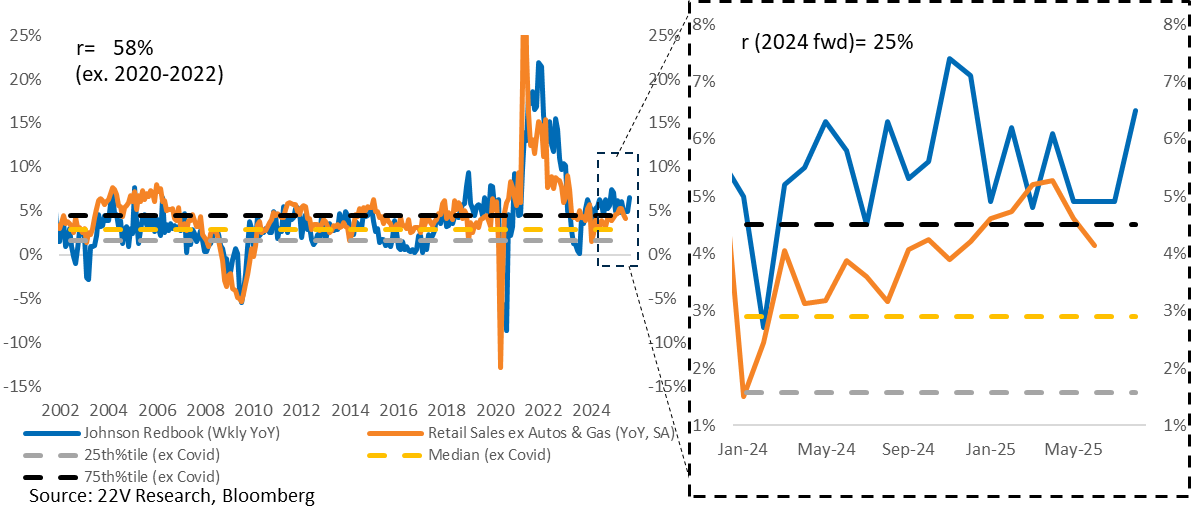
Additionally, recent high-frequency data suggest solid consumer spending. Johnson Redbook has increased this month and suggests little downside risk to core retail sales. As Peter Williams pointed out last Friday, Bank earnings season suggested growth in card spending broadly consistent with 4-5% nominal GDP (volumes at BAC +4% y/y, Citi +3%, WFC +5.2%, JPM +7%, AXP +7%). The combination of retailers passing on costs and firmer than expected consumer spending suggests upside risk to the retail ETF XRT. FYI – We are long Early Cyclicals, and Discretionary is an Early Cyclical.
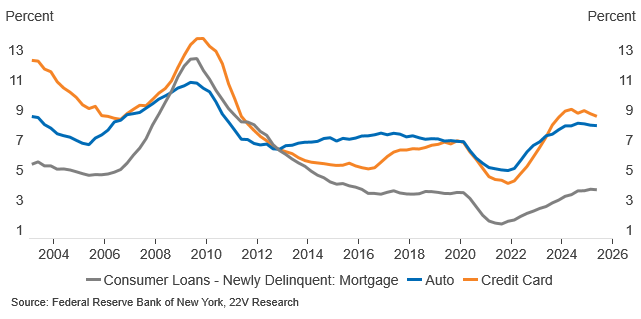
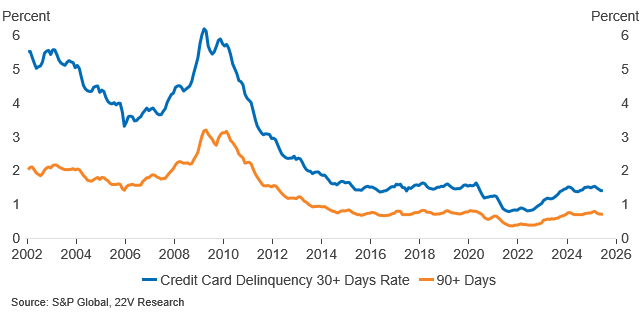
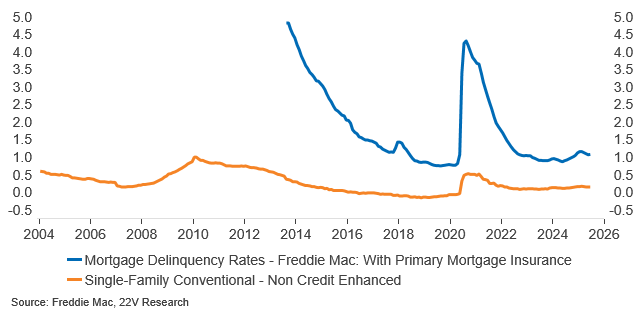
Clients also mentioned delinquency rates. They have not increased and have stabilized or moved slightly lower recently across Credit cards, Auto, and mortgages.
Longer Term Macro Call – Our call remains that ~1% GDP growth will be needed to keep inflation and inflation expectations in check. That means the economy will remain weak (below trend growth), it is just a matter of how we get there. Either growth slows as the real income is hit as tariffs impact consumers, or the Fed signals fewer rate cuts (FCI tighten some) if economic growth does not slow enough (given severe supply-side constraints) to get inflation back down toward the Fed’s target. We think the latter scenario is the most likely and would favor tighter FCI. Not before this fall though. Until then, financial conditions should remain easy, and that is why we are hedging against upside risk in small caps.
Full report below…
MARKET VIEWS: Our call remains that ~1% GDP growth will be needed to keep inflation and inflation expectations in check. That means the economy will remain weak (below trend growth), it is just a matter of how that happens. Either growth slows as the real income hit from tariffs impacts consumers, or the Fed signals fewer rate cuts (FCI tighten some) if economic growth remains strong enough to keep expected inflation well above the Fed’s target. We think this later scenario is the most likely and would favor tighter FCI. Not before this fall, though. Until then, financial conditions should remain easy. Assuming CPI is not outlier hawkish.
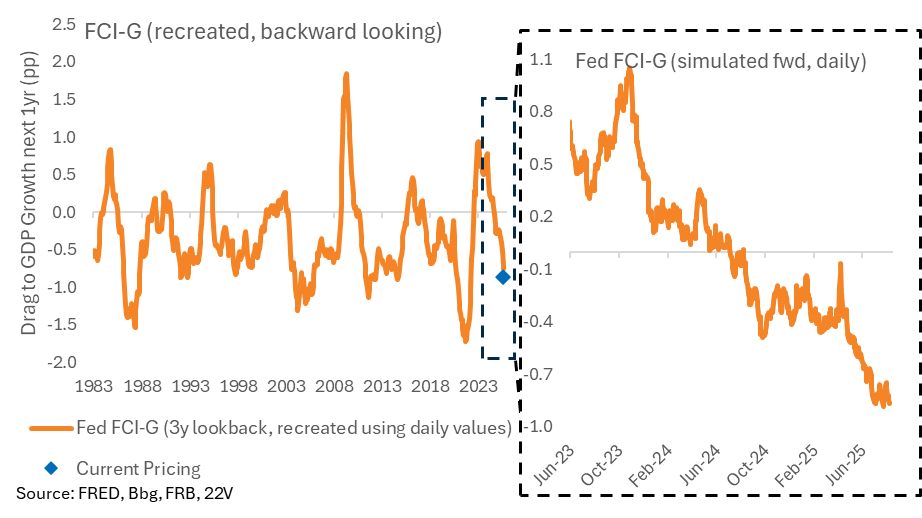
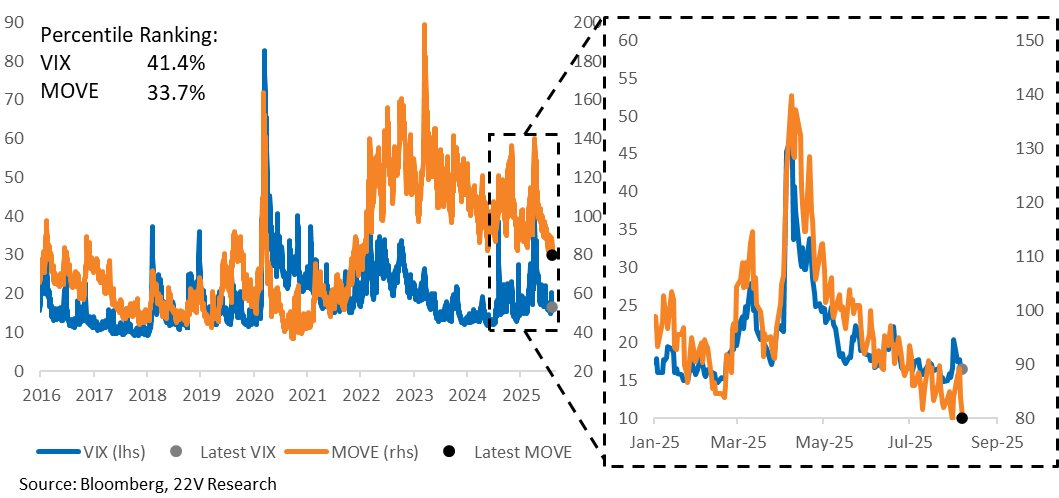
Our call favors AI beneficiaries, Earnings Growth, and Earnings Momentum at the expense of small caps, debt risk, and Value longer term. However, as we noted yesterday (HERE), early signals (spreads, MOVE Index, VIX, PEs) that typically presage a sharp slowdown or higher recession risk are not showing up. For now, we would still HEDGE against upside risk in small caps and other riskier factors.
Addressing client questions / Other Client Conversations – One question that continues to come up in client conversations is consumer delinquencies. This is NOT an issue. It was after the intense tightening cycle of 2022, but both credit card and mortgage delinquencies have leveled off or improved recently. This fits within a broader theme of ours that has been true in the post-COVID period and highlighted consistently by Gerard. Consumer spending has not been credit-dependent (HERE).
Several Clients have pointed to positive comments from Retailers about the ability to pass on tariffs. To check that we looked at S&P 1500 Discretionary commentary on current margins. We use an NLP tool to track what ALL companies are saying about margins. Current Discretionary margins have improved and remain at a high level. That suggests companies ARE passing on tariff costs, as some investors have pointed out. The ability to pass on costs is helping the Discretionary sector, according to investors. FYI -The outlook for future margins has declined, though, and you would think that would be a headwind. Investors are likely more focused on what companies are doing today, vs. what they say about an uncertain future.
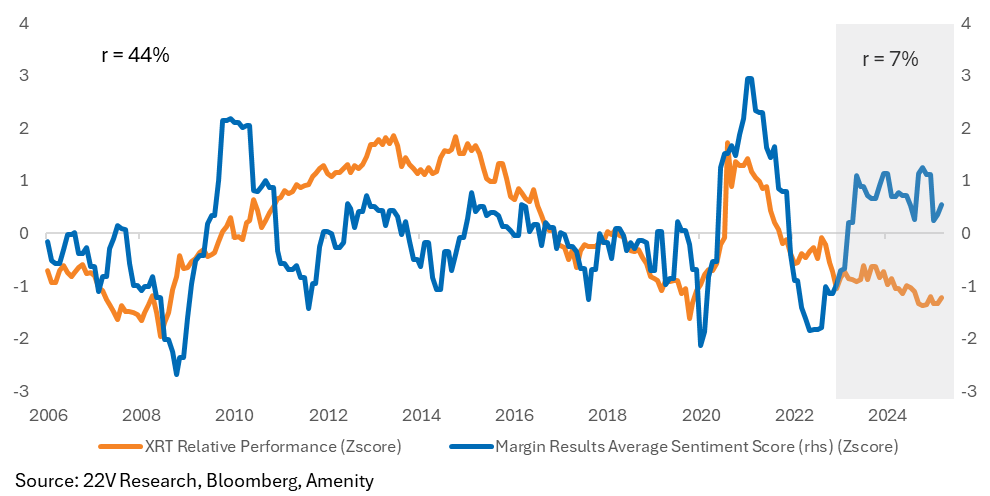
The relative performance of the XRT (Retail ETF) typically tracks margin result sentiment closely. However, since 2023, this correlation has broken down dramatically. We wonder if some “catch up” in XRT relative performance is likely in a world where consumer spending is holding up and Discretionary margins are not being as negatively impacted as feared?
FYI – Recent high-frequency data suggests solid consumer spending. Johnson Redbook, which is an index that covers a sample of large US general merchandise retailers representing about 9,000 stores, has increased. That suggests little downside risk to core retail sales. Also, as Peter Williams pointed out last Friday, Bank earnings season indicated that the growth in card spending seems broadly consistent with a 4-5% nominal GDP world (volumes at BAC +4% y/y, Citi +3%, WFC +5.2%, JPM +7%, AXP +7%).
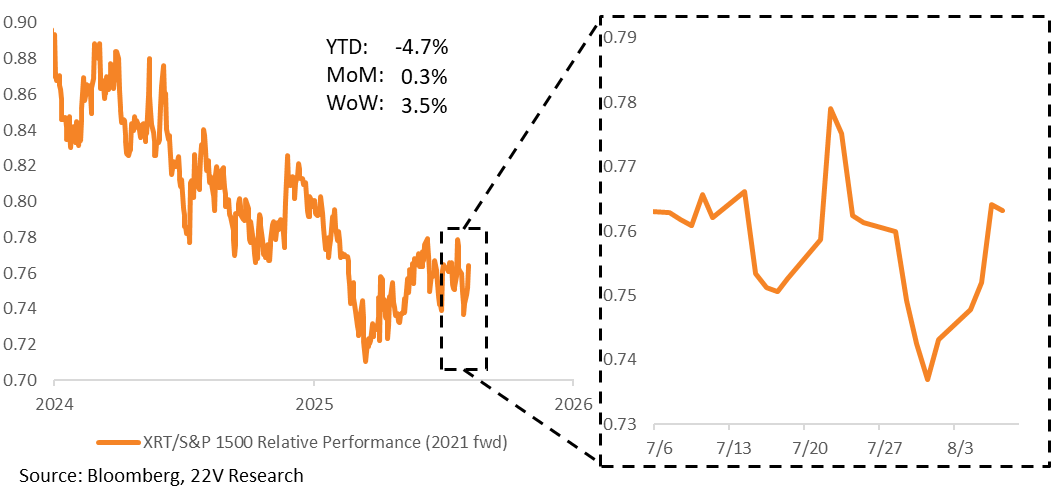
The retail ETF, XRT, has been a weak relative performer over the past few years, but has started to rebound recently. Less margin risk and firm high-frequency credit card spending data suggest some upside risk to the retail group. As noted, retail is a sub-industry group that investors appear more interested in now.
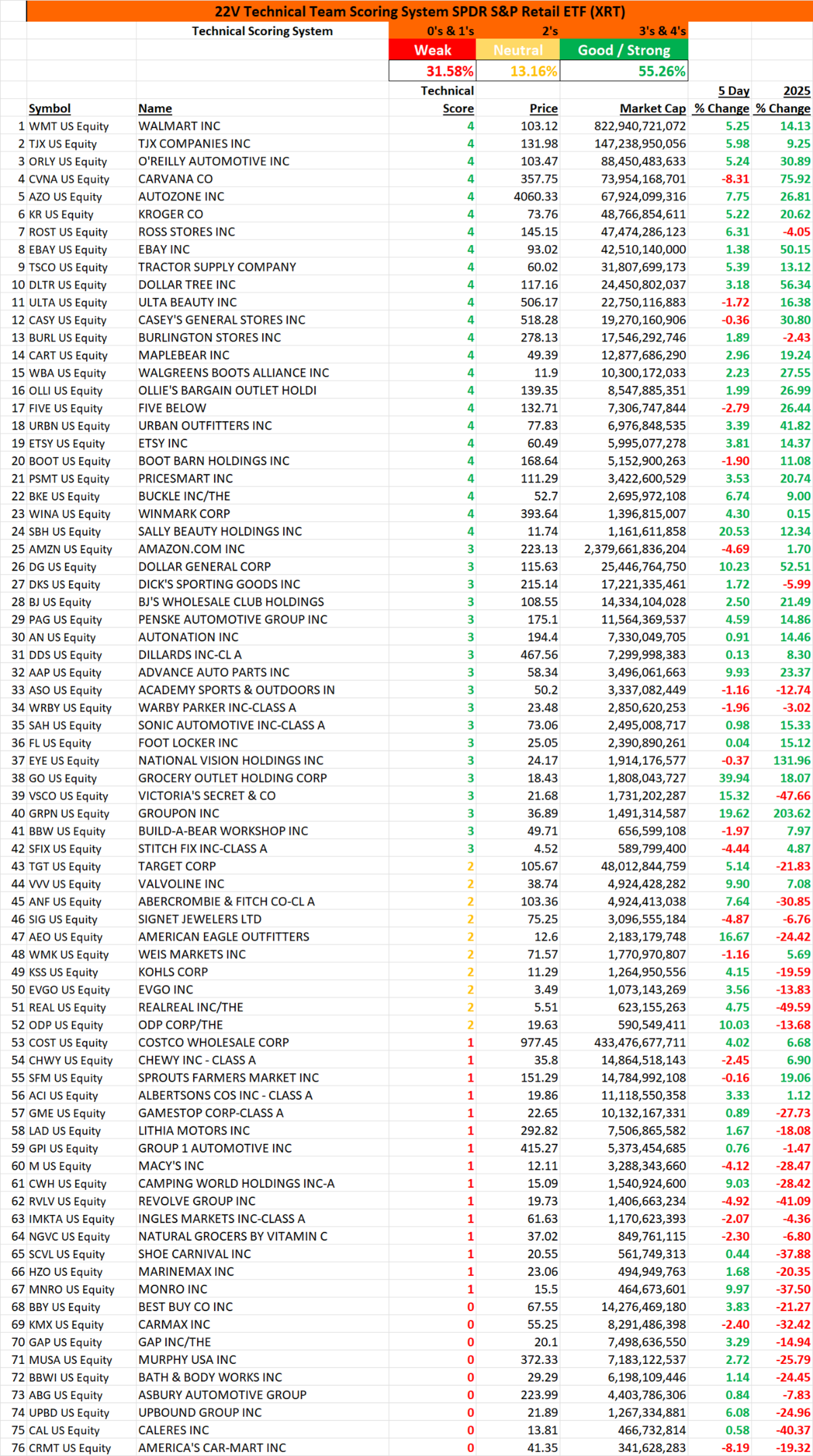
22V’s technical analyst, John Roque, provided us with a technical scoring of the XRT. 55% have good/ strong scores…
Source: Bloomberg, 22V Research

