June JOLTS: the Labor Market Song Remains the Same
- June’s JOLTS data largely confirmed what we already knew about the labor market.
- Layoffs remain rare and may be becoming a bit rarer, the hiring environment is sluggish, and slack seems to be only gradually easing or may be steady. Job openings faded their May bounce and seem consistent with other sources.
- Looking past the m/m wiggles, most signs suggest that labor market slack has been either steady or increasing at a notably slower pace since the scare of last summer, 3y into the labor market easing cycle.
- For the Fed, there is little here to move anyone’s priors in any meaningful way. This week, the June PCE and July employment reports are the most meaningful releases in that sense.
The June labor market data as a whole had something for everyone but offered little that was strongly conclusive. Those who are more concerned about labor market softness or brittleness will look at the hires rate, the slowing and likely benchmark revisions to NFP, and the still gradual easing of the Conference Board’s labor market differential and see further deterioration. The more optimistic will note jobless claims, most other measures of slack steadying, and the importance of changing labor supply dynamics in rapidly slowing breakeven paces of hiring. An additional important trend here, which these two camps will likely take different sides on, is that the easing in slack has been ongoing for almost 3y now. That is historically unprecedented, a fact that the more hawkish-optimistic might be inclined to suggest as evidence that this cycle is different in important ways, with churn and supply dynamics key, or the key, drivers beyond just demand. The more dovishly concerned likely see that same fact as suggesting increasing rather than decreasing marginal risks for each month it continues.
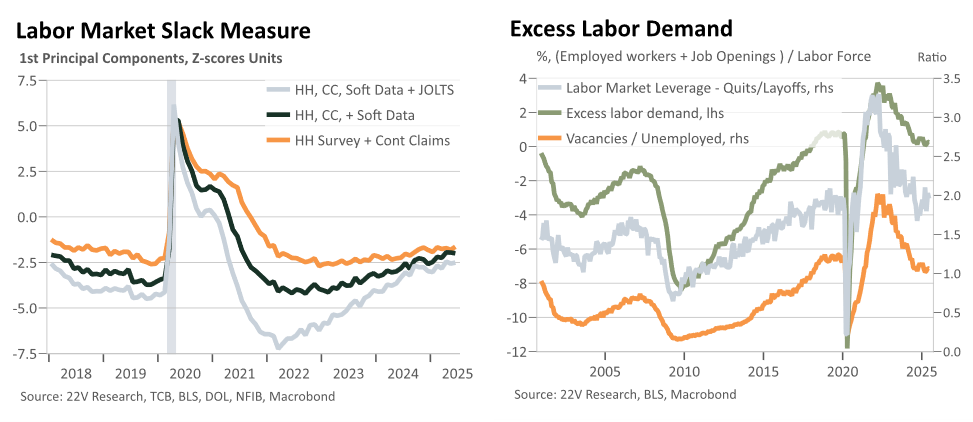
Our labor market slack models, now with complete data through June, show that slack has been either flat or much more slowly increasing in recent months. Given slow NFP growth (and much slower after eventual benchmark revisions) this seems to me reasonable evidence that labor supply growth’s rapid deceleration is playing a key role in keeping the labor market steady. The more analytic measures of labor market slack seem to support this interpretation more than a pessimistic one, largely bouncing around near 2017-19 like levels, no longer overheated but not rolling over either.
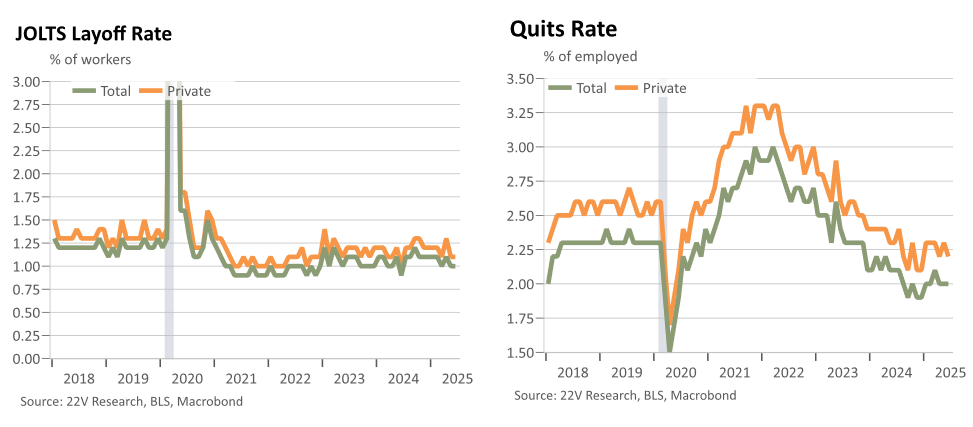
As JOLTS and the jobless claims both show, layoffs remain quite low and might even be moving down slightly in recent months. If the fear is that margin pressures or easing demand conditions will lead to a cycle of layoffs that take the low-hiring low-firing labor market equilibrium into one of outright weakness, there is little evidence to support that so far (tariffs ratcheting higher may be a risk, although we are past shock and awe and to a more normal set of cost shock responses it seems, but the support from corporate tax cuts is an important offset).
Since the turn of the year, the quits rate’s weak rebound and flattening out suggests that workers are not increasingly fearful of their job prospects but with limited gross and net hiring trends there is little reason for extreme confidence either.
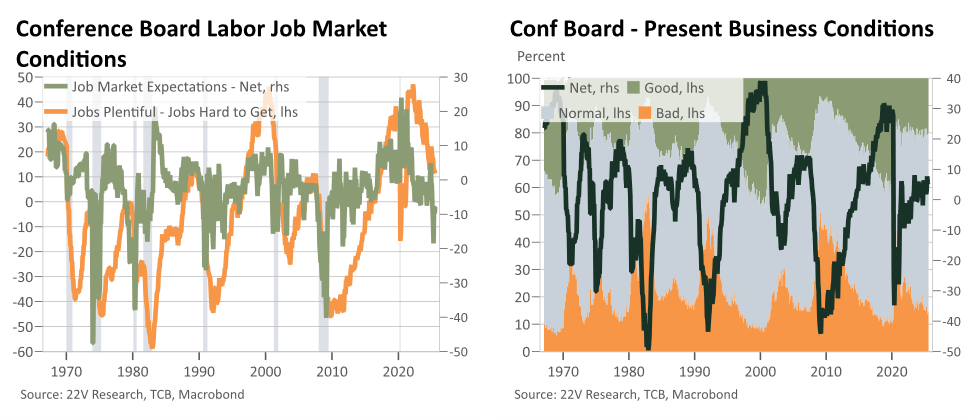
The Conference Board’s July release provides a timely update but one which largely echoes that seen in the hard data, although with a bit higher beta. The jobs differential continues to gradually ease after a temporary turn of the year rebound (a theme seen in much of the data which suggests that ex-tariffs the economy may have been primed to exit its doldrums in labor market churn and higher cyclical beta industries this year; perhaps that will still happen just on a delayed timeline). The labor market expectations series, which functions more like a contemporaneous recession indicator, remains quite soft but has bounced from its spring tariff-shock lows. Perhaps most interestingly is that perceptions of current business conditions keep slowly grinding higher from their covid-era lows. This has been delinked from labor market tightness and seems more a measure of supply-side dislocations and disruptions to the ease of doing business. In that sense, the rebound remains a positive sign.