SUMMARY: Today, we discuss why the risk-on rally is happening and how to think about a potential reversal. We covered this in a video last night as well (HERE).
Bottom Line – we don’t have a good reason, over the short term (next month or so) to forecast a reversal of the risk-on rally. In the longer term, we would fade the move in the riskiest names (particularly interest rate-sensitive names) and focus more on fundamental factors. Higher 10yr yields or bond volatility would be a catalyst for the reversal (late summer?).
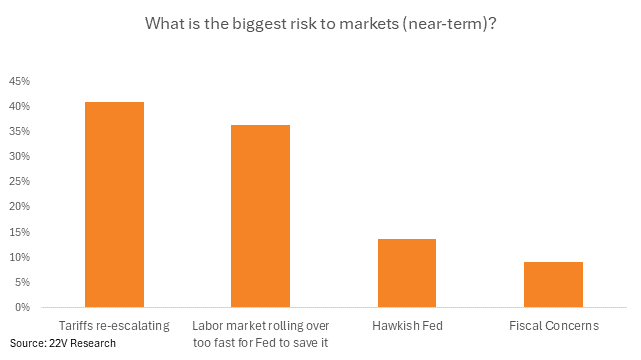
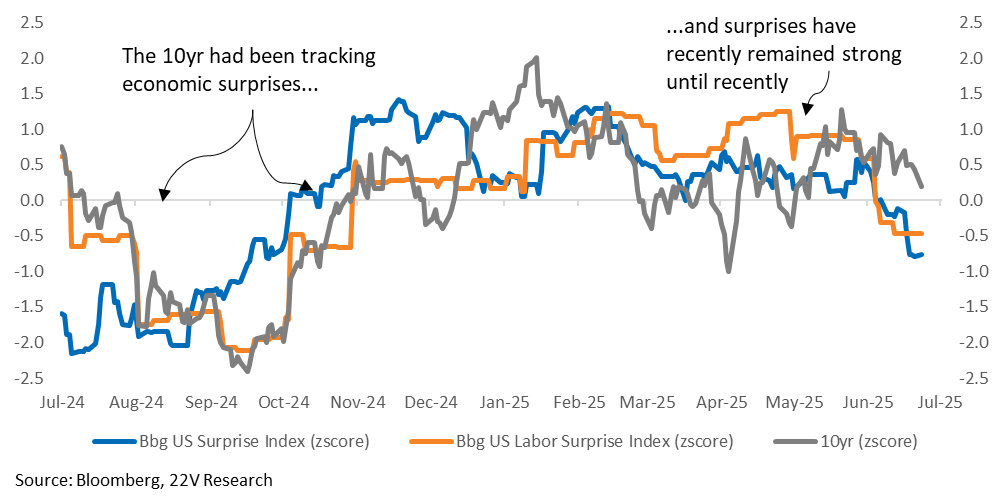
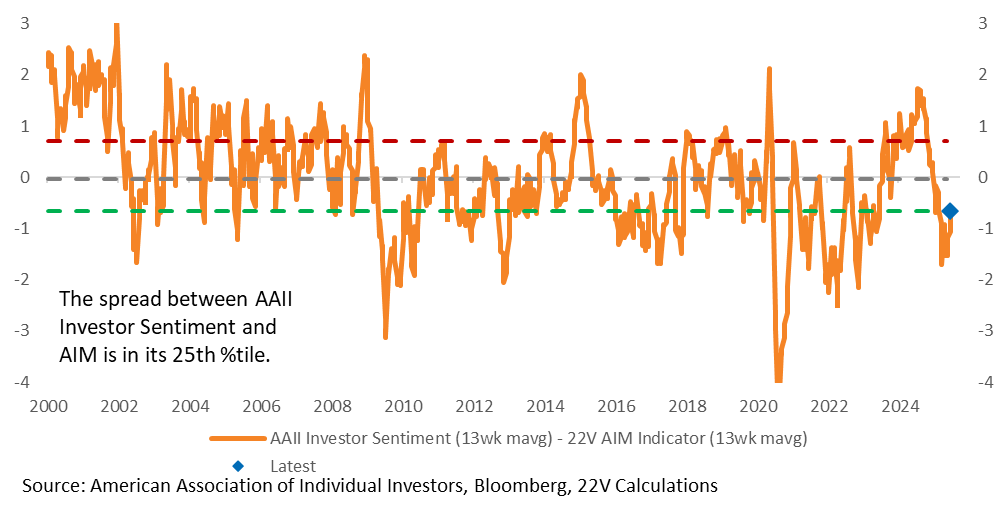
The Risk-On Rally Supports – It is fair to assume that concerns about a slowing labor market are helping keep 10yr yields anchored. 10yr yields appear to be following the recent deceleration in the US labor surprises and economic surprises. Investors are concerned about weaker labor markets, according to our survey. The Fed has a forecasted unemployment rate of 4.5% (current rate: 4.35%). Tariff re-escalation concerns, labor market rollover risks, and general geopolitical uncertainty are why investors’ sentiment is still unusually low relative to the breadth of hard data.
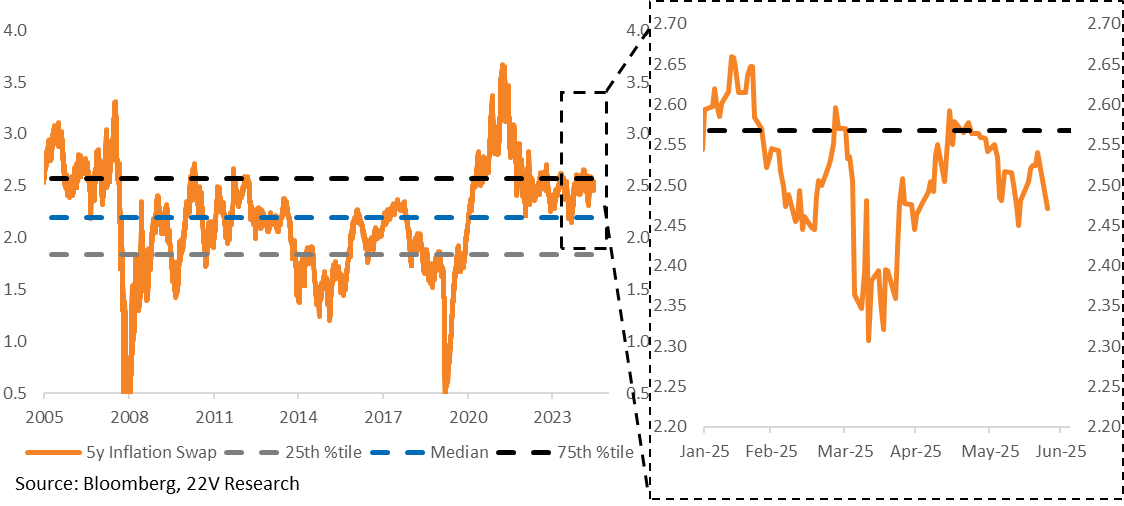
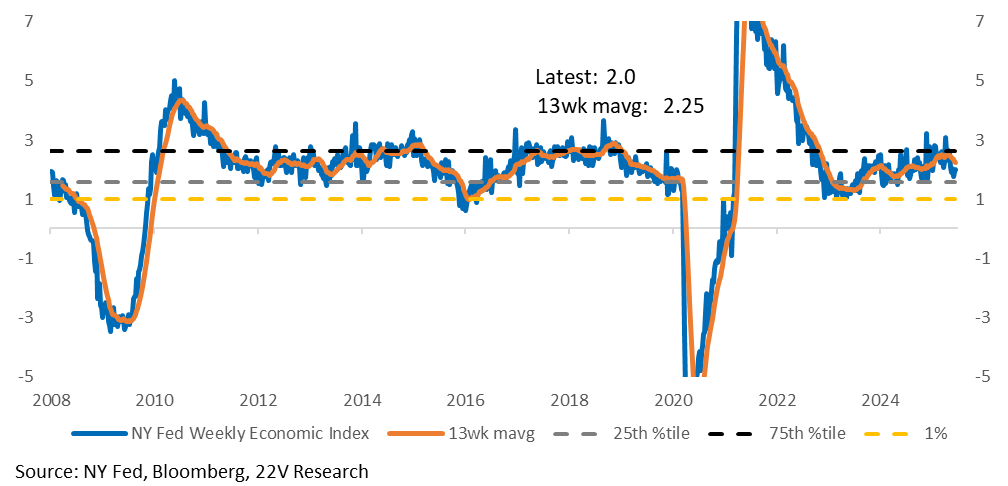
Inflation expectations have declined, and the New York Fed Weekly Economic index is running close to 2.25% on the 13-week moving average. Consensus estimates put 2025 real GDP growth at 1.4% GDP. In sum, inflation expectations are lower, 10yr yields are likely being anchored some by labor market concerns, BUT the economy is holding better than expected. The net result is a significant easing of financial conditions.
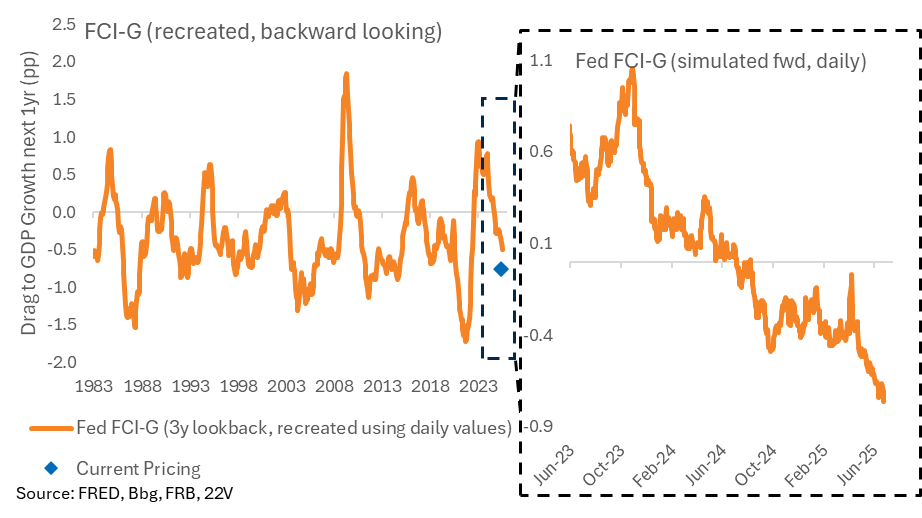
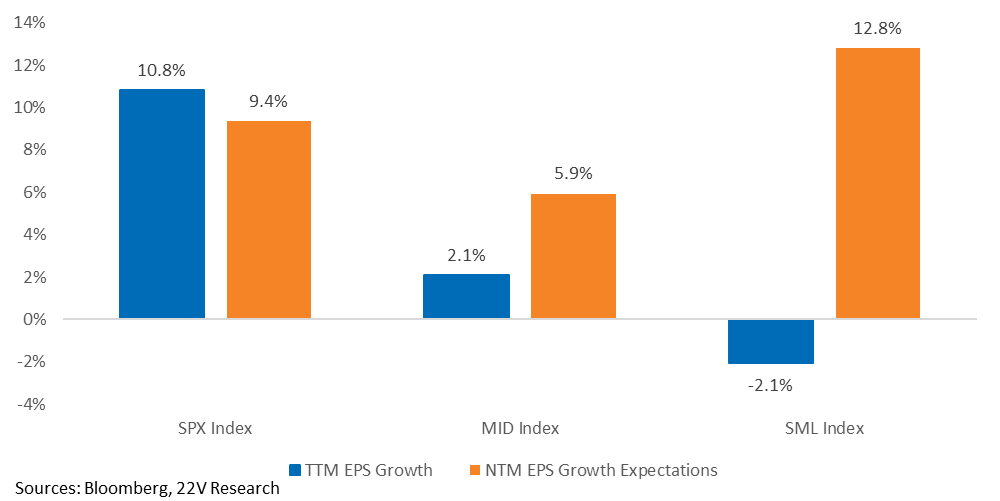
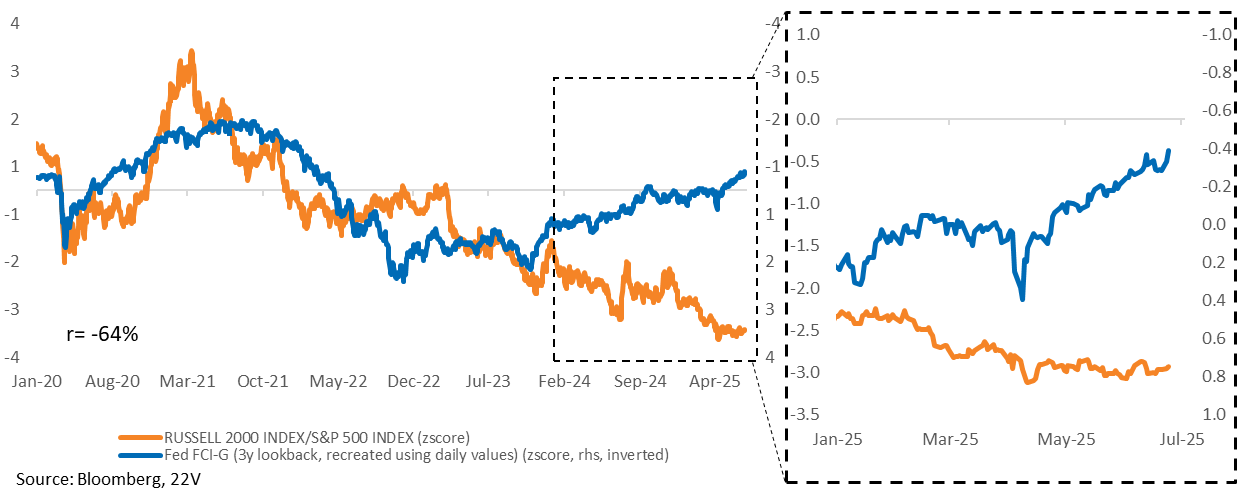
We don’t have a good reason for the current easing in financial conditions to reverse over the next month or so, at least through July Earnings season. Yes, a Truth Social post could happen at any time, but assuming consensus data expectations are roughly correct, we should not expect tighter financial conditions in the near term. We continue to think about upside hedges in small caps. Small caps underperformance relative to FCI has been significant. FYI – Some riskier or higher beta areas of the market have relatively strong NTM EPS growth. Like Small caps (+~13%) and the Earning Turbulence factor, AND enjoy financial conditions tailwinds currently.
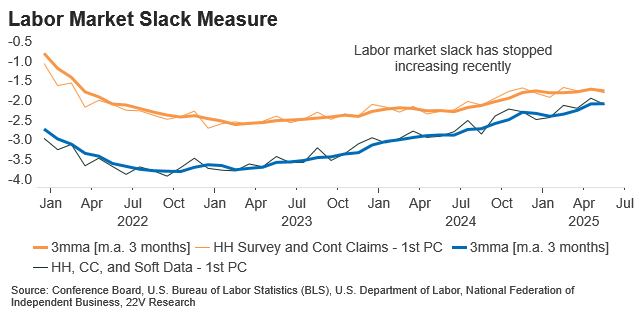
When To Fade the Riskiest Factors and Small Caps – Measures of labor market slack have stopped increasing recently. If that continues (unemployment rate remains stable), which we expect it will, investor concerns about a labor market decline will dissipate. At the same time, current economic trends and firm real labor income suggest demand growth is likely to remain relatively firm. The budget bill should provide some economic demand support in 1H26 too.
In short, by late summer, it may become apparent that we have a tighter-than-expected labor market, stronger-than-expected demand growth, and a fiscal impulse in the first half of 2026. Tighter financial conditions would be necessary to offset stronger growth and keep inflation in check. We believe 10yr yields would do a significant amount of that tightening of FCI (see Gerard webinar HERE). Later this summer seems like a more obvious time to fade riskier assets. It could happen before, but we probably need to get through more slowing in payroll growth first.
Full report below…
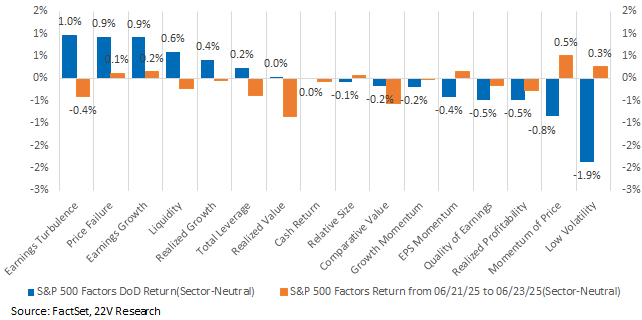
MARKET VIEWS: Small caps, debt risk baskets, and factors like Earnings Risk, Earnings Growth, and Momentum have outperformed to start the week. Low Vol and Defensives have been significant laggards. Outperformance of Risk-on (like earnings risk and price reversal) AND fundamental factors (Growth, Momentum, Value, and GARP are fundamental factor examples) started over a month ago. We had recommended in early June that investors hedge against a significant move higher in some riskier assets (See IWM upside hedge idea HERE). The risk-on rally took a break when the Israel/Iran conflict started, but has resumed.
Bottom Line – we don’t have a good reason, over the short term (next month or so), to forecast a reversal in the risk-on rally. Longer term, we would fade the move in riskiest names and focus more on fundamentals. Higher 10yr yields or bond volatility is a likely catalyst for the reversal. Late this summer, the case for higher bond yields is likely to become more compelling. We have no good reason to expect higher 10yr yields for now, though.
Let’s go to the charts…
In our latest Fed Survey (HERE), investors identified the biggest near-term risks to markets as either a tariff re-escalation or the labor market rolling over. We don’t have much to add on the tariff escalation risk…
… but it is fair to assume that concerns about a slowing labor market are helping keep 10yr yields anchored for now. 10yr yields appear to be following the recent deceleration in the US labor surprises and general economic surprises.
Tariff re-escalation concerns, labor market rollover risks, and general geopolitical uncertainty are why investors’ sentiment is unusually low relative to the breadth of hard data.
Tariff heavy risk being reduced and the more dovish than expected CPI data are helping anchored inflation expectations. Inflation expectations declining is a good thing when it is not associated with a negative economic shock.
There was potential for a large economic shock, but tariff-heavy risk seems low now. Consensus US GDP estimates are 1.4% for 2025. The New York Fed Weekly Economic index, an index of ten indicators of real economic activity, scaled to align with the four-quarter GDP growth rate, and is an indicator of underlying economic demand (it represents the common component of series covering consumer behavior, the labor market, and production) is running close to 2.25% on the 13wk mavg average. That is down from 3%, but still much stronger than expected.
In sum, inflation expectations are lower, 10yr yields are likely being anchored somewhat by labor market risks and the economy is holding up well. The net result is a significant easing of financial conditions.
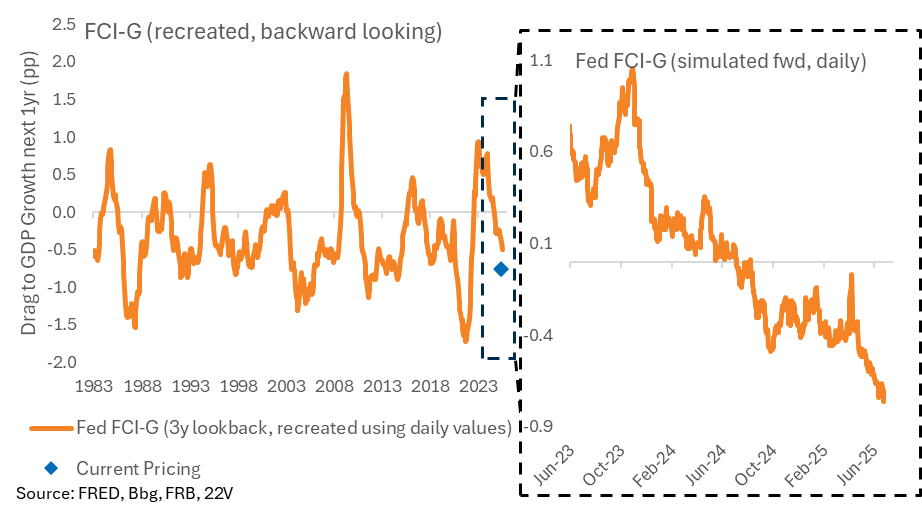
Financial conditions have eased as we head into earnings season. On an NTM basis, small caps are expected to post +~13% EPS growth. The S&P is expected to growth EPS 9% over the NTM.
Since last year, Small caps have significantly underperformed relative to financial conditions. FYI, small caps have underperformed relative to the easing of financial conditions since Feb ‘24. Something else might be going on in small caps that has led to the divergence. We get that. But given what we outline above and the continued easing of FCI, being SHORT small caps today is tougher. We would continue to hedge against upside risk in small caps.
How to think about a reversal in riskier assets – Labor markets are slowing and that is expected to continue given the reduction in immigration. It is fair for investors to worry about a decline in 10yr yields as labor demand (hiring) slows. There is a risk that slowing demand turns into a negative feedback loop, but measures of labor market slack have stopped increasing recently. If that continues (urate remains stable), as we expect it will, investors’ labor market concerns will dissipate and 10yr yields will have upside. At the same time, current trends and firm real labor income suggest demand growth is likely to remain relatively firm. Plus, the budget bill should provide some economic demand support in 1H26. In short, as we move through the summer it is possible that we have a tighter than expected labor market, stronger than expected demand growth and pending fiscal impulse to economic growth in 1H26. Tighter financial conditions would be required to offset stronger growth and keep inflation in check. We believe 10yr yields would do a significant amount of the heavy lifting in tightening FCI (see Gerard webinar HERE). Later this summer seems like a more obvious time to fade riskier assets.