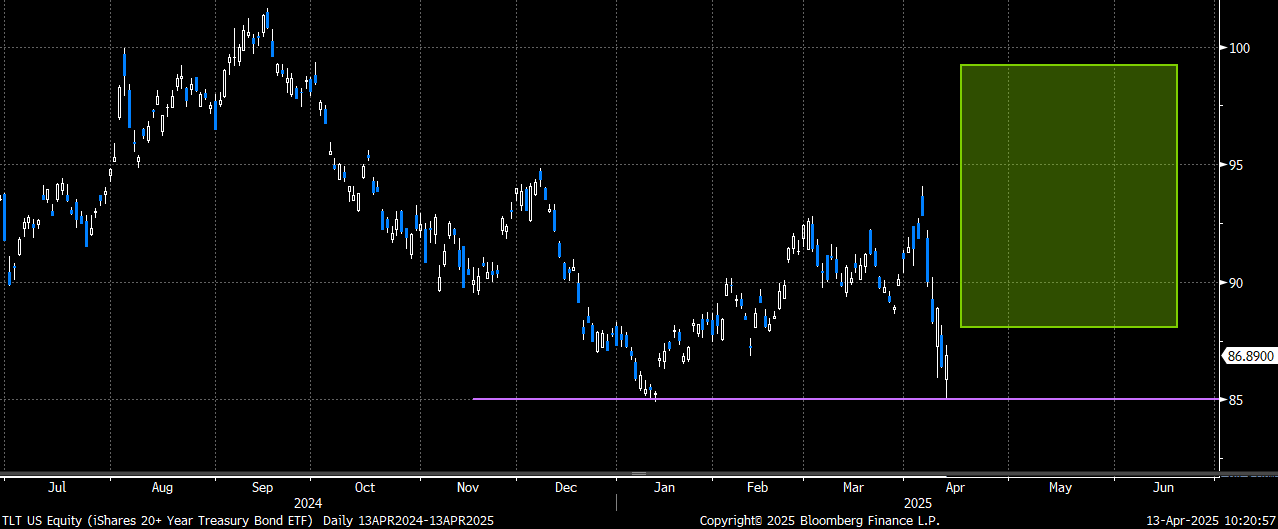
Another incredible week for volatility as we saw the VIX spike to as much as 60 before falling back to the mid-30’s following the tariff pause announcement on Wednesday afternoon. The volatility wasn’t just contained to the stock market as bond volatility (MOVE Index) also hit a 2-year high and the US$ Index (DXY) hit a 2-year low as the dollar continued to selloff (even as yields had a huge move higher).
VIX hit a high of ~ 60 on Monday and closed the week below 40 after announcing a 90-day tariff pause on Wednesday
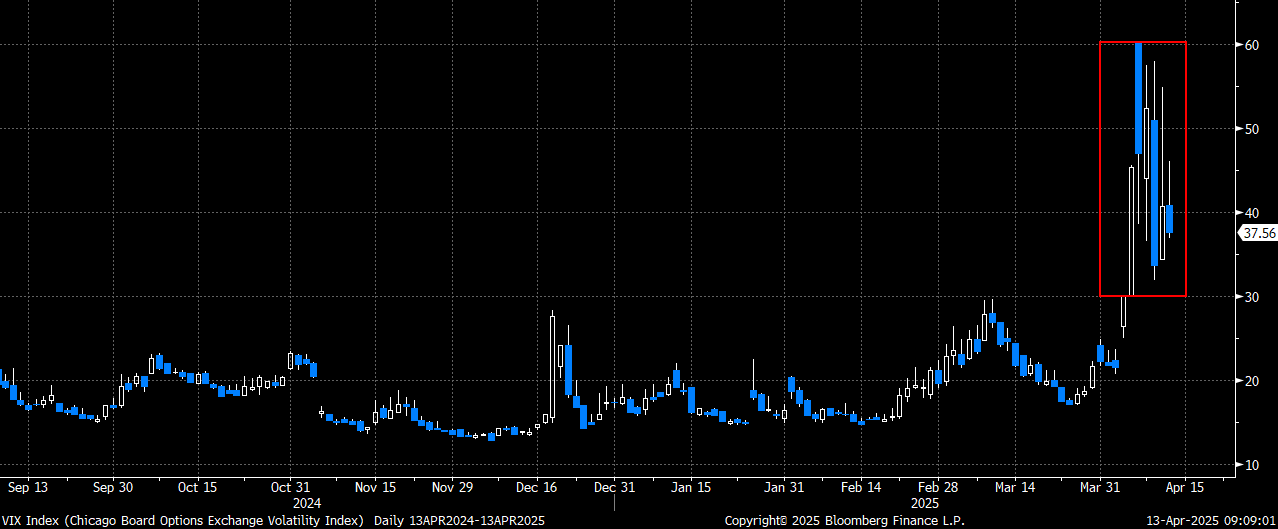
Bond volatility (MOVE Index) also hit a 2-year high as speculation of foreign CB’s selling as well as basis trades blowing up impacted the market
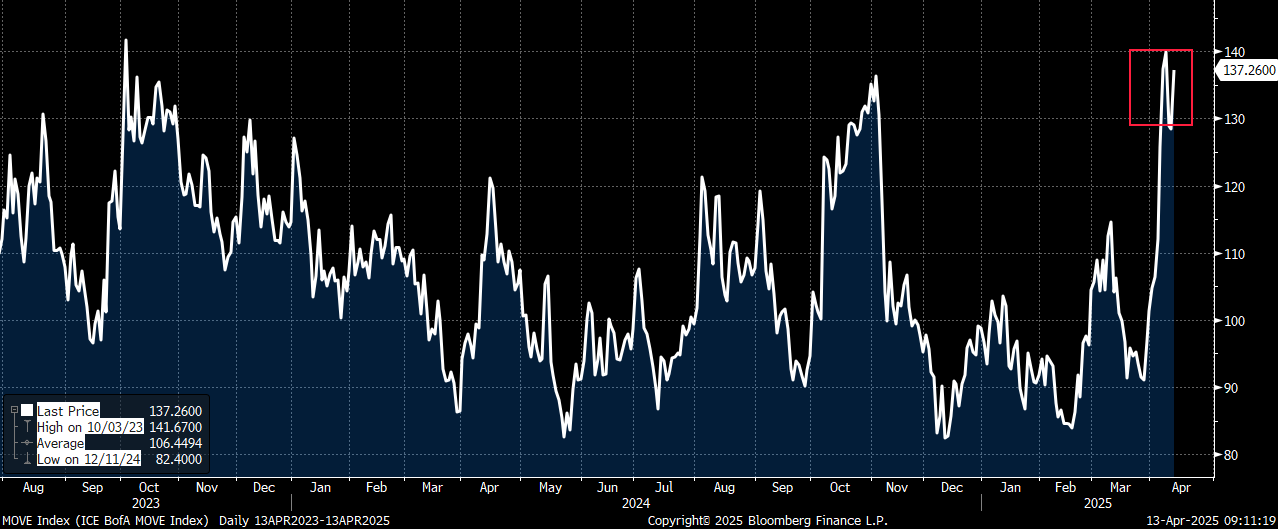
All these concerns weighed on the US$ (DXY) which hit a 2-year low last week as well
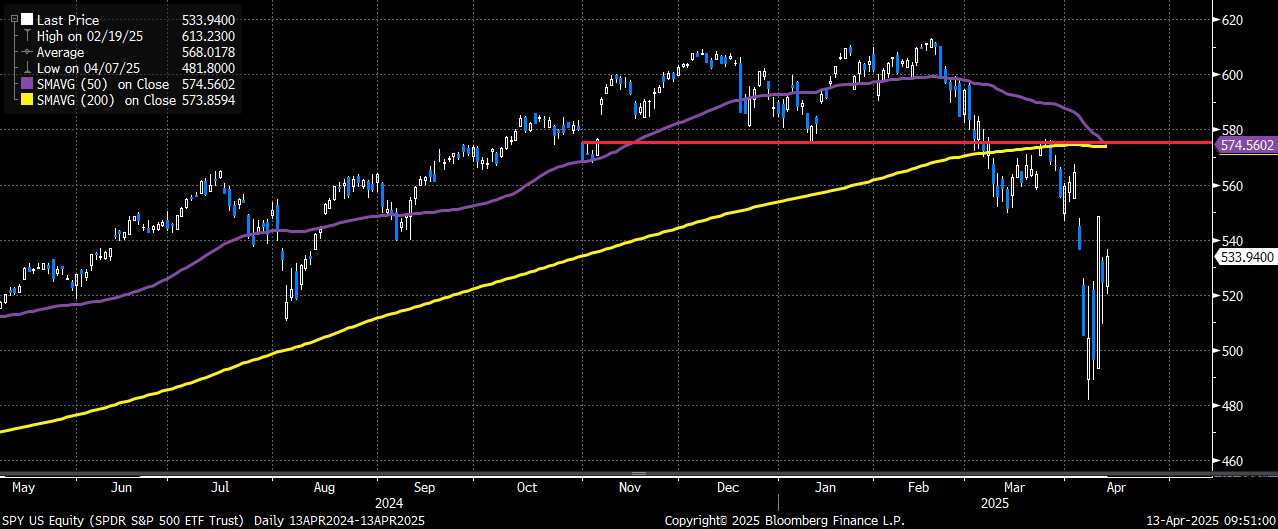
Thanks to the announced tariff pause, the market (SPY) was able to finish the week up ~ 5.7% (up nearly 11% from the Monday morning lows ~ 480). Late Friday we also got word that smartphones, computers and other electronics are exempt from the reciprocal tariffs. This news is likely to give another boost to the market when it opens on Monday. So where does this leave us and how should investors consider hedging now? My view is if SPY is at/near the highs we hit on Wednesday ~ 545-550 then May collars should once again be strongly considered as a macro portfolio hedge. Last week I mentioned I was not a fan of using collars (even with VIX extremely elevated) as I was concerned about an oversold snapback rally. Now that the administration has used their “pause” bullet, as well as the tech exemption, I’m far more comfortable suggesting selling an upside call to own a downside protective put or put spread.
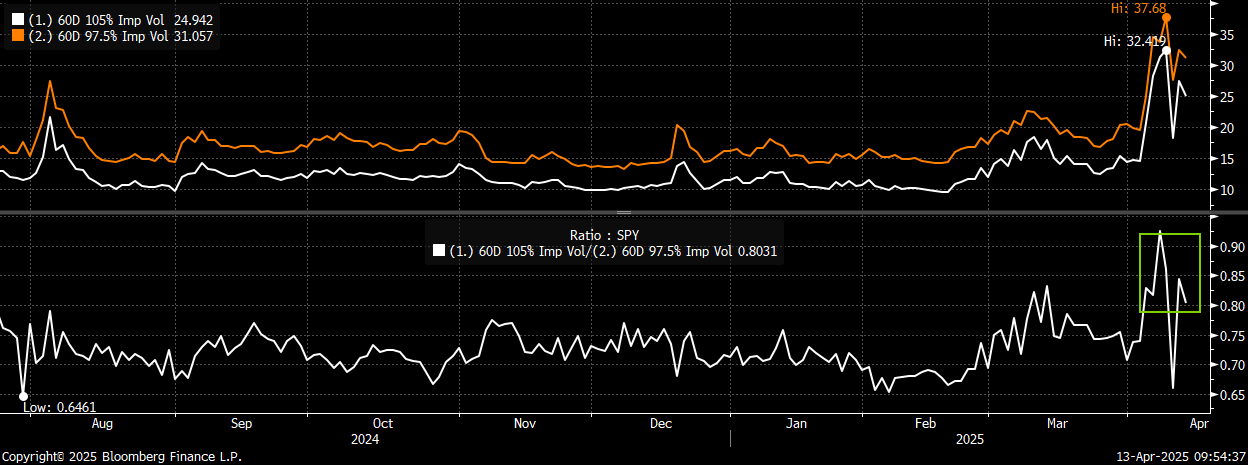
Why do I suggest tactically adding collars now? First, VIX is still likely to be 30 or higher even if we get the expected positive open on Monday. This level is still ~ double the Feb lows and well above the level it traded at when the tariffs were first announced on April 2nd. Second, assuming the market is up 13-15% off the lows from last Monday then the risk/reward of establishing low-cost collars once again shifts to being very favorable. Recall, the market was already dealing with several problems in Feb and March even before the tariffs became the main source of concern. In my opinion, there should be considerable overhead technical resistance in the 570-580 area as that was where the market broke down from and the 50-day and 200-day moving averages have converged right around the 575 level. Finally, not only is volatility still high, but upside calls still screen “rich” to puts (as of Friday). Especially into rallies, I favor using this skew to establish new, low-cost, put spread collars to “protect” sharp gains since we hit the lows only a week ago.
All signs point to the 575 area as being strong technical resistance. Suggest using this level when establishing new May protective collars
SPY 5% upside calls still screen “rich” relative to the 2.5% downside puts (bottom chart)
Here is an example of a new May put spread collar I would look to establish into a follow-thru rally early this week:
Trade:
Sell SPY May 575 calls
Buy SPY May 530/480 put spread
- Selling the upside call at what should be major resistance following sharp snapback rally off the lows from last Monday to help finance a protective put spread
- Protective put spread starts ~ 3-4% lower and is capped to the downside at the recent lows ~ 480
- Calls continue to trade “rich” to puts and VIX likely to still be > 30 (why I really like the setup to establish new put spread collars into further strength)
- Bond yields still well above the pre “liberation” day levels and US$ is now well below the April 2nd levels as well
- May collars will hedge thru tech earnings season (not sure how positive guidance can be given macro backdrop)
- Please reach out to me or the 22V sales team for updated pricing and execution capabilities
Repair trade idea for bonds using TLT options
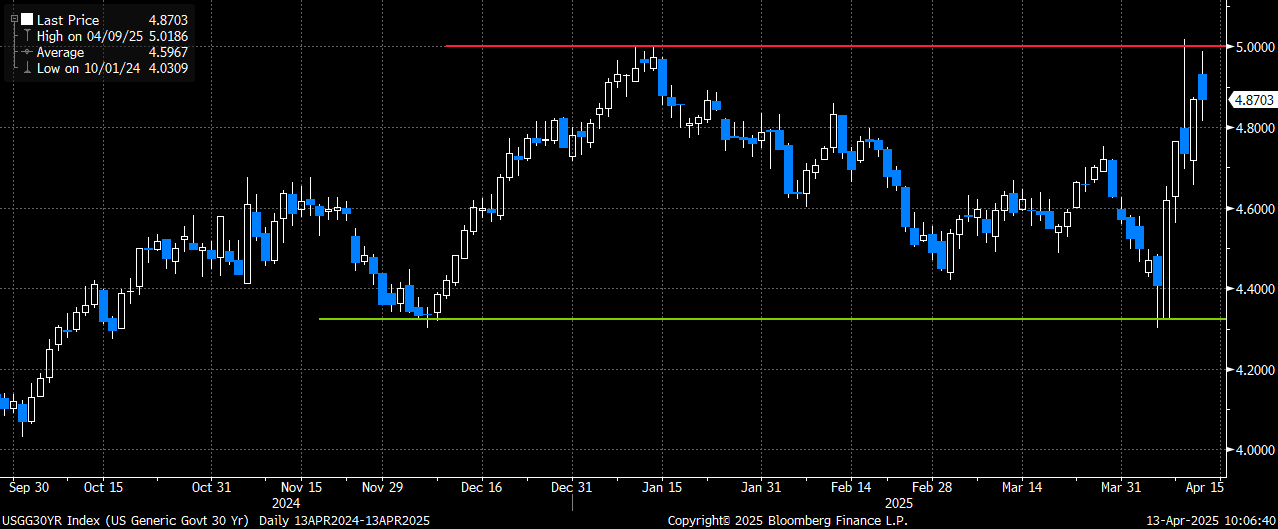
As I mentioned above, bonds also came under considerable pressure last week as concerns over foreigners selling as well as basis trades gone wrong spread throughout the markets. The 30-year yield touched 5%, re-testing the Jan highs, and that was after trading as low as ~ 4.3% on Monday. News on Friday from Boston Fed President, Susan Collins, suggesting the Fed is ready to help stabilize markets provided some much-needed relief. Between the assurance by Collins, and the fact that yields tested (and held for now) the Jan highs, perhaps we can see yields on the long-end continue to trade in the range they have been in since mid-October?
30-year yields re-tested the Jan highs ~ 5% and then moved back lower following comments from Fed President Collins on Friday
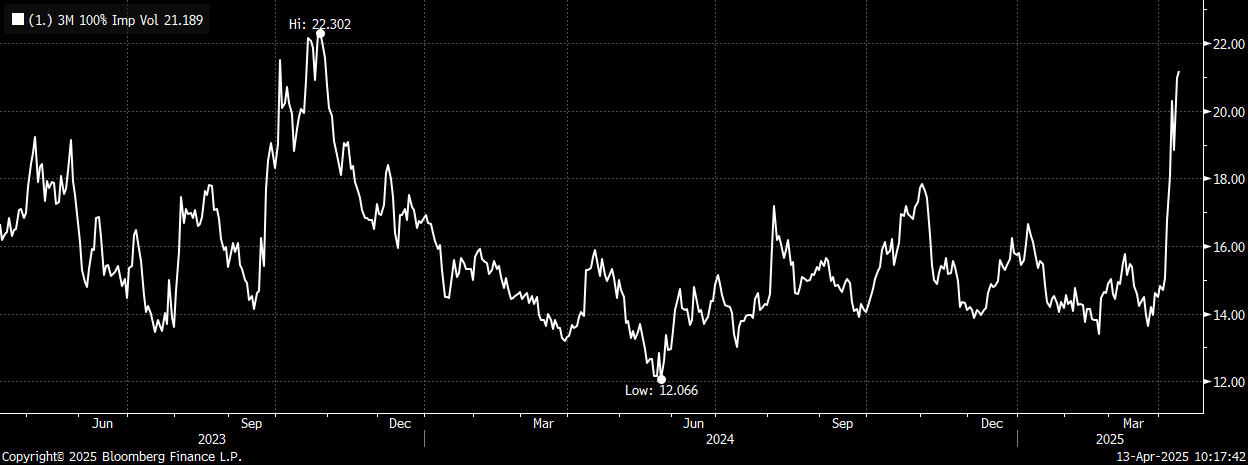
I mentioned the MOVE index hitting a two-year high earlier. We saw a similar-type move in TLT options where 3-month implied volatility is just below the two-year highs and is now up more than 50% from the Feb lows. This move in volatility has presented, what I believe to be, a very attractive opportunity to establish low-cost, delta neutral, “repair” trades for portfolios that currently have long bond duration exposure.
Trade:
Buy TLT June 88 calls 1x
Sell TLT June 94 calls 2x
Costs ~ .85 (TLT 86.89 Fri close ref)
- Buying the delta-neutral June 1×2 call spread
- TLT 3-month vol at a 2-year high (why you need to consider these ratio “repair” trades)
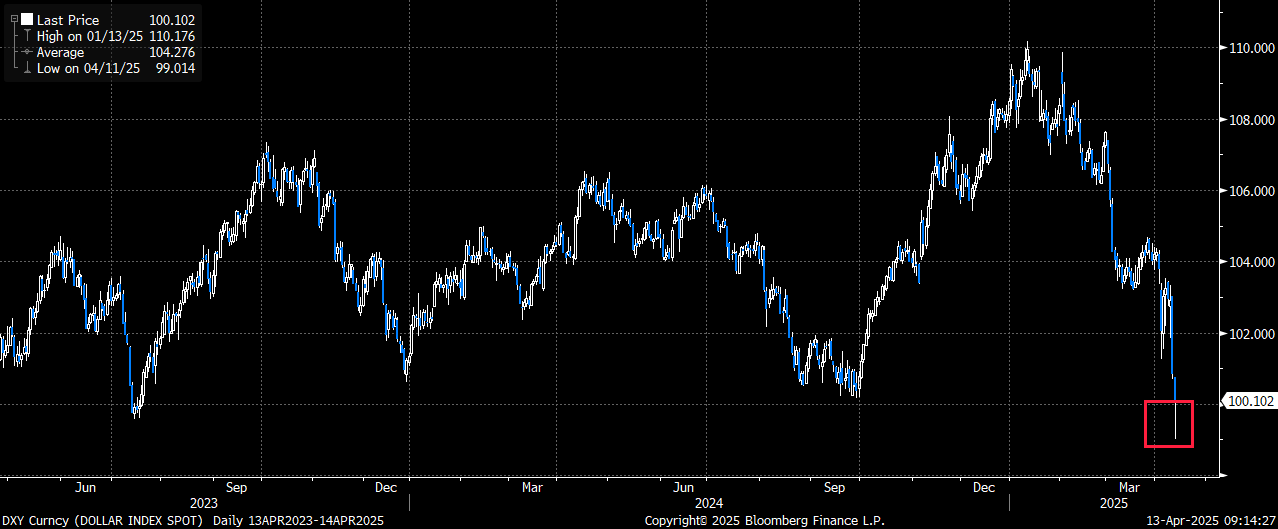
- Trade will make $/outperform between 88.85 and 99.15 by June (upside breakeven is also just below the Sept highs)
- Max profit at $94 (Dec and April highs)
- Good overlay trade to an existing long bond bias/portfolio
- Trade adds NO additional downside risk besides small debit
- Please contact me or the 22V sales team for updated pricing and execution capabilities
TLT 3-month (June) implied vol just below 2-year highs and up 50%+ from the Feb lows
The 1×2 call spread overlay trade offers a huge area of upside outperformance at June expiration