SUMMARY: We don’t have a call right now, and yesterday we detailed why we LEAN risk-on over the next 6 months (HERE). We are NOT risk-on now, though. A few reason for that is the focus of today’s report.
It Might Not Be About Recession or Not based on Tariffs – Credit spreads and short-term inflation expectations have both increased. After consolidating for a week or so, credit spreads have moved to new wides. Credit has acted worse than the stock market over the past few weeks. Stocks have not made new lows since the tariff noise ratcheted up in Feb. To be fair, HY and IG grade CDS spreads are back to their long-term medians. The levels are fine. The direction is a problem for now, especially if credit spreads move wider from here.
Why Would Credit Spreads Move Wider if April 2nd is a Clearing Event? Market-based measures for 1yr ahead inflation have broken above 3%. Powell made it clear at the press conference and in the Summary of Economic Projections (SEP) that the Fed will look through the tariff impact on inflation. That explains why the Fed has a core PCE forecast of 2.8% in 2025 and still assumes 50bp of cuts. If the Fed didn’t believe inflation would be transitory, they would likely be talking about tightening financial conditions. That is why credit spreads aren’t even wider.
Bottom Line Issue For Now Re Credit Spreads – It is possible that targeted tariffs (less econ growth hit from tariffs) and still firm demand growth will result in inflation being less transitory than hoped. The 1yr inflation swap could be picking up that possibility. In which case, the Fed is higher for longer (tighter financial conditions) as they attempt to slow growth to lower inflation. Recession risk goes up as the Fed attempts to slow growth. Credit spreads move wider, like they did in 2022.
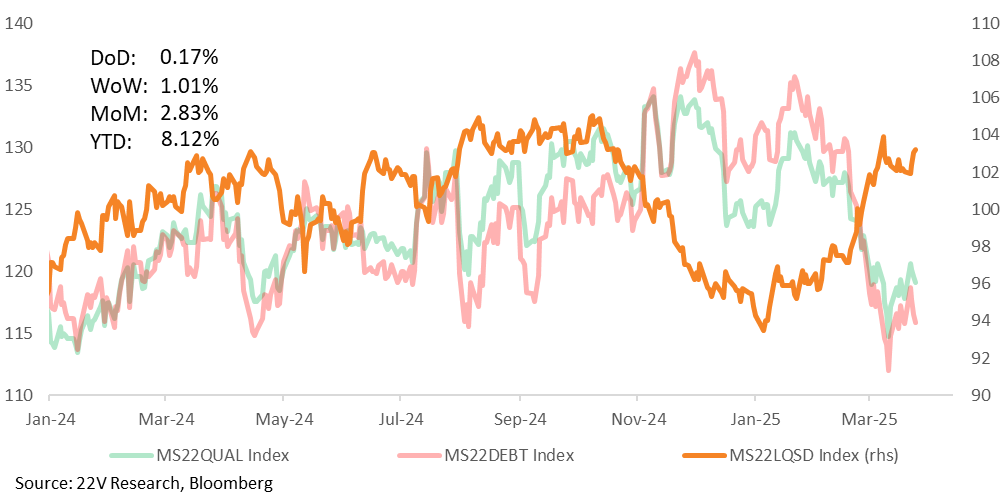
Over the past week, factors and sectors that benefit from wider credit spreads (Defensives sectors and Low Vol) have outperformed. The 22V long high-quality short debt risk swap (MS22LQSD index on bbg) is up +1% WoW. If inflation persists, being long quality and short debt risk makes sense. We also highlight a trade from Jeff Jacobson to hedge risk in Financials (XLF) today. Financials have one of the most negative sensitivities to wider credit spreads.
FYI – it is possible that credit spreads are wider because tariff-related risk is higher. We are not disputing that. Just pointing out that the fed/credit spreads could be an issue even if tariffs have a modest impact on the growth outlook. Targeted tariffs could still lead to persistent inflation. Bottom line – the backdrop is unusually complicated right now.
FYI FYI – the 5yr5yr forward expected inflation has moved lower. But that could reflect expectations that the Fed will crush inflation over the next year if needed. The Fed crushing inflation now, or a recession happening for another reason, lowers inflation in years 5-10 (what the 5yr5yr is supposed to measure). That is why investors should not necessarily look to anchored longer-term inflation expectations as a reason to be complacent on the Fed.
Full report below…
MARKET VIEWS: We don’t have a call for now in factors and 10yr yields. We LEAN risk-on for factors and assume higher bond yields, longer term (next 6+ months). Based on the economy avoiding a recession and tariffs being more targeted. i.e. a worst-case scenario real consumer income shock is avoided. Yesterday, we detailed the potential positive skew in risker factors. Today we focus on the counter to that positive skew. Credit spreads and short-term inflation expectations. Credit spreads have widened out materially and, after consolidating for a week or so, have moved to new wides. In short, credit has acted worse than the stock market over the last few weeks. To be fair, HY and IG grade CDS spreads are back to their long-term medians. The levels are fine. The direction is a problem for now.

Related to the increase in HY and IG credit spreads is the increase in short-term inflation expectations. The market-based measure for 1yr ahead inflation has broken above 3%. Powell made it clear at the press conference and the Summary of Economic Projections (SEP) that the Fed will look through the tariff impacts on inflation in, short term. They are focused on the slower economic growth forecast. That explains why the Fed has a core PCE forecast of 2.8% in 2025 and still assumes 50bp of cuts. If the Fed didn’t believe that inflation would be transitory, it would likely be threatening to tighten financial conditions. That is why credit spreads aren’t wider.
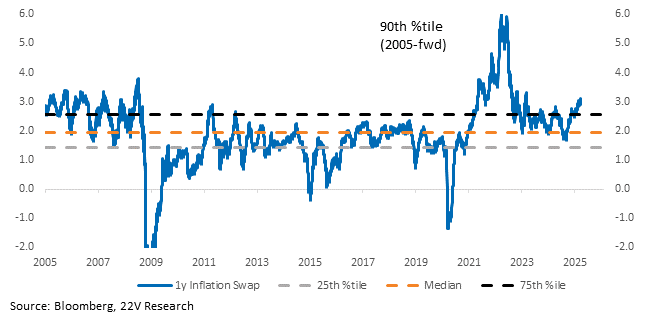
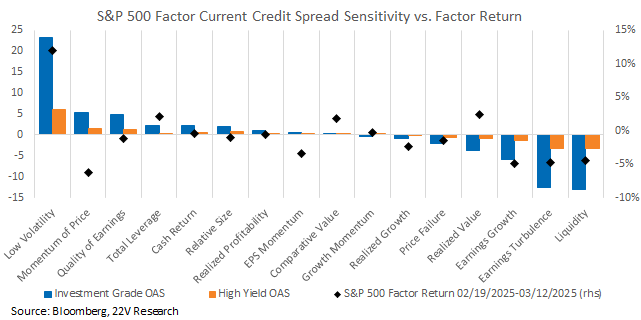
In short, it is possible that targeted tariffs (less econ growth hit from tariffs) and still firm demand growth lead to persistent inflation. The 1yr inflation swap could be picking up that possibility. That could help explain the pivot back to Low Vol this week. The factors most correlated to credit spread are Low Volatility and Momentum of Price, while Risk-on factors, including Liquidity and Earnings Turbulence, are most negatively correlated.
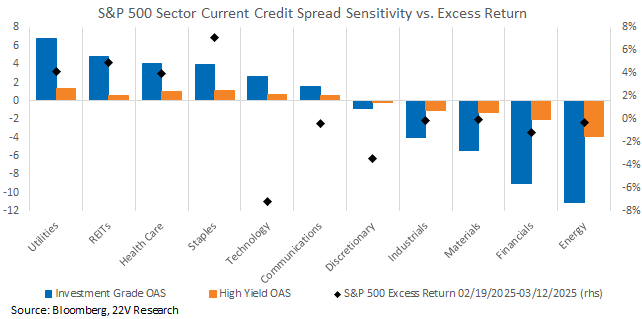
At the sector level, Defensives have been most positively sensitive to credit spreads while Deep Cyclicals and Financials are more negatively correlated. Defensives have worked this week, and Energy was one of the worst-performing sectors yesterday.
High quality has outperformed debt this week, consistent with the move wider in credit spreads. The debt risk basket is made up of S&P 1500 names with low and falling interest coverage, and high cash flow volatility (excluding Financials, Utilities, and REITs). These names tend to have more debt risk and face greater headwinds as credit spreads rise. The exposure of the names today is Risk-on and Growth tilted. It is negatively exposed to Low Volatility and Value, so factor trends are a drag on these names as well. The constituents can be found with the Bloomberg ticker MS22DEBT Index or are available by asking us. The long high quality short debt risk basket ticker is MS22LQSD and can be traded with Morgan Stanley.
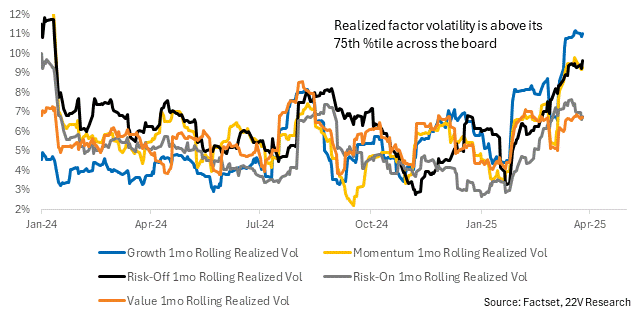
Options Idea – Jeff Jacobson, 22V’s Derivatives specialist, has been structuring short-term reversal trades to help with risk management in a volatile backdrop. Realized factor vol has risen above its 75th percentile across factors, with Growth volatility reaching its 96th percentile. There have been frequent, rolling catalysts for reversals – a background which seems unlikely to change short term. Keep in mind that tariffs were supposed to end in more clarity after the first 30-day delay, and now we have Liberation Day 30 days after that. This is a process, not a clearing event. Hedging after rallies has been a profitable strategy in this noisy tariff backdrop. Jeff recommended an SMH put spread after its nascent rally, which paid off.
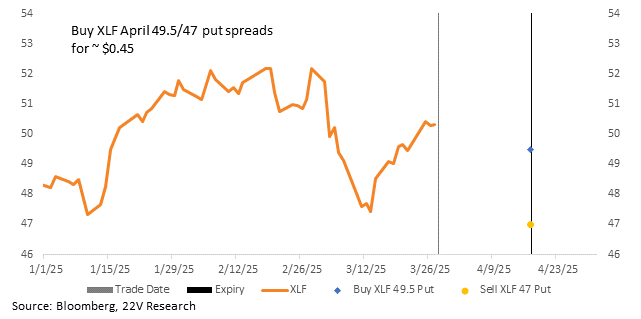
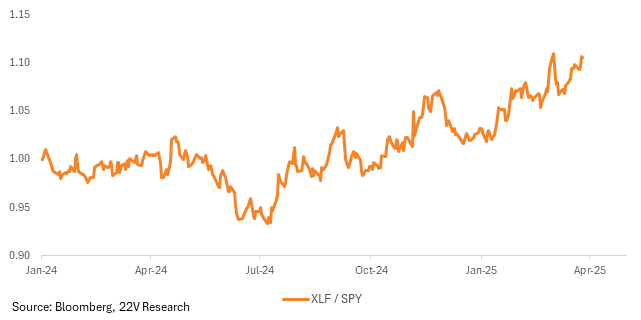
The XLF (financials ETF) has rallied +6% absolute and +3.5% relative to the S&P in two weeks. The XLF is back to its relative high, despite being caught up in the tariff Momentum unwind. To be clear, we don’t have a specific fundamental reason to be negative on Financials. Rather, it’s prudent to take advantage of cheaper volatility to buy hedges in an environment with intense realized vol. This is about risk management.
Jeff likes April hedges, capturing Liberation Day, March Payrolls, Powell on 4/4, CPI on 4/10, and the earnings releases of most of the largest banks (PM, BAC, WFC, GS, MS, and BLK to name a few).
Trade:
Buy XLF April 49.5/47 put spread for .45 (XLF 50.18 ref)
> Put spread starts less than 2% below spot (XLF just rallied 7.5% in 2 weeks
> Trade offers a 4.5x to 1 max payoff
> Have seen sentiment turn QUICK in this tape
> Put spread is capped to the downside ~ 7% lower which is below the recent lows and right at the 200-day