

The late day rally on Friday helped both the SPX (SPY) and Nasdaq (QQQ) eek out small gains for the week, the first positive week for both in the last five. Perhaps the bigger story for last week was the sharp decline in volatility (VIX), which moved from nearly 23 at the start of the week and closed on the lows just above 19. So on a week when the major averages were barely positive, we saw VIX decline by over 11% and it is now down by more than a third from the highs hit on 3/10 and 3/11. It is exactly this type of activity as to why I suggested last week that investors need to be short volatility in both index hedges, as well as on many single-name repair strategies (1×2 call spread overlays, short strangles and covered calls).
VIX declined by 11.5% last week and is now down by almost 35% from the recent highs

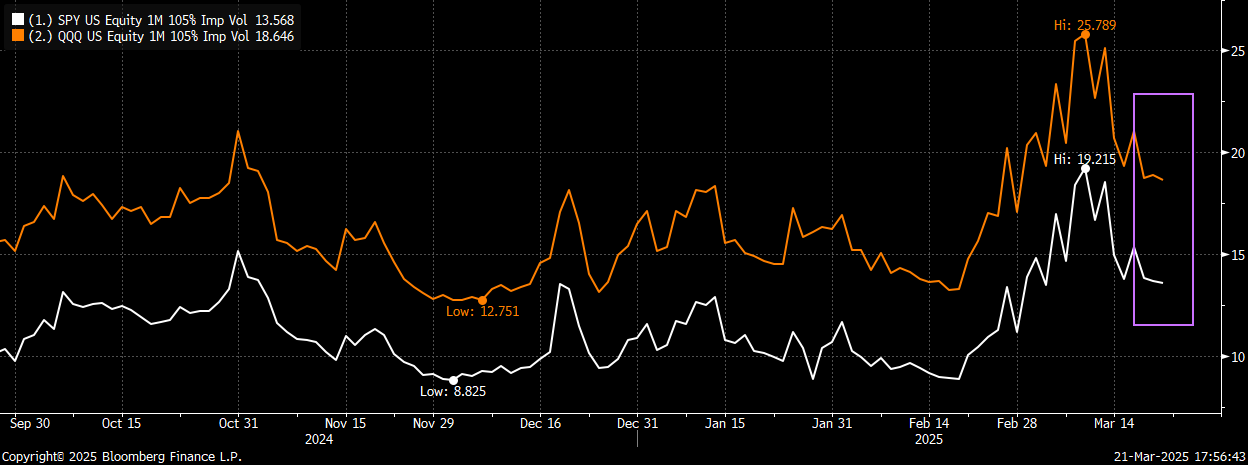
While overall volatility is down from the highs, I am still in the camp that investors should continue to employ short vol strategies when establishing new trades (especially on the index hedge front). A big reason I continue to favor short vol hedges (sell upside calls to own downside put spreads) is that upside call vol remains elevated, and I continue to believe should we get any sort of “decent” rally the upside call vol will be hardest hit. If we continue to trade sideways, like this past week, then not only will vol continue to come in, but the positive theta from the short calls will help offset the negative theta in the long puts (to a large degree). I believe this strategy works especially well still for April collar trades as the 5% upside call volatility for both QQQ and SPY remain 40-55% above the recent lows and we won’t get earnings from any of the major players until either the last week of the month or not until the start of May (after April regular expiry).
One month 5% upside call implied volatility for both QQQ and SPY still trade well above their Feb lows
Here are updated structures I still favor for April collar hedges:
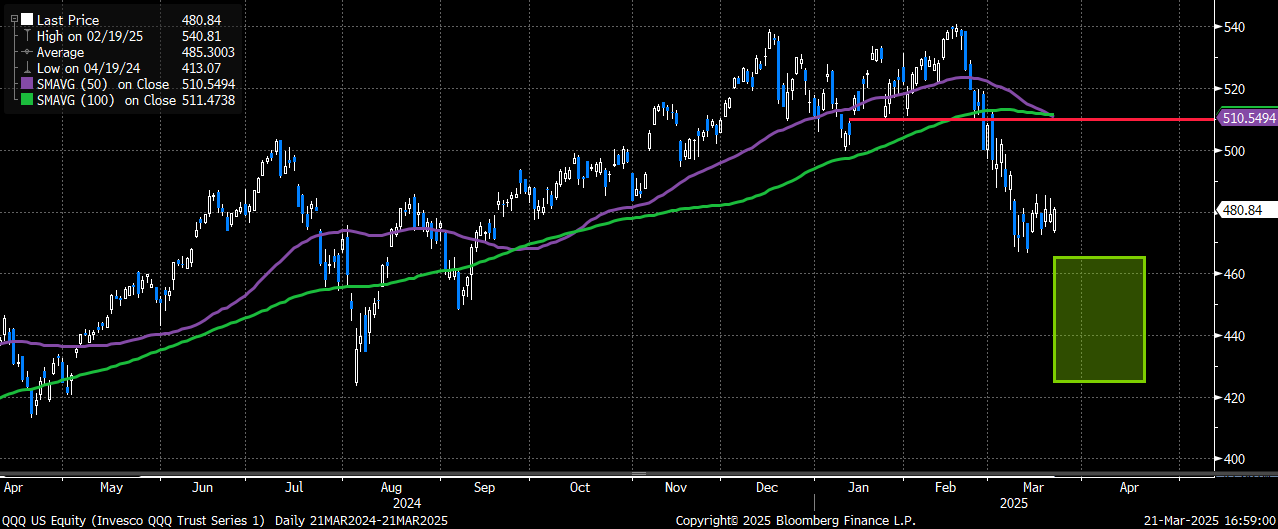
Trade #1 – QQQ April put spread collar
Sell QQQ April 510 call
Buy QQQ April 465/425 put spread
Costs ~ $2.40 (QQQ 480.84 ref)
- Selling the 5%+ upside calls to buy the put spread that starts ~ 3% below spot
- The 510 upside call strike is just below the declining 50-day and 100-day moving averages
- Put spread starts just below the Thursday lows and is capped to the downside 11.5% lower
- Structure is theta neutral to start and selling the upside call and downside put covers nearly 60% of the cost of owning the 3% lower put
- Can look to establish this protective collar position here, or on further rebound off recent oversold conditions
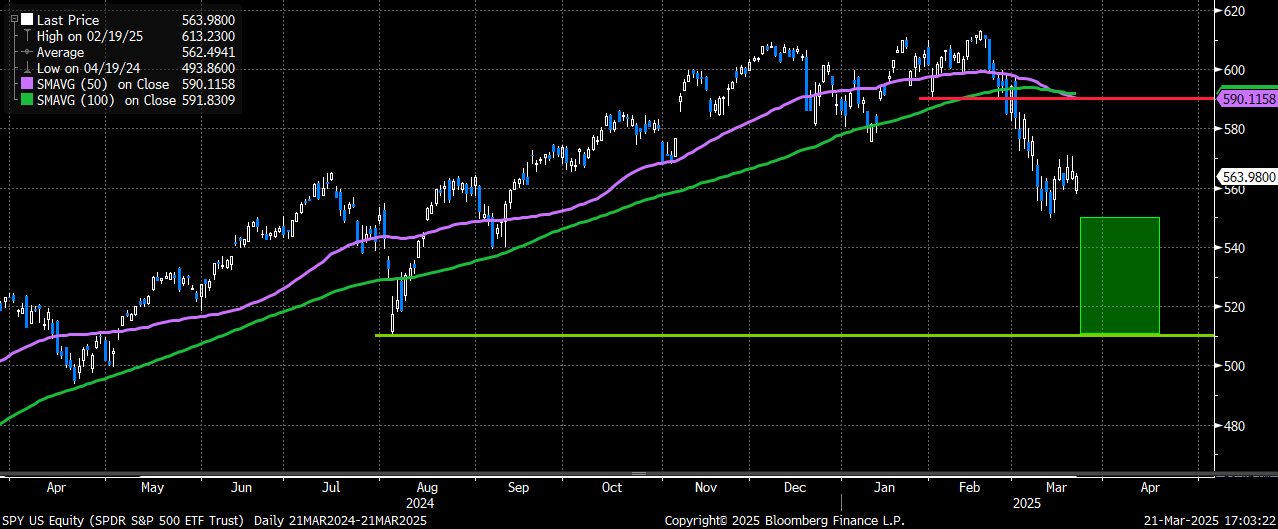
Trade #2 – SPY April put spread collar
Sell SPY April 590 call
Buy SPY April 550/510 put spread
Costs ~ $2.75 (SPY 564 ref)
- Selling the 4.6%+ upside call to buy the put spread that starts ~ 2.5% below spot
- The 590 upside call strike is just below the declining 50-day and 100-day moving averages
- Put spread starts at the recent lows and is capped to the downside at the August lows
- Structure is close to theta neutral to start and selling the upside call and downside put covers almost 50% of the cost of owning the 2.5% lower put
- Can look to establish this protective collar position here, or on further rebound off recent oversold conditions
Not Too Early To Start Thinking About Earnings
We saw on Friday that even stocks that are down a lot into earnings still have further risk to the downside. Micron (-8%), Fedex (-6.5%), Nike (-5.5%) and Lennar (4%) all dropped sharply after reporting on Thursday after the close, and all four names were down more than 20% from their 1-year highs heading into the reports. I mention this as with Q1 shortly ending, focus will soon start to shift to earnings, especially for the largest companies whose weightings dominate the indexes. What I have noticed is that while most of these names that are reporting between the end of April and start of May have a decided bid to vol to reflect the earnings, I am seeing little to no difference between April vol and say May 2nd vol on the index level. Names such as META, AMZN, GOOGL, AAPL and MSFT are all showing implied vols for May 2nd roughly 20% above April 17th vols (to reflect the earnings), while 40-delta put for both QQQ and SPY is actually HIGHER for April 17th vs May 2nd. I bring this up for a few reasons. First, if you currently own puts for April expiration for either QQQ or SPY, I would strongly suggest rolling them out the extra two weeks to capture earnings (especially while there is no real vol differential to do so). Second, if you are looking to establish outright hedges (puts or put spreads) then I would also focus on May 2nd or May 16th expirations to capture the bulk of earnings season.
Please feel free to reach out to me or the 22V sales team to discuss specifics and for execution capabilities.

