February CPI Doesn’t Give Much as We Wait
- Not to be trite but waiting to see what the next months’ policy and data developments hold, with little call for short-term action, seems to be perhaps the most robust theme I know of.
- The vol-but-flat move in rates on the data seems most likely to be a fading of recession risks as a slightly softer, less hawkish than feared seems most accurate, inflation path allows for a Fed that’s more responsive to any emergent downside risks (from tariffs/DOGE/whatever). That will require the data to remain well behaved “ex-tariffs” and it is important to remember that we have already seen notable upside from the Fed’s fall inflation forecasts.
- Realistically, barring much more notable labor market weakness a May cut seems highly unlikely and if one has that view it would be better to play for a more aggressive June-Sept path rather the very specific timing of June.
- After last month’s pop, February CPI brought some relief on the top lines, but the internals of the data seem to be a bit less favorable for the Fed with core PCE looking like it will come in only a bit softer than last month (tomorrow’s PPI will help refine this view further and could show tariff impacts or obvious preparations earlier).
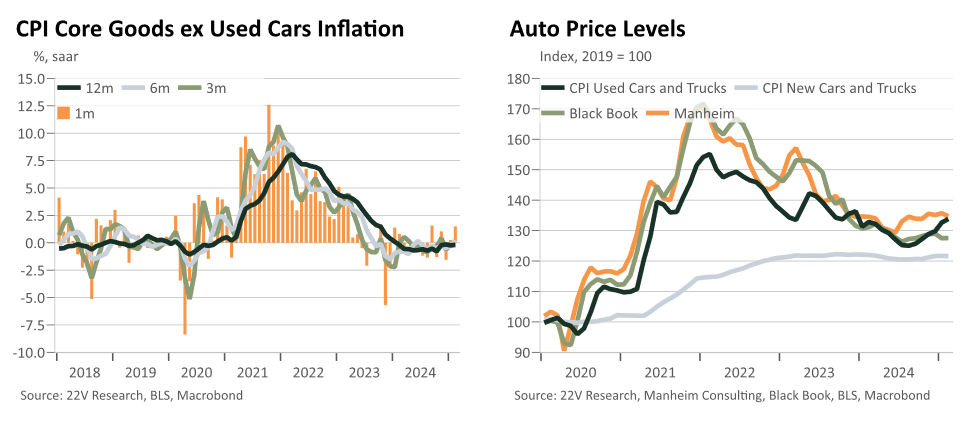
- The broad-based pickup in core goods inflation before the implementation of tariffs, prices there have been up every month but one since Sept, suggests that that deflationary tailwind is already gone, and pricing power is surprisingly robust in the sector.
- Core services inflation was soft and there seem to be some hints of a precautionary slowdown in spending with weaker hotel and airfare spending.
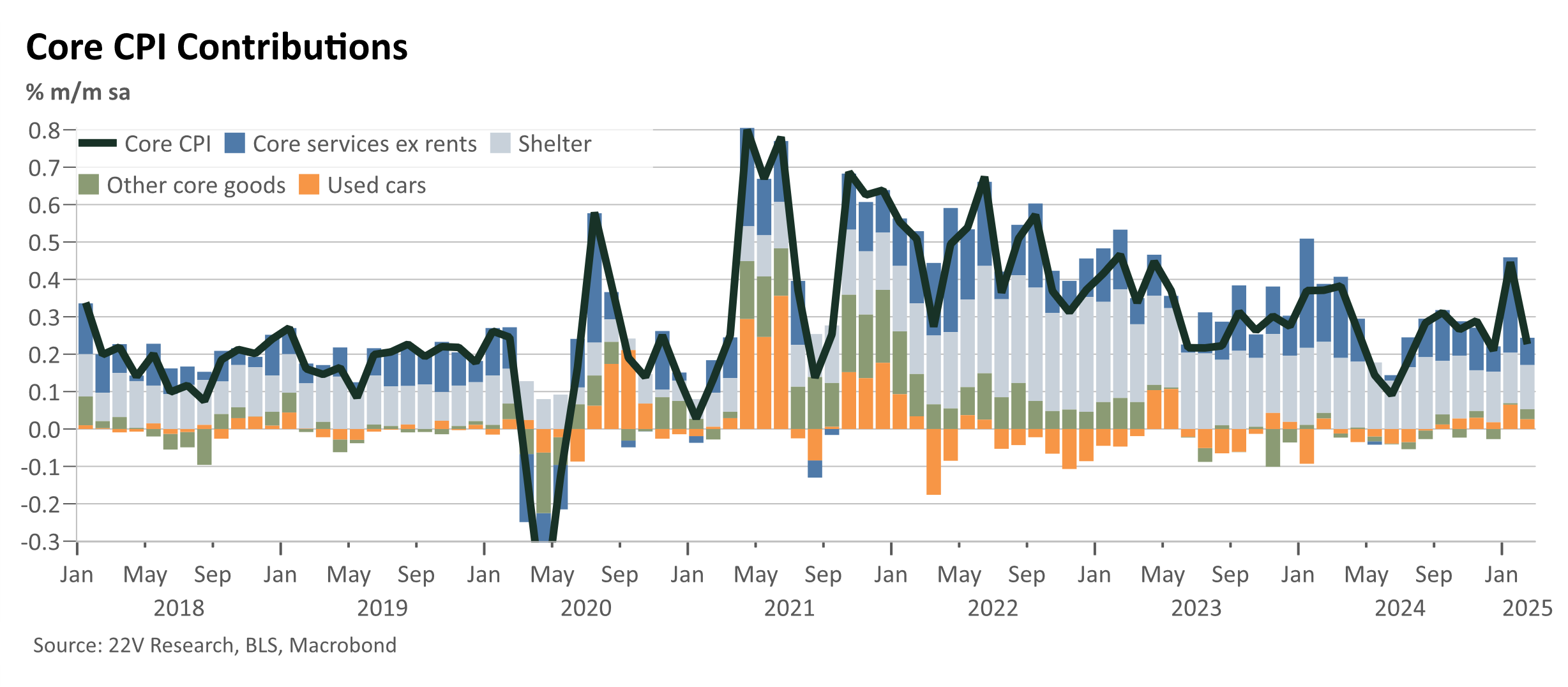
Core goods punchiness this month may be a result of tariff front-running, but it is part of longer trend away from outright deflation. The recent rebound in auto prices has been a key part of this trend but even ex autos there has been surprising upside strength in recent months. The higher trend pace in core goods inflation seems consistent with a broader snarling of global effective supply due to geopolitical shifts. The PPI data for intermediate goods production and the recent PMI prices measures are consistent with this only very mild bout of deflation, which has now wrapped up. The looming if unknown in final size, duration, and timing tariff shocks will fall on a sector where price gains seem to be able to be passed-through relatively cleanly.
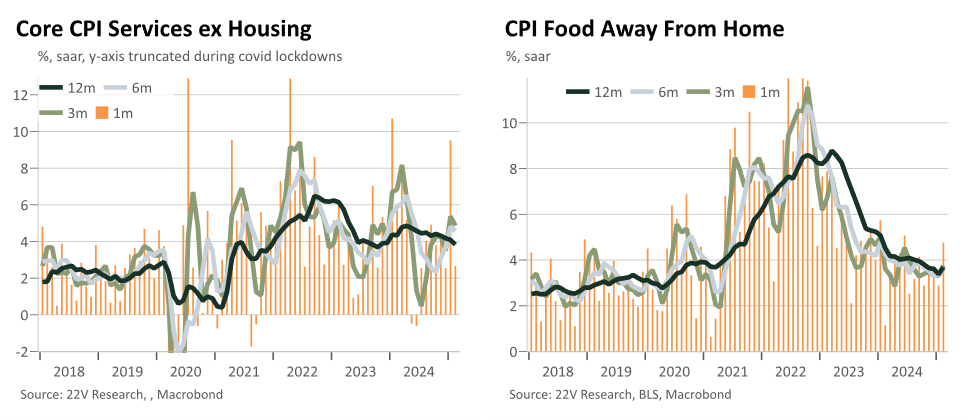
Core services ex housing was notably soft after its January spike. Airfares and hotels stand out for their weakness, lining up well with recent corporate reporting, and suggest that there may be some precautionary softening in discretionary spending given the messy approach to tariffs and DOGE risks to the labor market.
Food related inflation was an interesting pick your own story this month. Food at home was flat despite the surge in egg prices, potentially suggesting the further deflation may be in store or, less optimistically, that the surge in egg prices is forcing lower prices on other grocery items given cost competition for relatively fixed wallet shares. Food at home though saw its highest print since last June. Given the commodity, labor, and rent heavy input costs in this sector and its largely discretionary nature this remains one of my favorite measures of underlying cyclical inflation. It seems to be plateauing somewhat above pre-covid paces but is not obviously too high to be indicative of truly problematic underlying inflation.