The relative weakness we have seen from the “Mag 7” names since mid-December could be a signal that the main indexes (SPY and QQQ) could be in danger of more than just a slight pullback from their all-time highs. With six of the seven names already having reported earnings, all but META are lower since they reported and in many cases a lot lower (TSLA – 7%, GOOGL -10.4%, MSFT – 7.4%). In most cases the stocks dropped initially on earnings, and we have seen little to no lift since.
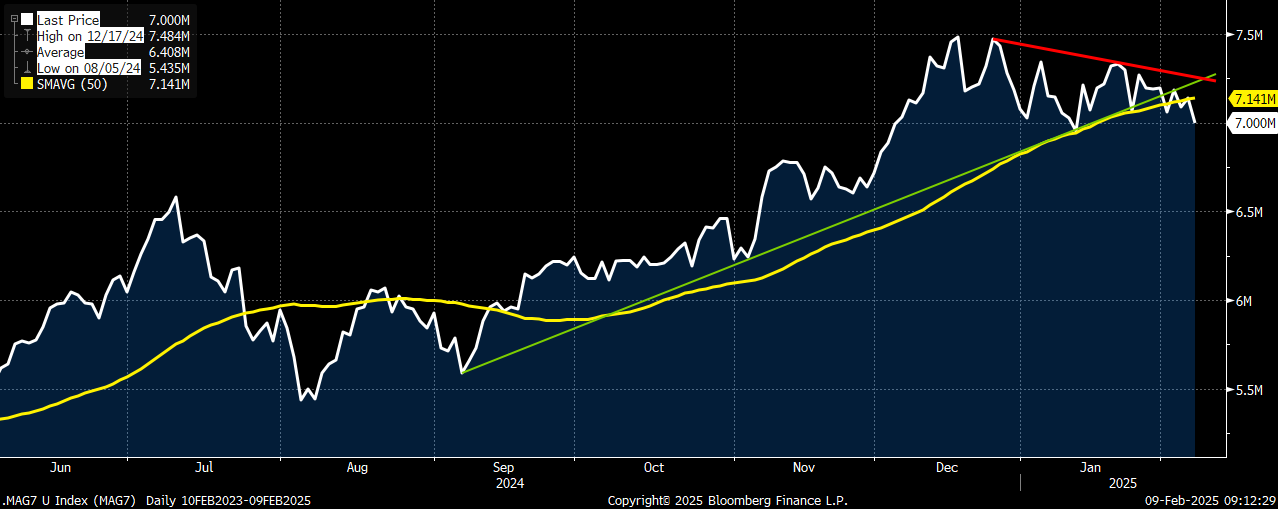
I created an equal-weighted Mag7 index, and that shows that since peaking on both an absolute, and relative to the index, basis in December they have declined by ~ 6.5% (vs a 0.25% decline for the SPX (SPY) and 2.25% drop for the NDX (QQQ). While the main SPX index has been able to hold up incredibly well in the face of the Mag7 weakness, should the market get further concerning news on tariffs, and/or inflation, the indices could be susceptible for a much larger decline than we have seen thus far given the overall weakness from the top-weighted names. In addition, should these names remain under pressure that likely puts a “cap” to the index upside in the shorter-term given their importance. Just to reiterate how important these seven stocks are to both the NDX and SPX, they comprise a total weighting of 43% in the NDX and a 32% weighting in the SPX.
The Mag7 names peaked in mid-December and have been significantly underperforming both SPY and QQQ since

Looking at just the Mag7 equal-weighted index alone we see that after peaking in December and making a lower-high on the January market bounce, it is now below both the September uptrend and the 50-day support. While we have seen other cases like this recently of declines (most notably the July drop), I can’t recall a recent time where most (all but one) of the names are signaling relative underperformance to the overall market. If we recall, it was these very names that supported the bid to the indices while most other areas of the market were under pressure for the better part of the last year. This action in the Mag7 is occurring with the major indices still just below their all-time highs and implied volatility still relatively low. In addition, the added risks/unknown we have on the tariff front, that seem unlikely to be resolved anytime soon, means owning index hedges here with a heavy Mag7 weighting remains a favorable option in my opinion. We have already seen the market react negatively a few times on just the mention of tariffs with some of our main trading partners.
I created an equal-weighted Mag7 index. After peaking in December it made a lower high on the market rebound in January and is now below the Sept uptrend and 50-day support
When deciding what expiration to own for market hedges now, I would lean towards owning March structures over the shorter-dated February ones. While there is still the unknown on the tariff front, we do know that the 1-month extension given to both Mexico and Canada will need to be addressed again in early March. In addition, there are two other known events that March hedges will capture that February will not. The first is Nvidia (NVDA) earnings on Feb 26th, and the second is the FOMC rate decision on March 19th. Given the Deepseek news and reaction by may of the tech/AI names, all eyes will be on NVDA when they report and discuss the possible impact on future sales/guidance. As far as the March FOMC meeting, we always see a bid to volatility as we approach the meeting which further supports owning vol now that captures the event. While I continue to advocate owning vol/hedges, I do think put spreads are starting to look a bit more attractive than owning puts outright. First, realized volatility has come in somewhat. Second, we have seen put skew move up in both SPY and QQQ and given the longer-duration March expiry I think wider put spreads make more sense. Given the high weighting of the Mag7 names in both SPY and QQQ, I think either make sense as a portfolio hedge.
Here are two specific put spread hedges I want to highlight:
Trade #1
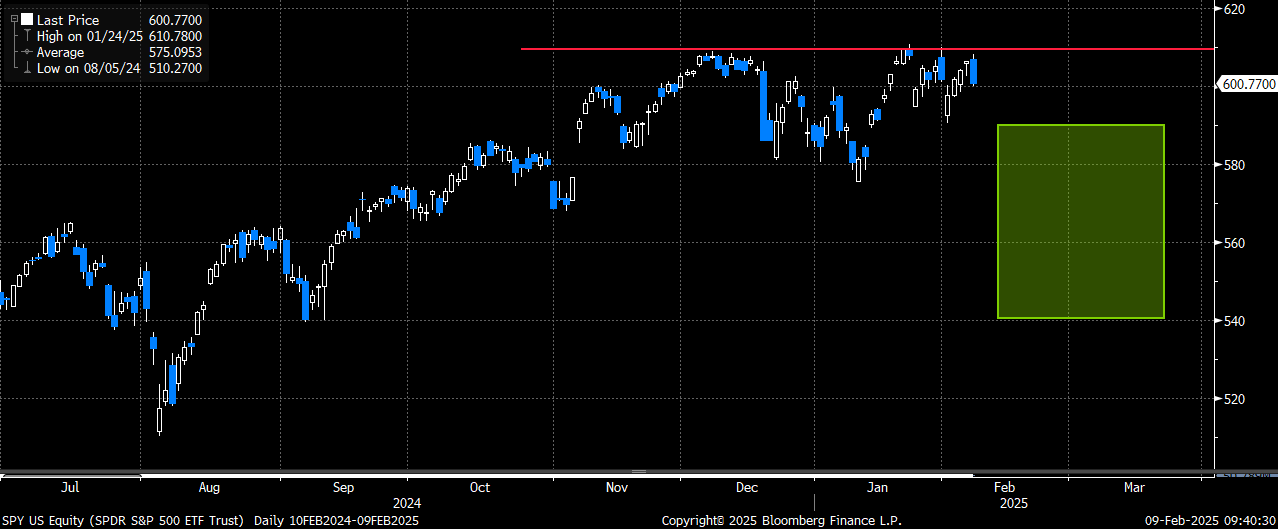
Buy SPY March 590/540 put spread for ~ $5.35 (SPY 600.77 ref)
- Put spread starts 1.5% below spot (after factoring in the ex-dividend on 3/21)
- Structure offers a whopping 8.3x to 1 max payoff with the 50-point wide put spread being capped down at the September lows
- Selling the 540 puts as part of the put spread hedge covers a full 20% of the cost of buying the much higher delta 590 puts (selling 22.36 vol/buying 14.95 vol)
- Spending less than 1% of the underlying to own the 6-week hedge that protects against a 10% decline
- March expiry captures 2 CPI prints, another payroll report, NVDA earnings on 2/26 and then next FOMC decision on 3/19
SPY March hedge has a wide range of profitability and nearly 6-weeks of duration
Trade #2
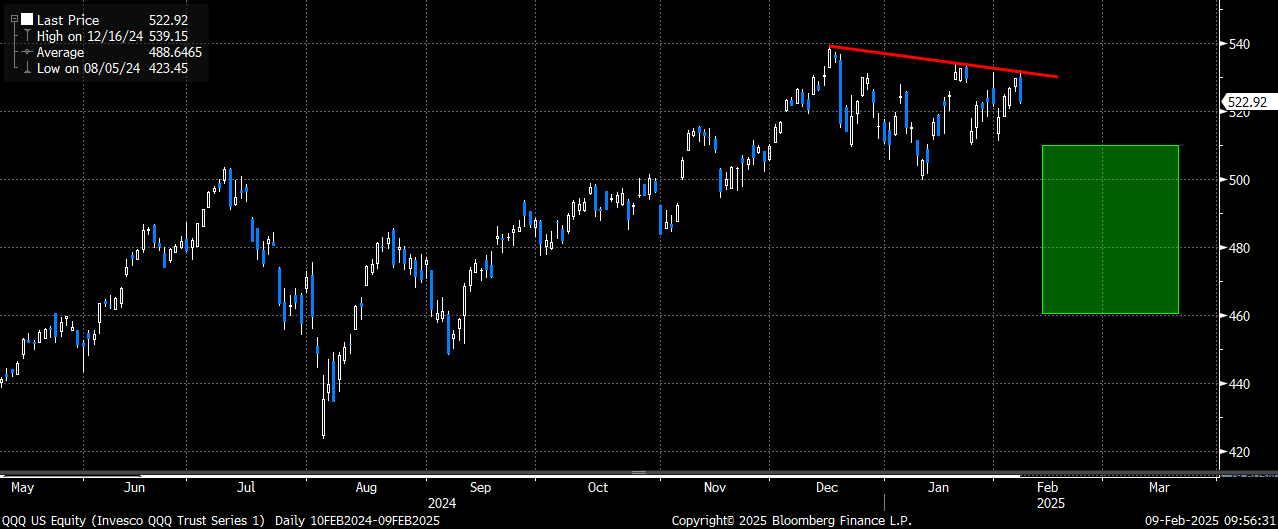
Buy QQQ March 510/460 put spread for $6.15 (QQQ 522.92 ref)
- Buying the March protective put spread that starts 2.5% below spot
- Put spread offers an attractive 7x to 1 max payout and is capped just above the September lows
- 43% weighting of the Mag7 names in QQQ and they continue to act poorly
- Selling the 460 put covers ~ 19% of the cost of buying the higher-delta 510 put (selling 27.6 vol/buying 20.2 vol)
- March expiry captures 2 CPI prints, another payroll report, NVDA earnings on 2/26 and then next FOMC decision on 3/19
QQQ March hedge also offers a wide range for profitability and six weeks of duration