

Previewing the Employment Survey Revisions: Less NFP Growth but a Positive Shift in the Household Survey
- The downward annual benchmark revisions for the non-farm payrolls data and the upward population control adjustments to the household survey, that frustratingly do not see backward revisions, will show a more internally consistent view of the labor market over the past few years.
- The primary macro takeaway from the revisions will be that the pace of hiring, especially in more cyclical sectors, has been very sluggish since mid-2023. Given labor supply gains due to immigration over this period (which the population adjustments to the household survey will show), this makes the modest rise in the unemployment rate easier to explain and suggests payroll growth more in line with long-run trends.
- For the Fed, these revisions, which are at least partially incorporated into their thinking, help the dovish case a bit on the margin by noting the softness of cyclical hiring since the tightening cycle reached restrictive levels. We heard some of this embedded in Chair Powell’s recent press conference.
- When combined with sluggish hiring rates, one can tell a story where, while topline payroll growth and activity have been robust, the underlying income growth supporting that has largely come from minimally cyclical industries, opening up a bit of downside risk as catchup hiring slows.
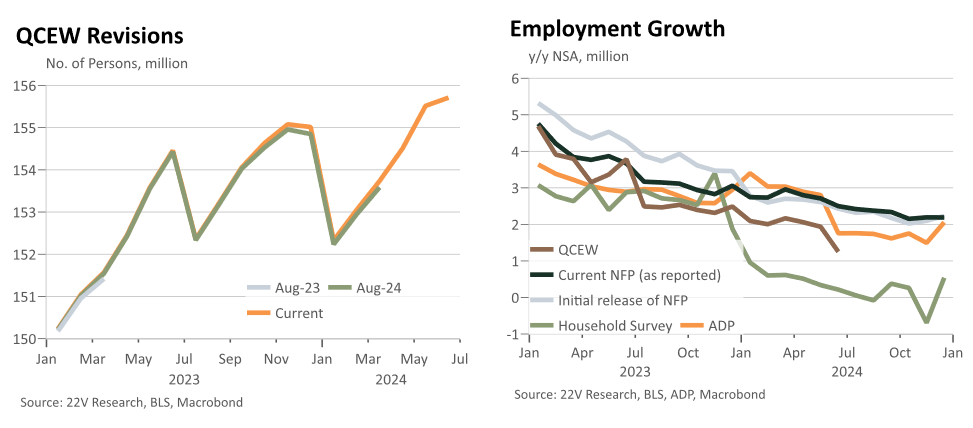
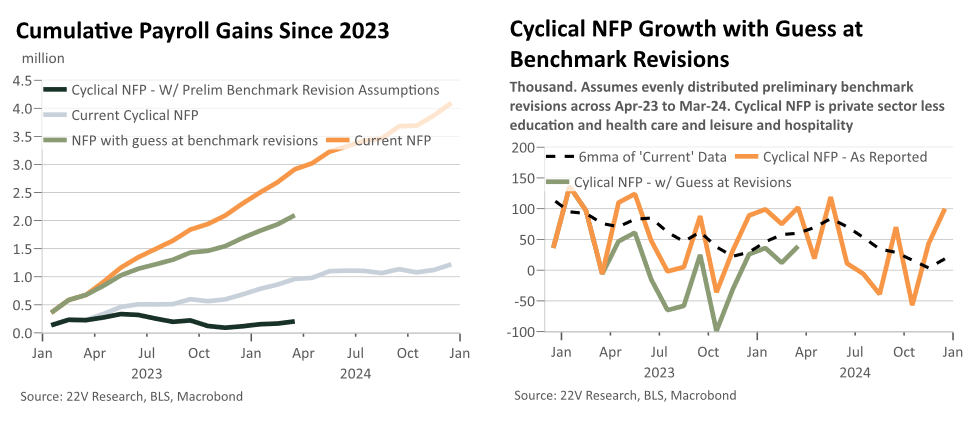
Non-farm payrolls level will see a downward shift of roughly 700k in March 2024, slightly smaller than the -818k preliminary benchmark revisions in August (here and here) due to a slight upward revision to the associated source data (the QCEW source data has tended to see mild positive revisions over the course of this cycle, even as the overall numbers have recently implied notable NFP overstatements, a somewhat strange combination when normally revisions are procyclical and correlated across series).
Most of the downward revision in the NFP data will come from more cyclical sources of employment growth. IT and professional and business services were particularly hard hit in the preliminary benchmark revisions. It is likely that non-catch-up hiring (private sector minus education, health care, and leisure and hospitality) was very close to 0 on net since mid-2023.
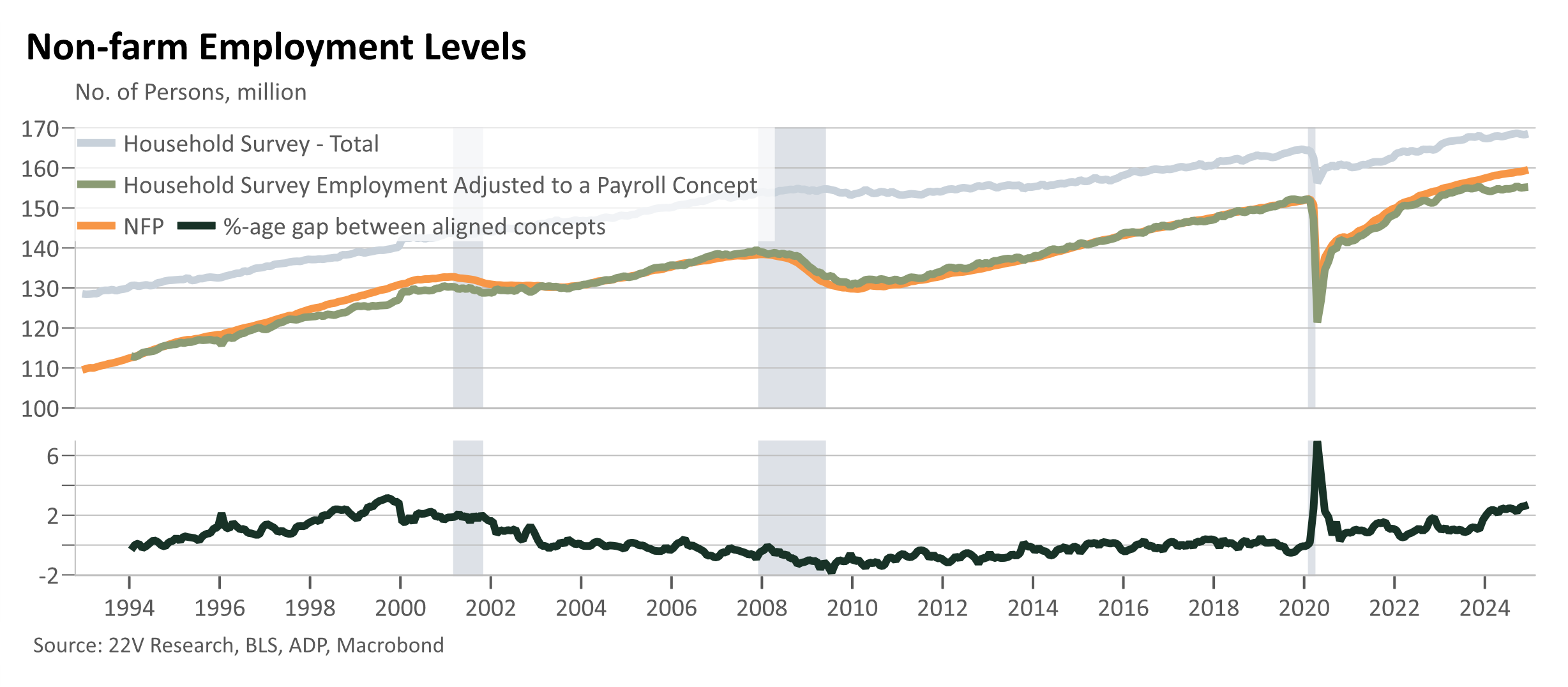
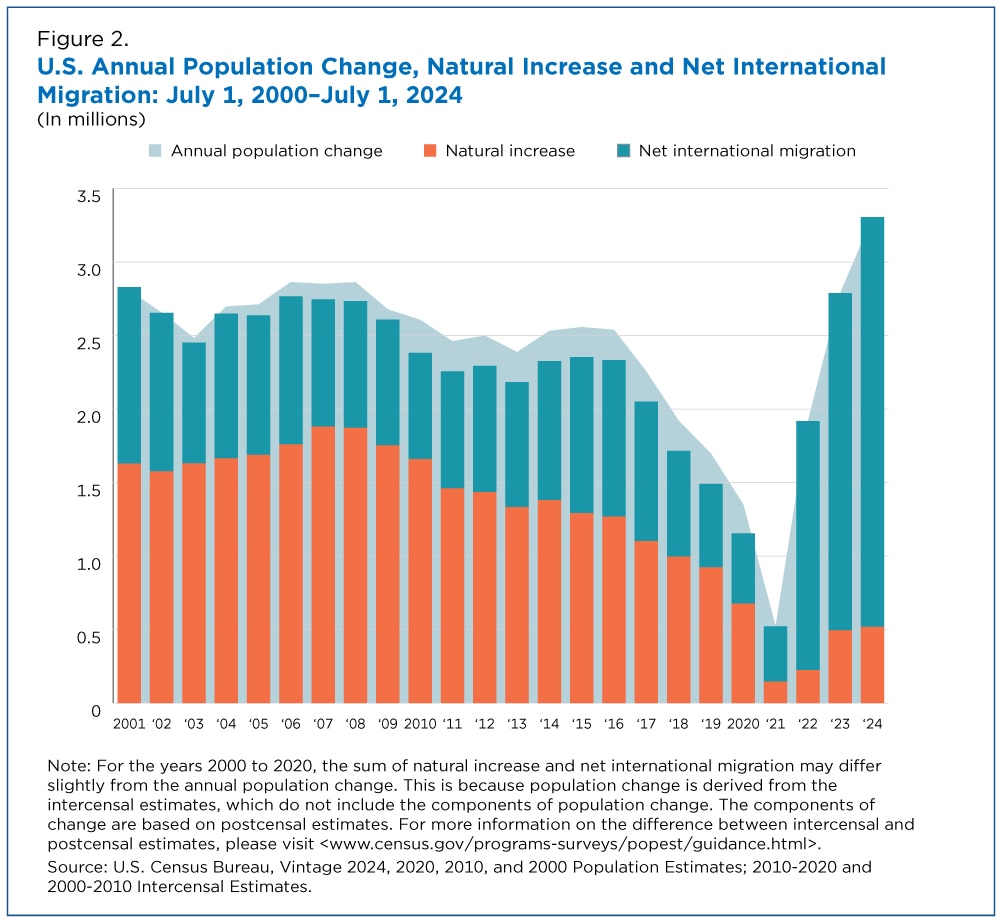
The household survey’s population controls will see upward revisions to employment and the labor force, up notably more than NFP is revised down, due to new immigration estimates (see more from the Census Bureau here and here). These estimates have 2.3m net immigrants in 2023 (up from 1.1m) and 2.8m in 2024. This cumulative increase in the immigrant population will go a long way towards closing the relevant gap between the NFP and HH survey data.
The BLS does not revise the historical data for the HH survey so we will see jumps higher across the level, rather than rate, series in the data. This will largely close the gap to NFP from below, with the smaller downward NFP revisions doing work from above.
This will likely only shift the associated rates (unemployment, participation, prime-age employment, etc) by a small amount. The press release from the BLS should contain values in December that do reflect these updated population estimates, this allows a more like-for-like comparison than just looking at the monthly levels which will populate on Bloomberg and elsewhere. When thinking about m/m changes in slack it is best to look at these estimates rather than the as reported series, even though the official numbers won’t change.[1]
Last year, these were in Table C of the employment situation report press release. ↑

