Dec PCE and Q4 ECI Data Support Cyclical Optimism
- Core PCE came in around dovish consensus, personal spending was strong, and the ECI was inline with expectations. Overall, that is a good combination of data for the cyclical bulls.
- As always, the internal story is a bit more complicated and suggests that while the economy has made substantial disinflationary progress, inflation’s underlying trend is probably more like 2.25-2.5% than exactly at target.
- This would not be a really hawkish problem for the Fed, and may even allow them to ease 1-2x more times leaving policy in a ‘more neutral’ stance, but these initial conditions increase overheating and hawkish policy response risks in the event of additional supply shocks or demand stimulus.
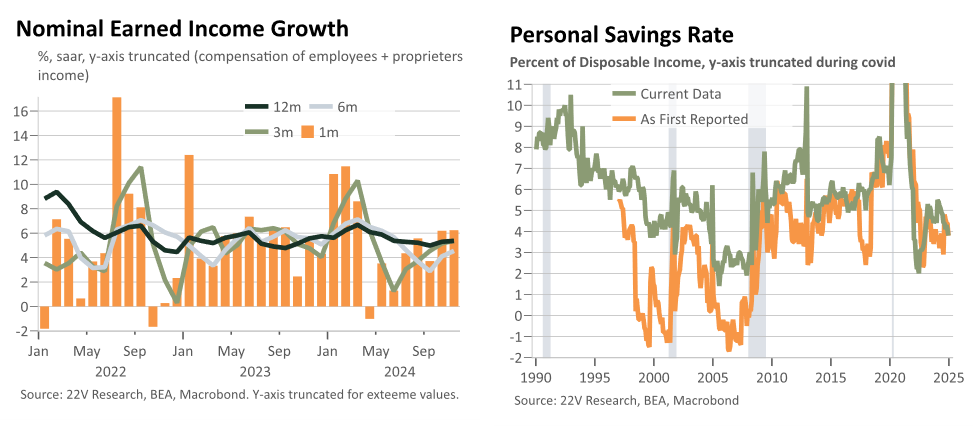
Core PCE came in at 16bp in December, about as good as it gets overall. Core services ex housing, a bit out of favor now as medium-term and dovish point of reference now that inflation has come down substantially, was up 28bps on the month. This is somewhat above pre-covid trends and likely, unless one makes a bit too optimistic assumptions on core goods and housing inflation trends, somewhat above target consistent levels. But there’s also nothing here which highlights endogenous reacceleration risks or screams for more hawkish Fed policy. Rather the inflation data, taken just on its own in a backward looking way, favors perhaps 1-2x more gradual cuts to a more neutral policy stance above a neutral rate which is apt to keep drifting higher.
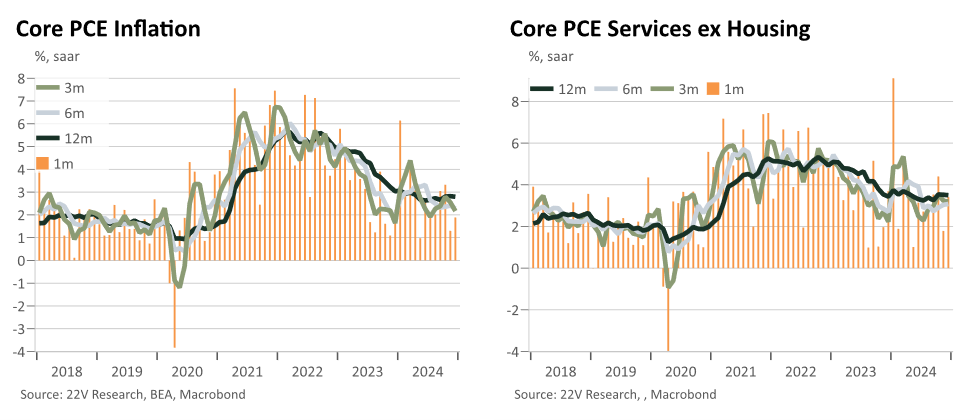
The employment cost index (ECI) was right in line with expectations as well. Overall compensation grew 3.65% over the quarter and 3.8% over the past year. ECI wages and salaries growth came in at effectively the same levels. We continue to see compensation leadership among state and local government and union workers (among the private sector workforce over the past year comp growth is 5.1% as members vs 3.4% non), which are playing relative catchup after substantially lagging the private sector during the peak of job churn and labor market tightness, a fact which should be unsurprising given the sticky nature of government and union employment. ECI wages and salaries ex incentive paid occupations was somewhat softer and is usually seen as a good measure of underlying wage pressures, in the same way that core inflation is. Jointly this suggests that in recent quarters non-union lower wage (or at least less incentive-based comp workers) are seeing relative easing of the labor market.
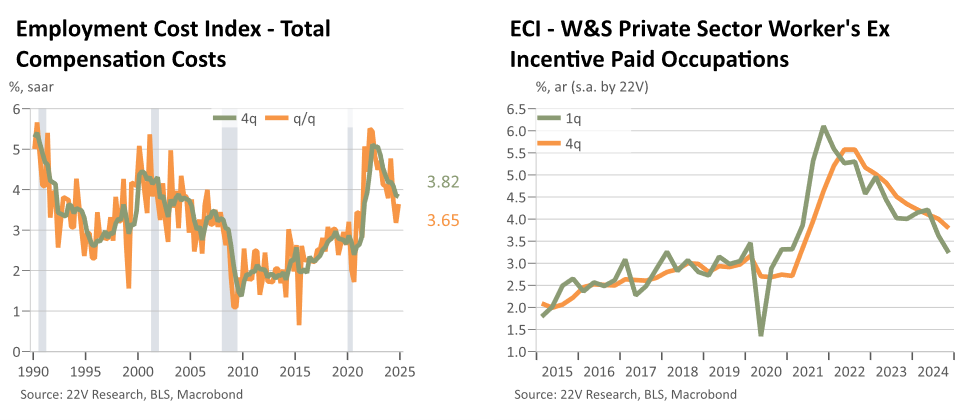
Personal spending continues to charge ahead (as we saw in yesterday’s Q4 GDP release). In the past two months durable goods spending has surged, suggesting the possibility that there is some tariff front-loading taking place (as Gerard noted here). My own measure of discretionary real PCE spending continues to look quite strong and suggests robust underlying demand.
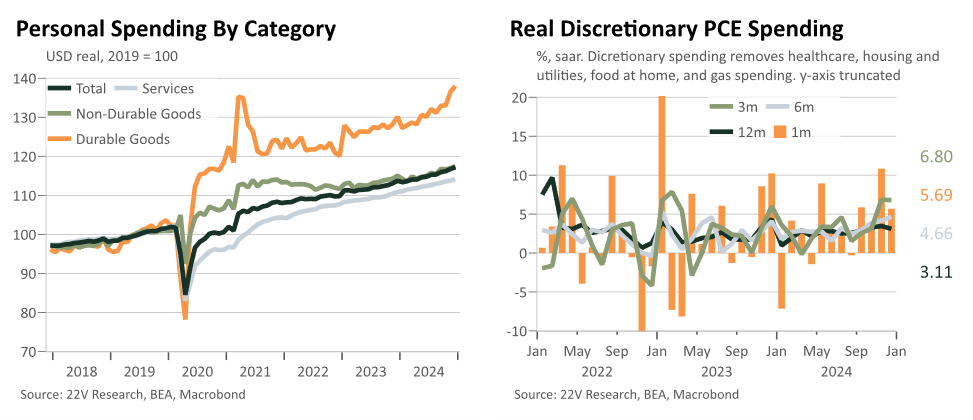
Personal income growth remains strong (aggregate earned income and wages and salaries growth are running between 4.5-6% depending on the smoothing horizon) but the recent spending heat has been enough to pull the savings rate down a bit (not something to try and tell a negative forward-looking story from, as we’ve learned this cycle).