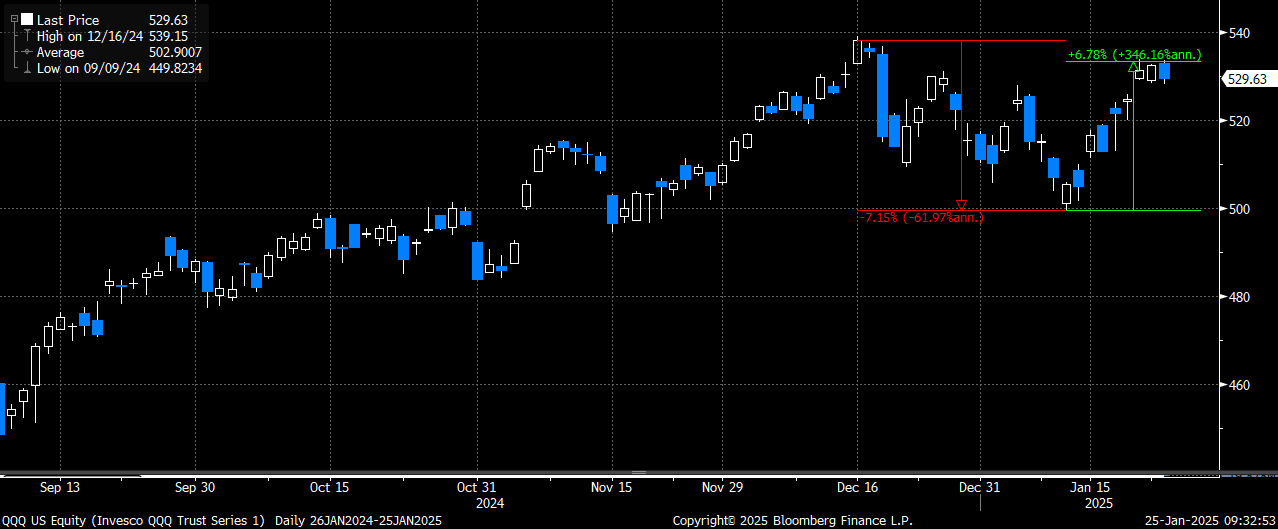
With earnings from several of the Mag7 companies expected to start this week, there are many reasons why I believe now is a very favorable time to establish sector hedges. First, after dropping by over 7% from the December (all-time) highs, the main technology etf (QQQ) rebounded by nearly 7% to just below the level where it was trading before the large drop on 12/18 (last FOMC meeting). This sharp rally to just below the highs may be setting the stage for “selling the news” when these companies announce earnings and guidance. Second, implied volatility for QQQ is CHEAP. A theme I continue to stress is to own volatility here as it is not only inexpensive, but continues to trade at a sharp discount to realized volatility. QQQ is no exception to this as 1-month 40-delta put vol trades ~ 17 (down from a high ~ 26 in December) while 30-day realized vol trades over 21. Over the last 22 trading days, QQQ has had a 1-day realized move of 70bps on 14 of those days (64% of the time), and that has been without any of the top names reporting earnings. In addition, those realized moves have been both up and down with 8 days being positive and 6 being negative. Over the next month or so we will get earnings from seven of the top-eight weighted names in QQQ (NVDA, AAPL, MSFT, AMZN, TSLA, META and GOOGL). These seven names comprise ~ 44% of the entire weighting in QQQ and are likely to have a significant impact as to the direction of the index over the next month. This is less of a market call but more about owning “cheap” insurance after a sharp 2-week rally back to the highs ahead of several catalysts.
QQQ declined by over 7% from the Dec highs to the Jan lows and has since rebounded by nearly 7% and is once again just below those all-time highs
QQQ 1-month 40-delta put implied volatility (white) trades just above the 6-month lows and at a sharp discount to 30-day realized vol (orange)

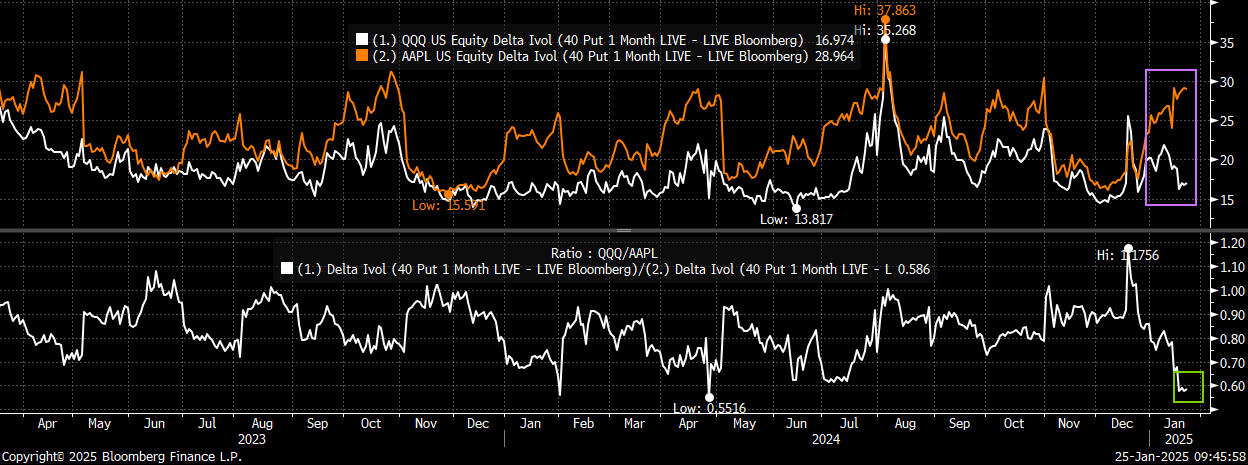
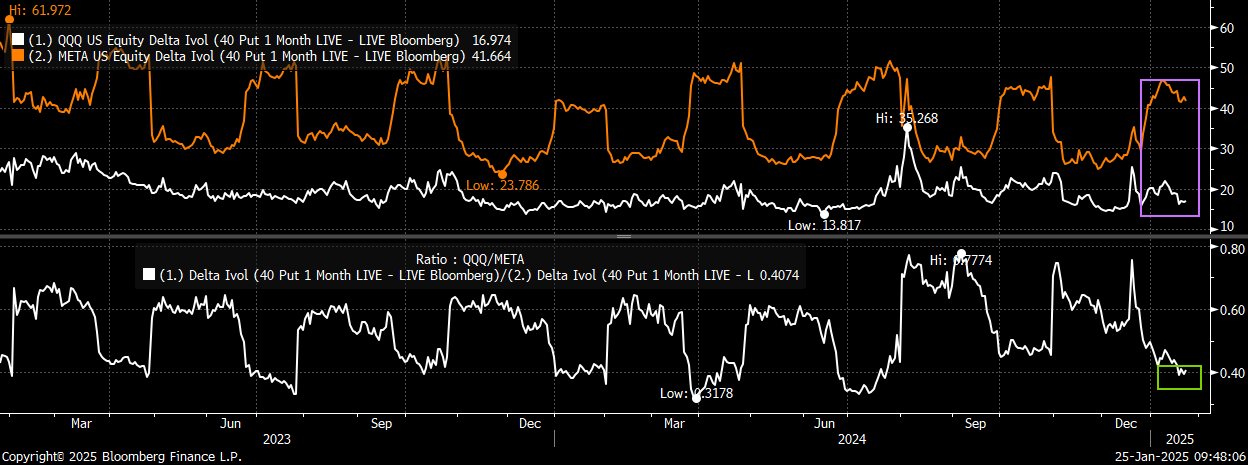
Another dynamic I am seeing, which supports owning index hedges as well, is that it trades VERY cheap relative to single-name volatility of the very names it owns. For the seven names reporting over the next month, the average 1-month 40-delta put implied vol trades at 38.5 (while QQQ implied vol trades at just over 17). Therefore, QQQ vol currently trades at a 45% discount to the collective Mag7 “basket”. While index vol typically trades at a discount to the basket of names, this is certainly on the lower-end. Below are the charts of both AAPL and META compared with QQQ vol.
QQQ 1-month 40-delta puts trading at 2-year lows relative to AAPL 1-month 40-delta puts
Similar put skew setup with QQQ puts trading near 2-year lows to META puts
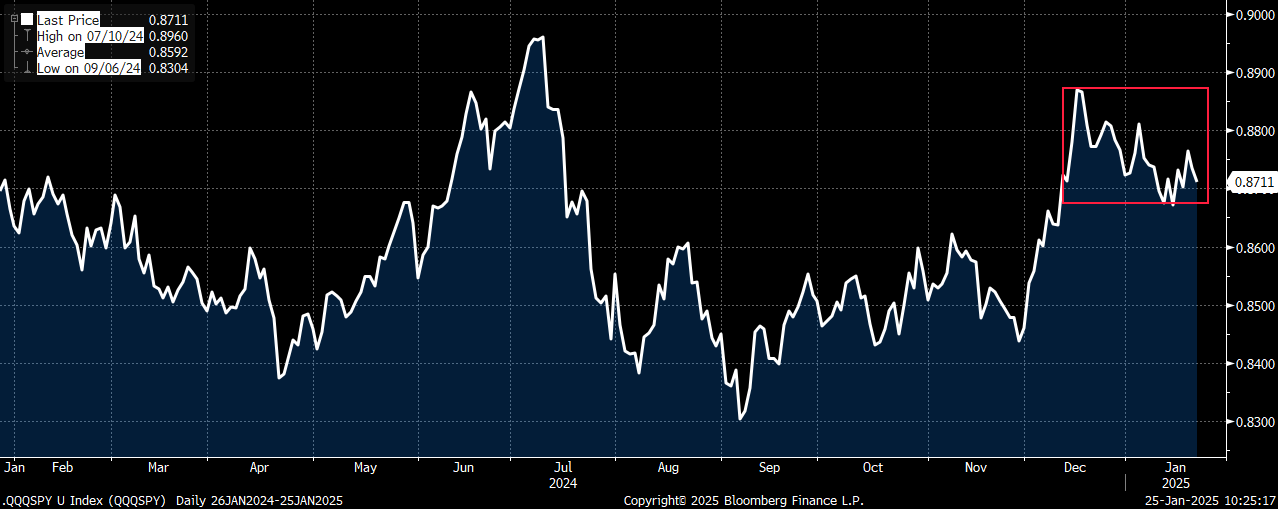
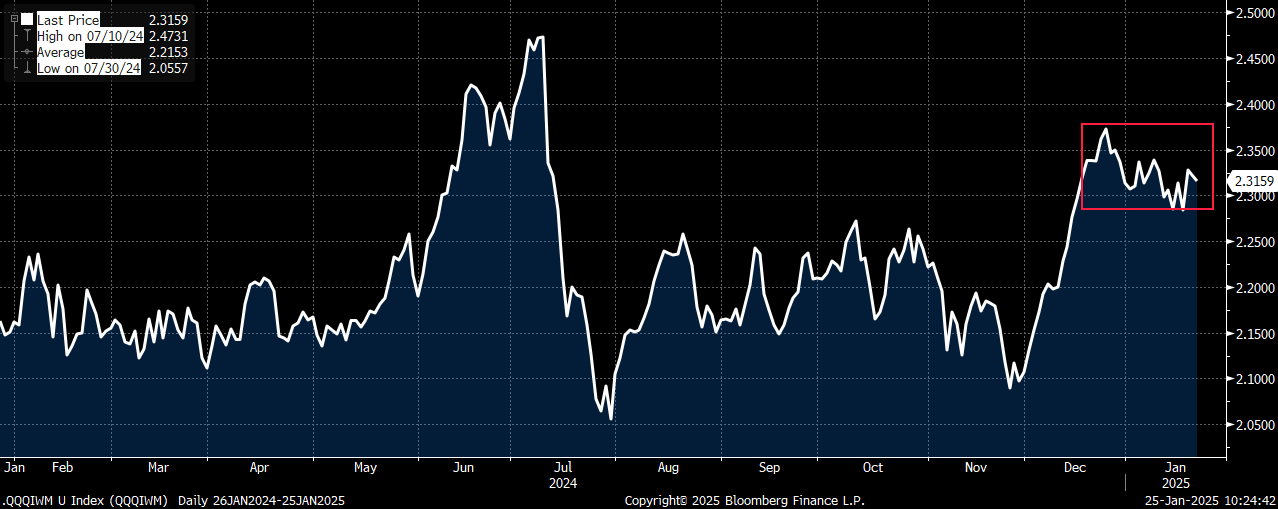
Finally, even with the rebound off the Jan lows, QQQ continues to lag the overall market (SPY) and even small caps (IWM). It peaked on a relative basis vs both in December and has been unable to make new relative highs as the market has rebounded. This lack of leadership could be indicating that new highs for the sector may be less likely as we move thru earnings season.
QQQ/SPY relative spread peaked in December and has been trending lower
QQQ/IWM also peaked in December and has failed to make a new relative high
Given this setup of QQQ back to the highs, index vol trading “cheap” to the individual names, and implied vol trading at a sharp discount to realized vol, I suggest adding 1-month hedges via put spreads:
Trade:
Buy QQQ Feb 28th 520 puts
Sell QQQ Feb 28th 480 puts
Costs ~ $5.35 – $5.40 (QQQ 529.63 ref)
Trade Details:
- Buying the 1-month QQQ put spread ahead of earnings season for the Mag7 with tech stocks just below the highs
- Prefer the Feb 28th expiry to Feb 21st “regular” expiry since NVDA is confirmed to report on Feb 26th
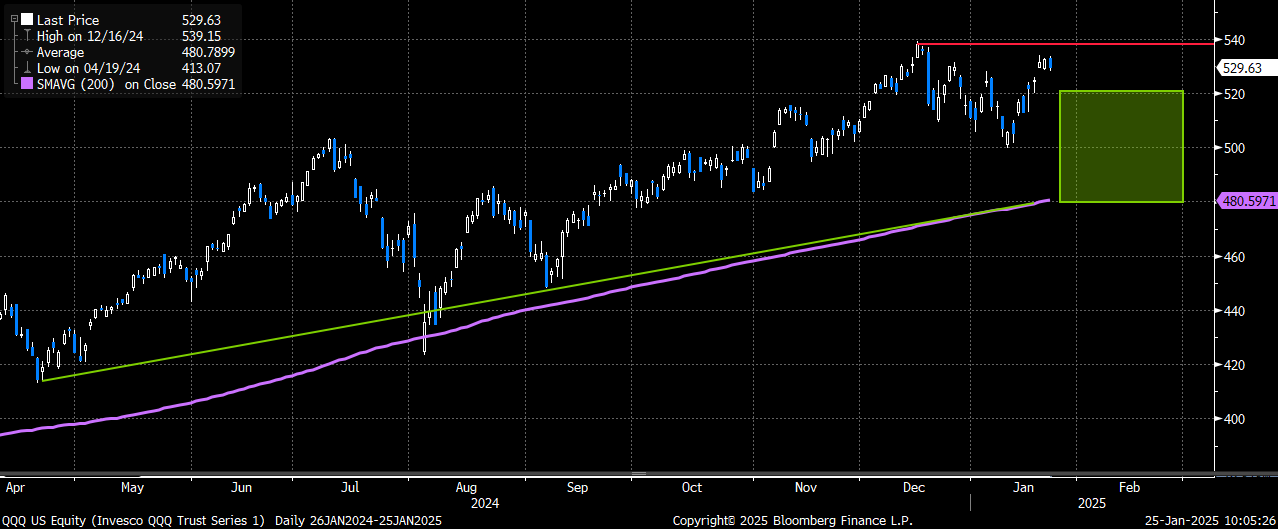
- Put spread starts less than 2% below spot and is capped to the downside at both the 200-day as well as the April uptrend support
- Paying about 1% of the underlying ETF to potentially protect against a 9.4% drop. Put spread offers an attractive 6.5x to 1 max payoff at expiry
- 1% reversal from the highs on Friday, even with the positive Capex news from META, could be a sign of buying “exhaustion” after the sharp 2 week rally
- Index vol also screens very cheap to the individual names
- Structure can be used to hedge long exposure to the top tech names, or as a limited-risk bearish bet given favorable setup
Please contact me or the trading desk for updated pricing and/or execution capabilities.
QQQ chart – targeting a pullback to the 200-day and April uptrend support after the rally back to just below the all-time highs