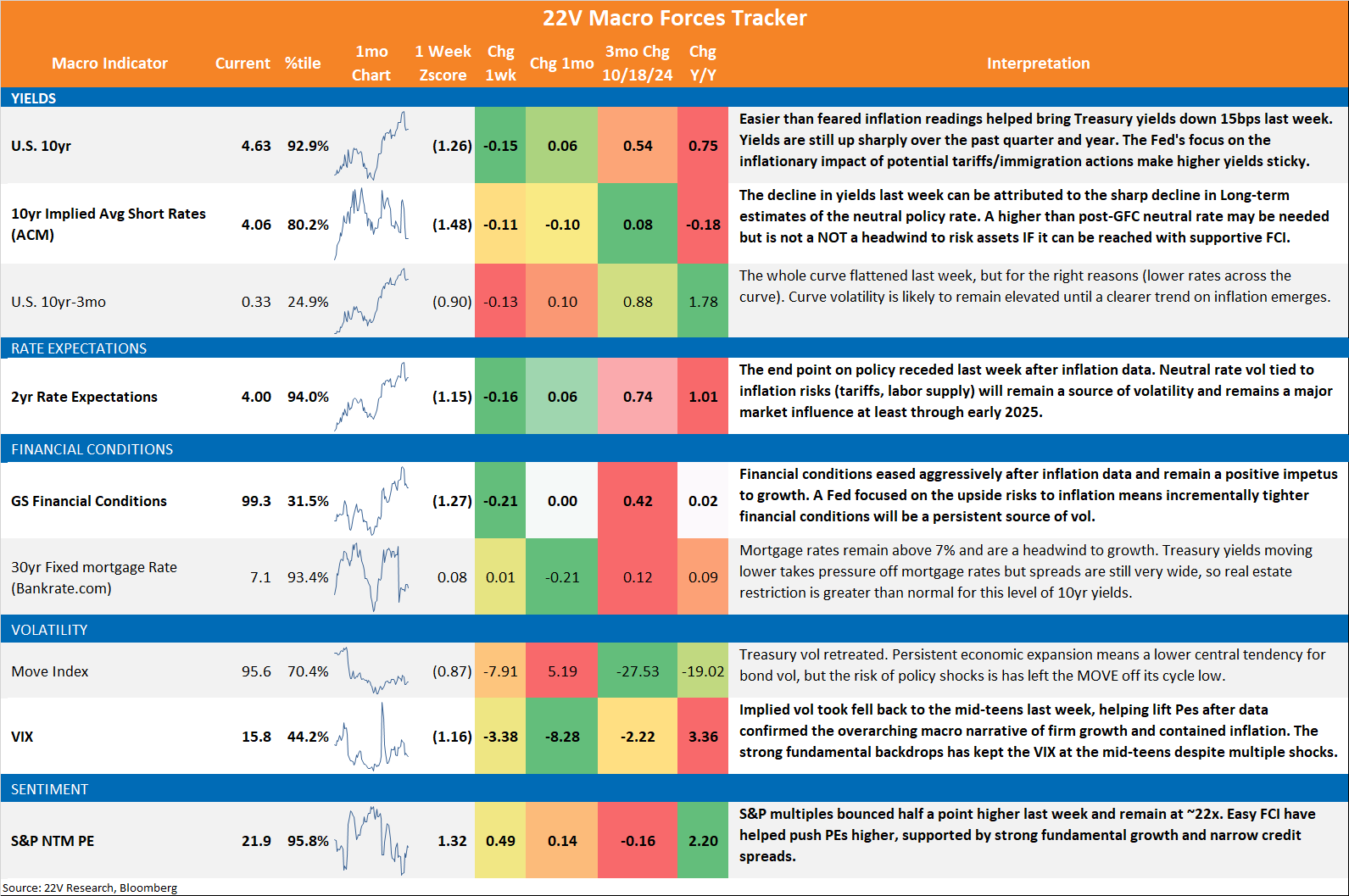
SUMMARY: The largest headwind to asset prices over the past few months has been the risk that too high inflation would require the Fed to slow growth significantly to put price levels back on a path to ~2.5%. CPI and PPI data last week reduced that risk, resulting in a significant easing of financial conditions, a bull flattener, and a material decline in medium/long-term implied short rates. Small and Mid-cap indices surged more than 4% versus the OEX’s gain of 2.2%. Value and Momentum were the strongest factors across most cap groups, and Price Reversal surged as investors rotated back into recent laggards (buying dips).
Our benign Trump tariff impact view seems largely priced, and news overnight didn’t change investors perception on tariffs. There is not much standing in the way of equities from a financial conditions standpoint for now. Enjoy.
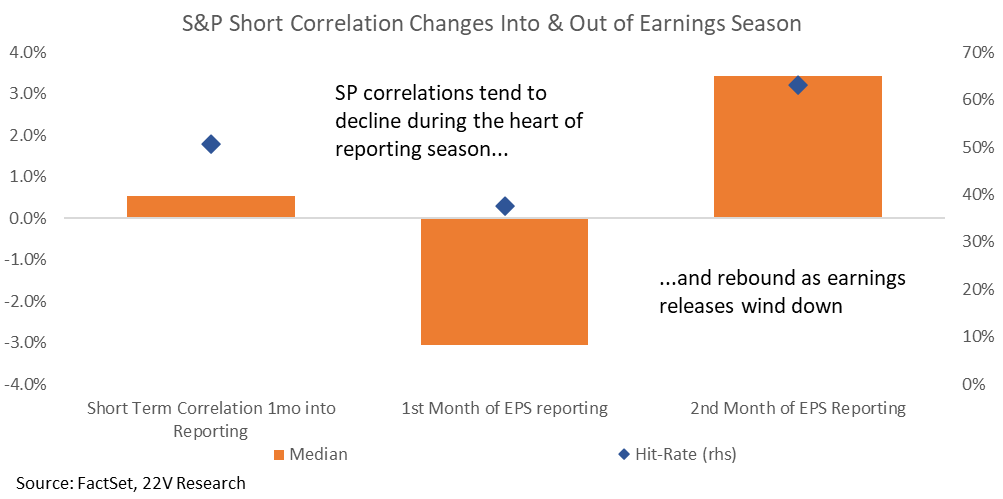
From Here it is About Lower Correlations: We should not expect a similar move higher in stocks this week though and are thinking more in lower correlation terms as we move through earnings season. Earnings will be a driver of returns as correlations decline and markets should be more range bound, with an upward bias, over the coming months.
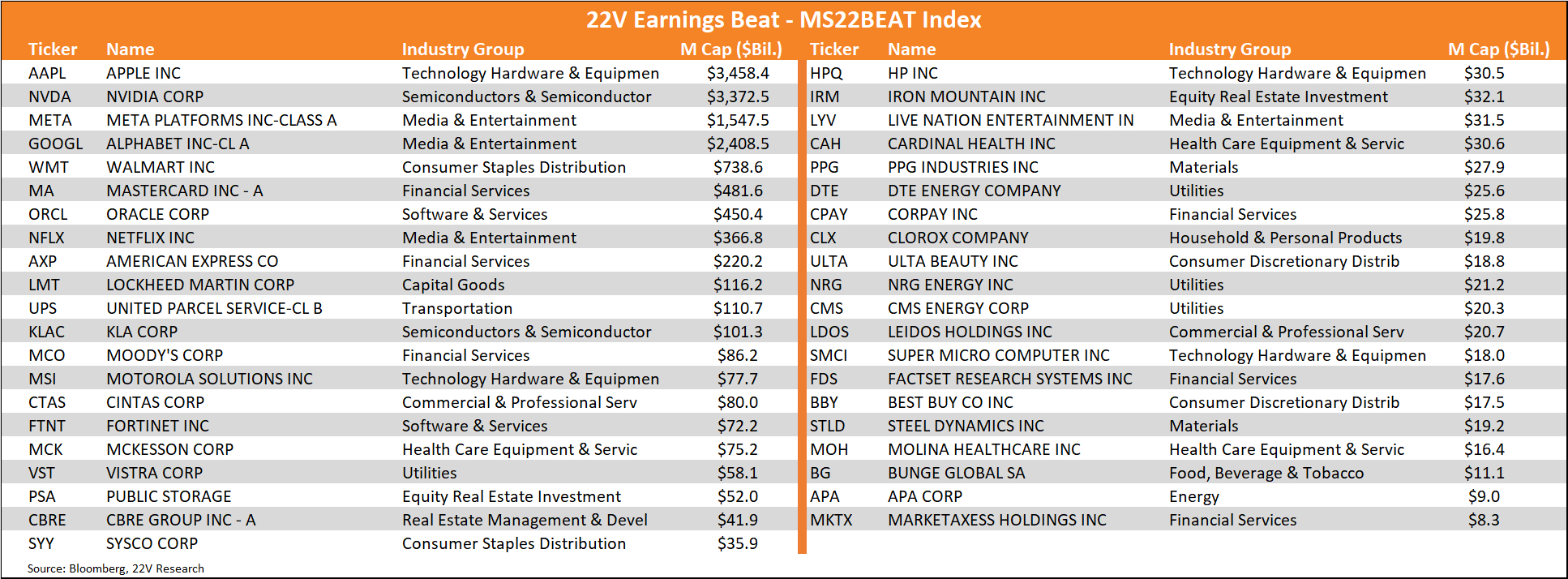
Beat Basket: S&P names with strong Earnings Quality and positive earnings sentiment (as measured using an NLP tool) have had higher beat potential historically. The beat potential Swap for 4Q is also tradable with ticker MS22BEAT Index. The list of stocks is below.
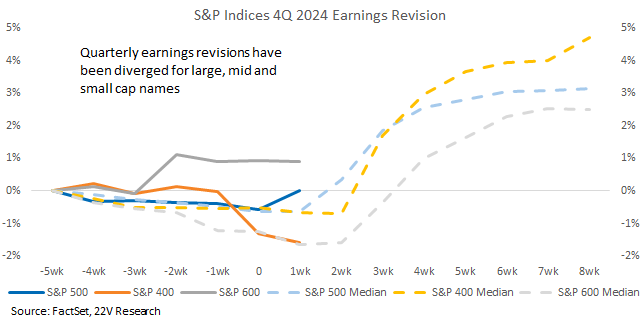
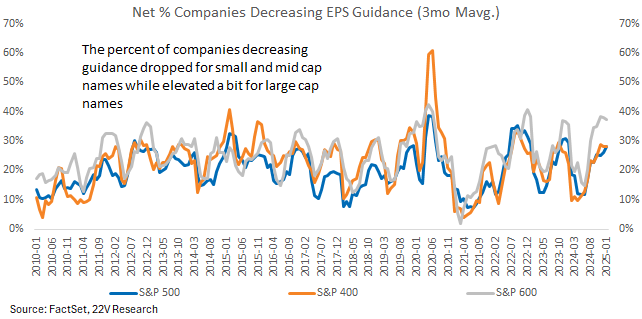
Earnings estimates for S&P small caps bucked the historical trend with positive revisions into reporting. FYI – The number of small caps companies issuing negative earnings guidance increased significantly coming out of 3Q24 earnings. As 4Q reporting gets underway, analysts are increasing estimates for small caps and company guidance is starting to improve too. This should be a tailwind for small caps, particularly Cyclical small caps, through earnings season.
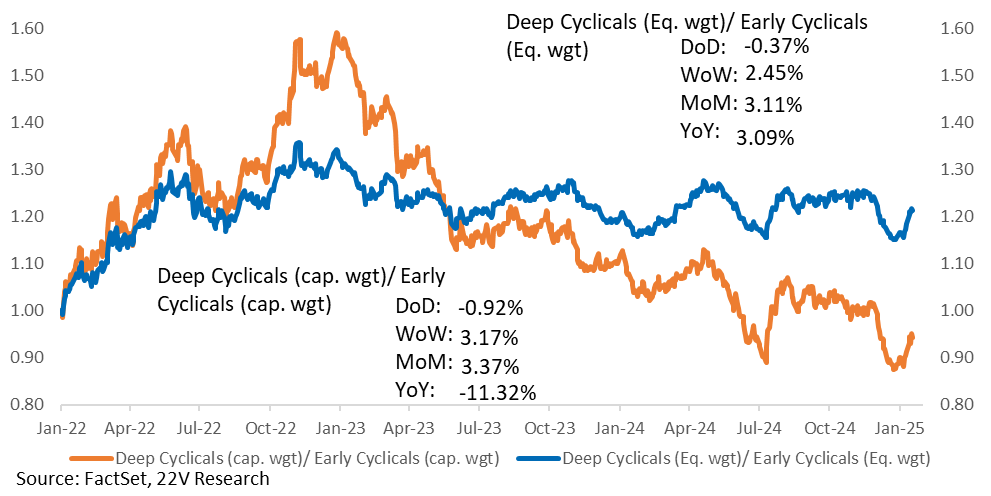
Risk Management: Deep (Energy, Industrials, Materials) have significantly outperformed Early Cyclicals (Tech, Discretionary, Communications) YTD. Led by Energy with +8% relative performance to the S&P. We are long Deep Cyclicals for 2025, but some consolidation should be expected near term. Especially as Mega cap Tech moves through earnings season. Earnings seasons have been a positive for large Tech over the past number of years.

Full report below…
MARKET VIEWS: Correlations should move lower through earnings season. It is typical for correlations to decline as new fundamental data is released through earnings season. The past few earnings seasons were associated with macro concerns (employment last July, the election in October). As we highlighted yesterday, there are tariff/immigration shocks that could change the financial conditions outlook and increase correlations. But until proven otherwise, we will assume tariffs will not be a large macro issue. The benign tariff impact view seems largely priced, inflation is less of a near term danger (see UST yields recently) and growth is firm. Earnings will be a driver of returns as correlations decline.
S&P names with strong Earnings Quality and positive earnings sentiment (measured using an NLP tool) have had higher beat rates historically. The beat potential Swap for 4Q is also tradable with ticker MS22BEAT Index. The list of stocks is below.
As the Quant team pointed out last night, 90% of the S&P names that reported last week beat EPS estimates and 75% beat sales estimates. The sample is small, but it is a good trend so far. Estimate revisions for large and mid caps were negative heading into reporting. Earnings estimates for S&P small caps bucked the historical trend with positive revisions into reporting. Small cap EPS are expected to improve significantly NTM and 4Q results are off to a strong start.
FYI – The percent of small caps companies guiding earnings lower increased significantly coming out of 3Q24 earnings. That is starting to change now, consistent with the strong nominal demand backdrop. Bottom line, analyst are increasing earnings estimates after companies guided them lower. And now company guidance appears to be improving some. This should be a tailwind for small caps, particularly Cyclical small caps, through earnings season.
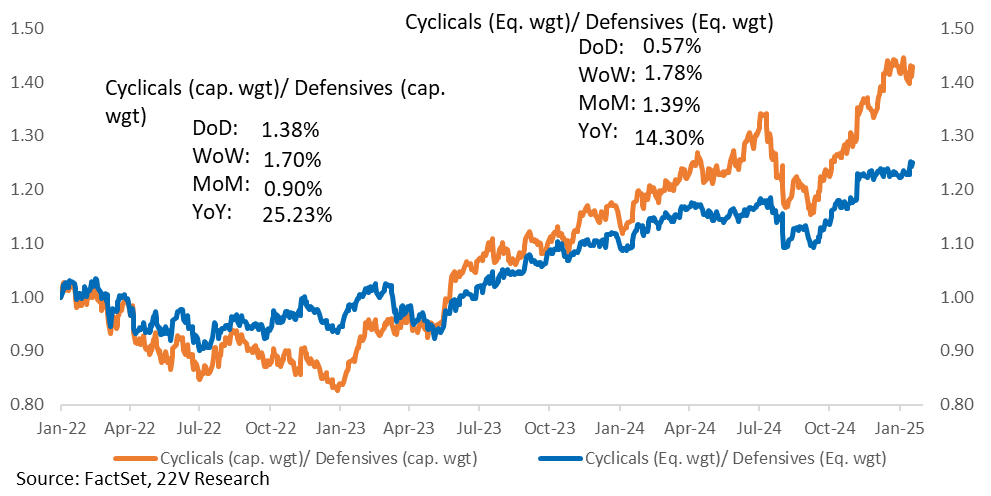
Risk Management: Cyclicals, on an equally weighted basis, have inflected higher vs. Defensives. That is consistent with our 2025 outlook. Cap weighted Cyclicals have done less well given the drag from Mega Cap Tech and Discretionary to start the year.
This is showing up most in the outperformance of Deep (Energy, Industrials, Materials) vs. Early Cyclicals (Tech, Discretionary, Communications). Deep Cyclicals are +3%ish vs. Early Cyclical to start the year. The Energy sector alone is +8% vs. the index. We are long Deep Cyclicals for 2025, but some consolidation should be expected near term. Especially as Mega cap tech moves through earnings season.
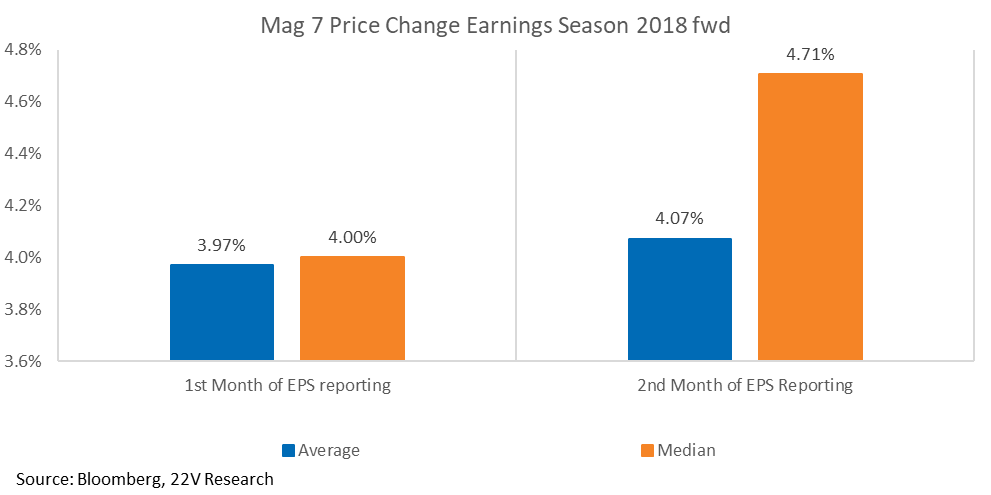
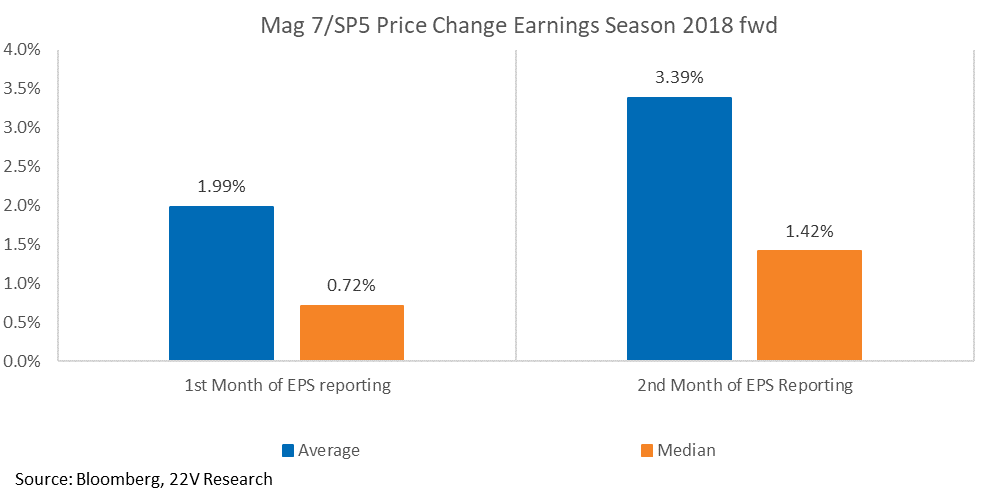
Earnings seasons have been a positive for large Cap Tech over the past number of years. Absolute and relative performance charts below.
Macro Tracker: Last week was a good example of how sensitive assets prices are to inflation data and which factors/market segments have the most upside skew to lower price levels/easier financial conditions. The largest headwind to asset prices over the past few months has been the risk that too high inflation would require the Fed to slow growth significantly to get price level back on a path to ~2.5%. CPI and PPI data last week reduced that risk, resulting in a significant easing of financial conditions, a bull flattener, and a material decline in medium/long-term implied short rates. Equites gained across the board, but Small and Mid-cap indices surged more than 4% versus the OEX gain of 2.2%. Value and Momentum were the strongest factors across most cap groups, and Price Reversal surged as investors rotated back into recent laggards (buying dips). The neutral policy rate remains uncertain, the Fed remains focused on inflation that has proven stickier than hoped, and tariff comments from the incoming Trump administration are likely to add volatility to rates over the next few months (at least). Too strong growth data or the risk of broad tariffs would trigger de-risking like we saw in December following the FOMC meeting. As long as the normal economic expansion remains intact (so far it has) and core inflation trends are contained, de-risking events will remain good opportunities to reduce exposure to outsized 2024 winners (Megas, parts of Tech/Comms) and add to positions in fundamental factors (Value, GARP) and Smaller caps.