

Bond volatility continues to move up into the election
Ahead of the election and FOMC meeting this week, implied volatility is elevated across all asset classes. Here are the implied weekly moves for some of the more actively traded equity and bond proxy instruments:
SPY – 2.6%/ IWM – 4.1%/ QQQ – 3.1% and TLT -3%
Perhaps most surprising on that list is that bond (TLT) vol is more than equity market (SPY) vol and nearly as expensive as both tech and small cap vol. However, this is something we have been mentioning for a while now (see TLT collar idea from 10/20). The persistent weakness in bonds as we head into the election has elevated its implied volatility to levels we haven’t seen since October of 2023 (chart below). Making this move higher in implied volatility even more surprising is that 30-day realized vol currently trades near 2-year lows. The bond market is clearly worried about the potential impact of tariffs and further spending that will lead to the deficit expanding, especially in a Republican sweep scenario. Regardless of viewpoint on where rates are heading post-election, I would look to be a seller of this very expensive vol. Given where the 30-day realized vol trades, I expect the implied vol and 30-day vol to quickly converge after the election, with the likely path being a sharp decline in implied vol down towards where the realized vol has been trading.
TLT Nov (white) and Dec (orange) implied vol trading as a massive premium to 30-day realized vol (green)

Here are two updated TLT trades I would suggest initiating before the election that can take advantage of this very elevated/rich volatility:
Trade 1 – low cost 1×2 call spread overlay to position for a move back higher in bonds:
Buy TLT Nov 92 calls 1x
Sell TLT Nov 95 calls 2x
Costs ~ .43 (TLT 90.84 ref)
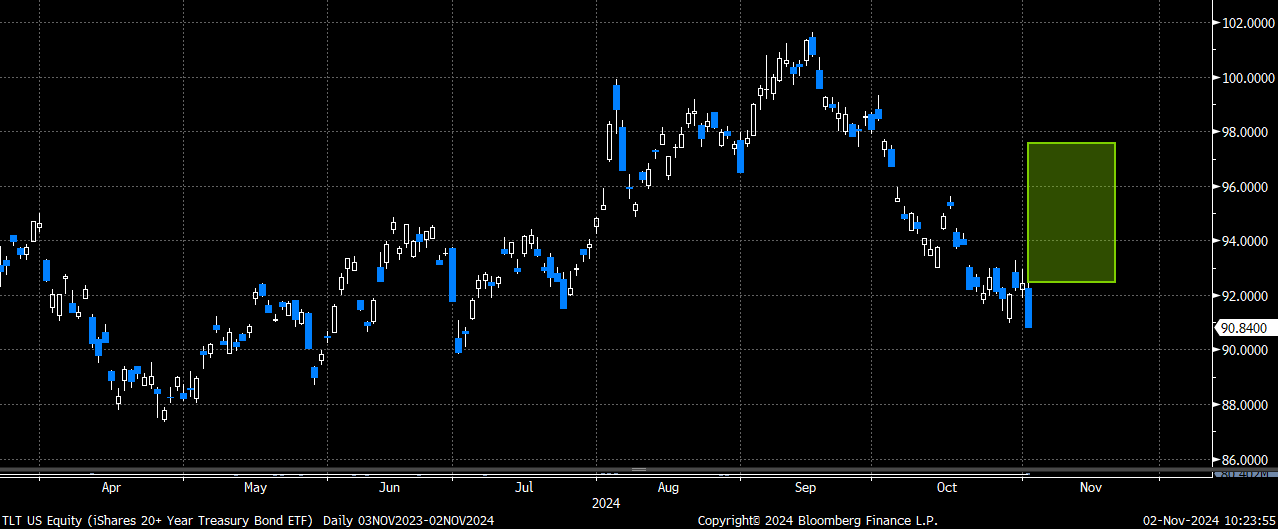
Buying the delta neutral 1×2 upside November call spread with TLT down 10.7% from the September highs. Great “repair” trade as an overlay to an already existing long bond/duration position. Trade will make money between 92.43 and 97.57 in TLT by November 15th expiry (+1.7% to +7.4%). Trade is a great way to offset the current bid to vol (by selling the upside calls twice) and positioning for a possible relief rally back in treasuries after the election. Also of note is the trade adds no further downside risk to existing long bond exposure (besides the nominal cost of the trade). Max profit on the trade is at $95 on November expiry (4.6% above current levels) which would result in a nearly 6x to 1 payoff.
The Green area shows where the 1×2 call spread overlay trade is profitable at November expiration
Trade 2 – sell expensive December strangle (put and call) and bank on yields staying within their recent range:
Sell TLT Dec 95 calls
Sell TLT Dec 86 puts
Collects ~ $1.85 (TLT 90.84 ref)
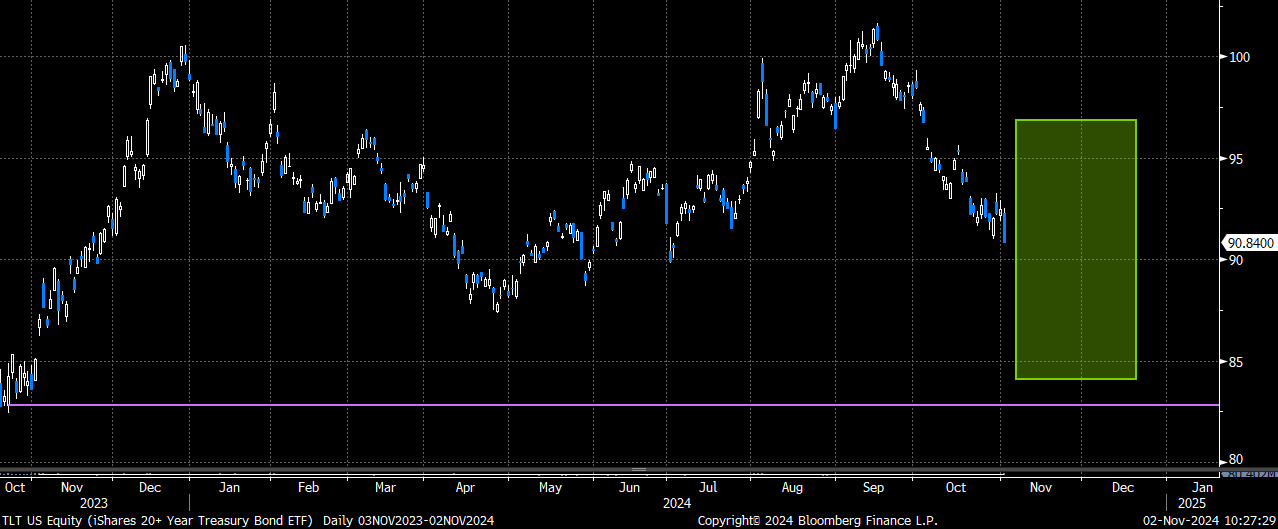
Selling both the upside call and the downside put in December to both fade this move in volatility as well as a bet that yields will continue to trade in the range they have been in since October 2023. Strangle sale yields 2% (15% annualized) and is a great way to take advantage of this elevated bond volatility. Trade makes money as long as TLT remains between 84.15 and 96.85 by December 20th expiration (+6.6% to -7.4%). Trade can be initiated against either a net long or short bond position, or as a stand-alone trade given attractive setup. I expect bond volatility to contract sharply post-election across the entire curve (why I chose December expiration for this trade).
The Green area shows where the strangle sale trade is profitable at December 20th expiration
EFA – an under the radar election trade/hedge
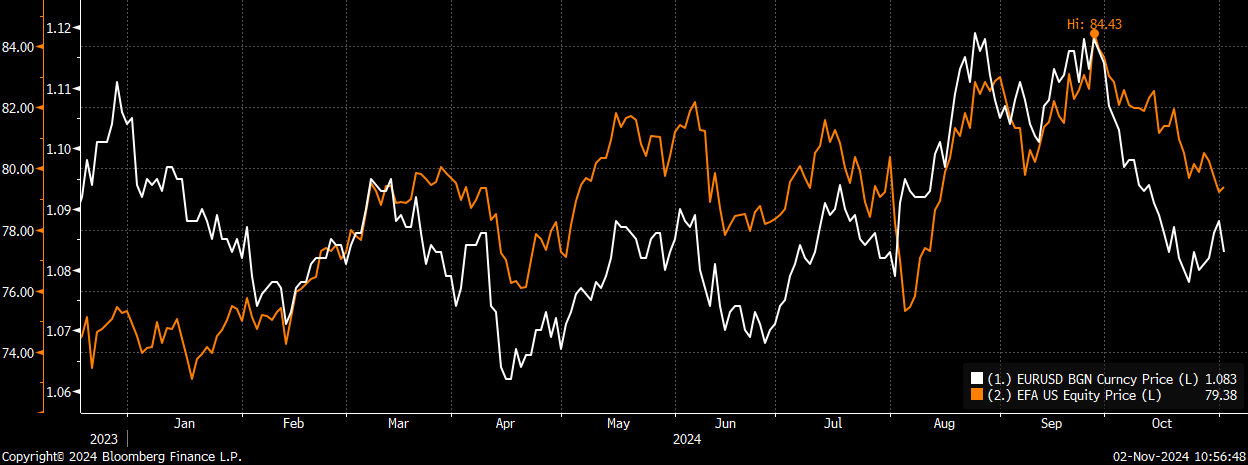
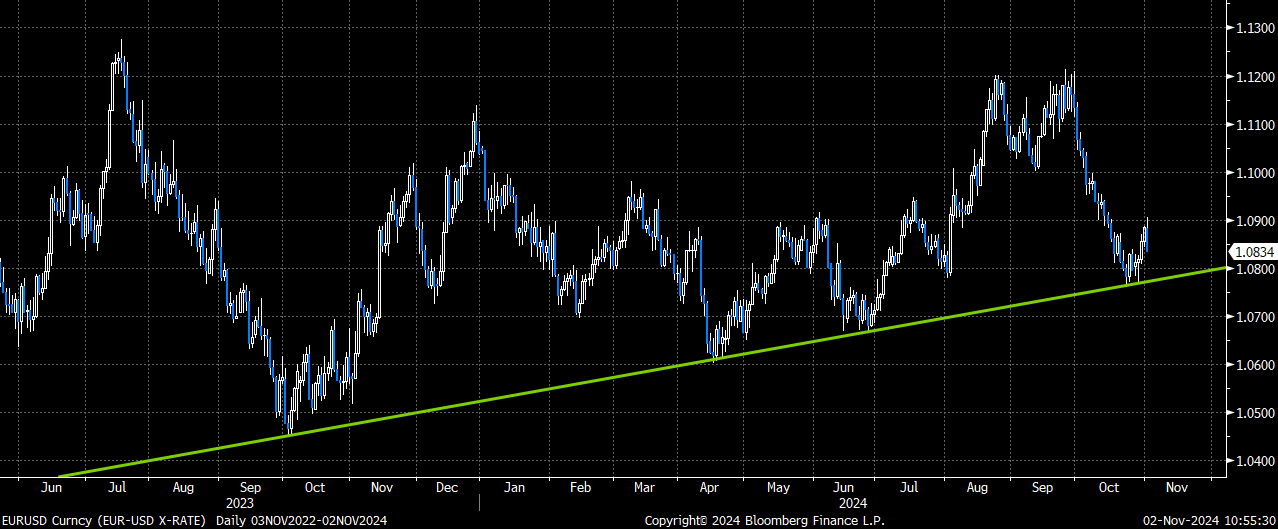
With one of the biggest concerns heading into the election being the potential impact of a Republican sweep, I think EFA put spreads are an interesting/under the radar hedge at this time. EFA is an actively traded “world” etf with heavy exposure to Europe. Because of the heavy exposure to Europe, EFA tends to track the Euro/Dollar spread rather closely (a weaker Euro is bad for EFA). Should we see a “red sweep” then I would expect the Euro to get hit hard against the US$, likely because of the expected move higher in US rates. A break below the well-defined Euro/US$ support line off the Oct 2023 lows would likely spell trouble for EFA.
EFA has already been a huge laggard to the US market (SPY) and on a “break” in the Euro I believe it may challenge the August lows ~ 74. With EFA vol “fair” and put skew attractive, I suggest targeting a November (election) hedge that would bring us down to those August lows.
Trade:
Buy EFA Nov 78.5/74 put spread for ~ $0.75 (EFA 79.38 ref)
Buying the EFA put spread as a “cheap” hedge to the upcoming US election. EFA performance has been closely tied to that of the Euro/US$ and should we see a further move higher in yields on the election results I think the Euro could break below Oct 2023 support, which would likely put further pressure on the already underperforming EFA etf. Put spread starts ~ 1% below current levels, offers a 5x to1 max payout, and is capped at the Aug lows ($74 level).
EFA (orange) has traded in-line with the Euro/$ spread (white)
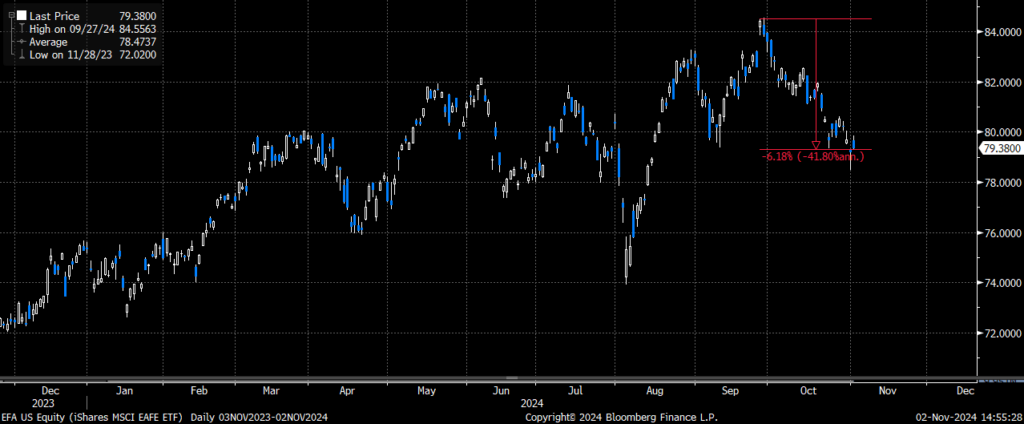
A break below the Oct 2023 uptrend support for Euro/$ could spell trouble for EFA given high correlation
Please reach out to me or the trading desk to discuss these structures or get updated pricing.

