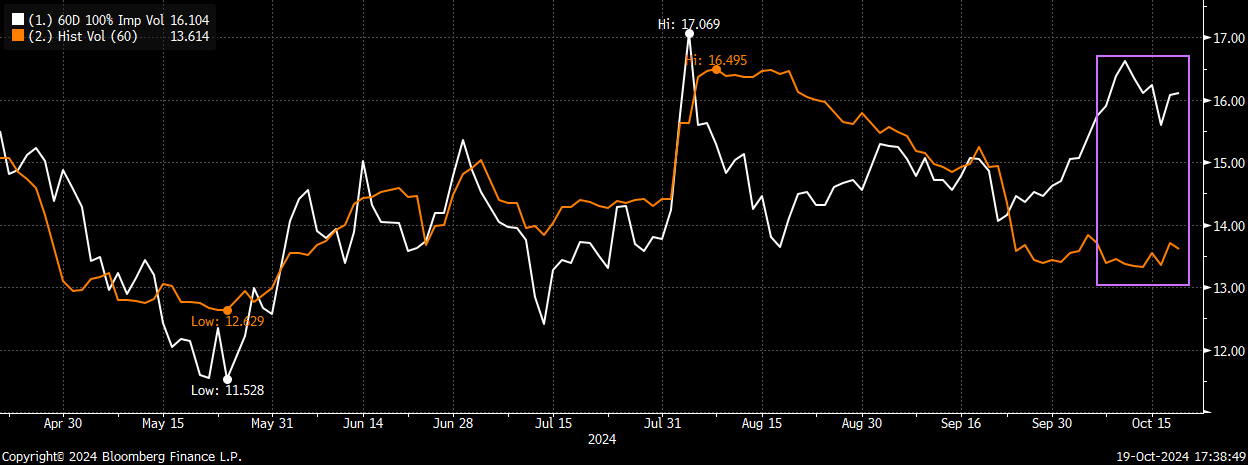
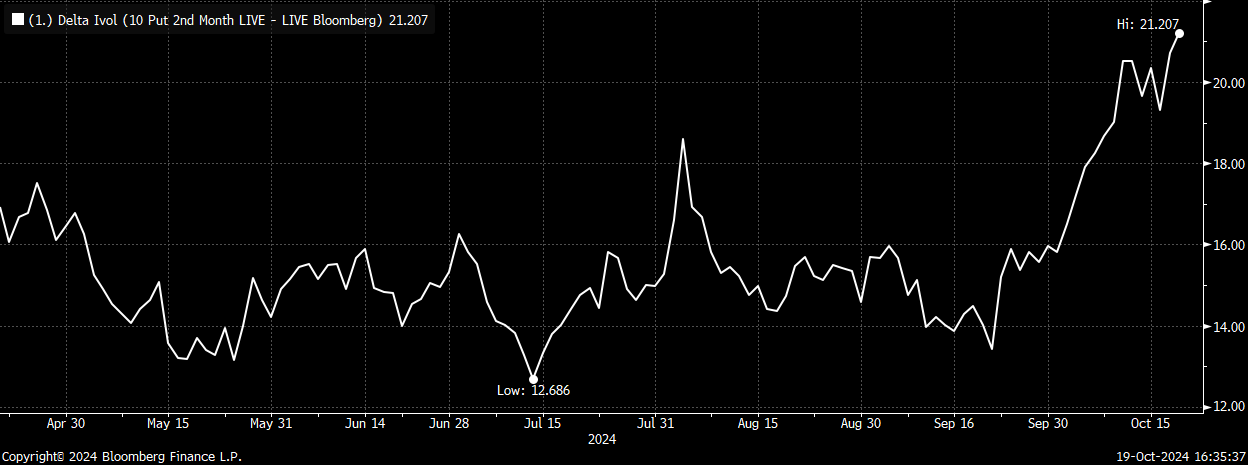
With all the talk about “tail” hedges on the equity markets being established for the upcoming election, perhaps there should be more attention being paid to what is happening in the bond market? While rate volatility has been climbing since bonds peaked in mid-September, the biggest spike we have seen has been on the far out of the money (low-delta) puts. The 10-delta November bond (TLT) put implied vol now trades ~ 21, or a more than 50% increase from the September lows (chart 1). To put this level into perspective, it is now more expensive on a volatility adjusted basis to hedge against a sharp spike in rates (selloff in bonds) than it is to hedge for a sharp drop in equities (SPY) thru the election (chart 2). This fact is even more remarkable when you consider that stocks are currently trading at their all-time highs and bonds are already well off their recent highs.
TLT 1-month (November) 10-delta put implied vol now trading ~ 21 and more than 50% above the September lows
Bond (TLT) 10-delta puts for November now have a higher implied vol then SPY November 10-delta puts

So what is causing all this concern for rates? Perhaps it has been the string of stronger economic data we have been seeing for most of October (stronger jobs #, higher CPI and better retail sales) all reported AFTER the Fed cut rates in mid-September? But given the large bid to November vol for rate protection, and especially on the out of the money puts, I think the market is now considering the probabilities of seeing a clean sweep by the Republicans (a Trump victory as well as winning the Senate and the House). While the 22V base case remains that there won’t be a sweep, clearly the market is becoming more concerned about this possibility. The prospect of more fiscal expansion (especially given the already huge deficit) as well as increased tariffs would likely spook an already fragile bond market (10-year yields have climbed from a low ~ 3.6% in September to almost 4.1% as of Friday).
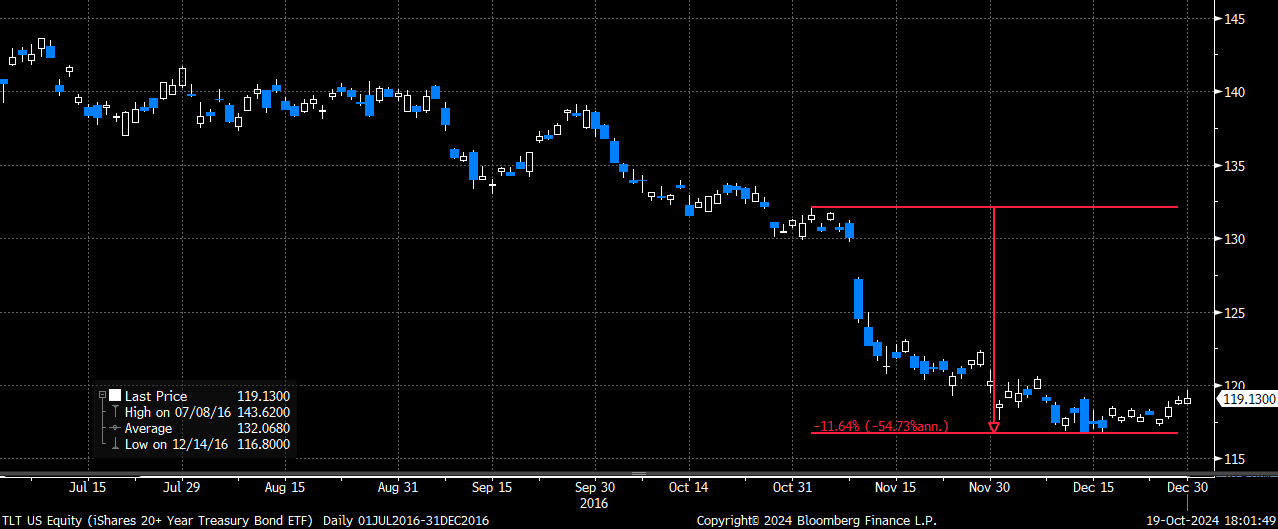
Bond investors may be using the 2016 playbook to project what type of a reaction we could see in bonds from this election (especially should there be a sweep). Back in 2016 the 10-year yield moved from ~ 1.8% up to as high as 2.6% between early November and mid-December (TLT declined from ~ 132 to 117 over that time – nearly 12%). Also of note on that move in 2016 was that bonds had already been selling off from their summer highs into the election (much like the weakness we have seen in bonds over the past month).
In 2016 TLT declined by nearly 12% from the November highs to the December lows as 10-year yields rose from 1.8% to 2.6% post-election
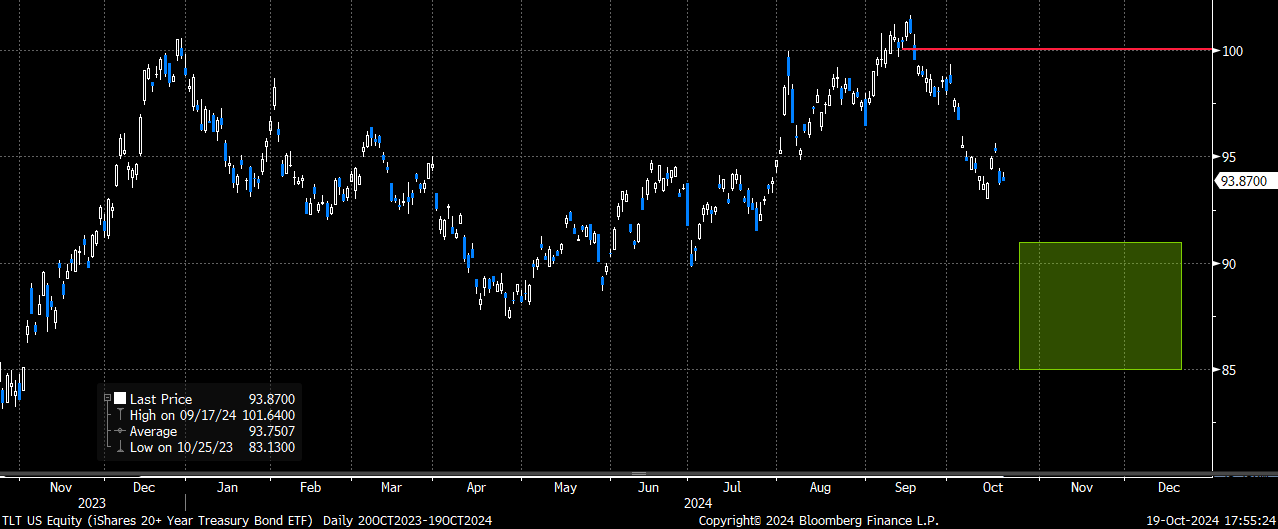
While still a low probability, I do believe hedging for a sharp spike in yields post-election does make a lot of sense given the risks and what happened back in 2016. With bond (TLT) option volatility trading just below the YTD highs, I believe the best trade now is to sell an upside call that is at/near the highs (low in yields) to help finance a large percentage of the cost of the downside protective put spread.
Trade:
Sell TLT Dec 100 calls
Buy TLT Dec 91/85 put spread
Costs ~ $0.45 (TLT 93.87 ref)
Trade Details:
- Selling the 6.5% upside Dec calls to buy the 6-point protective put spread that starts 3% below spot
- 2-month (Dec) implied vol is just below the YTD highs and trading at a substantial premium to 60-day realized vol (why you want to sell an upside call at the highs to help finance the wide put spread)
- Put spread is capped to the downside below the Nov 2023 and April 2024 bond lows (when 10-year was trading 4.6% – 4.7%)
- Low-cost collar trade that hedges long bond/duration exposure into year-end
- Please reach out to me or the trading desk to check on pricing
TLT 2-month (Dec) implied volatility trading at a sharp premium to 60-day realized volatility