Bottom Line: Some investors have pushed back against our risk-on call by citing the risk of inflation rising at the same time growth slows. We agree that inflation could prove sticky and that the economy is slowing. Our points of disagreement are 1) how much the economy slows (to trend or slightly above trend, HERE), and 2) at what level disinflation stagnates (Gerard’s 2-stage disinflation hypothesis, HERE). Equity volatility will remain reactive to inflation releases, Fed speeches, and data that have a large impact on the policy outlook, but a lower level of vol than has been seen over the past few years should be expected.
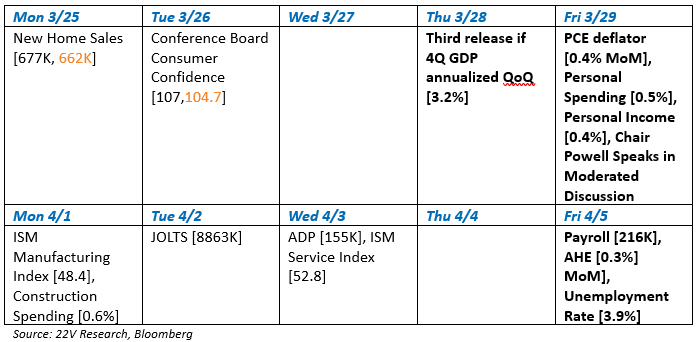
Things to Watch [Consensus, Results]:
Economics: Economic Trends into the End of the First Quarter
As 22V’s economist noted yesterday (HERE), “the New York Fed and Atlanta Fed seem to agree that GDP growth has decelerated to around trend (2%ish) in the first quarter….to the extent that the two regional banks provide detail on the components of demand, it looks as though most of the deceleration is (believed to be) due to the end of the earlier consumer spending boom.” Housing and the production side of the economy have improved, so we are not worried about a sharp deceleration in economic growth. We expect demand growth to remain around the 2-2.5% range and 2 or 3 cuts from the Fed. Our base case is basically priced at this point, so being long UST yields doesn’t seem to make much sense to us.

Portfolio Strategy: Low Correlations
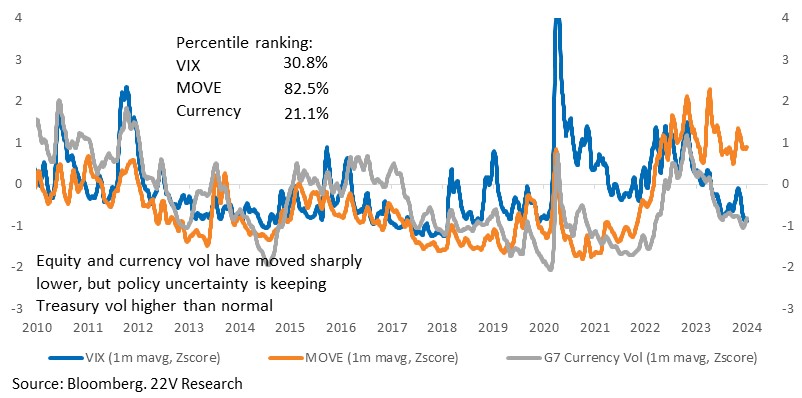
Equity and currency volatility both have dropped since last October as recession odds faded and a soft landing became increasingly likely. Lower asset price vol is to be expected as tail risk fades and the economic backdrop becomes less uncertain. Bond volatility remains elevated, reflecting uncertainty about the Fed rate path. Treasury vol has eased recently, and spreads are tight, apart from mortgages. We expect equity volatility to remain lower than over the past few years (HERE). Spikes around major macro data releases (April 5th payroll, April 10th CPI) should be expected. Unless data changes the path of policy, those spikes remain opportunities to add to risk.
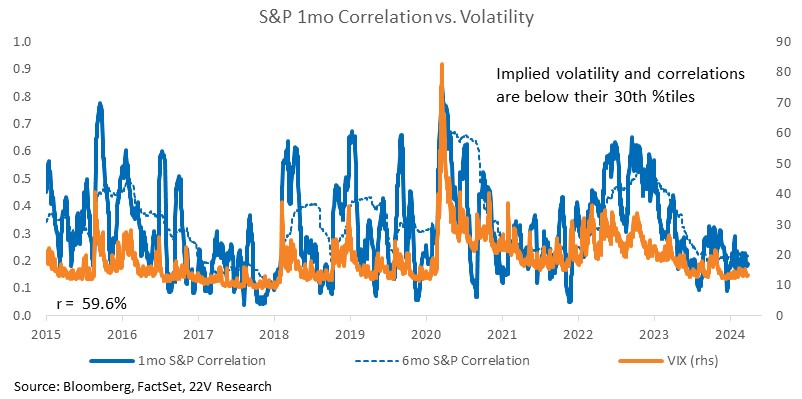
Low implied volatility is partially a function of lower correlations. Both the short- and long-term correlations are low today. With the S&P PE ~22x and yields rising, a lower risk premium is likely needed to drive the overall market meaningfully higher. Lower correlations mean more opportunity to outperform using factor, industry group, and stock selection.
Quant: Earnings and Sales Guidance into 1Q24 Earnings
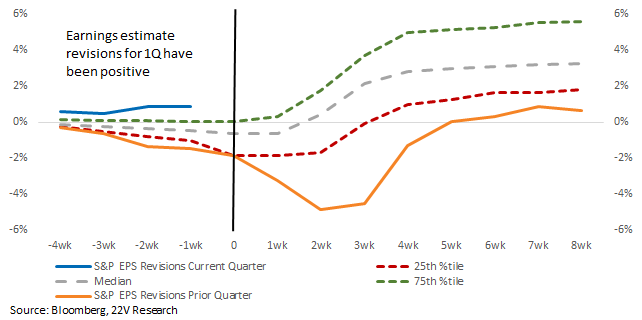
Earnings revisions have been oddly strong heading into the start of reporting in a couple of weeks. There are two big takeaways from that. First, it suggests that analysts are starting to catch up their forecasts to the improvement in macro conditions. Second, it means the bar for earnings season will be higher at the index/sector levels. That means a likely lower beat rate and better returns to positive surprises.