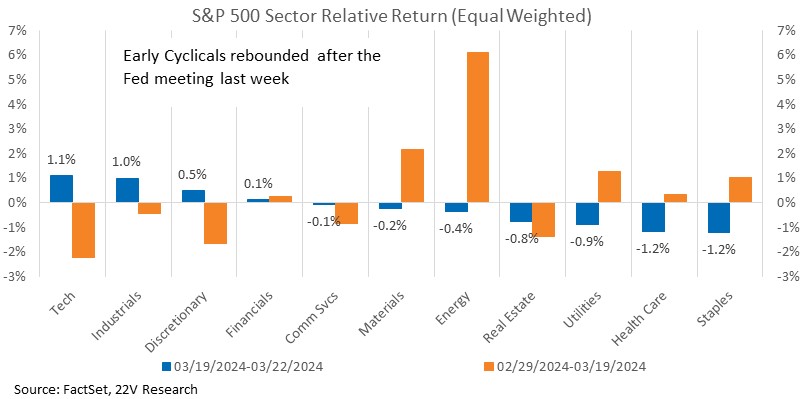
Market internals rotated last week after the Dovish Fed meeting with Value and Risk-on factors taking the leadership at the sector level. Early Cyclicals gained the most within sector groups after a sharp catchup from Deep Cyclicals YTD.
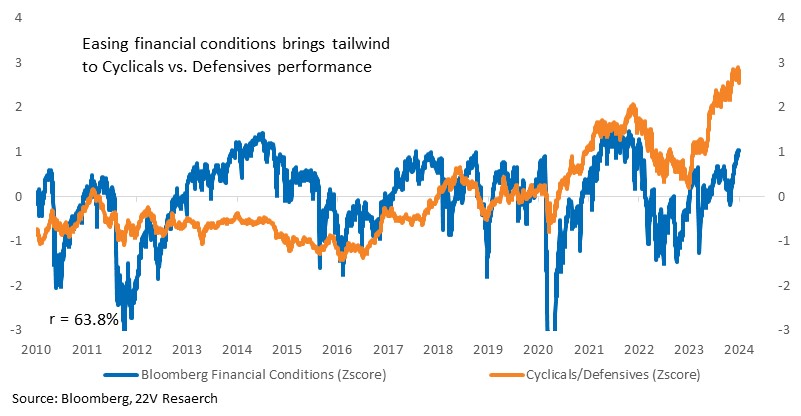
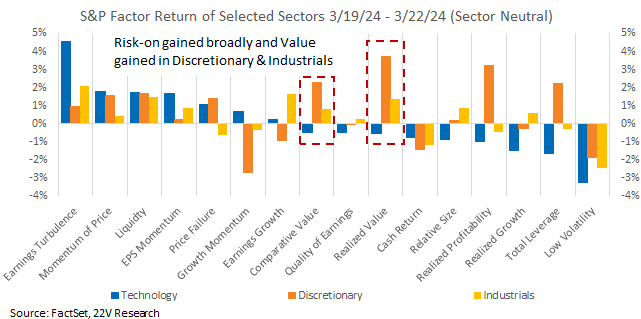
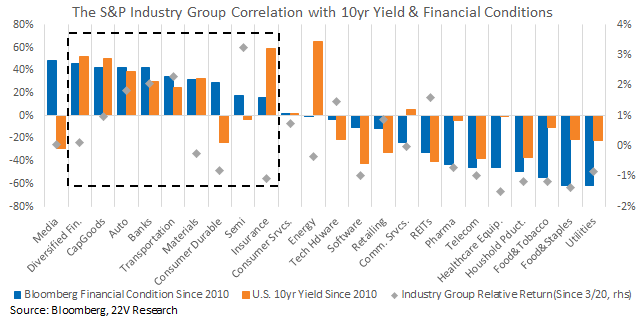
At the industry group level, returns after the meeting were well correlated with financial conditions. The easing financial conditions this year supported broad Cyclical outperformance relative to Defensives. Factor returns within leading sectors diverged after the FOMC meeting, especially around Value. The outperformance of Tech was driven more by a risk-on rebound while Discretionary and Industrials leadership were tied to Value outperformance.
The FOMC meeting last week suggests financial conditions will remain stable IF inflation eases. Powell made it clear the FOMC thinks 1) financial conditions remain restrictive and 2) that inflation will trend lower. Those are forecasts and subject to change, but the policy bias is to leave FCI alone, which is a risk-on/cyclical support.
This helps setup a more binary rotation over the coming weeks. If data signals inflation is trending lower, risk-on factors and industry groups that benefit from easy financial conditions should lead. If inflation proves sticky and financial conditions need to tighten further, risk-off and more Defensive industries stand to benefit.
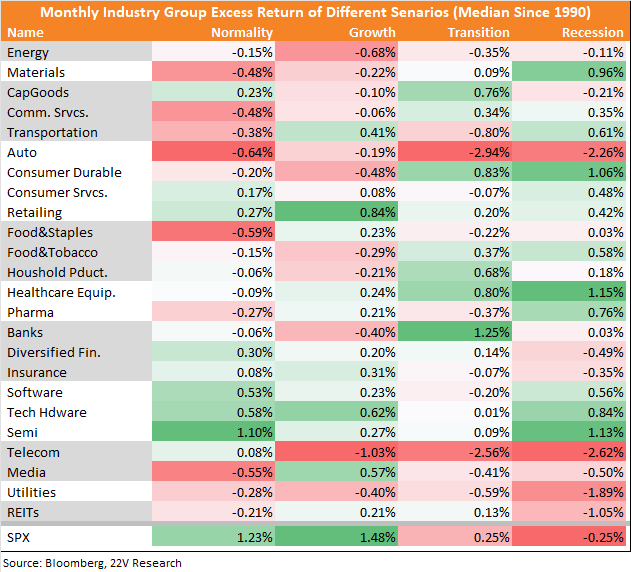
Our macro regime model still points to the backdrop of faster-than-normal growth. Early Cyclicals, especially Tech, have the highest returns during such periods. Considering the lag from Deep Cyclicals relative to oil and commodities, we also like Deep Cyclicals (HERE) near term.
Yields Weighing on Cyclical Rotations: Market internals shifting after the dovish Fed meeting last week. At the factor level, Risk-on and Value factors took leadership (HERE) after the risk-off gains earlier in March. At the sector level, Early Cyclicals outperformed both Deep Cyclicals and Defensives. Internals retraced some on Friday, and factor vol is likely to remain elevated near-term as investors debate if financial conditions are tight enough to keep inflation on a Fed friendly path. That being noted, the macro backdrop remains supportive of risk-on and GARP.
Financial conditions have been one of the macro factors most impacting Cyclicals vs. Defensives rotations, especially post-COVID. Easing financial conditions generally support Cyclicals, and have contributed to the outperformance of Cyclicals this year. Powell made it clear the FOMC thinks 1) financial conditions remain restrictive and 2) that inflation will trend lower. Those are forecasts and subject to change, but the policy bias is to leave FCI alone, which is a risk-on/cyclical support.

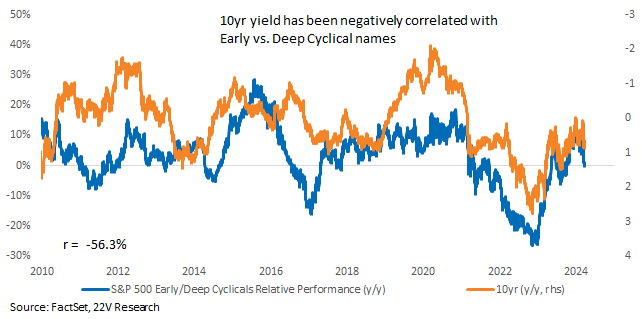
10yr yield moves also influence Cyclical vs. Defensive trends. Rising yields support Cyclicals, especially Deep Cyclicals. Yields retreated last week supporting Early Cyclicals especially Tech and Discretionary. Yields continue to exert an unusually large influence over the macro backdrop, so factor/industry internals are unusually tied to Treasury vol.
Factor returns within leading sectors diverged after the FOMC meeting, especially around Value. The outperformance of Tech was driven more by a risk-on rebound while Discretionary and Industrials leadership were tied to Value outperformance. Tech names are still trading with Momentum, which is more aligned to Growth than Value.
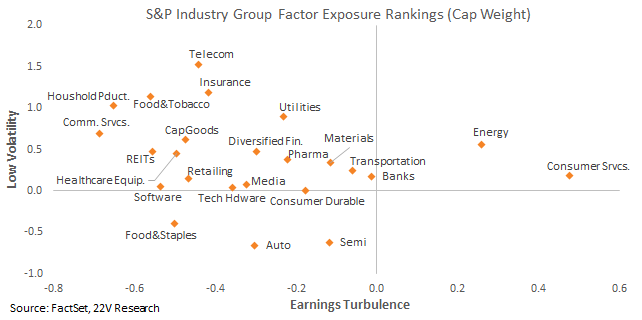
From a factor perspective, the risk-on rotation has been a broad trend across the market, but most industry groups have higher risk-off/Low Volatility exposure. Consumer Services are Energy are a few industry groups with positive exposure to Earnings Turbulence. Semis and Autos also have favorable risk factor exposure. If inflation pressure eases over the next few weeks (with payroll/inflation data), the Low Vol exposure is a risk to most industry groups. Names within those groups with more risk-on exposure would perform better.
After the Fed meeting, industry group relative returns were more aligned with their long-term correlation to financial conditions. This helps setup a more binary rotation over the coming weeks. If data signals inflation is trending lower, risk-on factors and industry groups that benefit from easy financial conditions should lead. If inflation proves sticky and financial conditions need to tighten further, risk-off and more Defensive industries stand to benefit.
Our macro regime model still points to backdrop of faster than normal growth. Early Cyclicals, especially Tech, have the highest returns during such periods. Considering the lag from Deep Cyclicals relative to oil and commodities, we also like Deep Cyclicals (HERE) near term.