Feb CPI Comes in ‘Less Hot’ But Hard to Make it Dovish
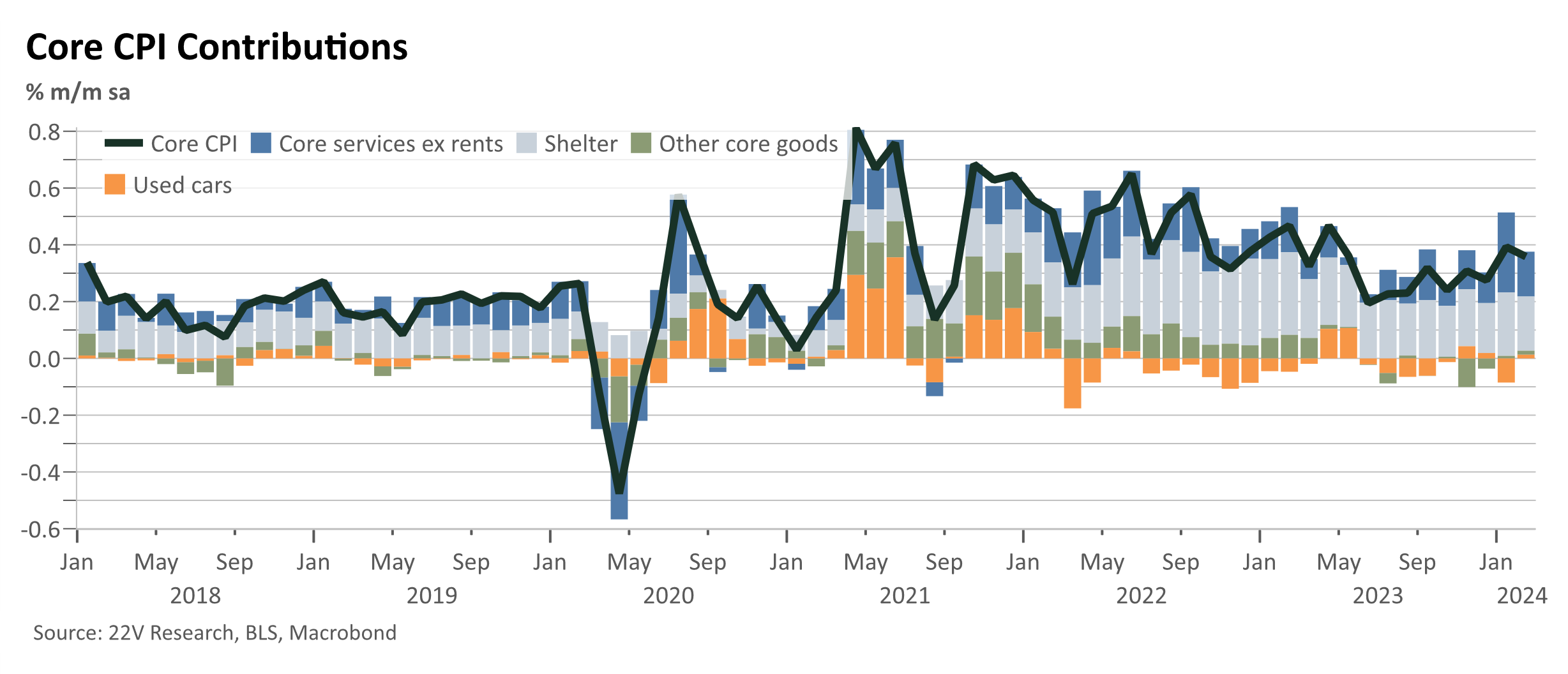
Today’s CPI came in hotter than expected (0.36 m/m sa, consensus was 0.3) and had a very mixed market reaction, with rates whipsawing around as different narratives came tumbling out of the data and commentariat.
This number and its composition did little to really shift odds or Fed views too dramatically, although it leans in the direction of ‘not May’. It was not obviously hawkish enough to fully rule out May if we get a bit softening in the March CPI data, and perhaps a bit of additional labor market weakness (certainly plausible given the disparate stories different parts of the labor market data are telling), but it wasn’t dovish either. It is very challenging to pin down cuts this far out, so what any hawkish data really does is rule out near-term dovishness, ambiguously punting cuts further down the road rather than locking them in to a specific but later date.
Until the cutting cycle actually begins, every CPI print is likely to have a similar recurring feel in the lead up to it as this one did. This is a natural reaction of the Fed’s statements that it needs ‘more good’ inflation data to start cutting but giving little concrete sense of exactly how it is framing that, beyond not needing to be quite as good as seen in 23H2 and that core PCE can be somewhat above 2% on a 12m basis. How exactly cautious data dependence will manifest itself in the reaction function once the first cut happens is also extremely up in the air, but that’s a debate for the second half of the year (or later).
In the absence of a financial conditions shock or more acute weakness in the labor market, the two more obvious channels for forcing cuts aren’t currently present. This leaves the inflation data as the marginal driver of policy and the generally dovish pull from the Fed’s views on the longer-run neutral rate of 2.5% as setting the default for the next action but giving no timeline for it.
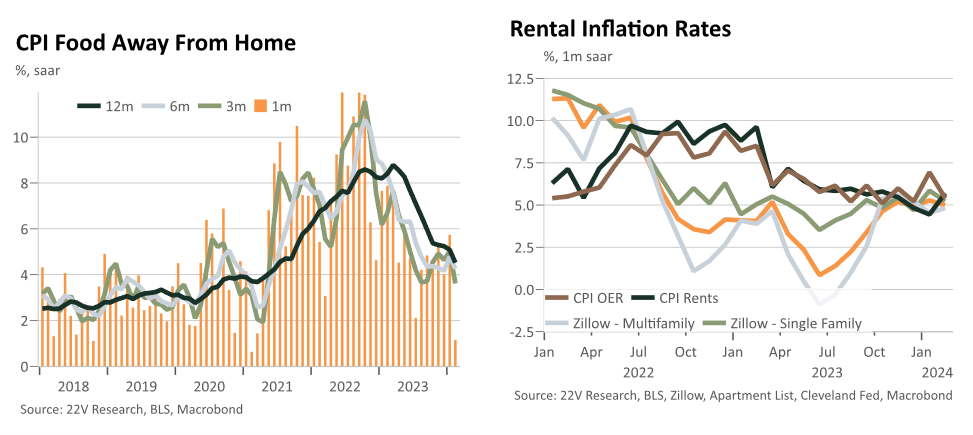
The optimistic/dovish take on the Feb CPI data is that some of the surprise (in the ‘can be rounded to 0.4’ sense of the word surprise at least) came from noisy airfares, communication services, and used cars. This seems to have contributed to the dovish early market reaction, which was then more than fully reversed. Of the series I immediately check, rather than subsequently dive into to explain the headlines after the fact, by far the most dovish print was food away from home, which is a part of headline CPI, but core PCE, and a good read on labor cost passthroughs and income-driven demand-pull inflation for non-essential purchases. If there is some persistence to its largely monthly drop this would be a very good sign.
The hawkish case is that this data leans against the idea of January being one-off, as the most dovish had said a month ago. The data under the hood looks less obviously good to me. This isn’t to dismiss the usually one-off nature of shocks to the more volatile series mentioned above, which should be considered when making m/m forecasts, but past few years have made me (and I think the Fed) cautious in reading a dovish medium-term story from precisely exclusionary m/m reads of the data.
Over the past few months, a more hawkish read, or at least one where the inflation data is going much less of a push to cut, seems to be harder to dismiss. A few notable points in that direction are:
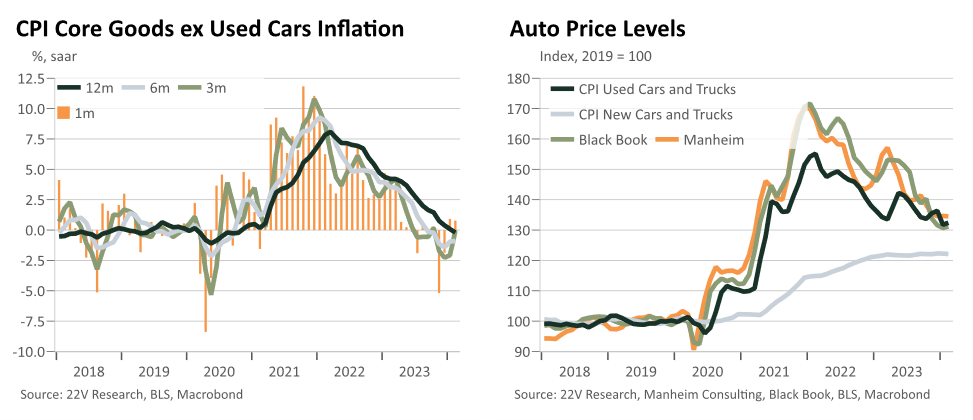
- the lack of decline in core goods ex used autos the last two months, this category likely sees some further decline but this shows that persistent deflation can’t be counted on there (there’s some possible residual seasonality here but that shouldn’t be a dovish anchor);
- sticky high-ish shelter inflation (and market rent data that look less weak recently as well);
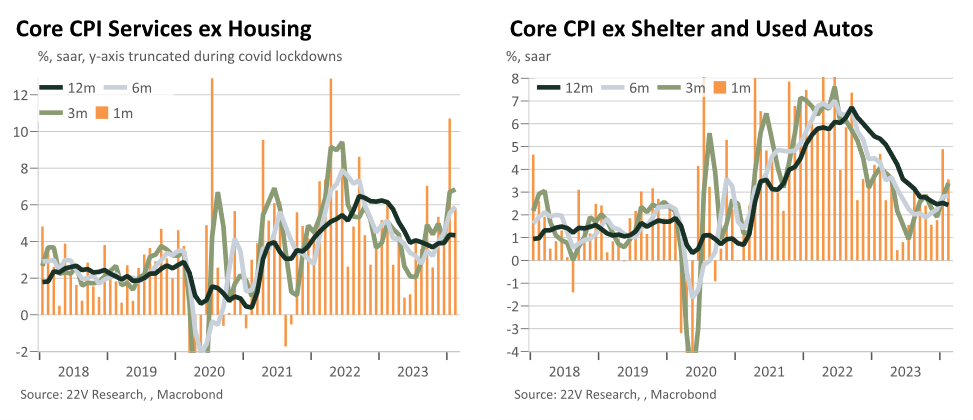
- and core services ex housing and core ex shelter and used autos prints which both look to be going in the wrong direction on a multi-month basis.
After all the shelter bruhaha in January, accentuated by the BLS’s notorious ‘super user’ email, rents and OER converged to basically the same rate of growth again in Feb. I’d expected the wedge to be a bit more persistent and given single- vs multi-family rents some modest wedge is likely going forward. In last week’s webinar on recent methodological changes to the CPI shelter inflation data, the BLS did note that the February panel (the rental data is polled every 6m on a rotating panel) is often the weakest in H1 so any bounce in March will be interesting to watch for.