

January PCE Inflation Hot, As Expected
The January PCE inflation data was widely anticipated to be high and hawkish given the CPI and PPI prints which were already in hand. Market reaction was minimal even upon seeing the high but in-line numbers given the focus on the Jan inflation data over the past few weeks.
The PCE inflation data itself is a bit more dovish than the first glance suggests given the outsized impact from noisy non-market prices.
For the Fed, this heat to start the new year has been largely folded in as well. Since the hot Jan CPI data, officials have generally balanced between acknowledging the heat as unwelcome news but not overweighting one data point too much[1], especially given possible distortions caused by turn of year pricing resets which reflect lagged higher inflation rates more than usual seasonality.
The real test will be with the February data where 2 months of hot data may get a notably more hawkish response. The risk, which seems plausible, is that some of the heat remains in stickier categories which see less smooth pricing resets and surveys (mostly services).[2] Far too early consensus suggests an 0.3% for Feb’s core CPI but there’s a great difference between the top and bottom of that rounding range, with below 0.3 back to the comfortable 23Q4 pace while the top seems much more likely to mean that the Fed see’s it as 2 months of ‘not good’ data, rather than partially looking through it as a funky one-off, and would be much more likely to get Fed to push back on near-term cutting plans.
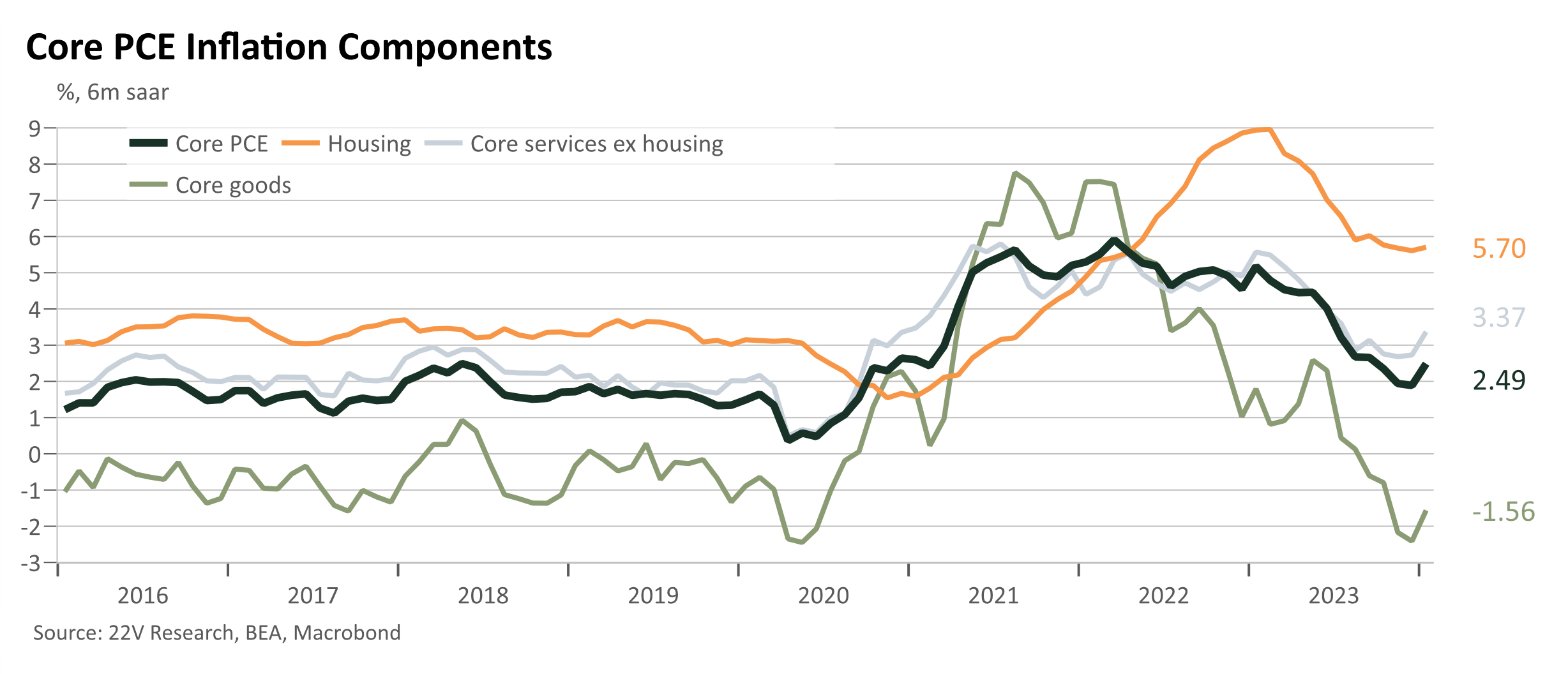
On a slightly longer lookback (3-6m) the broad swath of the inflation data suggests that inflation is running around, or a bit above, 2.5% in PCE-like terms. This includes the somewhat offsetting impacts of lagging measures of shelter inflation and the ultimately temporary deflation seen in used cars and other core goods. These issues, and the myriad of shocks still making their way through the economy, if now largely seeing them fade, makes parsing the forward-looking outlook for underlying inflationary very challenging, hence the Fed’s current caution and desire simply to see more good inflation data be realized before initiating cuts.
A Few Thoughts on the Details of the Data:
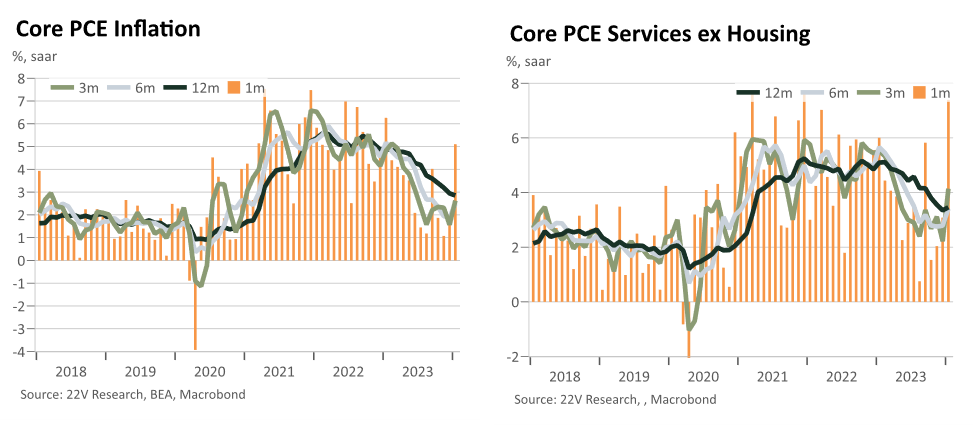
- Core PCE had its hottest print since January of last year at 0.42% m/m. This pattern last year is perhaps a good omen for those more dovishly inclined that this is largely a one-off readjustment in infrequently adjusted prices with high lagging inflation.
- Core services ex housing was very hot, if basically in line with expectations, at 0.6%. This will give the Fed some pause but the inflation of non-market prices in financial services boosted this notably. Fed doesn’t usually strip those out but it’s worth flagging as they can be quite volatile m/m and tend to be driven by noisier non-Phillips Curve stuff.
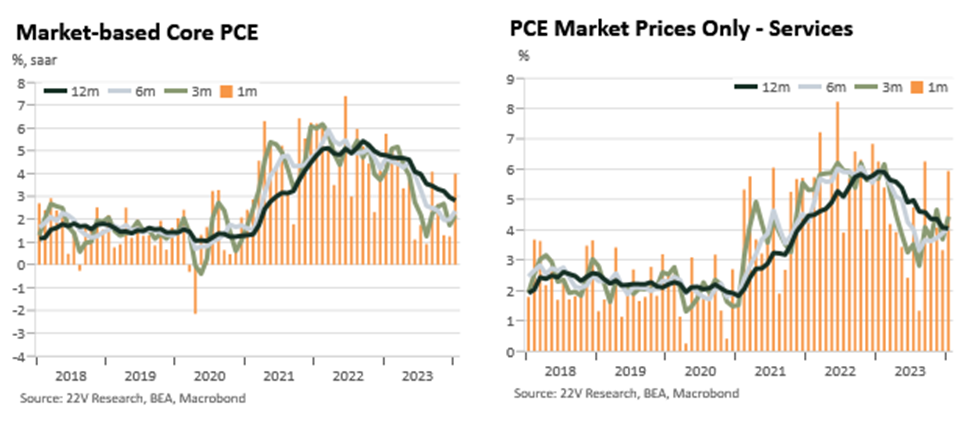
- Market prices only core was 0.33%, a bit hot for sure, well above 3m 6m, and 12m run rates, but less obviously bad than overall core PCE.
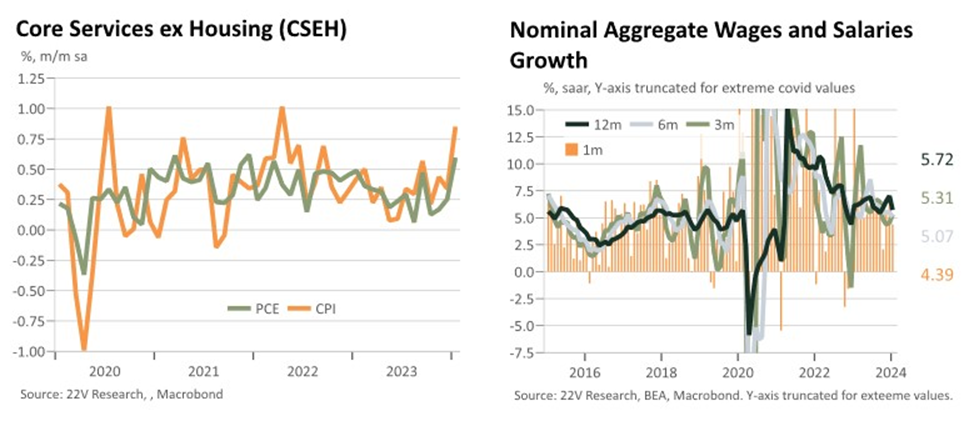
- Personal income growth jumped to 1% m/m but this was largely driven by transfer payments, rental income, and dividend assumptions but then taken away by a jump in tax payments. Aggregate wages and salaries growth continues to hang out in a 4-5.5% range, suggesting decent nominal income gains but not ones that are obviously excessive (this is somewhat more dovish than wage growth measures, which have similar recent rates of growth, perhaps suggesting dents to aggregate incomes which have not filtered through to median or lower wage earners).
We’re generally past the point where the Fed will strongly react to any singular data point in the way they were in 2022. ↑
Core CPI ex used autos and shelter, which strips out a upside weight in shelter and source of currently deflationary m/m vol in used autos, was 0..40% in Jan, its highest m/m gain since September 2022. ↑

