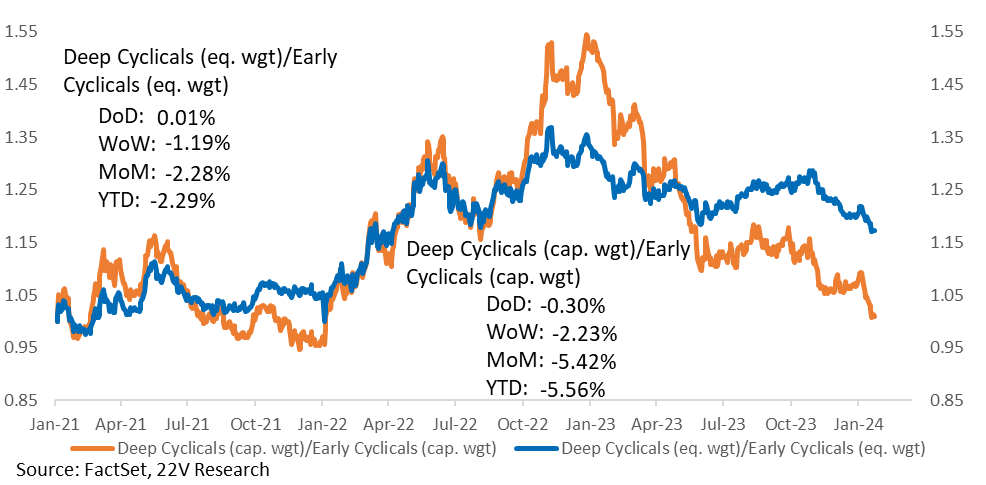
SUMMARY: The PBOC announced it will cut the reserve ratio by 50bps. The timing is not a complete surprise, but the size is bigger than expected. Michael Hirson’s take is “this is an effort to show that PBOC is not passive in supporting the economy… but does not imply a wholesale shift in China’s stimulus strategy – it is not the “bazooka,” nor should one expect one… the effectiveness of such liquidity support is constrained amid a climate of weak private sector demand, including for credit.” Near term, if this cut eases concerns about RoW growth, they are a tailwind for Deep Cyclicals. That would be a part of broader laggards catch-up (Small caps, risk-on, Value, non-Mega cap profitable Tech).

Longer-term, reviving China’s growth and confidence will require more. We detail Michael’s watchpoints in the full report below. Michael’s base case is that “Beijing’s support measures will put a floor under GDP growth (4-4.5%) but stay modest relative to the downside pressures weighing on the economy, including from the property sector. Private sector demand and confidence will remain subdued this year.”
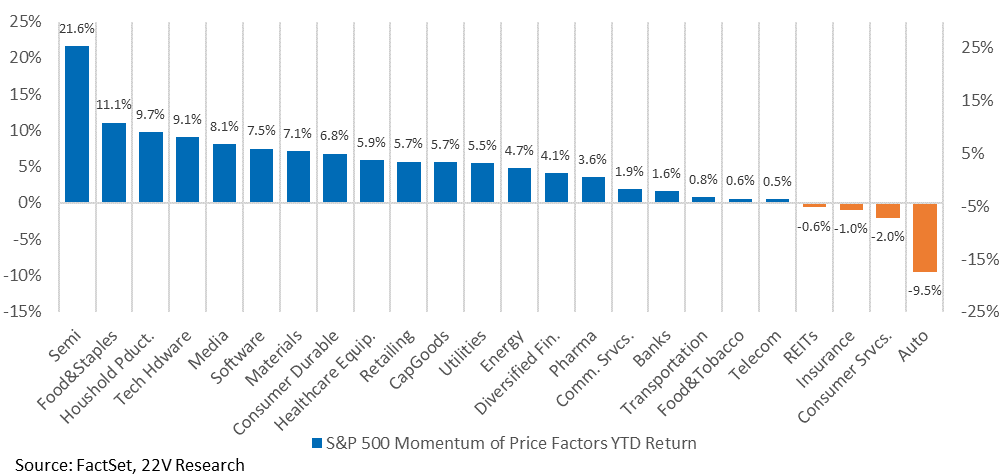
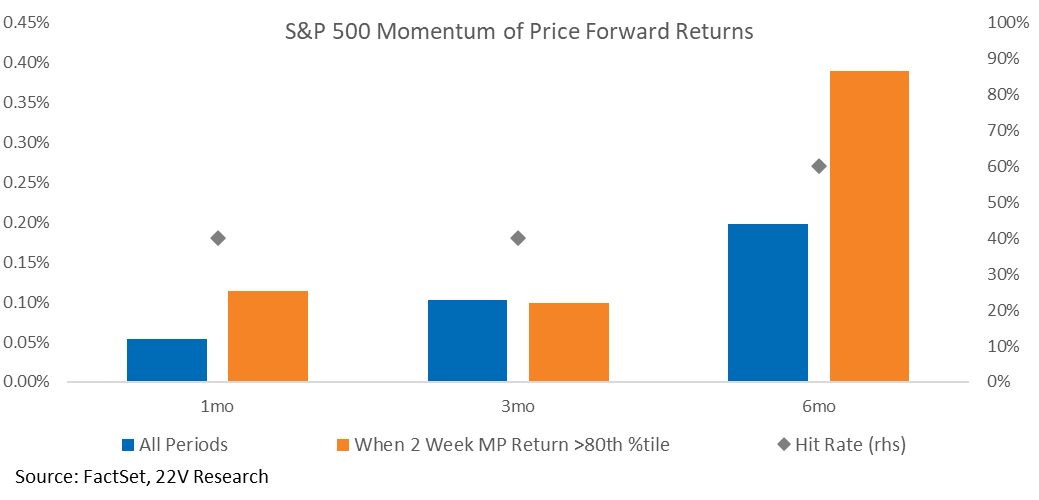
MOMENTUM: Momentum is the best performing factor YTD, working in almost every S&P industry group. Shorting Momentum because it has done very has not worked historically. The forward returns to Momentum after moves similar gaps higher are positive, similar to all Mo returns, and the hit rates hover near 50%.
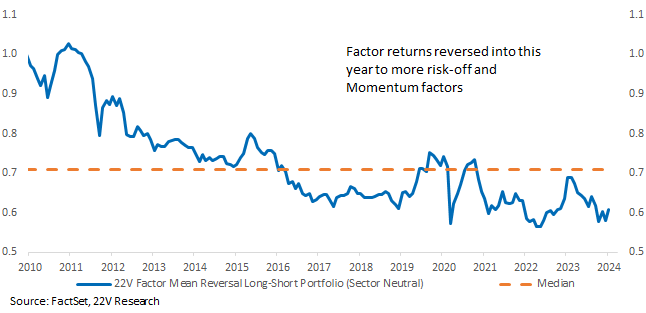
Overall, factor reversal is less common and profitable during Normal and Growth economic regimes. We continue to like playing for a rebound in Value/Risk-on factors given 1) their underperformance YTD, and 2) their disconnect to fundamental forces (yields in particular, more HERE).
More details in the full report below…
MARKET VIEWS: The PBoC announced it will cut the reserve ratio by 50bps. The timing is not a complete surprise, but the size is bigger than expected. Michael Hirson’s take is “this is an effort to show that PBOC is not passive in supporting the economy… but does not imply a wholesale shift in China’s stimulus strategy – it is not the “bazooka,” nor should one expect one… the effectiveness of such liquidity support is constrained amid a climate of weak private sector demand, including for credit.” Near term, to the extent this cut eases concerns about RoW growth, Deep Cyclicals have a tailwind for a bounce. That would be a part of broader laggards catch up (Small caps, risk-on, Value, non-Mega cap profitable Tech).
Longer term, and again per Michael, “Reviving growth and confidence will require further actions on the part of PBOC and other agencies. Key watchpoints include:
- Rate cuts to bring down real interest rates, which remain high amid deflation
- Further news as to how the PBOC will use its PSL facility to support infrastructure and affordable housing construction this year. Pan did not discuss the issue in detail, suggesting PBOC and other agencies are still debating the modalities.
- The strength of fiscal policy, including the size of the broad budget deficit and central government support for infrastructure funding (such as through a special sovereign bond offering or similar tools).
The actions above are all expected, but with key outstanding questions as to their size, timing and scope. There will be more signals in the weeks ahead, leading up to the start of the National People’s Congress on March 5.
Our expectation is that Beijing’s support measures will put a floor under GDP growth (4-4.5%) but stay modest relative to the downside pressures weighing on the economy, including from the property sector. Private sector demand and confidence will remain subdued this year.”
MOMENTUM: Momentum is the best performing factor YTD, working in almost every S&P industry group.
Playing for mean reversal within Momentum has not worked out well historically. The forward returns to Momentum after moves similar gaps higher are positive, similar to all Mo returns, and the hit rates hover near 50%. There are still places and times to play factor mean reversion, but we don’t see much edge in applying Momentum on its own.
Overall, factor reversal is a less effective strategy during Normal and Growth economic regimes. We continue to like playing for a rebound in Value/Risk-on factors given 1) their underperformance YTD, and 2) their disconnect to fundamental forces (yields in particular, more HERE).