SUMMARY: The Fed’s new financial conditions index, which is designed to show how financial asset prices impact growth according to the Fed’s main econometric model, shows the drag from financial conditions has fallen to 30bp off the coming year’s growth rate. That is basically neutral and suggests the Fed will be biased to keep financial conditions tight given the recent economic momentum. We expect the Fed to raise rates this week and to skip in September. Given our low near-term recession odds, the risk is another hike later this year, but that is basically priced in.
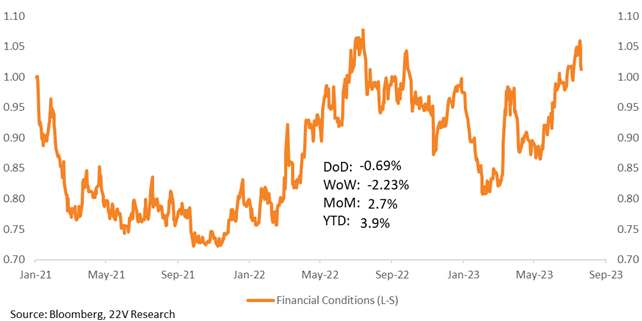
As we noted in our Weekly (HERE), a narrative that builds off the concept of growth being too strong, requiring financial conditions to remain tighter for longer, has started to form. That helps explain the underperformance of stocks that benefit from easier financial conditions vs those that benefit from tighter financial conditions last week. That basket was down -2.2% WoW. Market gains will be difficult, from here, with financial conditions biased to tighten.
Continued China headwinds, slowing European data (flash PMIs in Europe, Japan, and the UK were all weak overnight), and financial conditions that are unlikely to ease much from here favor Low Volatility and risk-off factors. To be clear, we favor risk-on factors given strong US economic momentum, falling inflation, and a good setup into earnings. But a rebound in low volatility and Defensives names should be expected. Low Vol has significantly underperformed MTD but bounced late last week.
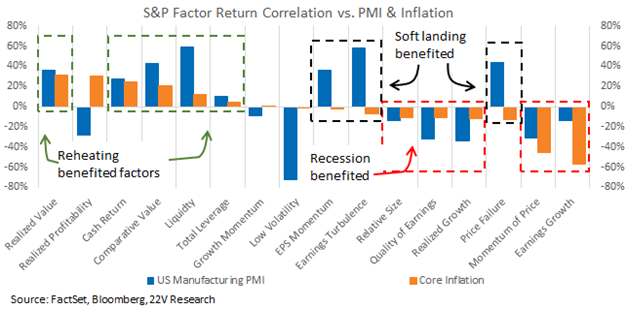
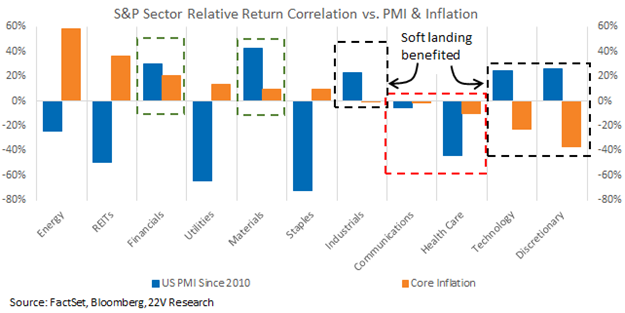
We also highlight the sectors and factors that work under different scenarios. The trend in the lower inflation and steady economic growth scenario favors risk-on factors along with Technology, Discretionary, and Communications work. In the lower inflation and slowing economic growth scenario Quality and Growth factors should perform better, along with Healthcare and Communications. Value, Liquidity, Energy, and Materials work in the higher inflation/economic growth backdrop.
Full report below…
MARKET VIEWS: We get US flash PMI data later today, but in the aggregate, US data has been much firmer than the rest of the world recently. As Gerard noted on Friday, the Fed’s new financial conditions index, which is designed to show how financial asset prices impact growth according to the Fed’s main econometric model, shows the drag from financial conditions has fallen to 30bp of the coming year’s growth rate. That is basically neutral and suggests the Fed will still be biased to tighten more.
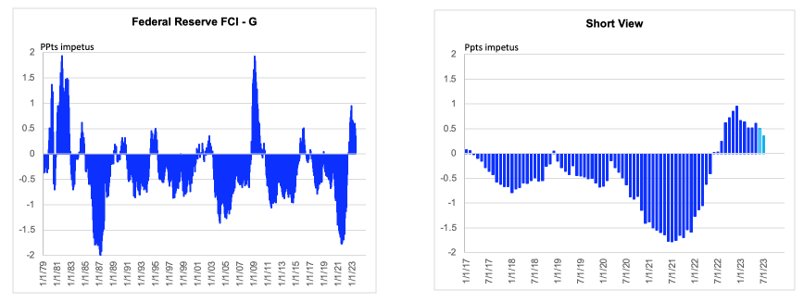
Source: Federal Reserve Fed Notes “A New Index to Measure U.S. Financial Conditions”
As we noted in our Weekly (HERE), a narrative that builds off the concept of too strong growth that requires further tightening of financial conditions, has started to form. That helps explain the underperformance of stocks that benefit from easier financial conditions vs those that benefit from tighter financial conditions last week. That basket was down -2.2% WoW. Market gains will be difficult, from here, with financial conditions biased to tighten.

Financial Conditions are biased to remain tighter, UST yields are lower, and flash PMI data from Japan, Eurozone and the UK all came in weaker than expected. The service data in the Eurozone is now more clearly decelerating. Continued China headwinds, slowing Europe and financial conditions that are unlikely to ease much from here would favor Low Volatility stocks. To be clear, we favor risk-on factors given strong US economic momentum and falling inflation, but a rebound in Low Volatility and Defensives names, should be expected. Low Vol has significantly underperformed MTD but bounced late last week.
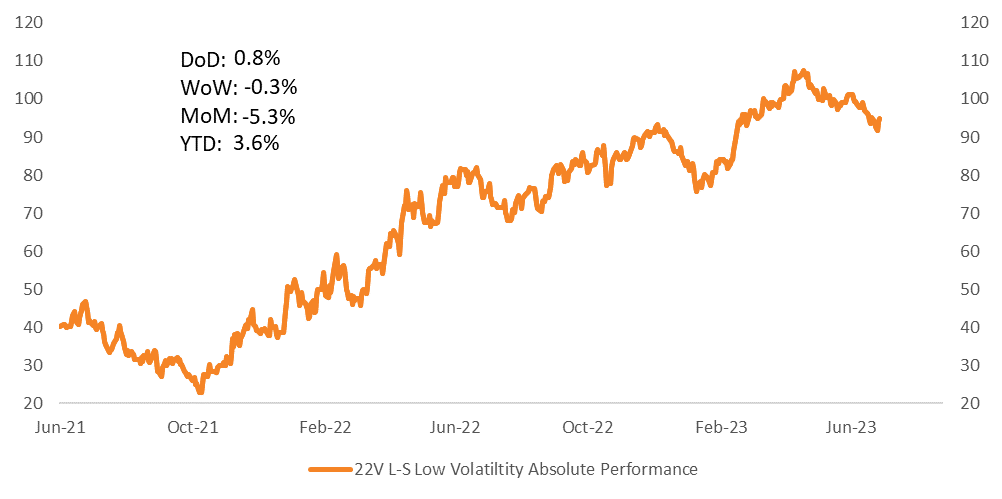
Source: FactSet, 22V Research
Sectors & Factors the Work in Different Scenarios: Under a soft landing scenario, inflation continues to decline as economic growth gradually improves, favoring Earnings Turbulence, EPS Momentum and Price Failure. Inflation accelerating and economic growth improving benefits Value and Liquidity most. While Growth and Quality are more likely to perform well if both economic growth and inflation drop, leaving a recession more likely.
At the sector level, Technology, Discretionary, and Industrials should benefit more from a soft landing scenario, they have also been leading sectors this year as soft landing odds increased. Financials and Materials benefit under a reheating (rising inflation) scenario, while Health Care and Communications are more likely to benefit if a recession cannot be avoided. A reheating of inflation likely ends in a recession, but the immediate impact would benefit Financials and Materials.
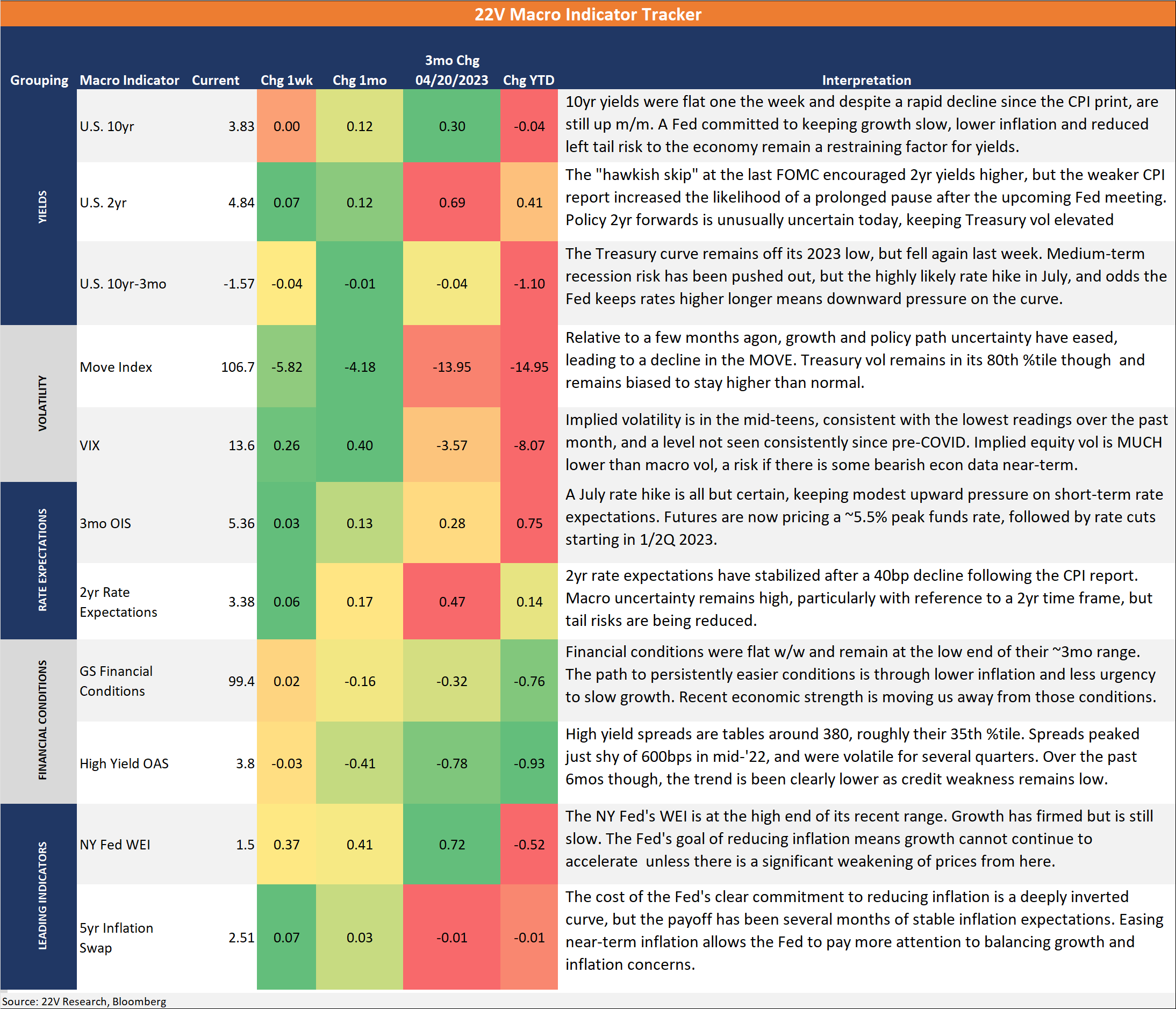
Macro Tracker: Last week, firm economic data, steady inflation expectations, and broadly positive earnings surprises (78% of companies are beating est) helped offset growing concerns about the outlook for growth and inflation (both remain too strong). Financial conditions are at the low end of their recent range, which has helped lift the S&P NTM PE to just under 20x and push implied vol to the mid-teens. That backdrop is at risk given the Fed’s need for growth to remain below trend for an extended period. The Fed will give us another look at how their policy approach is evolving later this week. Their commitment to reducing inflation has been unwavering, so the question is how much concern they express toward the improvement in growth and the easing of financial conditions. Market internals were mostly risk-on last week with Value and Earnings Turbulence leading factors, and Banks and Energy the best performing GICS groups. On Friday though, Low Volatility stocks rallied and a further bounce in risk-off factors and sectors is a possibility given the strength of the economy (not strong, but firming) and still high inflation. Fundamentals could add to market volatility this week as well. Mega cap Tech starts reporting 2Q results this week, and the earnings sentiment of managers within the space has failed to keep pace with the rapid expansion of PEs. Disappointing mega cap numbers/guidance would support the relative outperformance of the average stock (smaller caps over larger) but would also be a headwind for the overall market.