SUMMARY: Big bank 2Q earnings reports have gotten off to a strong start. JPM and WFC beat and are up this morning (C reports at 8, after the time of writing this note). Net interest income was stronger than estimates, despite concern over interest rate risk management in the SVB fallout. And per JPM, “US economy continues to be resilient. Consumer balance sheets remains healthy.” This is consistent with the macro data. Recession risk has been pushed out.
WAGE GROWTH MODERATING: The Atlanta Fed wage growth tracker 1) does not have some of issues that AHE does (sector and rank mix shift), and 2) better tracks the ECI, which is the metric the Fed watches but is quarterly. The Atlanta Fed wage growth tracker printed on the softer side for June, falling from 6.4% to 6.1%. That’s a positive for risk short-term, but as Gerard pointed out (HERE), nominal wage growth is still 5%+. Moderating at 5%+ is probably not low enough to get inflation back to 2%. The labor market is likely still too tight. As with CPI, that’s a problem for later this year, and the softer print will support risk in the short-term.
The risk-on rally has been in place since mid-May. CPI and the wage data imply stable financial conditions, limiting the impetus for mean reversion. From a risk management standpoint, it is important to note the economy is still in Transition and economic data is still volatile. Extrapolating trends remains risky. The absolute levels of CPI and the Atlanta Wage tracker highlight the longer-term headwinds to continued risk-on outperformance, even as short-term prints are risk-on.
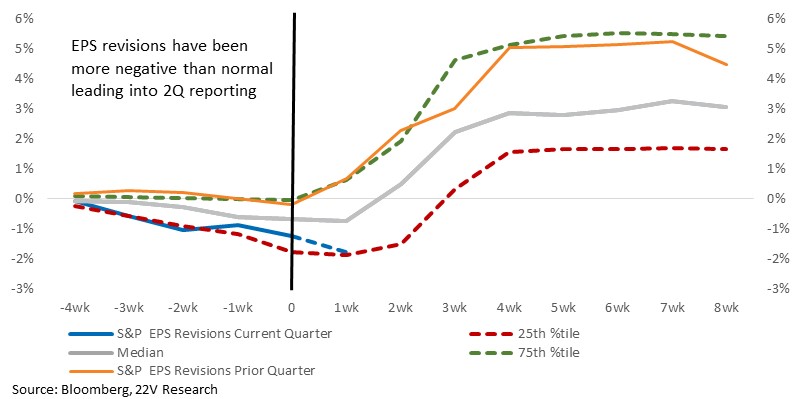
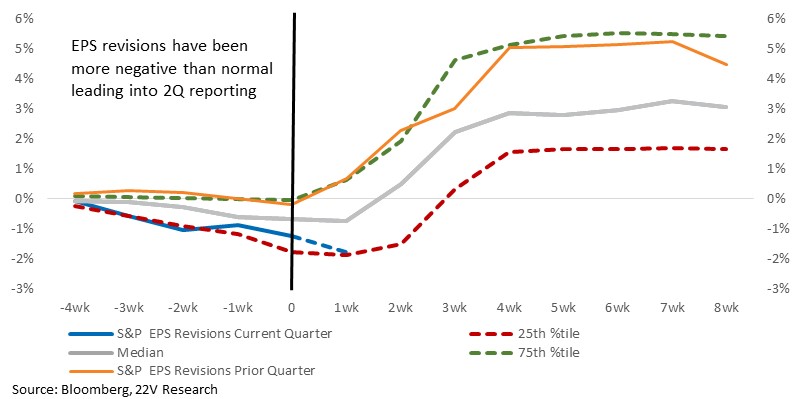
2Q EARNINGS PREP: Leading into 2Q reporting, estimates have been revised down more than normal, but still within the typical range of revisions. When estimates are low but not extreme, revisions tend to end the season 1) modestly higher, and 2) positive. Specifically, historical revisions suggest EPS will end +2.5pp up from here (~$54, $215 a.r.).
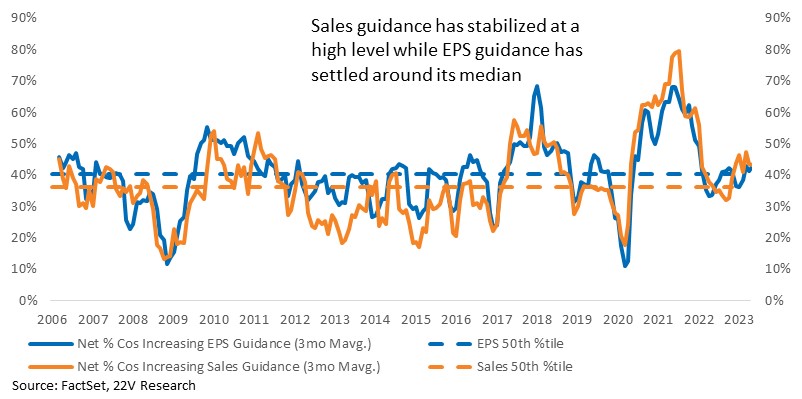
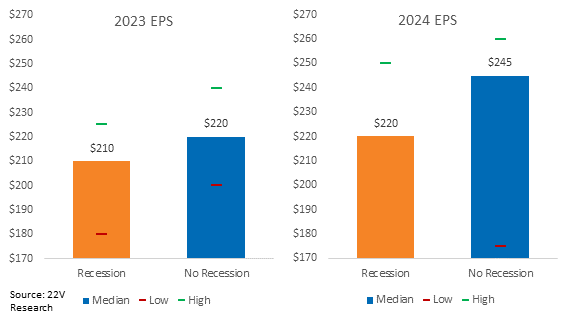
Guidance has NOT tracked the decline in revisions. Like overall sentiment, net positive corporate guidance has stabilized, at 1) a high level for sales and 2) the median level for EPS. Revisions and guidance are not nearly weak enough to suggest the bottom is going to drop out. A $215 run rate would put 2023 EPS right in the middle of the recession/no recession estimates of the investors we surveyed (HERE). Earnings are trending in a direction consistent with a soft landing, which is another support for risk assets. Market data is moving away from a deep recession outcome.
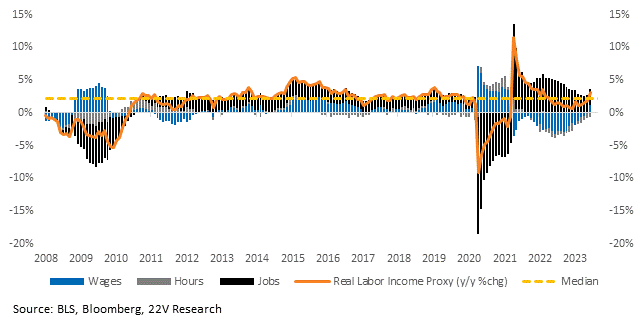
MARKET VIEWS: Big banks have started 2Q earnings strong. JPM and WFC beat and are up this morning (C reports at 8, after the time of writing this note). Revenue was better than estimates (JPM $42.40 billion, estimate $39.34 billion, WFC $20.53 billion, estimate $20.13 billion). Net interest income was stronger than estimates, despite concern over interest rate risk management in the SVB fallout. And per JPM, “US economy continues to be resilient. Consumer balance sheet remains healthy.” This is consistent with the macro data, like the increase I the real labor income proxy (below). Recession risk has been pushed out.
WAGE GROWTH MODERATES: The Atlanta Fed wage growth tracker 1) does not have some of issues that AHE does (sector and rank mix shift) and 2) tracks the ECI better, which is the gold standard of wage growth and the metric the Fed watches, but is quarterly. The Atlanta Fed wage growth tracker printed on the softer side for June, falling from 6.4% to 6.1%. That’s a positive for risk short-term, but as Gerard pointed out (HERE), nominal wage growth is still 5%+. Moderating at 5%+ is not low enough to get inflation back to 2%. The labor market is probably still too tight. Like with CPI, that’s a problem for later this year, and the softer print will support risk in the short-term.
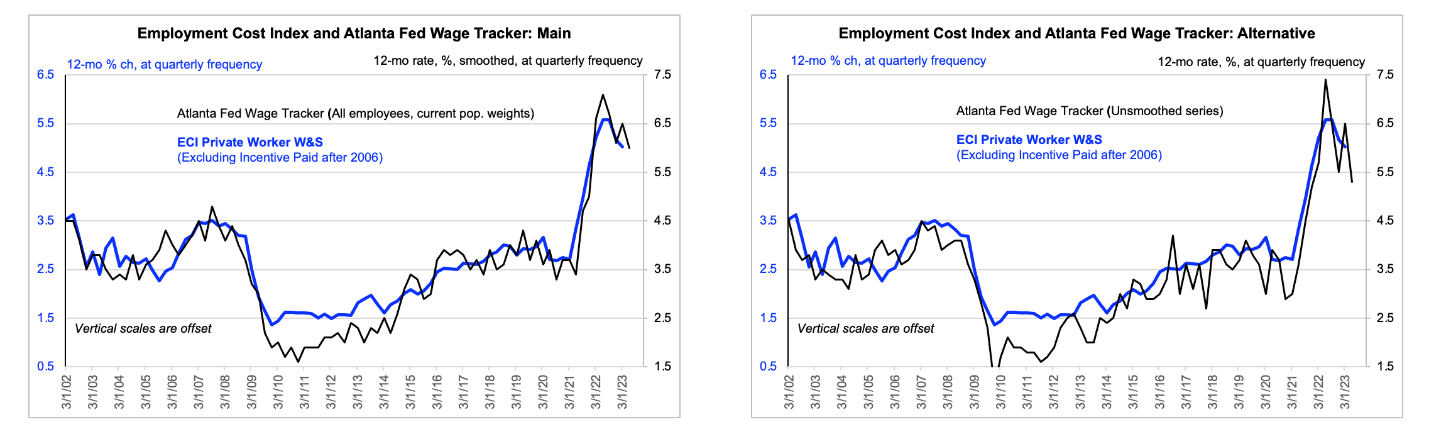
Source: Federal Reserve Banks of Atlanta and St. Louis (FRED), FH calculations
ECI data are actual to March. Wage Tracker is actual to June.
The risk-on rally has been in place since mid-May. Mean reversion had been a consistent trend the last ~2 years. CPI and the Atlanta Fed wage growth tracker this week imply changes in financial conditions won’t be a market determinant right now, limiting the impetus for mean reversion. It is important to note for risk management though that the economy is still in Transition, economic data is still volatile, and so mean reversion is still a risk longer-term. The absolute levels of CPI and the Atlanta Fed Wage Growth tracker both highlight the longer-term headwinds to continued risk-on outperformance, even if short-term the soft prints are risk-on tailwinds.
2Q EARNINGS PREP: Leading into 2Q reporting, estimates have been revised down more than normal, but still within the typical range of revisions. When estimates are low but not extreme, revisions tend to end the season 1) modestly higher, and 2) positive. Specifically, historical revisions suggest EPS will end +2.5% from here ($54, $215 a.r.).
Guidance has NOT tracked the decline in revisions. Like overall sentiment, net positive corporate guidance has stabilized, at 1) a high level for sales and 2) the median level for EPS.
Revisions and guidance are not nearly weak enough to suggest the bottom is going to drop out. A $215 run rate would put 2023 EPS right in the middle of the recession/no recession estimates of the investors we surveyed (HERE). That means there is little tail risk this quarter, which is some support for risk-on. More market data is moving away from a deep recession outcome.
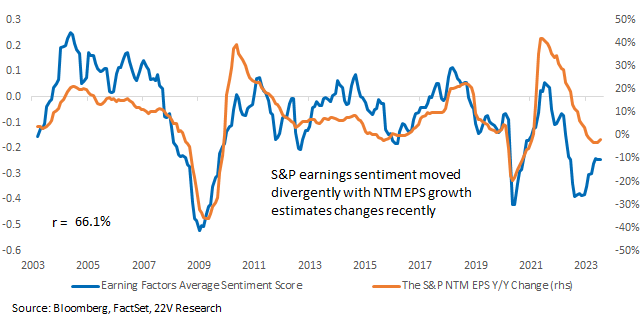
So far, NTM EPS y/y changes have diverged from earnings sentiment changes into July, moving higher even as sentiment stalls. Given the positive correlation between them, we expect the two to converge. The longer-term question is how.