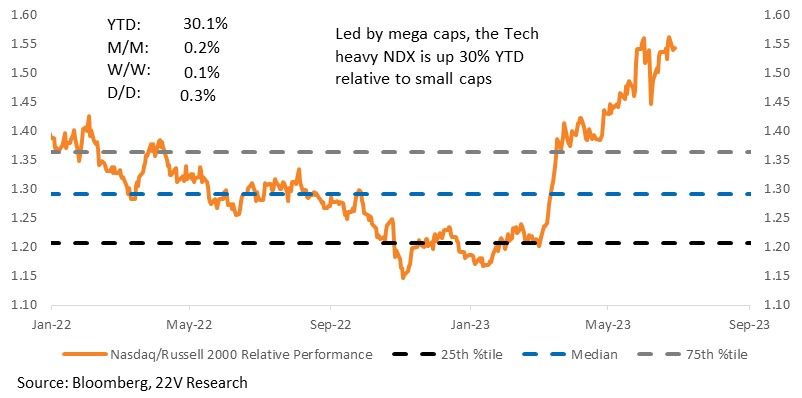
Supported by mega-cap Tech outperformance, the NDX is up 37% YTD return, while the small-cap Russell 2K is up 5%. The only time the NDX has outperformed small caps by a larger amount was a brief period in 2020 (August) and during the late-90s TMT bubble. Tech leadership has faltered a bit recently as Tech starts to consolidate and lower nearby recession odds support a broadening out of gains.
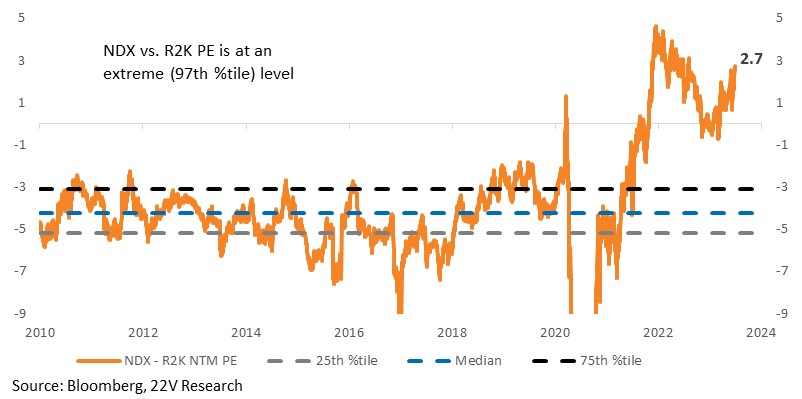
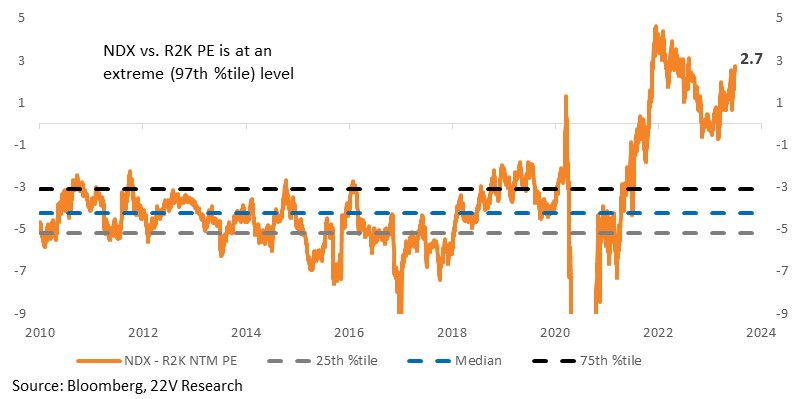
Earnings growth expectations do not change the spread narrative. The NTM PE spread between the NDX and R2K is near its highest point of the post-GFC period. In late 2021, the NDX-R2K PE spread topped out at 4.7 points, and today it is 2.7. PE spreads are not mean reverting, but the high uncertainty, high hard landing odds backdrop that fueled the Tech rally has shifted. We discussed mega-cap Tech near-term headwinds (details HERE). There are two clear results of mega caps faltering: 1) Index level gains from here will be limited, and 2) the average stock should do better.
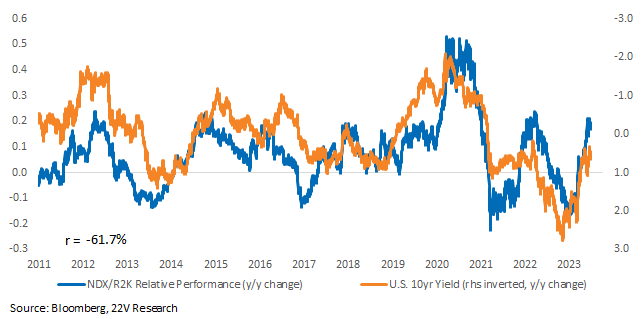
Historically, the relative performance of NDX and R2K is negatively correlated with U.S. 10yr Yield. Declining yields, which can signal slowing growth, favor the NDX over small caps. If growth data such as the PMIs (next week) and NY Fed Weekly Economic Index (every Thursday) continue to improve, it would support smaller caps relative to Tech.
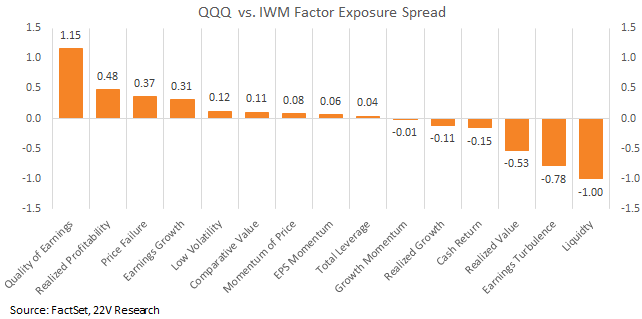
The most liquid ETFs to play a Tech vs. small cap relative trade are the QQQ vs. IWM. QQQ is more risk-off and Growth exposed than IWM, led by Quality of Earnings. Small cap names are more exposed to Value and risk-on factors than any other market cap segment (details HERE). Though factor returns have been more mixed since the hawkish Fed meeting, we expect risk-on factors and small-cap names to gain as investors discount lower hard-landing odds. 2Q reporting season, which gets underway in a few weeks, should be a tailwind as well.
Extreme Spreads Between NDX & Russell 2000 Index: Supported by mega-cap Tech outperformance, the NDX is up 37% YTD return, while the small-cap Russell 2K is up 5%. The relative performance spread between the NDX and Russell 2000 over the past six months is a 96th %tile event. The only time the NDX has outperformed small caps by a larger amount was a brief period in 2020 (August) and during the late-90s TMT bubble. Tech leadership has faltered a bit recently as Tech starts to consolidate and lower nearby recession odds support a broadening out of gains.
Earnings growth expectations do not change the spread narrative. The NTM PE spread between the NDX and R2K is near its highest point of the post-GFC period. In late 2021, the NDX-R2K PE spread topped out at 4.7 points, and today it is 2.7. PE spreads are not mean reverting, but the high uncertainty, high hard landing odds backdrop that fueled the Tech rally has shifted. That makes the current NDX multiple of 25.9x (88th %tile) look risky.
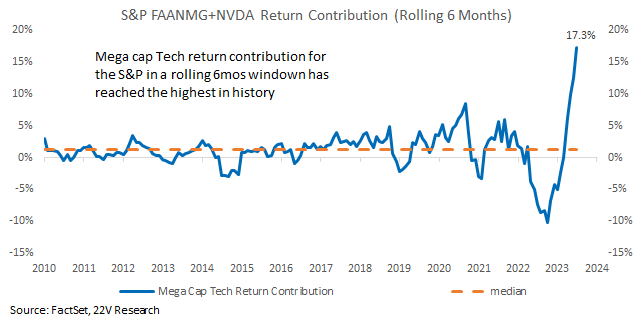
Mega-cap Tech’s incredible rally is the driver of NDX as they account for more than half of the index market cap. The return contribution of mega caps to even the broader S&P 500 has been extreme too. On a rolling 6mo basis, Megas have contributed 17.3pp to the S&P, and 35.9pp to the NDX as well. We discussed mega-cap Tech near-term headwinds (details HERE). There are two clear results of mega caps faltering: 1) Index level gains from here will be limited, and 2) the average stock should do better.
Marco & Fundamental Backdrop: Historically, the relative performance of NDX and R2K is negatively correlated with U.S. 10yr Yield. Declining yields, which can signal slowing growth, favor the NDX over small caps. 10yr yield has been rising over the past two months on lower hard landing odds. If growth data such as the PMIs (next week) and NY Fed Weekly Economic Index (every Thursday) continue to improve, it would support smaller caps relative to Tech.
The most liquid ETFs to play a Tech vs. small cap relative trade are the QQQ vs. IWM. QQQ is more risk-off and Growth exposed than IWM, led by Quality of Earnings. Small cap names are more exposed to Value and risk-on factors than any other market cap segment (details HERE). Though factor returns have been more mixed since the hawkish Fed meeting, we expect risk-on factors and small-cap names to gain as investors discount lower hard landing odds. 2Q reporting season, which gets underway in a few weeks, should be a tailwind as well.