SUMMARY: The payroll report did not change the June FOMC hike vs. pause odds but did suggest wage growth could be settling out at too high a level. That is why a “skip is probably a better word than pause to describe what is teed up for June” according to Gerard. Investors have fully priced a ‘skip’ with a hike on July 26th and the back end of the Fed funds futures curve shifting meaningfully higher. No cuts are priced this year (from here).
The increase in UST yields associated with the higher expected Fed funds rate has not tightened financial conditions. Lower immediate recession odds are what is driving UST yields higher, and that is why FCI has not tightened. If the Fed SIGNALS they will be more aggressive in pushing back against economic strength, financial conditions will tighten at a time when “underlying demand” is running at about 1%. 1% is not far from zero, which is why recession odds would increase if the Fed assumed a more aggressive stance. Then Cyclical gains would fade. For now, that is not an issue, and stable to easier financial conditions favor deeper Cyclicals.
Transition Phase, Financial Conditions & Deep Cyclical Mean Reversion: According to our Quant modeling, the economy remains in Transition; a period defined by economic signals that give no clear indication of recession or normal growth. Transitions are also periods prone to mean reversion, higher correlations, and outperformance of Quality and Defensives factors. Quality and Defensives have done great, but financial conditions remain the most important influence over sectors during this phase of the cycle. FCI is likely to be biased easier for the coming month as recession risk declines and banking lending standards don’t tighten nearly as much as feared. That should favor the deeper Cyclicals that lagged last month. If we are wrong on FCI over the coming month (June 16th Fed meeting will be a test), we are likely wrong on Deeper Cyclicals mean reversion.

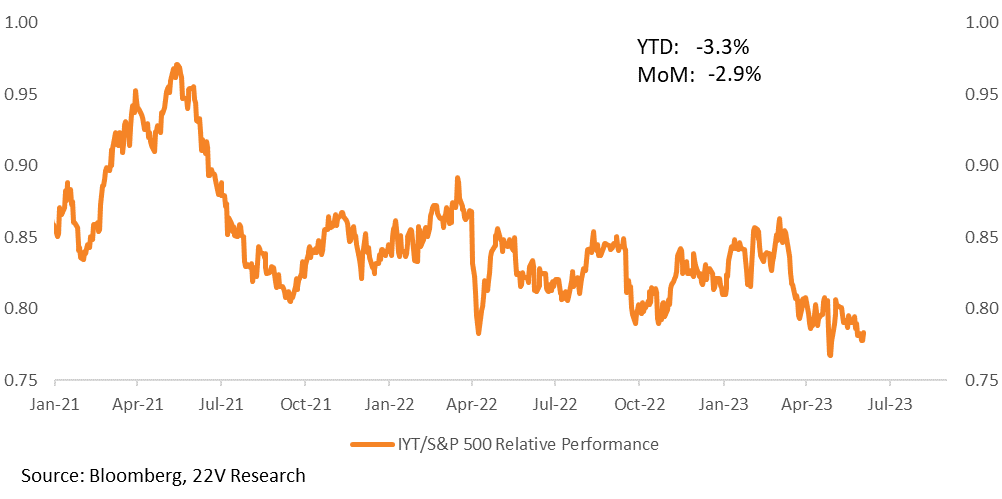
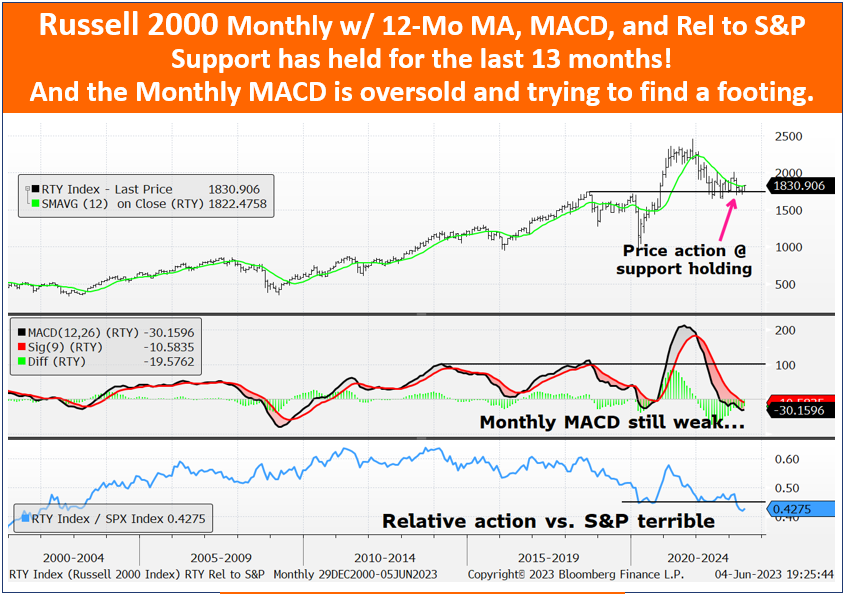
Other Reversions: Higher softer landing odds should help the “average stock” relative to the mega caps (John Roque highlighted that the Russell 2000 has held support for the last 13 months. Plus it is oversold) and we should expect some mean reversion in stocks that have been hit particularly hard from “destocking”. Given the inventory unwinds in 1Q23 (HERE), if economic growth stays firmer for longer, production should pick up, and the “destocking losers”, which have had terrible performance, would have a significant bounce. At least over the next month. That would favor XRT (retail) and IYT (transports). Tough to remain short those popular shorts in our view.
Full report below…
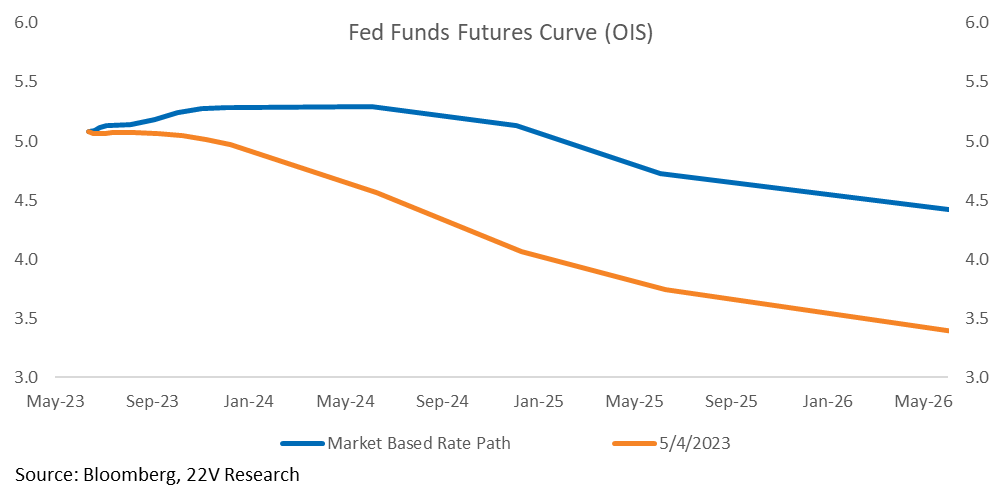
MARKET VIEWS: The data has been much better than feared and as Gerard pointed out yesterday, the payroll report did not change the June odds, but it does appear that wage growth could be settling out at too high of a level. That is why a “skip is probably a better word than pause to describe what is teed up for June.” Investors have fully priced in the skip as a hike on July 26th is the base case and the back end of the Fed funds futures curve has shifted meaningfully higher. On May 4th a roughly 4.2% fed funds rate was expected on December 23. Only a month later, the December Fed funds rate is expected to be 5%. No cuts are expected from here.
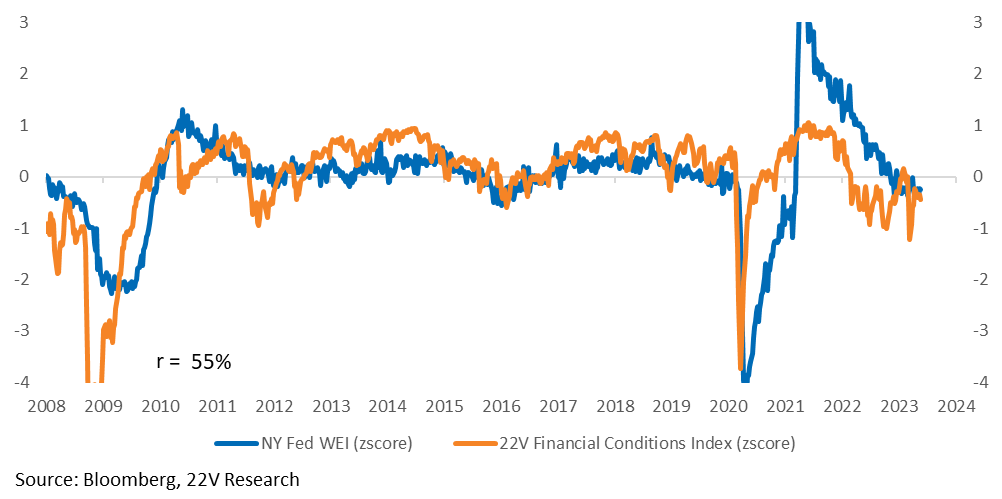
For now, the increase in UST yields associated with the increase in the expected Fed funds rate has not tightend financial conditions (FCI). Stocks are higher, credit spreads tighter and inflation expectations are stable. Lower odds of an immediate recession are what is driving UST yields higher, which is why FCI has not tightened. If the Fed SIGNALS they will be more aggressive in pushing back against economic strength, financial conditions will tighten at a time when “underlying demand” (The New York Fed Weekly Economic index represents underlying demand in the chart below) is running at about 1%. 1% is not far from zero, which is why recession odds would increase if the Fed got more aggressive. For now, that is not an issue, and stable to easier financial conditions would favor deeper Cyclicals.
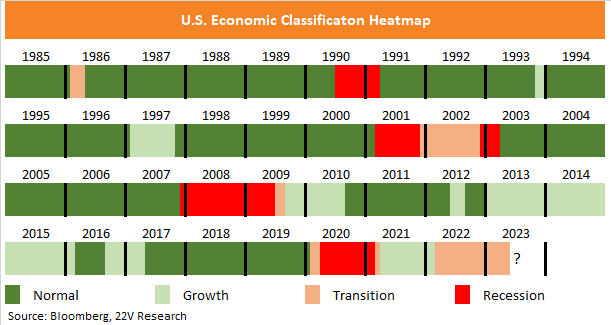
Regime Update: With macro readings still mixed, the 22V Macro Regime Classification model that the quant team has been leaning on continues to signal an economy in Transition. That has been the case for more than a year. As the rarest macro regime historically, accounting for 7.4% of all historical periods, the current year-plus Transition makes up fully half of ALL Transitions back to 1985. Recall, Transition periods are defined by economic signals that give no clear indication of recession or normalcy, and are prone to mean reversion and higher correlations.
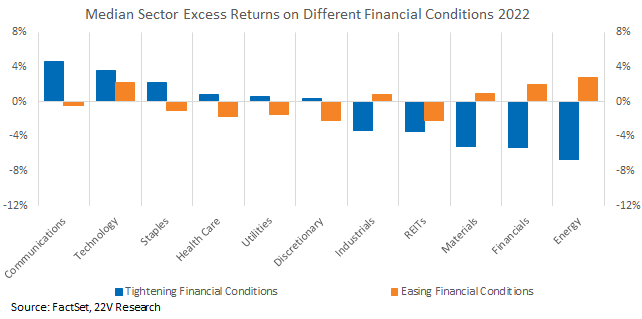
For the current Transition period, financial conditions remain the most important influence over sector returns. Early Cyclicals tend to do well during FCI tightening periods while Deep Cyclicals perform relatively well during periods of easing financial conditions. Banking sector issues have not been nearly as damaging to the economy as feared, employment growth is firm, and financial conditions are easing. That should favor the deeper Cyclicals that lagged last month.
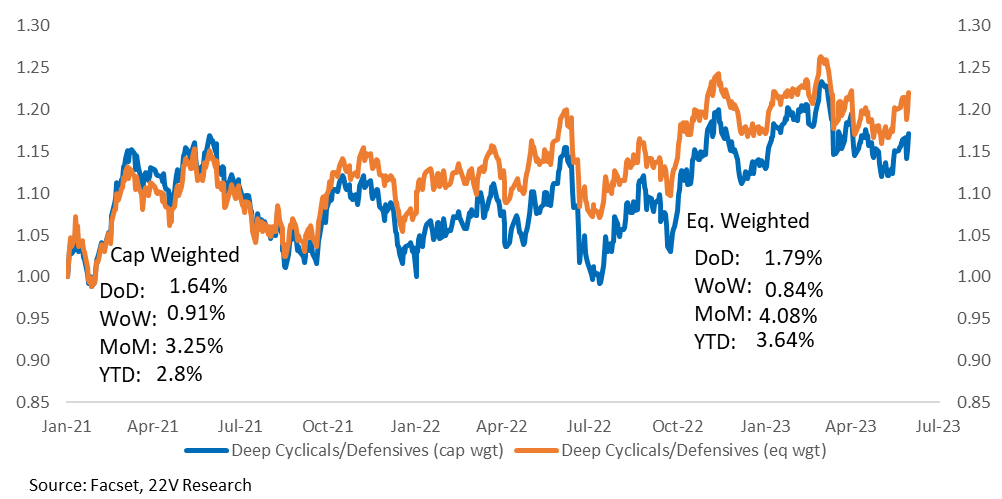
Deeper Cyclicals (Energy, Materials, Industrials) have had a very nice run relative to Defensives over the past month (mostly the past few weeks). We expect that to continue through the month of June. Unless we get something from the Fed on June 16th that signals they want financial conditions to tighten aggressively.
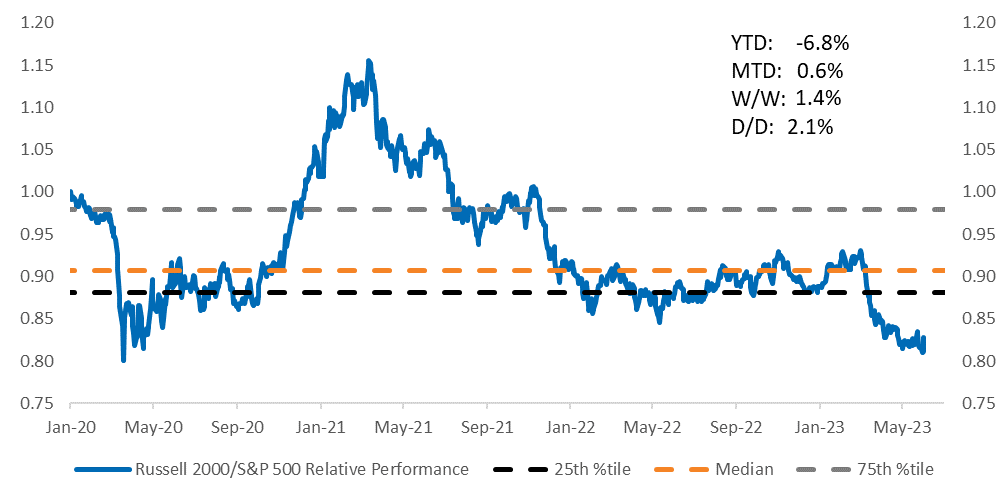
Other Reversions: We are re-highlighting something we focused on in our Friday webinar and Weekly report yesterday. Higher softer landing odds should help the “average stock” relative to the mega caps and we should expect some mean reversion in stocks that have been hit particularly hard from “destocking”. Reduced bank risk and a firmer than expected economy should favor some mean reversion in small caps relative to Nasdaq performance.
John Roque pointed out yesterday that the Russell 2000 has held support for the last 13 months. Plus it is oversold.
Retail and transports have been hit particularly hard by “destocking”. The labor market is fine now, which should keep consumer spending at healthy levels (roughly 2% of spending is the current trend), and the housing data has already bottomed. Given the inventory unwinds in 1Q23 (HERE), if econ growth stays firmer for longer, production should pick up, and the “destocking losers”, which have had terrible performance, would have a significant bounce. At least over the next month. That would favor XRT (retail)…
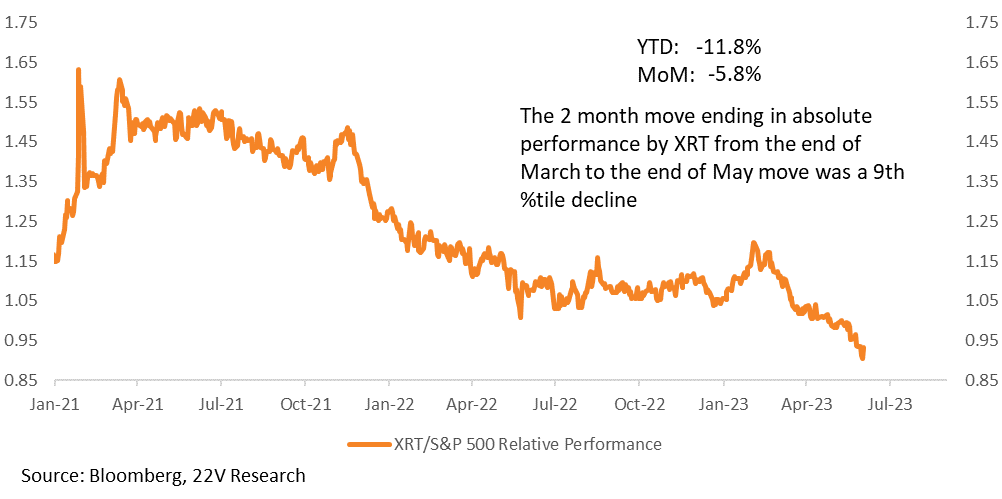
And IYT (transport ETF).