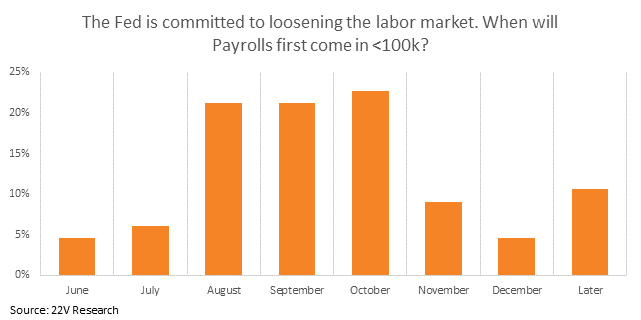
SUMMARY: Our latest investor survey (HERE) indicates a majority of clients do not expect labor markets to weaken before August. We would not push back against this timing, but it does suggest a weak payroll report would be market moving. Only 2% of our survey respondents expect Payrolls to come in less than 100k, which is about the level needed to keep the labor market flat. Most clients anticipate a minimal market reaction to the report.
A weak payroll and in-line average hourly earnings (AHE) would suggest a continuation of the Cyclical rally. Soft landing odds continue to go up under that scenario. A stronger than expected payroll or AHE number would increase rate hike expectations and policy headwinds. That would mean higher short-term rates (longer dated yields probably move lower or increase less than 2yr yields, so the curve inverts more) and weakness in risk assets in general. The Low Vol factor is already expensive, but macro influence would support those factors near-term if today’s report leaves investors discounting more rate hikes/increased recession risk.

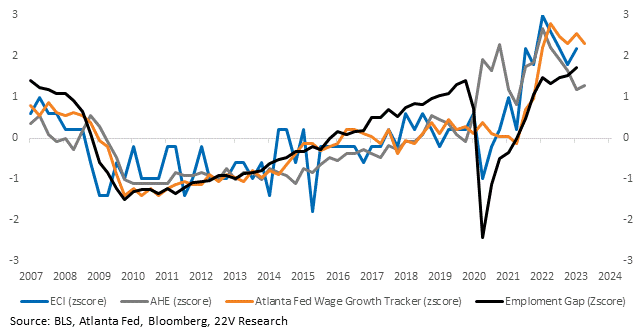
Despite economic and employment data suggesting wage growth should decrease, it is currently exceeding what economic data and employment data (urate, employment gap) would suggest. Wages might normalize lower without damage to the labor market, but we are worried about labor data deteriorating soon (next 3 to 4 months) as corporate profitability falls. The debate between soft landing or not will be intense as the labor market loosens. WHICH WILL HAPPEN. Either with the Fed doing more or on its own. FYI, AHE is less important than the Atlanta Fed Wage Growth Tracker and ECI, which both account for sector composition, unlike AHE.
Full report below…
MARKET VIEWS: In our latest survey (HERE), almost no client anticipated labor markets weakening before August. 65% think August to October. We would not push back against this timing, but it does suggest a weak payroll report would be market moving. A weak headline number and an in-line AHE reading would take a June rate hike off the table, but most clients expect a negligible market reaction to the report.
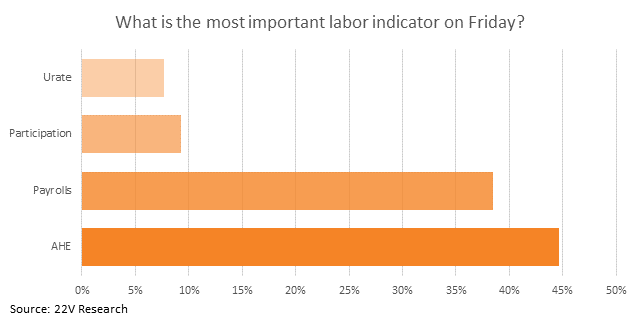
Wages are the indicator investors are watching most closely in today’s report. The calibration of wages and payroll readings to June hikes is tight. If AHE is in-line, 46% of our respondents think a modest Payrolls beat (< ~50k) would get the Fed to raise rates in June. FYI, Payrolls have beat by 50k or less 8 of the prior 12 releases. 30% think a Payrolls >300k will cause a June rate hike.
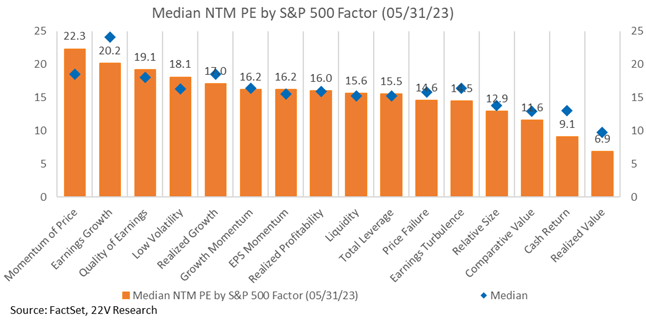
So, a weak payroll and in-line AHE would suggest a continuation of the Cyclical rally and selloff of risk factors. A strong payroll or AHE number increases rate hike expectations and should increase policy headwinds. That would mean higher yields and weakness in risk assets in general. Low Vol and Momentum are already expensive, but macro influence would support those factors near-term if today’s report leaves investors discounting more rate hikes/increased recession risk.
WAGE GROWTH IS LEVITATING: If AHE comes in at consensus today (+0.3% m/m), the 3-month trend will still be above 4% ar. The Fed wants to see this lower (~3.5%). We are in the pause camp (save for blowout data this morning and/or CPI) but wages haven’t given the all-clear yet. With the market pricing in a benign outlook at 4250, that’s a tailwind to our Defensives call.
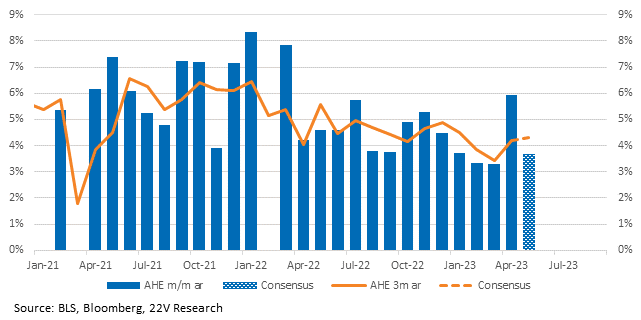
Wages are exceeding what economic data and employment data (urate, employment gap) would suggest. There may be a hope trade that wages will normalize without damage to the labor market, but we are worried about labor data deteriorating soon as corporate profitability falls. We do not expect wage growth to fall cleanly, though evidence of that near-term may keep the current trend of selling risk-off intact. FYI, AHE is the less important than the Atlanta Fed Wage Growth Tracker and ECI, which both account for sector composition, unlike AHE.
UTILITIES: Mean reversion remains a constant in equities, and Cyclicals have posted a 99th percentile gain relative to Defensives over the past month. Tightening of financial conditions and some pulling forward of recession risk would favor Defensives.
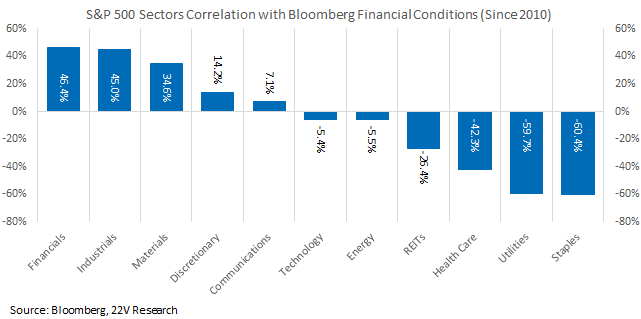
The backdrop is a tailwind to Utilities, which has been one of the worst performing sectors over the past month. Utilities are least levered to growth trends and would benefit from falling 10yr yields.
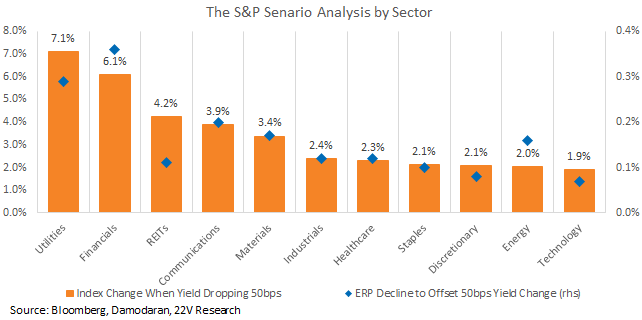
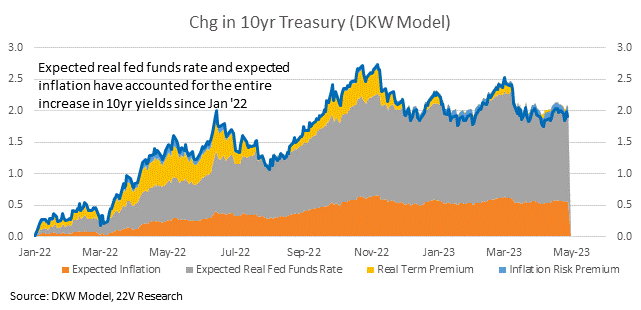
Near-term, the 10yr is biased lower with the Fed pausing, recession risk rising, and inflation falling. All the gain in the 10yr since the beginning of 2022 is from a higher expected real fed funds rate and higher expected inflation. Labor data deteriorating would apply downward pressure on both those impulses.